
What’s actually slowing this PC down?
Pick the symptom - the matching free tool is one click away.
Some links on this page are affiliate links: if you buy through them we may earn a commission, at no extra cost to you.
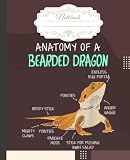
The paired openings on the sides of a bearded dragon’s head are usually its ear openings. A small spot centered on top of the skull, between the eyes, is a different normal structure called the parietal (or third) eye. Nostrils sit separately near the snout, and the mouth is the large opening at the front.
Location is only the first clue. A new wound, swelling, discharge, crust, parasite or irregular depression cannot be identified as normal anatomy from a general description. If the mark is changing or your dragon seems ill, arrange an examination with a veterinarian experienced with reptiles.



As an Amazon Associate I earn from qualifying purchases.
Use location to identify the normal landmarks
Owners often use the word “hole” for any dark opening or indentation they notice. A location-based check separates the structures that are expected on a healthy head from a change that needs professional assessment.
| What you see | Where it is | What it represents | What a general description can and cannot tell you |
|---|---|---|---|
| Paired openings on the sides | Laterally, behind the eyes | External ear openings leading to the tympanic membrane (eardrum) area | Consistent with normal ear anatomy; a new mark at or around the opening still needs an examination if it is swollen, wet, crusted or painful |
| One small central spot | On top of the head between the eyes | Parietal, or third, eye | A normal sensory structure; an irregular wound or enlarging lesion in that region is not automatically a parietal eye |
| Small paired openings near the snout | On the nose, forward of the eyes | External nares (nostrils) | Separate from the ears; discharge, bubbles or blockage are abnormal signs |
| Large opening at the front | Below the snout | Mouth | Not an ear or a parietal eye; swelling, bubbles or breathing difficulty around it warrants veterinary attention |
| Irregular pit, break in the skin or lump anywhere | Any head location | Not safely identifiable from the word “hole” alone | Could represent trauma, inflammation, a mass, parasites or another problem; examination is required rather than guessing |
This distinction follows the landmarks clinicians check during a reptile head examination. It is a way to decide what to look at next, not a photographic self-diagnosis chart.
Popular on Amazon
The side openings are the ears
Bearded dragons have an external ear opening on each side of the head. The opening is positioned laterally, behind the eye, rather than on top of the skull. Inside is the tympanic membrane area, which is why veterinary examination guides specifically include tympanic membrane anatomy when assessing the head.
Both sides should be considered together. Similar-looking paired openings in the expected position are much more consistent with ordinary anatomy than a single new depression elsewhere. Even so, symmetry does not rule out disease: redness, swelling, wetness, a foul-looking discharge, a scab, a visible object or a sudden change in one side should not be “cleaned out” at home.
The Tool Desk
Outbyte Driver Updater FREEFix the driver behind crashes, sound loss and screen glitchesFind Drivers →Outbyte PC Repair FREEClear out junk files and repair common Windows errorsFree Scan →Do not insert a cotton swab, probe or dropper into the opening. The depth and condition of the ear structures cannot be judged safely by looking at the entrance, and pushing material inward can injure tissue or hide a finding your veterinarian needs to see.
The spot between the eyes is the parietal eye
The small central feature on top of the head is the parietal eye, also called the third eye. It is associated with the pineal gland and is a normal part of bearded-dragon anatomy. In the 2011 Association of Reptilian and Amphibian Veterinarians proceedings, Rachel J. Raftery, DVM, describes that location and states that the pineal gland controls circadian rhythms, reproduction and behavior.
Also popular on Amazon
The parietal eye is not a second conventional eye that forms an image like the two eyes on the sides of the head. It is a sensory structure involved in detecting environmental light and helping the animal’s biological timing. Its presence does not explain every spot, hole or scar on the crown. A mark that is off-center, newly appeared, ulcerated, swollen, bleeding or changing in size should be treated as an unexplained lesion until a reptile veterinarian examines it.
Avoid pressing on the spot or covering it with ointment. The correct response to a suspected injury in this area is observation and professional assessment, not an attempt to test whether it is the parietal eye.
Recommended Free Tools
Nostrils and mouth are separate openings
The external nares are the paired nostrils near the snout. They are farther forward than the ears and are not located behind the eyes. The mouth is the broad opening at the front of the lower face. Confusing these landmarks can make a normal nostril look like a “head hole” in a close photograph, while discharge or bubbles can make a normal opening look abnormal.
During a clinical examination, the nostrils and eyes are checked for cleanliness and discharge, and the mouth and jaw are assessed for swelling or other abnormalities. A visible secretion, crust, bubble or obstruction is a reason to contact a veterinarian rather than scrape the area.
Also popular on Amazon
When a “hole” may be a problem instead of anatomy
General anatomy cannot identify an individual dragon’s lesion. A depression can follow an abrasion or bite; a raised edge can indicate swelling; a dark center can be dried material; and a moving speck may be a parasite. Those possibilities look different under proper lighting and palpation, and some require tests. Calling all of them an ear or parietal eye risks delaying care.
Merck’s reptile examination guidance instructs clinicians to look for abnormal head conformation, inspect the nostrils, eyes and tympanic scales for cleanliness and discharge, and palpate the head, body and limbs for masses or swellings. That approach matters because the significant finding may be around the apparent hole rather than inside it.
Crashes, No Sound, or Screen Glitches?
Random freezes, missing sound and display glitches usually trace back to one bad driver. Find and replace yours safely.Free scan · under a minutePC Slower Than It Used to Be?
A free scan shows the junk files, broken settings and background clutter dragging Windows down - then fixes them in one click.Free scan · Windows 10 & 11Record when you first noticed the change, whether it is enlarging, and whether the dragon reacts when the area is approached. Take clear photographs from the same angle and in neutral light for your veterinarian, but do not rely on a photograph to rule out a lesion.
A safe at-home triage sequence
- Map the location. Decide whether the feature is lateral and behind an eye, central between the eyes, near the snout, or somewhere irregular. Do not touch it while making this first observation.
- Compare both sides. A paired opening in the expected ear position is a useful anatomical clue. A one-sided change, new asymmetry or swelling deserves closer attention.
- Look for surface changes. Without scraping or squeezing, note discharge, bubbles, blood, a crust, a break in the skin, a mass, visible mites or a foreign object.
- Assess the whole dragon. Check breathing effort, appetite, activity and posture. Also look for jaw or limb swelling, eye or nose discharge and unusual lethargy.
- Document, then stop handling. Write down the date and changes, and take photographs if useful. Do not flush, probe, pick, apply medication or place drops in an opening.
- Choose the level of care. A stable dragon with an unchanged, clearly typical landmark can be discussed at a routine reptile appointment. Any new lesion, swelling, discharge, visible parasite or concurrent illness calls for prompt contact with a reptile-experienced veterinarian.
Signs that need prompt or immediate veterinary attention
Respiratory signs are urgent
VCA identifies eye or nose discharge, bubbles from the mouth or nose, unnaturally rapid or shallow breathing, open-mouth breathing, reduced appetite and lethargy among signs associated with respiratory illness. Respiratory cases call for immediate veterinary-team attention, particularly when breathing is labored or the dragon is weak. Do not wait to see whether an apparent ear or head opening “heals” if these signs are present.
Also popular on Amazon
Swelling, discharge and parasites need assessment
Jaw or hind-limb swelling can be a sign of disease. A head mass, increasing asymmetry, persistent discharge or a wound should be examined rather than treated based on appearance. VCA also notes that mites may be visible around the head and in skin folds. Seeing moving specks or clusters around a suspected opening is not a reason to apply a household insecticide or ear product; it is a reason to obtain veterinary guidance.
Changes in behavior add weight to the finding
A dragon that stops eating, becomes unusually inactive, or reacts strongly when its head is approached may be experiencing a problem even when the skin change is subtle. These signs do not identify a specific disease, but they lower the threshold for a same-day call to a reptile veterinarian.
What a reptile veterinarian will examine
The clinician will begin with the head and compare its overall shape and symmetry. The examination includes the external nares, eyes, mouth and jaw, the ear openings and tympanic membrane anatomy, and palpation for masses or swelling. The rest of the body and limbs are also checked because a head concern can occur alongside broader illness.
Depending on findings, the veterinarian may recommend additional tests or sampling. The important point is that diagnosis depends on seeing and feeling the animal in person; a general anatomy explanation cannot establish whether a particular mark is an injury, infection, parasite, tumor or normal structure.
Also popular on Amazon
What not to do while you arrange care
- Do not poke, scrape, squeeze or widen the opening.
- Do not flush an ear or nostril with water, oil or a disinfectant.
- Do not put human ear drops, antibiotic cream, antiparasitic products or other medication on the area unless a veterinarian prescribed it for this dragon.
- Do not pull off a scab or scale to “see how deep” the hole is.
- Do not assume that ultraviolet light will treat a wound or swelling.
These actions can cause trauma, drive material deeper, alter the appearance of a lesion and delay an accurate diagnosis.
Lighting and husbandry: important, but not a treatment
UC Davis School of Veterinary Medicine identifies ultraviolet B exposure as required for maintaining bearded dragons and provides husbandry guidance. Correct UVB, temperature, nutrition and hydration support normal health, but none should be presented as a treatment for an unexplained hole, wound or swelling. Keep the enclosure’s established conditions stable while seeking advice and avoid making abrupt changes in response to a head mark.
If the dragon is newly acquired
VCA’s ownership guidance advises that a newly acquired bearded dragon receive an examination by a veterinarian familiar with reptiles within 48 hours. That recommendation applies to a new pet and is not a universal deadline for every head spot in an established animal. A new owner who notices a questionable opening can combine the initial checkup with a specific request to examine the ears, parietal-eye region, nostrils and jaw.
Quick decision examples
| Observation | Best next step | Reason |
|---|---|---|
| Two similar openings behind the eyes, with clean surrounding skin and normal behavior | Leave them alone and mention them at the next routine reptile examination | The position and pairing fit normal ear anatomy, but handling is unnecessary |
| A single central spot between the eyes that has always been present and is unchanged | Observe without touching and identify it to the veterinarian as the suspected parietal eye | The location fits the normal sensory structure |
| A new pit, crust, swelling or discharge near either ear or on top of the head | Contact a reptile-experienced veterinarian promptly | General anatomy cannot distinguish an injury or disease process |
| Any head change accompanied by bubbles, rapid or shallow breathing, open-mouth breathing, marked lethargy or refusal to eat | Seek immediate veterinary-team attention | These are warning signs associated with potentially serious respiratory or systemic illness |
| Moving specks around the head or in skin folds | Arrange veterinary assessment and avoid over-the-counter insecticides | Mites are possible, but treatment and safety depend on confirming the cause and the dragon’s condition |
Why a photograph or online answer is not enough
Camera angle, shadows, shed skin and enclosure dust can make a normal opening look deeper or make a lesion look flat. A photograph also cannot show warmth, texture, pain, odor, breathing effort or a palpable mass. Use an image to communicate what changed, not to replace an examination.
The practical answer is therefore two-part: side openings behind the eyes are the ears, and the small central spot between the eyes is the parietal eye. Anything that does not match those locations or that is new, irregular, swollen, wet or associated with illness should be treated as a medical question and evaluated by a reptile veterinarian.





Leave a Reply