
What’s actually slowing this PC down?
Pick the symptom - the matching free tool is one click away.
Some links on this page are affiliate links: if you buy through them we may earn a commission, at no extra cost to you.
A matted coat is more than a cosmetic nuisance. A dense clump of hair can pull continuously on the skin, hide fleas or wounds, trap moisture and feces, and make ordinary movement uncomfortable. In severe cases, mats wrapped around a leg or tail can affect circulation.
Long-haired cats are especially prone to mats, but a new or worsening coat problem can also signal pain, illness, obesity, dental disease, parasites, or skin irritation. The safest way to deal with matted fur depends on whether you are looking at a loose tangle or a tight mat attached close to the skin.
As an Amazon Associate I earn from qualifying purchases.
The Tool Desk
Outbyte Driver Updater FREEScan for outdated or missing drivers - takes under a minuteDriver Scan →Outbyte PC Repair FREERepair Windows errors before they cause bigger problemsFix Now →What causes a cat’s fur to mat?
Fur mats form when loose hair, dead undercoat, dirt, debris, and natural oils become caught together and compacted. The result is a dense clump that may feel like a small piece of carpet rather than a simple knot.
Several factors can start or worsen the process.
Long, thick, silky, or curly fur
Long-haired cats have more coat that can tangle, particularly in areas where hair rubs together or the cat cannot groom easily. Check the chest, collar area, behind the ears, armpits, groin, backs of the legs, tail, and under the tail carefully.
Popular on Amazon
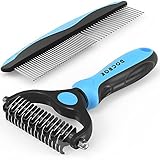
- 【Easy Dematting and Deshedding Tools】: Our Grooming brush and comb combo help effortlessly dematting and reduces shedding. A must have dog brush for shedding, pet supplies, cat supplies, dog supplies metal comb for dogs shedding.
- 【Safe Design】: Soft and protective edge brush and comb creating a comfortable feeling while detangling matted hair and deshedding without hurting your pet. Perfect metal comb for dogs, dematting comb for cats, undercoat rake for dogs double coat.
- 【2-in-1 Rake】: Our undercoat rake is perfect for medium and long-haired dogs and cats and other double coat pets. Wide side for easy dematting, dense side for deshedding. Well made deshedding tool, grooming brush and deshedder brush for dogs.
- 【2-in-1 Comb】: Wide sided for comb knot, smoothing and modeling your pet's hair, dense side for removal of loosen hair, you can use it on the legs, head or tail of your pets where the brush can’t. Perfect metal comb for dogs, dematting comb for cats deshedding tool for dogs.
- 【Sturdy and Comfortable Design】: Premium Stainless steel metal teeth and compact design make our product sturdy and durable. High-quality & lightweight TPR handle make your grooming effortlessly. High-quality undercoat rake for dogs double coat, metal comb for dogs, dematting comb for cats, dog comb for matted hair.
Dense undercoats can also hide tangles beneath a coat that looks smooth on top. A brush that only passes over the surface may not be reaching the hair closest to the skin.
Missed brushing and shedding
Loose hairs caught in the surrounding coat can twist together as the cat moves. Indoor cats may shed throughout the year, while seasonal shedding can produce a sudden increase in loose undercoat. Without enough brushing, that hair compacts into mats.
Reduced self-grooming
Cats normally spend substantial time maintaining their coats. When grooming declines, matting may be one of the first visible signs that something has changed. Possible reasons include:
- Arthritis or another painful mobility problem
- Older age or general weakness
- Obesity, especially when the cat cannot reach its hindquarters
- Dental pain, stomatitis, or advanced periodontal disease
- Skin disease, allergies, parasites, itching, or wounds
- A systemic illness
A short-haired cat that suddenly develops mats, or a cat that stops grooming normally, should not simply be assumed to be getting old or “lazy.” A veterinary examination may be needed.
Moisture, dirt, and debris
Water can tighten an existing tangle. Burrs, grass awns, feces, urine, skin flakes, and other debris can become embedded in the coat and bind the hairs together. If your cat needs a bath, remove tangles first; bathing an already matted coat can make removal more difficult.
Fleas and skin conditions
Fleas, flea allergy, infections, and other itchy skin conditions can cause scratching, licking, biting, hair loss, and abnormal grooming. These changes can create mats, while the mat itself may conceal the underlying problem. Black specks that resemble ground pepper may be flea dirt—dried blood left by fleas.
Free tools Windows power users keep installed
One-click scans. No signup required.
Is matted fur normal?
Occasional loose tangles can happen, particularly in a long-haired cat. Dense, recurrent, painful, or widespread matting is not something to consider normal or harmless.
Also popular on Amazon

- COMPLETE GROOMING COMBO: Includes our dual-sided deshedding brush and a premium metal comb to effortlessly remove stubborn mats, tangles, and loose hair.
- 2-IN-1 METAL COMB: The included stainless steel comb features dual-density teeth perfect for detailed detangling on sensitive areas like the face, paws, and tail.
- DUAL-SIDED DEMATTING BRUSH: Start with the 9-teeth side for stubborn mats and tangles, then finish with the 17-teeth side for thinning and deshedding to reduce shedding by up to 95%.
- SKIN-FRIENDLY DESIGN: Both tools feature rounded, scratch-free teeth that gently massage your pet's skin, ensuring a pain-free and comfortable grooming experience.
- COMFORTABLE & DURABLE: Designed with a soft, ergonomic anti-slip grip for comfortable, long grooming sessions for both cats and dogs of all hair types.
Mats can:
- Pull on the skin and cause pain
- Cause redness, inflammation, sores, or infection
- Hide fleas, wounds, lumps, or other skin problems
- Restrict movement
- Trap moisture, feces, or urine against the skin
- Interfere with circulation if wrapped tightly around a limb or tail
A severe mat around the hind end can make defecation difficult. A cat with extensive matting may need clipping by a veterinarian rather than an attempt at home grooming.
How to tell a tangle from a true mat
A loose tangle may separate gently with your fingers or allow a wide-toothed comb to pass through with little resistance. A true mat is compact, dense, and usually attached close to the skin. It may feel firm and rough, with no clear way to slide a comb beneath it.
Do not keep pulling at a dense mat to test it. Repeated tugging hurts, can damage the skin, and may turn a short grooming session into a frightening struggle.
How to detangle a cat’s fur safely
For a small, loose tangle
- Keep the coat dry. Do not wet the fur first.
- Choose a calm location. Work when your cat is relaxed, and keep the session brief.
- Separate the outer hairs with your fingers. Gently tease apart the ends rather than pulling from the skin.
- Comb from the ends toward the skin. Use a suitable cat brush or wide-toothed metal comb, making gradual progress.
- Stop at the first sign of trouble. Stop if the cat becomes distressed, the comb catches firmly, or the skin looks irritated.
- Reward cooperation. Give a treat or another reward while your cat is still calm.
Armpits, bellies, rear legs, and tails are particularly sensitive. Never force a cat through grooming or restrain it aggressively. A struggling cat can be injured, and the person grooming can be bitten or scratched.
For a dense or extensive mat
Do not attempt to pull out a tight mat with a comb. Large, numerous, painful, or skin-adherent mats are best removed by an experienced cat groomer or veterinarian. A frightened or painful cat may not remain still safely, and a veterinary team may need to use sedation or perform the removal as a medical procedure.
Why scissors are dangerous
Never cut a cat’s mat with scissors. The skin can be pulled up into the clump, making it impossible to see where the skin ends and the mat begins. Cats can also jerk suddenly. Even a careful-looking snip can cause a deep laceration or puncture wound.
Electric clippers used by a trained professional are safer for close mats. A mat splitter is not automatically safe: its blade can also cut the skin if used incorrectly. It should not be used on a tight mat or an uncooperative cat.
Quick wins for a faster PC:
Repair Windows errors before they cause bigger problemsFix Now →Fix the driver behind crashes, sound loss and screen glitchesFind Drivers →Also popular on Amazon

- Removes mats and tangles: The Freshly Bailey Dematting Comb for cats and dogs is a mat remover safe detangler for matted fur that gently tackles tough knots in medium to long-haired pets, saving you costly trips to the groomer.
- Reduces shedding at home: This deshedding grooming tool eliminates loose undercoat and topcoat fur. Regular brushing keeps coats healthy, reduces shedding in your home, and helps prevent painful tangles and mats.
- Gentle for sensitive pets: This dog brush is designed with curved stainless-steel teeth that protect your pet’s skin. Works gently on long-haired cats and medium to long-coated dogs like Goldens, Huskies, and German Shepherds.
- Double sided for thick coats: Our double sided undercoat rake features wide teeth for large mats and narrow teeth for loose fur. Perfect for removing tangles and shedding from Persians, Ragdolls, Aussies, Golden Retrievers, and other long coats.
- Durable and easy to use: Built with sturdy stainless-steel teeth, the Freshly Bailey Dematting and Deshedding Comb for Cats and Dogs is long-lasting and easy to clean. The ergonomic handle makes grooming thick coats more comfortable for owners.
When a matted cat needs veterinary care
Contact a veterinarian rather than trying to remove the coat yourself if you notice:
- Red, swollen, cracked, bleeding, moist, or foul-smelling skin
- Open sores, pus, discharge, or obvious pain
- A mat wrapped around a leg, tail, or other body part
- Feces or urine trapped in the coat
- Widespread or severe matting
- A sudden decline in grooming
- Bald patches, persistent licking, biting, or scratching
- Weight loss, lethargy, poor appetite, stiffness, or difficulty jumping
- Sudden matting in a short-haired cat
The veterinarian can remove the mat safely and investigate why it formed. Arthritis, dental pain, obesity, fleas, infection, allergies, and other illnesses may all need treatment before the coat problem stops recurring.
How to prevent mats from coming back
Match grooming to the coat
Long-haired, silky, curly, and dense-coated cats generally need daily brushing or combing. Short-haired cats usually need less frequent grooming, but they still benefit from regular checks. The correct schedule is not a fixed number of sessions; it is the interval that removes loose hair before it tangles.
A cat that mats despite regular home grooming may need a professional trim or a planned clipping schedule.
Check high-risk areas every day
Run your hands through the coat and inspect the areas most likely to tangle:
| Area | What to look for |
|---|---|
| Behind the ears and collar area | Small knots caused by rubbing and fine hair |
| Chest and armpits | Dense tangles hidden where the front legs move |
| Groin and backs of the legs | Mats caused by friction and limited reach |
| Tail | Compacted undercoat, dirt, or debris |
| Under the tail | Feces, urine, moisture, irritated skin, or fleas |
These checks also help you find skin irritation, flea dirt, wounds, lumps, or areas your cat does not want touched.
Use tools that reach the coat
A suitable brush helps remove loose hair and undercoat, while a metal comb can reveal tangles beneath the visible surface. The right tool depends on coat type and your cat’s tolerance. If the brush glides over the top but the comb catches underneath, ask a veterinarian or professional groomer to recommend a tool and technique.
Also popular on Amazon

- DUAL-SIDED DESIGN: Our Undercoat Rake Dog brush is perfect for deshedding your pet's coat. Designed with a dual-sided design, start with a 9-teeth side to tackle stubborn mats and tangles, and finish with a 17-teeth side to thin out and deshed after.
- HEALTHY COAT AND REDUCED SHEDDING: Our deshedding brush for dogs is designed with sharpened but finely rounded teeth that allow you to easily and safely remove mats, tangles, knots, and loose hair without irritation or scratching.
- EFFECTIVE DESHEDDING TOOL: This dematting and deshedding brush gently removes loose hair and eliminates tangles, knots, dander, and trapped dirt. The perfect cat grooming tool solution for pets with thick fur or dense double coats.
- COMFORTABLE TO USE: Keep your pet clean and healthy with our dog and cat brush for grooming. Designed with a lightweight, comfortable handle and a non-slip rubber base to keep the brush from moving around as you brush your pet.
- PERFECT GIFT FOR PET LOVERS: Our dog comb brush is a must-have grooming products for dogs and cats. A great gift undercoat rake dog for pet lovers who want to keep their fur buddies clean, healthy, and well-groomed!
Make grooming predictable and positive
Start with a few strokes in an area your cat already accepts. Stop before your cat becomes tense, then gradually increase the time over future sessions. Reward calm behavior. Continuing while the cat is escalating, hissing, swatting, or struggling can create a lasting fear of grooming and increase the chance of injury.
Do these 3 things before closing this tab:
1Fix the driver behind crashes, sound loss and screen glitches2Clear out junk files and repair common Windows errors3Scan for outdated or missing drivers - takes under a minuteDeal with the underlying cause
Recurring mats are a reason to reassess more than the brush. Your cat may need weight management, pain control, dental treatment, parasite control, treatment for a skin condition, or a professional haircut. Removing the visible mat without addressing the reason it formed often leads to the same problem returning.
Independent reader supportYour contribution helps us test, update, and keep practical guides available for everyone.Bathing and product safety
Most healthy adult cats rarely need baths. When bathing is necessary, remove mats and tangles beforehand, use a shampoo made for cats, rinse thoroughly, and dry the coat safely. Human shampoo can irritate or dry feline skin, and leftover product may be swallowed when the cat grooms.
Do not use essential oils, concentrated “natural” oils, or unapproved detangling products on a cat. Cats can absorb or ingest substances from their fur. Tea tree, citrus, pine, peppermint, eucalyptus, clove, wintergreen, and cinnamon oils are among the oils that can be toxic to cats. If a potentially toxic product has been applied, contact a veterinarian or an animal poison service promptly.
Common mistakes about cat mats
| Claim | What is actually true |
|---|---|
| “Cats groom themselves, so brushing is unnecessary.” | Long-haired, elderly, overweight, painful, or ill cats may not groom effectively. |
| “Every mat can be brushed out.” | Small loose tangles may be manageable; dense mats often need clipping or professional removal. |
| “Scissors are fine if I am careful.” | The skin may be hidden inside the mat, and a sudden movement can cause a serious cut. |
| “A bath will loosen the mat.” | Water can tighten an existing mat and make it harder to remove. |
| “A matted cat always has to be shaved.” | Minor tangles may be groomed out, but dense, painful, or extensive mats may need clipping for safety. |
FAQ
Can I brush out a matted cat’s fur at home?
Only attempt a small, loose tangle on a dry coat. Gently separate the ends with your fingers, then work gradually with a suitable brush or wide-toothed comb. A dense, painful, skin-adherent, or extensive mat should be removed by a veterinarian or experienced cat groomer.
PC Slower Than It Used to Be?
A free scan shows the junk files, broken settings and background clutter dragging Windows down - then fixes them in one click.Free scan · Windows 10 & 11Crashes, No Sound, or Screen Glitches?
Random freezes, missing sound and display glitches usually trace back to one bad driver. Find and replace yours safely.Free scan · under a minuteCan I use scissors to remove a cat’s mat?
No. The skin can be pulled into the mat and is easy to cut, while a sudden movement can cause a deep injury. Professional removal with appropriate clippers is safer.
Why does my short-haired cat suddenly have matted fur?
Sudden matting can reflect reduced grooming caused by pain, arthritis, dental disease, obesity, illness, fleas, allergies, infection, or another skin problem. A veterinary check is appropriate, especially if grooming has declined or other symptoms are present.
How often should I brush my cat to prevent mats?
Long-haired, silky, curly, and dense-coated cats generally need daily brushing or combing. Short-haired cats usually need less frequent grooming. Check the coat daily and adjust the schedule so loose hair is removed before it forms tangles.
The Bottom Line
Small, loose tangles can sometimes be managed patiently on a dry coat, but dense mats should never be yanked, soaked, or cut with scissors. Have painful, widespread, skin-adherent, or suddenly recurring mats assessed by a veterinarian. Daily checks of the trouble spots, coat-appropriate brushing, and treatment of any underlying health problem are the best ways to keep them from returning.





Leave a Reply