Free tools Windows power users keep installed
One-click scans. No signup required.
What causes fin rot in fish? Fin rot is damaged, fraying, or eroding fin tissue caused by a combination of bacterial disease, fungal involvement, physical injury, and stress. Poor water quality, immature filtration, aggression, sharp décor, crowding, low oxygen, transport, and abrupt temperature changes commonly make fin problems worse.
Because “fin rot” describes a sign rather than one confirmed diagnosis, the first response is to test the aquarium and look for injury. Correcting water quality and removing ongoing stressors are part of treatment, even when a veterinarian later recommends medication.
Key takeaways
- Fin rot describes fraying or loss of fin tissue and can result from bacterial disease, fungal involvement, physical injury, or environmental stress.
- Poor water quality, organic waste, immature biofiltration, crowding, low oxygen, transport, temperature changes, and aggression can predispose fish to fin damage and infection.
- Test ammonia, nitrite, nitrate, pH, temperature, and any species-specific parameters before choosing medication.
- A torn fin does not prove that bacteria caused the problem; sharp décor, fin-nipping, filter damage, and rough handling can produce similar early signs.
- Culture and antimicrobial susceptibility testing are especially valuable when disease is serious, recurrent, spreading, affects valuable fish, or fails to improve.
- Rapid deterioration, ulcers, abnormal breathing, loss of appetite, multiple affected fish, or deaths warrant an aquatic veterinarian or fish-health specialist.
What causes fin rot in fish?
Fin rot usually develops when damaged fin tissue is exposed to unfavorable aquarium conditions and opportunistic microorganisms. In freshwater fish, Aeromonas and Pseudomonas are commonly associated with bacterial disease; in marine fish, Vibrio is more commonly associated. Those organisms are possible causes, not proof of the diagnosis in one aquarium.
The phrase “fin rot” is therefore best understood as a description of frayed, eroding, discolored, or missing fin tissue rather than the name of one single disease. The underlying problem may be bacterial infection, fungal involvement, a physical tear, parasites, environmental toxicity, or several factors at once. Merck Veterinary Manual’s overview of bacterial fish diseases links outbreaks with poor water quality, organic loading, handling and transport, marked temperature changes, low oxygen, and other stressful conditions.
#1 Best Overall

- Contains one (1) API LIQUID SUPER ICK CURE Freshwater and Saltwater Fish Medication 4-Ounce Bottle
- Treats "ich" white spot disease in fish and secondary bacterial fish infections
- Quickly kills ich parasite, typically within 24 hours of first dose
- Use only in freshwater and saltwater aquariums not with reef aquariums
- Dose every day for five days when symptoms first start occurring
Which aquarium problems make fin rot more likely?
Environmental stress is often the part of fin rot that an aquarist can correct most quickly. Stress does not automatically create an infection, but it can weaken the fish’s defenses, injure the protective surface of the body, and allow organisms already present in the water to invade damaged tissue.
| Risk factor | How it can contribute | What to check |
|---|---|---|
| Poor water quality | Toxic or irritating conditions stress fish and damage gill or surface function. | Ammonia, nitrite, nitrate, pH, temperature, chlorine or chloramine, and salinity where relevant. |
| Immature or disrupted biofiltration | Ammonia and nitrite can rise when the biological filter is not established or has been damaged. | Recent tank setup, filter-media replacement, aggressive cleaning, or unexplained nitrogen readings. |
| Organic waste and overfeeding | Decaying food and waste degrade water quality and increase the aquarium’s biological load. | Uneaten food, detritus, dead plant matter, stocking level, and feeding amounts. |
| Low dissolved oxygen | Hypoxia adds physiological stress and is associated with bacterial-disease outbreaks. | Surface gasping, poor circulation, blocked filters, excessive stocking, and inadequate aeration. |
| Crowding and aggression | Fighting and fin-nipping cause direct tears and chronic stress. | Chasing, hiding, bite marks, incompatible tankmates, and insufficient space. |
| Temperature or pH changes | Rapid changes stress fish and can make existing disease more difficult to control. | Recent water changes, heater problems, transport, or differences between replacement water and tank water. |
| Transport or rough handling | Handling can remove protective mucus and damage skin or fins. | Recent purchase, transfer, netting, breeding activity, or repeated relocation. |
| Sharp décor or strong flow | Objects and equipment can tear delicate fins, especially in long-finned fish such as bettas. | Jagged ornaments, rough plastic plants, exposed intakes, and filter flow that pushes or traps the fish. |
Can poor water quality cause fin rot?
Yes. Poor water quality is a major environmental contributor to fish disease, and water quality should be the first investigation when fin tissue begins to fray. Check the water rather than relying on its appearance: clear aquarium water can still contain harmful ammonia or nitrite.
New-tank syndrome is an important example. Merck Veterinary Manual describes new-tank syndrome as often occurring during the first 1 to 3 weeks after a new aquarium is set up, when the biological filter may not yet process fish waste adequately. Merck also describes a total ammonia nitrogen reading of 2 mg/L or higher as a threshold for at least a 50% water change in new-tank-syndrome management. That threshold is not a universal instruction for every aquarium; pH, temperature, species, source-water chemistry, and the test method affect the risk and the appropriate response.
Merck’s environmental-disease reference identifies unionized ammonia above 0.05 mg/L as harmful to fish because histologic gill changes have been demonstrated at that level. Total ammonia and unionized ammonia are not interchangeable readings, so interpret a result in light of pH and temperature. When ammonia or nitrite is detected, correct the underlying filtration and waste problem rather than treating only the fin.
Quick wins for a faster PC:
Fix the driver behind crashes, sound loss and screen glitchesFind Drivers →Repair Windows errors before they cause bigger problemsFix Now →Scan for outdated or missing drivers - takes under a minuteDriver Scan →An aquarium water test kit can help you check ammonia, nitrite, nitrate, pH, and other parameters before deciding what the fish needs. A test kit supports diagnosis; it does not treat fin rot.
Rank #2
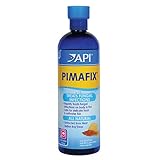
- Contains one (1) API PIMAFIX Antifungal Freshwater and Saltwater Fish Remedy 16-Ounce Bottle
- Rapidly and safely treats fungal infections on body and fins of fish
- Contains all-natural extract from West Indian Bay Trees to help with fungus and cottony growth
- Helps heal internal and external bacterial infections in freshwater, saltwater and reef aquariums
- Use daily for a week when treating infections
Can a torn fin be mistaken for fin rot?
Yes. A localized, clean tear that appears immediately after transport, fighting, fin-nipping, or contact with sharp décor may be trauma rather than an established infection. The distinction becomes less clear when the edge continues to erode, turns red or dark, develops a cottony coating, or is accompanied by poor appetite, lethargy, ulcers, or abnormal breathing.
Physical damage can also become the starting point for secondary infection. Dr. Marrow of the University of Illinois College of Veterinary Medicine explains: “Rough handling can cause disruption of the mucus and the skin, allowing pathogens from the water all around them to get into their body and cause disease.” The statement appears in the university’s guidance on caring for and feeding pet fish.
Inspect decorations, filter intakes, tank dividers, and tankmates. Bettas and other long-finned fish are particularly vulnerable to tears from sharp surfaces and excessive flow. Remove or cover hazards and reduce aggression before assuming medication is the solution.
Recommended Free Tools
Which microorganisms are associated with fin rot?
Bacterial disease is commonly associated with fin and tail lesions, but a suspected pathogen found in an aquarium does not automatically establish that the organism caused the illness. Aeromonas and Pseudomonas are common freshwater-associated bacterial genera, while Vibrio is more commonly associated with marine fish. UF/IFAS also lists Aeromonas hydrophila, Aeromonas salmonicida, Flavobacterium columnare, Vibrio, and Pseudomonas among common gram-negative fish pathogens in its ornamental-fish antibiotic guidance.
Fungal involvement, parasites, and noninfectious injury can produce overlapping signs. Visual inspection alone usually cannot identify the responsible organism. A diagnosis based only on the label “fin rot” is therefore less reliable than a diagnosis that combines the fin’s appearance, water-test results, recent events, the number of affected fish, and the fish’s overall condition.
Rank #3
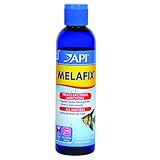
- Contains one (1) API MELAFIX Freshwater Fish Bacterial Infection Remedy 4-Ounce Bottle
- Heals bacterial infections and repairs damaged fins, ulcers and open wounds
- Contains natural, botanical tea tree extract to quickly and rapidly help fish
- Helps treat newly-introduced fish to reduce risk of disease outbreak in freshwater aquariums
- Use daily for a week when treating infections and for 3 days as a preventive when adding new fish
How should you investigate suspected fin rot?
Investigate the aquarium and the fish together. Choosing medication before checking the environment can leave the main cause in place and expose fish, plants, invertebrates, or biofilter bacteria to unnecessary treatment.
- Test ammonia and nitrite first. Then check nitrate, pH, temperature, chlorine or chloramine in replacement water, salinity for marine systems, and other parameters required by the species.
- Inspect the fin closely. Note whether the damage is a single tear, fraying from the edge, progressive erosion, redness, ulceration, discoloration, or a coating.
- Search for trauma. Check sharp décor, exposed filter intakes, excessive flow, fin-nipping, fighting, crowding, and recent netting or transport.
- Review recent changes. Consider a new fish, a missed water change, increased feeding, a filter-media replacement, aggressive filter cleaning, a heater failure, or an abrupt pH or temperature change.
- Assess the whole fish. Hiding, rubbing, surface gulping, rapid or abnormal breathing, unusual coloration, lethargy, loss of appetite, ulcers, or multiple affected fish suggest a broader problem.
- Decide whether isolation is practical. A quarantine or hospital tank can permit closer observation and controlled treatment, but the separate system still needs stable temperature, oxygenation, filtration, and water quality appropriate for the species.
What is the safest first response to fin rot?
The safest first response is to stop ongoing injury, correct measurable water-quality problems carefully, stabilize the aquarium, and monitor progression before reaching for medication.
| Situation | Priority response | Why |
|---|---|---|
| Ammonia or nitrite is detectable | Address the nitrogen problem with appropriate water changes, reduced feeding, and biofiltration review. | Toxic nitrogen compounds can keep fish stressed while fin treatment does nothing to remove the cause. |
| A sharp object or aggressive tankmate is present | Remove the hazard or separate the aggressor and observe the injured fish. | Continued trauma prevents healing and can create new entry points for pathogens. |
| Only one fish has a small, recent tear and behaves normally | Improve husbandry, remove hazards, maintain stable conditions, and monitor closely. | A physical injury may not require antimicrobial treatment. |
| Several fish are affected or fins are rapidly eroding | Seek fish-health or veterinary advice and prepare diagnostic information. | An outbreak or systemic problem is more likely than an isolated tear. |
| Ulcers, severe lethargy, appetite loss, abnormal breathing, or deaths occur | Escalate promptly to a veterinarian familiar with fish or an aquatic-health specialist. | These signs suggest disease beyond localized fin damage. |
Make water corrections carefully. A sudden change in temperature, pH, or source-water chemistry can add another stressor, so replacement water should be prepared appropriately for the species and aquarium. Merck’s aquarium-fish management guidance supports regular testing, appropriate water changes, reduced feeding when indicated, and evaluation of biofiltration.
Should you use antibiotics for fin rot?
Antibiotics are not automatic treatment for fin rot. Antibiotics can help when a susceptible bacterial infection is actually present, but they will not repair a sharp decoration, eliminate ammonia, correct crowding, or treat every condition that resembles fin rot.
UF/IFAS describes antibiotics as “tools and not ‘magic bullets.’” The usefulness of an antibiotic depends on whether bacteria are involved, whether the bacteria are susceptible to the selected drug, whether the dose and treatment interval are correct, and whether the contributing stressors have been removed. The extension guidance recommends culture and antimicrobial susceptibility testing when selecting an antibiotic, particularly for valuable fish, repeated treatment failure, spreading disease, systemic signs, or serious outbreaks.
Rank #4

- CLEARS ICK: Soothing conditioner that quickly clears ick, or white spot, on freshwater fish.
- FIZZ TABS: Fast-dissolving, pre-measured tablets make caring for your aquarium easy.
- PROTECTS FISH: Contains special ingredients to protect fish against secondary infections.
- FAST AND SAFE: No need to raise water temperature – see product label for complete directions for use.
- USAGE: Treats up to 80 gallons of aquarium water.
In the United States, medication legality requires additional caution. The U.S. Food and Drug Administration states that antibiotics sold in pet stores or online for ornamental fish have not been approved, conditionally approved, or indexed by FDA, and warns that unapproved products may not have been evaluated for safety or effectiveness. The FDA also cautions that inappropriate use of medically important antimicrobials contributes to antimicrobial resistance. Rules and product status can differ outside the United States.
Do these 3 things before closing this tab:
1Fix the driver behind crashes, sound loss and screen glitches2Repair Windows errors before they cause bigger problems3Scan for outdated or missing drivers - takes under a minuteDo not assume that a product is approved, safe, effective, or interchangeable merely because it is sold for aquarium use. If a veterinarian recommends a medication, follow the current label and professional instructions, confirm species restrictions and food-fish restrictions, and consider effects on plants, invertebrates, the biofilter, and untreated tankmates. Manufacturer disease charts can describe a company’s recommendations, but those recommendations are not independent proof that every listed product works for every fish.
Independent reader supportYour contribution helps us test, update, and keep practical guides available for everyone.When should you use a quarantine or fish hospital tank?
Use a quarantine or hospital tank when separation will improve observation, prevent aggression or fin-nipping, or allow a controlled treatment that should not expose the display aquarium. Isolation is not automatically safer if the separate tank cannot maintain stable temperature, oxygen, filtration, and water quality.
A hospital setup should match the fish’s species and the expected duration of care. Avoid transferring a stressed fish repeatedly, and avoid moving a fish into an uncycled container with untested water. If multiple fish are affected, investigate the main aquarium even when one fish is isolated; removing one visibly sick fish does not correct a contaminated or stressful environment.
How can fin rot be prevented?
Prevention depends more on stable husbandry than on keeping medication available. Establish biological filtration before stocking heavily, test water routinely and whenever fish become ill, and treat tap water for chlorine or chloramine before it enters the aquarium.
Best Value
- Contains one (1) API LIQUID SUPER ICK CURE Freshwater and Saltwater Fish Medication 1.7 -Ounce Bottle
- Treats "ich" white spot disease in fish and secondary bacterial fish infections
- Quickly kills ich parasite, typically within 24 hours of first dose
- Use only in freshwater and saltwater aquariums not with reef aquariums
- Dose every day for five days when symptoms first start occurring
- Keep stocking, feeding, temperature, pH, hardness, salinity, and water movement appropriate for the species.
- Remove uneaten food, decaying plant material, and accumulated organic waste.
- Quarantine new fish before introducing them to an established aquarium.
- Choose smooth décor and protect fish from exposed filter intakes and excessive flow.
- Reduce crowding, aggression, and fin-nipping.
- Handle fish gently with an appropriate net and avoid unnecessary transfers.
- Do not replace or aggressively clean all biological filter media at once unless a fish-health professional has directed you to do so.
When should you contact a fish veterinarian?
Contact an aquatic veterinarian or fish-health specialist when a fish is worsening, several fish are affected, fin tissue is rapidly disappearing, ulcers or body lesions appear, the fish stops eating, breathing becomes abnormal, disease follows a major water-quality event, or fish begin dying.
Professional help is also appropriate when the cause is unclear, treatment has failed, the fish is valuable, or an outbreak is recurring. A specialist can help determine whether culture and antimicrobial susceptibility testing, microscopy, necropsy, or other diagnostics are appropriate. UF/IFAS recommends involving a fish-health specialist early in an outbreak rather than repeatedly switching medications without a diagnosis.
There is no single universally correct medication, dosage, or recovery time for fin rot. The cited veterinary and extension sources support a multifactorial explanation, environmental correction, cautious diagnosis, and early escalation—but they do not establish a universal prevalence statistic or recovery rate for home aquariums.
Frequently Asked Questions
Is fin rot contagious?
Fin rot can spread between fish when a shared aquarium has an underlying infectious or environmental problem, but frayed fins are not automatically contagious. A torn fin caused by décor or aggression may affect only one fish; multiple sick fish indicate that the aquarium and its conditions need investigation.
What’s actually slowing this PC down?
Pick the symptom - the matching free tool is one click away.
Does fin rot always need antibiotics?
Fin rot does not always require antibiotics. Correct water-quality problems, remove sources of injury, stabilize the aquarium, and monitor a fish with a small recent tear and normal behavior; seek professional advice for progressive erosion, ulcers, systemic signs, multiple affected fish, or treatment failure.
What water tests should you do for fin rot?
Test ammonia and nitrite first, then check nitrate, pH, temperature, chlorine or chloramine in replacement water, salinity when relevant, and species-specific parameters. Clear-looking water can still contain harmful nitrogen compounds.
When should a fish with fin rot see a veterinarian?
A fish veterinarian or fish-health specialist should evaluate fin rot when the fish is deteriorating, several fish are affected, ulcers or abnormal breathing occur, appetite is lost, deaths begin, the problem keeps returning, or treatment fails. Culture and antimicrobial susceptibility testing may help select treatment when bacterial disease is serious.
The Bottom Line
Fin rot is usually a sign that fin tissue has been injured or compromised, not proof of one specific bacterial infection. Test and correct the water, remove physical and social stressors, monitor the whole fish, and seek fish-health advice before using antibiotics when the disease is severe, spreading, recurrent, or not improving.
Outdated Drivers Are Slowing You Down
One free scan finds every outdated or missing driver and matches the right update for your exact hardware.Free scan · exact hardware matchPC Slower Than It Used to Be?
A free scan shows the junk files, broken settings and background clutter dragging Windows down - then fixes them in one click.Free scan · Windows 10 & 11Quick Recap
Product prices and availability are accurate as of the date/time indicated and are subject to change. Any price and availability information displayed on Amazon at the time of purchase will apply.




