
There is no officially accepted equivalent of “pup” or “cub” for a baby platypus. Nestling is the established term for a young platypus developing in its nesting burrow, while puggle is a popular informal label that became widely known after a 2003 captive-rearing success.
Why the name is less simple than “pup” or “cub”
Many mammals have a standard everyday word for their young: foals, calves, kittens or cubs. Platypuses do not. The Australian Platypus Conservancy explains that “there is no officially accepted term – equivalent to pup or cub – to describe a baby platypus.” That is why different articles, captions and zoo announcements may use different labels.
As an Amazon Associate I earn from qualifying purchases.
When precision matters, nestling is the most useful choice for the young animal while it is still developing in the nesting burrow. You will also see puggle, especially in popular writing and media coverage. It is a charming, recognizable nickname, but it is not an official universal name adopted by zoological authorities.
Recommended Free Tools
| Term | What it means | How to use it |
|---|---|---|
| Nestling | A young platypus developing in its nesting burrow. | Best term when describing the developmental stage or maternal-care period. |
| Puggle | An informal popular label for a baby platypus. | Fine in casual writing if you explain that it is not an official equivalent of “pup” or “cub.” |
| Hatchling | A descriptive word for an animal that has emerged from an egg. | Useful for explaining the egg stage, but not a formal species-specific name. |
The word puggle entered public use after staff at Taronga Zoo used it in 2003 while publicizing the successful captive rearing of platypus twins. That history explains its popularity without making it a scientific title.
#1 Best Overall

- Size: 12inches (30cm)
- A cute stuffed plush fat platypus toy, cute design, soft touch, round cute style, to accompany you warmly.
- The platypus plush toy is filled with high elastic down cotton, which is full of elasticity and is not easily deformed. It is very suitable for hugs. It is the perfect gift for close friends and children, Valentine's Day, Christmas and birthday.
- You can place it anywhere, such as the bedroom, living room, home, office, chair, etc. With it, this winter is no longer cold.
- After receiving the parcel, you need to tap the body of the plush duck several times, it will be restored to its original state, as cute as we described.
Platypus babies are mammals that begin life in eggs
Platypuses are monotremes, a very small mammal group that reproduces by laying eggs. The Australian Museum describes monotremes as different from other mammals because they lay eggs and have no teats. A baby platypus therefore starts life in a way that combines two features readers often think of as belonging to separate animal groups: it hatches from an egg, then drinks milk supplied by its mother.
The hatchling is tiny and highly immature rather than a miniature, ready-to-swim adult. Its early development continues inside a protected nesting burrow. That arrangement is crucial: the egg stage ends before the young animal has completed the growth and coordination needed for life outside the burrow.
Calling the animal a “baby platypus” is therefore accurate, but it hides an unusual sequence. The young first develops as an embryo in an egg, hatches, remains dependent in the burrow and only later makes its first entry into the water.
Quick wins for a faster PC:
Fix the driver behind crashes, sound loss and screen glitchesFind Drivers →Clear out junk files and repair common Windows errorsFree Scan →Scan for outdated or missing drivers - takes under a minuteDriver Scan →How a mother feeds a hatchling without nipples
Female platypuses do not have nipples. Instead, milk is secreted through pores in the skin on the abdomen. The milk wets the surrounding fur, and the young feed from that fur rather than attaching to a teat. This is one of the defining biological details of monotremes and a major reason platypus reproduction does not fit ordinary mammal expectations.
Rank #2

- Ready to swim into fun-filled play, this realistic stuffed animal platypus features a lifelike bill, webbed feet and a soft furry body.
- Known for its Australian roots, this soft platypus plush toy is ready to become mates with kids of all ages.
- Get to know the quirky traits of the wild with this platypus stuffed animal with a long, fluffy tail and playful eyes.
- Bring wildlife adventures to play with this platypus plush made with durable stitching and recycled materials.
- Combining play with Earth-sustaining practices, The Petting Zoo is committed to providing little ones with cute and cuddly plush toys that are made from recycled water bottles.
The arrangement works particularly well for a burrow-dwelling newborn. A mother can provide milk in the nest while the young remains sheltered, without exposing a vulnerable hatchling to open water or requiring the mother to carry it to a visible feeding site. The baby’s dependence is substantial: it needs the protected nest, maternal milk and time to develop before it can leave.
Because the milk reaches the fur through pores, descriptions that say a platypus “nurses from nipples” are incorrect. “Feeds on milk secreted onto the abdominal fur” is the more accurate explanation.
From egg to first swim: the development timeline
Platypus schedules are estimates and observed averages, not a timetable every individual follows exactly. The Australian Platypus Conservancy’s reproduction and vital-statistics pages provide broad reference figures, while a captive study offers a more specific measurement from animals observed over multiple breeding seasons.
Free tools Windows power users keep installed
One-click scans. No signup required.
- Eggs are laid in a nesting burrow. Typical clutches contain one to three eggs, with two most often reported by the Australian Platypus Conservancy.
- Incubation lasts about 10–11 days. This is an estimated incubation period, not a guarantee for every clutch or every season.
- The hatchling remains in the burrow. Newly hatched young are very immature and continue growing under maternal care rather than emerging immediately.
- Milk is provided through the mother’s abdominal skin. The young feed from milk spread onto fur because the female has no nipples.
- The young eventually leave for the water. The Conservancy describes approximately three months in the nesting burrow before the first entry into water.
A separate paper, “Maternal care of platypus nestlings (Ornithorhynchus anatinus),” published in Australian Mammalogy in 2020, followed captive breeding across 11 seasons. In that study, the mean age at emergence was 128 ± 1 days. The researchers also reported that 60% of the observed nestlings emerged after weaning. Those numbers describe the animals and conditions in that captive study; they should not be presented as a universal wild-species average. The authors note that rigorous study of maternal care in the wild is difficult because platypus burrows are hard to locate and access. The paper is available from CSIRO Publishing.
Rank #3
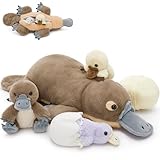
- Adorable Platypus Family Set: This charming set features a mother platypus stuffed animal and three colorful baby platypuses from eggs. Each platypus baby has its own unique color, making the family even more lovable and eye-catching
- Lifelike Design with Intricate Details: Every detail of the platypus family is carefully crafted. The mother platypus toy has expressive, sparkling eyes, a signature flat duck bill, a long, detailed tail, and webbed feet, making it look just like the real thing. The babies are equally adorable, with perfectly formed features and soft, smooth fur
- Soft, Plush, and Cuddly: Made with high-quality materials, this cute stuffed animal set is soft to the touch with a fully filled body, ensuring a cuddly experience. The fur is ultra-smooth, providing a soothing, comforting feel for both kids and adults alike
- CPC Certified Safety: This platypus plush toy is fully compliant with ASTM F963 and CPSIA standards, meaning it meets strict safety requirements. Made with non-toxic materials, it is safe for children of all ages, allowing for worry-free hugs and cuddles
- Versatile Gift and Decor for All Occasions: Whether it is Christmas, Easter, a birthday, or a special celebration, this adorable platypus set makes a delightful gift. It is also a charming decorative piece for platypus lovers, parties, or to add some whimsy to any space
| Milestone | Reference figure | How to interpret it |
|---|---|---|
| Eggs per clutch | 1–3, most often 2 | Typical Conservancy estimate; individual clutches vary. |
| Estimated incubation | 10–11 days | Reference estimate from the Conservancy, not an exact rule. |
| Time in the burrow | Approximately 3 months | General specialist summary before first entry into water. |
| Captive-study emergence age | 128 ± 1 days | Mean from an 11-season captive maternal-care study. |
| Captive nestlings emerging after weaning | 60% | Proportion recorded in that study’s observations. |
What happens during the burrow stage
The nesting burrow is not simply a place where a finished baby waits. It is the setting for the most vulnerable part of development. The young hatch small, remain dependent and gain the physical maturity needed for their first time in the water while concealed from the outside environment.
This hidden stage also explains why platypus family life is difficult to observe directly. Researchers cannot routinely open occupied burrows without disturbing the animals, and entrances do not reveal everything happening underground. As a result, detailed maternal-care evidence is more limited in wild populations than it is for animals that raise young in visible nests.
Emergence is a transition, not a single universal birthday. Some young may leave at different ages, and weaning status can differ. The captive findings are valuable precisely because they attach a number to observations that are otherwise difficult to obtain, but they must retain their study context.
Crashes, No Sound, or Screen Glitches?
Random freezes, missing sound and display glitches usually trace back to one bad driver. Find and replace yours safely.Free scan · under a minutePC Slower Than It Used to Be?
A free scan shows the junk files, broken settings and background clutter dragging Windows down - then fixes them in one click.Free scan · Windows 10 & 11Why baby platypuses look exceptionally cute
The “cute” impression comes from a combination of scale, dependency and developmental proportions rather than from a separate category of animal. A hatchling is extremely small compared with the adult it will become, remains dependent on its mother and has not yet completed the growth needed for an independent aquatic life. Those traits trigger the same protective response people often have toward other young mammals.
Rank #4

- This plush is approx. 7" x 10.5" x 5" in size
- Made from deluxe materials for a cloud-like softness!
- This adorable platypus plush is designed to be similar to the shape of a potato (spud)
- Has a filling as fluffy as your favorite mashed potatoes
- Free from bean pellets, suitable for all ages
There is also a striking contrast between the familiar idea of a mammal and the platypus’s actual life history. A young animal that hatches from an egg, drinks milk from abdominal fur and spends months hidden in a burrow does not fit a simple “tiny adult” picture. Understanding that biology makes photographs and zoo announcements more meaningful: the appealing appearance reflects a demanding developmental stage, not a toy-like pet animal.
Descriptions should still avoid implying that a wild nestling is safe to touch or suitable for private ownership. Its small size signals vulnerability, and the mother–young relationship depends on an undisturbed burrow.
Independent reader supportYour contribution helps us test, update, and keep practical guides available for everyone.Is “puggle” wrong?
No. It is a familiar informal term, and readers will encounter it often. The problem is presenting it as the one official name. If you are writing a caption, classroom worksheet or general-audience article, you can say that “puggle” is a popular nickname and then identify nestling as the established developmental term.
That distinction also prevents a second misunderstanding: a puggle is not a separate kind of platypus. The terms refer to the same young animal; they differ in status and context. “Nestling” emphasizes where and how the young is developing, whereas “puggle” emphasizes popular usage.
Best Value

- This plush is approx. 7.5" x 15.5" x 3" in size
- Made from deluxe materials for a cloud-like softness!
- This light and fluffy Platypus plush makes for a great cuddling partner
- Flopsies are designed to lay resting on its belly for easy, fun play
- To ensure stability and quality, this plush contains bean pellets suitable for all ages
Conservation context for a hidden young animal
The Australian Platypus Conservancy reports the platypus as Near Threatened nationally in Australia and internationally. Its status page also reports different assessments for some states, including Vulnerable in Victoria and Endangered in South Australia. These labels are jurisdiction-specific and can change as official assessments are updated, so a current conservation statement should identify the geography and check the applicable listing at the time of publication. The Conservancy’s status information is at platypus.asn.au/conservation-status/.
For readers, the practical implication is simple: a nestling should be treated as a wild native animal, not as an animal to collect, handle or raise at home. If you find a platypus or an apparently abandoned young animal, keep people and pets away and contact the relevant wildlife authority or licensed wildlife rehabilitator in your area rather than attempting care yourself.
Where to learn more about platypus biology
For a detailed reference beyond the naming question, CSIRO Publishing’s Platypus, Fourth Edition, edited by Tom Grant, covers anatomy, distribution, breeding, venom, sensory systems, ecology, ancestry and conservation. Its publisher page is available here. The Australian Platypus Conservancy also publishes conservation and environmental-education material through its organization website.
Do these 3 things before closing this tab:
1Fix the driver behind crashes, sound loss and screen glitches2Repair Windows errors before they cause bigger problems3Scan for outdated or missing drivers - takes under a minuteThe most accurate short answer remains nuanced: use nestling for precision, recognize puggle as a popular informal label, and remember that the young animal is an egg-born monotreme whose first months unfold in a protected burrow.
Quick Recap
Product prices and availability are accurate as of the date/time indicated and are subject to change. Any price and availability information displayed on Amazon at the time of purchase will apply.





Leave a Reply