
Some links on this page are affiliate links: if you buy through them we may earn a commission, at no extra cost to you.
What fish are compatible with parrotfish? If “parrotfish” means a freshwater blood parrot cichlid, the safer candidates are similarly sized peaceful-to-semi-aggressive fish such as larger tetras, angelfish, oscars, or additional blood parrots—but no pairing is guaranteed. Adult size, temperament, water conditions, space, cover, feeding, and breeding behavior decide the outcome.
“Parrotfish” is also the common name for true marine fishes in the family Scaridae. This article addresses the freshwater blood parrot cichlid first, then explains why marine parrotfish require a separate assessment.
As an Amazon Associate I earn from qualifying purchases.
Do these 3 things before closing this tab:
1Scan for outdated or missing drivers - takes under a minute2Clear out junk files and repair common Windows errors3Fix the driver behind crashes, sound loss and screen glitchesKey takeaways
- Freshwater blood parrot cichlids are hybrid cichlids, and similarly sized peaceful-to-semi-aggressive fish are generally safer companions than tiny, delicate, slow, or highly aggressive fish.
- Commonly suggested blood parrot tank mates include larger tetras, angelfish, oscars, and additional blood parrots, but every pairing depends on the aquarium and the individual fish.
- Adult size, mouth size, temperament, water conditions, aquarium footprint, cover, feeding speed, and breeding behavior matter more than a universal compatibility list.
- Gu ppies, bettas, goldfish, tiny fish, and highly aggressive territorial cichlids are poor choices or require especially strong justification and a separation plan.
- Blood parrots can lose food to faster fish because their small mouths make eating less efficient, so feeding must be observed rather than assumed to be successful.
- True marine parrotfish belong to the family Scaridae and need a separate marine, species-level assessment; freshwater blood parrot advice does not apply to them.
What fish are compatible with parrotfish?
For a freshwater blood parrot cichlid, the safer candidates are similarly sized peaceful-to-semi-aggressive fish such as larger tetras, angelfish, oscars, or additional blood parrots—but no pairing is guaranteed. Adult size, temperament, water conditions, aquarium space, cover, feeding competition, and breeding behavior determine whether a combination remains healthy.
The word “parrotfish” needs clarification. In home-aquarium discussions, the name usually refers to a freshwater blood parrot cichlid, a hybrid cichlid with distinctive body and mouth characteristics. True parrotfish are marine reef-associated fishes in the family Scaridae. The main recommendations below concern freshwater blood parrots, not marine Scaridae.
Popular on Amazon

- PURE SEAWEED NUTRITION — 100% dried green seaweed (no fillers or additives) rich in natural vitamins A, B, C, E and essential trace elements
- IDEAL FOR HERBIVOROUS FISH — Specifically formulated for tangs, surgeonfish, parrotfish, angelfish, butterflyfish, and freshwater herbivores like cichlids and goldfish
- EASY FEEDING IN SHEETS OR FLAKES — Feed whole sheets clipped in tank, or break into flakes for smaller species
- ENHANCES COLOR & VITALITY — Packed with natural vitamins and minerals to support healthy digestion, vibrant coloration, and overall well-being
- ENCOURAGES NATURAL GRAZING — Seaweed sheets allow herbivorous fish to tear and graze at their own pace, supporting a more natural feeding experience
Which blood parrot tank mates are usually the more plausible choices?
The following fish are possibilities, not guarantees. LiveAquaria’s compatibility guidance treats compatibility charts as guidelines rather than promises, because individual fish can differ substantially in temperament.
| Candidate | Why it may work | Important conditions and risks | Practical verdict |
|---|---|---|---|
| Additional blood parrots | They share broadly similar behavior and environmental needs. | Pairs can develop an uneven hierarchy, with one fish dominating the other. Territorial separation and adequate space are important. | Possible, but plan the group and provide shelters; Aquarium Co-Op recommends one, three, or more than three rather than an isolated pair. |
| Larger tetras | Adult larger tetras can occupy open or midwater areas without automatically becoming prey. | Tiny neon-sized or delicate tetras may be eaten, bullied, or outcompeted. Schooling needs and adult size still matter. | Often more plausible than tiny tetras, provided the tetra species is genuinely large enough and the aquarium is suitable. |
| Angelfish | Angelfish are large enough for some community arrangements and can share a spacious aquarium. | Angelfish have their own territorial and fin-related risks. Aggression can increase around spawning. | Conditional; use only with sufficient space, cover, and a way to separate fish. |
| Oscars | Oscars are among the larger cichlids Aquarium Co-Op lists as common blood-parrot tank mates. | Adult size, bioload, aggression, and aquarium footprint make this a demanding combination rather than a routine community pairing. | Possible only for an appropriately planned large system; not a default choice for an ordinary community aquarium. |
| Other peaceful or semi-aggressive cichlids | Some species may match the blood parrot’s size and social intensity. | Compatibility changes with adult size, species temperament, territory, and breeding behavior. | Assess the exact species rather than relying on the label “cichlid.” |
Can blood parrots live with angelfish?
Blood parrots can live with angelfish in some spacious, carefully monitored aquariums, but angelfish are not automatically compatible. Both fish may defend territory, and angelfish can become more assertive when spawning. Provide broken sight lines and shelter, introduce fish gradually, and be prepared to separate them if chasing, fin damage, hiding, or feeding problems persist.
Can a blood parrot live with an Oscar?
A blood parrot can sometimes be kept with an Oscar, but the combination demands particular attention to adult size, aggression, bioload, and aquarium footprint. Aquarium Co-Op lists oscars among possible blood-parrot tank mates; that listing should not be interpreted as a guarantee or as evidence that the pairing suits a small or lightly filtered aquarium.
How many blood parrots can be kept together?
There is no universal number that works in every aquarium. Aquarium Co-Op recommends one, three, or more than three blood parrots rather than an isolated pair because one fish may dominate the other; treat that as the source’s husbandry recommendation, not an absolute rule. The aquarium still needs enough footprint, filtration, shelters, and territorial separation for the actual fish.
An isolated pair can be especially difficult if one fish repeatedly claims the best shelter or excludes the other from food. A group is not automatically safer if the aquarium is crowded. Watch the fish rather than assuming that a particular number prevents aggression.
Also popular on Amazon

- HALF MOON AQUARIUM KIT: Clear plastic, half-moon-shaped front allows for unobstructed viewing.
- IDEAL FOR BETTAS: Bettas require minimal maintenance and make great species for beginners.
- MOVABLE LIGHT: Energy-efficient LEDs can be positioned to light tank from above or below.
- CONVENIENT FEEDING: Clear canopy has a hole to make feeding fish easy.
- PERFECT FOR BEGINNERS: Small aquariums like this 1.1-gallon tank are a great way to get started in the freshwater fishkeeping hobby.
Which fish should you avoid with a blood parrot?
Choose a different companion when the proposed fish is very small, delicate, slow, long-finned, highly aggressive, or unable to share the same water conditions. Aquarium Co-Op specifically advises against guppies, bettas, and goldfish as blood-parrot tank mates.
Recommended Free Tools
- Tiny fish: A blood parrot may be able to swallow a small fish, while even fish it cannot swallow may be harassed or excluded from food.
- Delicate or slow fish: These fish may not tolerate repeated chasing and may lose feeding competition.
- Long-finned fish: Flowing fins can attract nipping or persistent attention, and damaged fins create additional health concerns.
- Highly aggressive cichlids: A more aggressive species can injure the blood parrot or claim the entire aquarium.
- Goldfish: Aquarium Co-Op lists goldfish among fish not to use with blood parrots; the combination should not be treated as a general coldwater-versus-tropical shortcut.
Aqueon cautions against casually mixing community fish with aggressive species. Crowding, inadequate cover, and territorial behavior can turn a seemingly reasonable combination into a stressful one.
What compatibility factors matter more than a species list?
Two fish can look compatible on paper and still fail in a particular aquarium. Aqueon identifies species or origin, territorial behavior, space, cover, and stocking density as important parts of compatibility. Evaluate each proposed tank mate against the following factors.
- Adult size and mouth size: Compare the adult fish, not the size of juveniles at the store. A fish small enough to be swallowed or relentlessly harassed is not a safe companion.
- Temperament: Peaceful-to-semi-aggressive fish are generally more plausible than timid community fish or strongly aggressive cichlids. “Peaceful” alone is not enough if the fish is too small or slow.
- Water conditions: Both species must be able to thrive in the same temperature, pH, hardness, and general water-quality range. Do not add a fish merely because it uses a different part of the aquarium.
- Swimming level and territory: Bottom, midwater, and open-water use can reduce direct competition, but different swimming levels do not eliminate aggression.
- Feeding speed: Blood parrots may eat awkwardly and slowly. A non-aggressive but very fast feeder can still cause chronic underfeeding.
- Footprint and cover: A larger horizontal footprint, caves, décor, shelters, and broken lines of sight can reduce territorial pressure. A larger aquarium does not guarantee peaceful behavior.
- Breeding behavior: Fish that coexist normally may become territorial while spawning or defending eggs. Plan for behavior to change.
How should a new fish be introduced?
Introduce a new tank mate gradually and treat the first days and weeks as an observation period, not as proof of guaranteed compatibility.
- Confirm the exact species and adult size before purchase, especially when a retailer uses a broad name such as “parrotfish,” “tetra,” or “cichlid.”
- Check the aquarium’s current conditions and make sure the filtration, water quality, and available shelters can support additional livestock. PetMD notes that adding fish can change ammonia, pH, and nitrate conditions, so monitor water after an addition.
- Rearrange décor before introduction to disrupt an established territory. Add caves, tall decorations, and visual barriers so fish can retreat and avoid constant eye contact.
- Feed carefully and observe the whole aquarium at feeding time and at different times of day. Confirm that every fish reaches food, not merely that food enters the tank.
- Look for persistent warning signs: repeated chasing, torn fins, rapid breathing, prolonged hiding, refusal to eat, surface crowding, or a fish being excluded from shelter.
- Separate or rehome a persistent bully or chronically stressed fish. Extra décor may help mild territorial tension, but it cannot repair an intrinsically unsuitable combination.
How can feeding competition be prevented?
Blood parrots can be outcompeted even when their tank mates are not overtly aggressive. Aquarium Co-Op explains that blood parrots line up with food and scoop it in, and their small, unusual mouths can make feeding less efficient than it is for faster-feeding fish.
Quick wins for a faster PC:
Clear out junk files and repair common Windows errorsFree Scan →Fix the driver behind crashes, sound loss and screen glitchesFind Drivers →Repair Windows errors before they cause bigger problemsFix Now →Also popular on Amazon
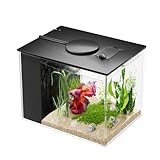
- Perfect Mini Habitat: Measuring just 7.8"L x 5.8"W x 6"H, our space-saving small fish tank with filter and light fits effortlessly on desks, countertops, or shelves. An ideal nano aquarium for bettas, shrimp, guppy fry (like sea monkeys), aquatic plants, or even as a frog habitat, offering versatile usage in any small space
- Vibrant 3-Color LED Lighting: Illuminate your underwater world with adjustable LED lights featuring 3 color modes (white, blue, warm white) and 10 brightness levels. Create the perfect ambiance to showcase your aquatic pets and promote healthy plant growth
- Discreet & Silent Filtration: A concealed filter pump system operates quietly out of sight to keep water crystal clear and well-oxygenated. This self cleaning fish tank design minimizes maintenance while ensuring a healthy environment for delicate fish and shrimp
- Perfect Beginner’s Tank & Present: This all-in-one fish tank starter kit is an ideal choice for first-time owners and makes a wonderful present for young pet enthusiasts. Parents can use this engaging betta tank to introduce youngsters to pet care responsibilities. It also works perfectly as a temporary tank during cleaning or a quarantine space for sick fish
- Convenient Feeding Design: The top cover includes a dedicated feeding opening, allowing easy access for daily feeding without needing to open the entire lid—keeping your fish secure and reducing evaporation
Use appropriately sized food and watch the fish eat. Juveniles may need baby-sized pellets, while larger adults may manage mini pellets; floating pellets can be easier for some blood parrots to approach from below. Aquarium Co-Op’s blood parrot care guide discusses these feeding considerations.
For that reason, mini cichlid pellets or appropriately sized floating cichlid pellets may be useful when the food fits the fish and the other inhabitants do not consume it first. Correctly sized food supports feeding success; food cannot make an aggressive, overcrowded, or otherwise unsuitable fish combination compatible.
Are parrotfish freshwater or saltwater?
“Parrotfish” can refer to either a freshwater blood parrot cichlid or a true marine parrotfish, so the answer depends on the animal being sold. Freshwater blood parrots are hybrid cichlids kept in freshwater aquariums, while true parrotfishes are marine members of the family Scaridae.
The University of Michigan’s Animal Diversity Web describes Scaridae parrotfishes as primarily tropical marine, reef-associated, primarily herbivorous, and often territorial or highly mobile. A marine parrotfish therefore should not be given a freshwater blood-parrot tank-mate list. Species identification, adult size, marine system volume, reef compatibility, grazing behavior, and legal or conservation considerations need to be assessed separately with specialist marine-aquarium guidance.
What’s actually slowing this PC down?
Pick the symptom - the matching free tool is one click away.
What is the safest way to choose a tank mate?
Start with the exact blood parrot’s aquarium rather than with a “top tank mates” ranking. Record the tank’s dimensions and footprint, current inhabitants, filtration, water results, shelters, and each fish’s adult size. Then reject any candidate that is tiny enough to be prey, too aggressive, unable to share the water conditions, or likely to lose every feeding.
Also popular on Amazon
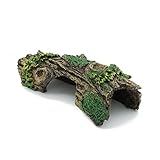
- The natural and detailed bark pattern resin hollow tree trunk ornament is great for nano beta fish and guppies.
- Made of durable resin material and natural brown colors are vivid and not washed out.
- Makes the tank look realistic and add much fun for the fish.
- There are 3 holes on the trunk fish decor, your lovely pet betta or other smaller fish would be super happy to go in and out the trunk cave to sleep, rest, hide, play, breed
- Measures 5.7" x 2.5" x 2.1" (L*W*H). Great for aquarium decorations, model making, terrarium, miniature garden and marine aquariums.
There is no authoritative compatibility percentage or success score for blood-parrot pairings. A responsible recommendation is therefore conditional: choose a plausible species, introduce it gradually, monitor behavior and water quality, and keep a realistic separation or rehoming plan.
Frequently Asked Questions
Can I put small tetras with a blood parrot?
Small tetras are usually a poor choice with a blood parrot because tiny fish may be eaten, bullied, or outcompeted. A genuinely larger tetra species can be more plausible, but its adult size, schooling needs, temperament, and the aquarium’s space must still be evaluated.
Can blood parrots live with angelfish?
A blood parrot can sometimes live with an angelfish, but the pairing is conditional. Both fish may defend territory, and angelfish can become more assertive while spawning, so provide cover and a way to separate them.
PC Slower Than It Used to Be?
A free scan shows the junk files, broken settings and background clutter dragging Windows down - then fixes them in one click.Free scan · Windows 10 & 11Crashes, No Sound, or Screen Glitches?
Random freezes, missing sound and display glitches usually trace back to one bad driver. Find and replace yours safely.Free scan · under a minuteCan a blood parrot live with an Oscar?
A blood parrot can sometimes be kept with an Oscar, but this is a demanding large-cichlid combination. Adult size, aggression, bioload, aquarium footprint, and a backup separation plan are essential considerations.
How many blood parrots can I keep together?
The safest number of blood parrots is not universal. Aquarium Co-Op recommends one, three, or more than three rather than an isolated pair because one fish may dominate the other, but the aquarium must still provide enough space, filtration, and shelters.
Are parrotfish freshwater or saltwater?
A marine parrotfish is not the same animal as a freshwater blood parrot cichlid. True parrotfishes belong to the marine family Scaridae and require species-specific marine-aquarium guidance rather than a freshwater tank-mate chart.
The Bottom Line
Bottom line: The more workable blood parrot companions are similarly sized larger tetras, angelfish, oscars, additional blood parrots, and carefully selected peaceful or semi-aggressive cichlids. None is guaranteed. Avoid guppies, bettas, goldfish, tiny or delicate fish, and highly aggressive cichlids, and judge the pairing by adult size, behavior, feeding access, water conditions, and the aquarium’s actual space.





Leave a Reply