
Do these 3 things before closing this tab:
1Scan for outdated or missing drivers - takes under a minute2Repair Windows errors before they cause bigger problems3Fix the driver behind crashes, sound loss and screen glitchesLake Xochimilco is best understood as a fragmented network of canals, lakes, wetlands, and chinampa-associated waters. Its documented fish community includes native Mexican species as well as introduced tilapia, carp, goldfish, bass, and livebearers—and the exact mix changes from one water body and survey to another.
Lake Xochimilco is not a single, uniform modern lake. It is a connected but fragmented system of canals, lakes, wetlands, chinampas, and managed water bodies in Mexico City. Researchers have recorded both native Mexican fish and introduced species there, and the exact mix varies by water body, survey date, and sampling method.
As an Amazon Associate I earn from qualifying purchases.
The fish most often associated with the present-day Xochimilco system are tilapia and common carp. However, they are not the only fish present. Records also include native charales, the tiro, the pupo, the pez amarillo, goldfish, largemouth bass, and several small livebearing fish.
Fish recorded in the Xochimilco system
The safest way to present the species list is as a documented composite. This does not mean that every species below is abundant—or even present—in every canal.
#1 Best Overall

- QUIET AQUARIUM FILTER: The Tetra Whisper IQ Power Filter with Stay Clean technology contains a sound shield for quiet filtration less than 40 dB.
- SELF PRIMING: Submerged motor starts up with no priming required.
- CAPACITY: The Tetra Whisper IQ 20 Power Filter works in filters up to 20 gallons (130 GPH).
- STAY CLEAN TECHNOLOGY: By maintaining healthy pH levels, creates easier maintenance for healthier fish.
- CARTRIDGE REFILLS: Change cartridges monthly; uses large-sized Tetra Whisper Bio-Bag Filter Cartridges (refills sold separately).
Native, endemic, or historically native fish
| Scientific name | Common name or description | What the records indicate |
|---|---|---|
| Chirostoma jordani | Charal | A native charal recorded in a 2016 Lake Xochimilco fish survey. |
| Chirostoma humboldtianum | Valley of Mexico charal | Identified as endemic in an older official protected-area management plan. |
| Goodea atripinnis | Tiro | Treated as native in the cited research; it was the native species with the greatest parasite richness in that sample. |
| Algansea tincella | Pupo | Listed as endemic in the official management plan. |
| Girardinichthys viviparus | Pez amarillo, or yellow fish | Listed as native in the management plan. |
“Endemic” means a species is naturally restricted to a particular geographic area. In this case, the term refers to fish associated with the Valley of Mexico or its historic freshwater ecosystems, not fish that evolved only in one present-day canal.
Introduced or non-native fish
| Scientific name | Common name | Why it matters |
|---|---|---|
| Oreochromis niloticus | Nile tilapia | A widespread introduced fish considered an important ecological pressure in the canals. |
| Oreochromis aureus | Blue tilapia | An introduced tilapia recorded in official Xochimilco material. |
| Cyprinus carpio | Common carp | An introduced carp associated with cultivation and fish stocking. |
| Carassius auratus | Goldfish | An introduced species recorded in the protected area. |
| Micropterus salmoides | Largemouth bass | An introduced predatory fish listed in the management plan. |
| Gambusia sp. | Small livebearer, often called a mosquitofish | Recorded in the 2016 fish sample; the source reported the genus rather than a confirmed species. |
| Xiphophorus hellerii | Green swordtail | A non-native livebearer recorded in the 2016 study. |
| Poecilia mexicana | Mexican molly | A livebearer recorded in the 2016 study. |
| Poecilia gracilis | Atlantic molly or related livebearer | Common-name treatment varies; the scientific name was recorded in the survey. |
| Pseudoxiphophorus jonesii | Livebearer | Recorded in the 2016 study. |
An official management plan reported 21 fish species in the protected area, but it did not necessarily present all 21 as equally common or equally current. The names above are the best-supported records highlighted in the available historical and recent material.
Are tilapia and carp the main fish in Xochimilco?
For a general visitor, tilapia and common carp are the most important fish to know about. Official Xochimilco material identifies common carp and Nile tilapia as significant fish in the canals and describes Nile tilapia as exotic to the region.
Rank #2

- QUIET AQUARIUM FILTER: The Tetra Whisper IQ Power Filter with Stay Clean technology contains a sound shield for quiet filtration less than 40 dB.
- SELF PRIMING: Submerged motor starts up with no priming required.
- CAPACITY: The Tetra Whisper IQ 45 Power Filter works in tanks up to 45 gallons (215 GPH).
- STAY CLEAN TECHNOLOGY: By maintaining healthy pH levels, creates easier maintenance for healthier fish.
- CARTRIDGE REFILLS: Change cartridges monthly; uses large-sized Tetra Whisper Bio-Bag Filter Cartridges (refills sold separately).
Tilapia are highly adaptable, reproduce successfully, and compete with native animals for food and other resources. Carp can also disturb bottom sediments while feeding, which can affect water clarity and aquatic habitat. These traits help explain why introduced fish can become dominant in altered wetlands.
That does not mean every canal is dominated by the same species, or that carp and tilapia are the only fish people can find. A recent environmental-DNA study detected alien fish throughout parts of the study area while finding native fish and amphibians at lower or more localized levels. The study recovered approximately 60% of historically recorded fish and amphibian species—evidence that some species persist, but also that others may now be scarce, locally absent, or difficult to detect.
Why are native Xochimilco fish difficult to find?
Native fish face several overlapping pressures:
- Habitat degradation: the remaining wetlands are fragmented and heavily modified.
- Pollution and poor water quality: contamination affects fish directly and can reduce the quality of food and shelter available to them.
- Eutrophication: excessive nutrients can cause eutrophic or hyper-eutrophic conditions, changing oxygen levels, plant growth, and the structure of aquatic habitat.
- Urbanization: development and altered water management reduce and isolate suitable habitat.
- Competition and predation: introduced fish may consume native organisms, compete for resources, or alter the food web.
As a result, Xochimilco’s native fish are not merely an identification topic. They are part of a broader wetland-conservation problem. A species may still be recorded in the system without being widespread or secure across it.
Rank #3

- WITH ROTATING BIO-WHEEL: Patented Bio-Wheel technology provides excellent wet/dry biological filtration.
- MULTI-STAGE FILTRATION: Delivers mechanical, chemical and biological aquarium filtration to maintain a clean aquatic environment.
- MARINELAND FILTRATION PRODUCTS: Count on Marineland brand for the most reliable, technically advanced aquariums and accessories on the market.
- COMPATIBILITY: Use with Marineland Rite-Size Filter Cartridges (see individual filter for sizing recommendations).
- FIVE SIZES: Available in 75 GPH, 100 GPH, 150 GPH, 200 GPH and 350 GPH sizes.
Why do sources name different charales?
Readers may notice that one source names Chirostoma jordani, while an older official document identifies Chirostoma humboldtianum as the endemic Valley of Mexico charal. Both names should be preserved with their source and date rather than silently treated as interchangeable.
Recommended Free Tools
The difference could reflect changing taxonomic interpretations, historical records from different parts of the wider wetland system, or differences in what researchers sampled. Recent environmental-DNA work has detected native charal sequences and a smaller amount of evidence associated with C. humboldtianum, but that does not by itself establish that both species are equally abundant in every part of Xochimilco.
For that reason, the most accurate wording is that both Chirostoma jordani and Chirostoma humboldtianum appear in the literature on Xochimilco and the Valley of Mexico, with the records differing by source and period.
Rank #4
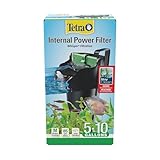
- INTERNAL POWER FILTER: Tetra Whisper Internal Power Filter for 5- to 10-gallon aquariums uses medium Whisper BioBag filter cartridges that are easy to change.
- QUIET 85 GPH MOTOR: The internal pump efficiently filters up to 85 gallons per hour.
- POWERFUL FILTRATION: Water flows through the cartridge floss, trapping debris and fish waste, while Ultra-activated carbon helps remove odor and discoloration.
- SPACE-SAVING DESIGN: Your aquarium can be 1” from the wall with the internal filter designed to clip directly on your aquarium wall and be hidden by décor.
- EASILY ADJUSTABLE: Adjustable clip allows for a variety of setups to easily adjust to high or low water levels.
What did the 2016 fish survey record?
A peer-reviewed 2016 study sampled fish in Lake Xochimilco and reported these named taxa:
- Oreochromis niloticus
- Cyprinus carpio
- Gambusia sp.
- Pseudoxiphophorus jonesii
- Xiphophorus hellerii
- Poecilia mexicana
- Poecilia gracilis
- Goodea atripinnis
- Chirostoma jordani
That survey is useful evidence of fish recorded at sampled locations and at that time. It should not be read as a complete census of every canal or as proof that all historically reported species remain common. Fish surveys and environmental-DNA surveys answer somewhat different questions: a net sample records captured animals, while environmental DNA can detect traces left in water even when animals are difficult to observe.
Is the axolotl a fish?
No. The axolotl, Ambystoma mexicanum, is an amphibian. It is strongly associated with Xochimilco and is an important conservation symbol, but it should not be included in a list of fish. The rana de Tláloc and rana de Moctezuma are amphibians as well.
Best Value

- UNASSEMBLED REPLACEMENT CARBON FILTER Keeps aquarium water crystal clear – removes odors and discoloration
- CATCHES DEBRIS Dense dual-sided mesh filters debris and fish waste
- FITS TETRA WHISPER WATER FILTERS Color coded to make it simple to remember which replacement cartridge size to purchase
- CONVENIENT Easy to assemble and easy to replace
- USAGE Change monthly or sooner if needed
These animals can be discussed alongside Xochimilco’s fish because they share the wetland ecosystem and face many of the same pressures. Their presence in a biodiversity article does not change their biological classification.
Bottom line
The Xochimilco system contains a mixture of introduced fish—especially Nile tilapia, blue tilapia, common carp, goldfish, largemouth bass, and several livebearers—and native or historically native Mexican fish, including charales, the tiro, the pupo, and the pez amarillo. Introduced fish are prominent in recent records, while native species are generally more localized and conservation-sensitive. Because Xochimilco is a network of changing canals and wetlands rather than one uniform lake, no single species list should be assumed to describe every location.
Frequently Asked Questions
What are the most common fish in Lake Xochimilco?
The best-supported records include Nile tilapia, blue tilapia, common carp, goldfish, largemouth bass, several livebearers, native charales, Goodea atripinnis, Algansea tincella, and Girardinichthys viviparus. The full documented list varies by source and location.
Is the Xochimilco axolotl a fish?
No. The axolotl is an amphibian. It is associated with Xochimilco’s wetlands but does not belong on a fish list.
Why do sources list different Xochimilco charales?
Sources differ: a 2016 study recorded Chirostoma jordani, while an older official management plan identified Chirostoma humboldtianum as the endemic Valley of Mexico charal. The records should be attributed to their respective sources rather than treated as unquestionably identical.
The Bottom Line
In short: Xochimilco’s recorded fish community includes native charales and other Mexican fish alongside introduced tilapia, common carp, goldfish, largemouth bass, and small livebearers. Tilapia and carp are especially important today, but the exact species mix varies among canals and surveys. The famous axolotl is an amphibian, not a fish.
Quick Recap
Product prices and availability are accurate as of the date/time indicated and are subject to change. Any price and availability information displayed on Amazon at the time of purchase will apply.
Quick wins for a faster PC:
Scan for outdated or missing drivers - takes under a minuteDriver Scan →Clear out junk files and repair common Windows errorsFree Scan →




Leave a Reply