
Some links on this page are affiliate links: if you buy through them we may earn a commission, at no extra cost to you.
Yes—some ordinary home hazards can seriously injure or kill aquarium fish, but the risk is specific rather than universal. Indoor pesticide foggers can carry aerosol into pumps and open water; untreated municipal water can expose fish to chlorine or chloramine; and copper can leach from plumbing into source water. Other household fumes deserve sensible precautions, yet available evidence does not prove that every cleaner, candle, pan or smell routinely poisons aquarium fish.
The safest approach is to separate established hazards from plausible-but-unproven ones, then match each risk with a practical control. Never add replacement water until it has been treated for the disinfectants your supplier uses, and never assume a tank lid alone makes pesticide treatment safe.
As an Amazon Associate I earn from qualifying purchases.
Recommended Free Tools
Quick risk guide: nine things to check
| Hidden household source | What is established | First response |
|---|---|---|
| Bug bombs (total-release foggers) | Fine pesticide mist can circulate into fish-tank pumps and water. | Remove people and animals as directed; cover the aquarium, isolate air handling and follow the product label. |
| Handheld pesticide sprays | Liquid, vapor or dust can enter an aquarium during application. | Keep sprays away from the tank and prevent drift; use label re-entry instructions. |
| Chlorine in tap water | Disinfectant is toxic to fish when untreated water is added. | Use a conditioner labeled to neutralize chlorine before every water change. |
| Chloramine in tap water | The chlorine-ammonia compound is very toxic to fish and aquatic organisms. | Choose treatment that explicitly covers chloramine, not chlorine alone. |
| Copper plumbing | Copper may leach, especially after water stands in pipes; sufficient copper can kill fish. | Test suspect source water and consider flushing or metal-removal filtration. |
| Hydrogen sulfide | Any detectable amount is a major problem; acute mortality is reported at 0.5 mg/L. | Investigate stagnant, poorly maintained or well-water systems immediately. |
| Overheated nonstick cookware | High-temperature fumes can irritate or poison people and pets; fish-specific harm is not established here. | Do not overheat empty cookware and ventilate away from the aquarium. |
| Cleaners and disinfectants | Incorrect use or storage can harm pets; routine use is not proven to poison fish at ordinary exposure. | Prevent spray, splash and residue from reaching tank water or equipment. |
| Fragrance, smoke and other aerosols | General fume hazards do not automatically demonstrate aquarium toxicity. | Avoid using them beside an open tank and increase separation and ventilation. |
1. Total-release foggers (“bug bombs”)
A total-release fogger produces a fine aerosol that can move throughout a home. The National Pesticide Information Center (NPIC) warns that the mist may reach fish-tank pumps and the tank itself. Once an aquarium pump draws contaminated room air across the water, or droplets settle on the surface, the chemical can enter the system.
How to protect the aquarium
- Read the pesticide label before activating the fogger. The label controls the required evacuation time, ventilation and re-entry interval.
- Remove people and animals from the treated area as instructed. Fish should be moved to an untreated location when that can be done safely.
- If the aquarium remains in the home, cover it to limit liquid, vapor and dust entry. A cover is only one precaution, not a guarantee of safety.
- Consider turning off central heating or air conditioning if the label and building conditions allow it; forced-air systems can distribute airborne pesticide.
- After the stated interval, ventilate exactly as directed before people or animals return. If pesticide entered the tank, do not guess at a remedy—contact an aquatic veterinarian or poison-control service.
Never infer that a sealed lid makes fogger use harmless. Pumps, air stones, overflow openings and gaps around cables can still provide routes into the aquarium.
Popular on Amazon

- Professional Quality Testing Kit: The AAwipes Aquarium test kit (50 strips) is developed by experts for fish enthusiasts. It offers 8-in-1 testing capabilities, made with high-quality fiber paper and non-bleeding colors. The kit measures key parameters like Free Chlorine, Nitrate, Nitrite, Hardness, Sodium Chloride, Total Alkalinity, pH and Ammonia nitrogen. By identifying potential issues, our fish tank testing kit helps prevent hidden water problems and ensures the safety and well-being of your fish.
- Versatile Use for Freshwater and Ponds: This aquarium water test kit is versatile and suitable for both freshwater and saltwater environments. It can be used in various aquariums, fish tanks, ponds, pools, and shrimp tanks, making it easy to monitor water quality and ensure your filter functions properly. Experts recommend testing your aquarium water at least twice a week to maintain optimal water quality.
- Fast and Accurate Results: Get accurate results in minutes with just 3 steps: 1) Dip the test strip into water for 2 seconds for pads 1-7; dip pad 8 (Ammonia nitrogen) separately for 5 seconds. 2) Remove the strip without shaking off excess water. Hold horizontally for 30 seconds for pads 1-7, wait 180 seconds to read Pad 8 (Ammonia nitrogen). 3) Compare the colors to the chart for up to 99% accuracy and take necessary action.
- Extended Shelf Life: The test strips are packaged in a well-sealed bottle to ensure they remain effective over time. This protects the strips from moisture and other environmental factors, ensuring you have reliable testing materials on hand when needed.
- Convenient Use: With this kit, you can test your aquarium water at home without the need to send samples to a lab, saving you both time and money. Enjoy peace of mind knowing your aquarium water is balanced and safe without the stress or extra expense.
2. Handheld insecticide sprays and surface pesticides
Spot sprays, crack-and-crevice treatments and aerosol insecticides create a smaller plume than a fogger, but the same pathways exist. A spray can land directly in open water, on a hood that later drips into the tank, or on an air-intake area. NPIC’s basic precaution—keep fish tanks covered and animals away from treated areas—also applies to these products.
Safer application routine
- Move the aquarium away from the treatment zone whenever possible.
- Do not spray over, behind or immediately beside the tank, filter, air pump or tubing.
- Turn off equipment only when doing so will not endanger fish through overheating or loss of oxygen; ask a qualified aquatics professional if uncertain.
- Keep the tank covered during application and for the label’s stated re-entry period, then wipe external surfaces before uncovering.
- Follow the product label rather than relying on odor as a safety test. Some dangerous residues have little smell.
3. Chlorine in untreated tap water
Municipal suppliers disinfect drinking water with chlorine or another approved disinfectant. Fish cannot tolerate the concentrations that may be acceptable for human drinking water. Pet Poison Helpline identifies adding water without prior dechlorination as a common cause of chlorine or chloramine toxicity in aquarium fish.
Windows Errors? Fix Them Before They Spread
Repair common Windows errors and clear accumulated junk for a smoother, more stable PC - no reinstall needed.Free scan · no reinstallOutdated Drivers Are Slowing You Down
One free scan finds every outdated or missing driver and matches the right update for your exact hardware.Free scan · exact hardware matchUse a water conditioner before replacement water enters the aquarium. Select a product whose label specifically says it neutralizes chlorine, and dose for the volume of new water according to the instructions. Treating the full aquarium volume when you are replacing only part of it can lead to dosing mistakes, so measure the water being added.
Also popular on Amazon

- 𝗛𝗼𝗺𝗲 𝗔𝗾𝘂𝗮𝗿𝗶𝘂𝗺 𝗪𝗮𝘁𝗲𝗿 𝗧𝗲𝘀𝘁 𝗞𝗶𝘁 - Ensure the health of your fish with aquarium water testing kit & ammonia test strips for fish tank. This complete freshwater & saltwater tank test kit provides a reliable water tester for ammonia, pH, iron, chlorine, total hardness (GH), carbonate, nitrate, nitrite, total alkalinity, copper, and temperature, allowing you to have a complete understanding of your aquarium water quality. Trusted by fish enthusiasts, it adapts to your needs, making it an essential tool for aquarium care.
- 𝗔𝗰𝗰𝘂𝗿𝗮𝘁𝗲 & 𝗙𝗮𝘀𝘁 𝗧𝗲𝘀𝘁𝗶𝗻𝗴 𝗥𝗲𝘀𝘂𝗹𝘁𝘀 - Our aquarium water test strips deliver reliable results. Each fish tank water testing kit comes with easy-to-read color charts. This fish tank test strips are highly sensitive, detecting low levels of impurities and foreign substances in aquarium water. Our aquarium water quality tester helps prevent any invisible water problems.
- 𝗜𝗻𝘀𝘁𝗮𝗻𝘁 𝗛𝗼𝗺𝗲 𝗧𝗲𝘀𝘁𝗶𝗻𝗴—𝗡𝗼 𝗧𝗿𝗶𝗽𝘀 𝘁𝗼 𝘁𝗵𝗲 𝗦𝘁𝗼𝗿𝗲 - Testing 11 key parameters in your aquarium is easier than ever with just one kit. Just dip the strip in water and use the provided color chart for instant, reliable results. Say goodbye to frequent trips to pet stores because now you have our home water test kit with the ability to monitor your aquarium's water quality in the comfort of your own home.
- 𝗧𝗲𝘀𝘁 𝗦𝗺𝗮𝗿𝘁𝗲𝗿 𝘄𝗶𝘁𝗵 𝗘𝘅𝘁𝗲𝗻𝗱𝗲𝗱 𝗦𝗵𝗲𝗹𝗳 𝗟𝗶𝗳𝗲 𝗦𝘁𝗿𝗶𝗽𝘀 - Our aquarium test kit contains 150 test strips for aquarium fish tank: 50 strips in a bottle and 100 in a separate bags to maintain freshness. Once opened, it's recommended to use the strips within 3 months for maximum accuracy of the fish water testing kit. These water testing strips allow regular water quality checks without using all water test strips at once.
- 𝗩𝗲𝗿𝘀𝗮t𝗶𝗹𝗲 𝗪𝗮𝘁𝗲𝗿 𝗧𝗲𝘀𝘁𝗶𝗻𝗴 𝗞𝗶𝘁 𝗳𝗼𝗿 𝗔𝗹𝗹 𝗔𝗾𝘂𝗮𝘁𝗶𝗰 𝗡𝗲𝗲𝗱𝘀 - Our Aquarium water quality test kit is designed to cater to a wide range of aquariums including saltwater aquariums, freshwater fish tanks, betta fish tank, and fish ponds. Our hard water test kit can be used to test the water quality effectively, which ensures that you can maintain optimal water conditions in different aquarium setups.
Signs that demand urgent action
Fish exposed to disinfected tap water may show sudden respiratory distress, gasping, excess mucus, erratic swimming or rapid deaths. Move affected fish to properly conditioned water if you can do so without causing another shock, and increase aeration while seeking aquatic-veterinary advice.
4. Chloramine: the disinfectant chlorine alone does not solve
Some water systems add ammonia to chlorine, forming chloramine. UF/IFAS aquaculture material states: “This mixture of chlorine and ammonia forms a compound known as chloramine, which is very toxic to fish and other aquatic organisms.” A conditioner that handles free chlorine but not chloramine can leave the ammonia component available to harm fish.
Check the water source and the conditioner
- Look up your water supplier’s current consumer water-quality report or ask which disinfectant is used. Practices differ by municipality and can change over time.
- Read the aquarium conditioner label for explicit chloramine coverage. Do not assume that “dechlorinator” means every disinfectant is neutralized.
- Follow the product’s contact time and dosage directions; overdosing or underdosing is avoidable when the replacement volume is measured.
- If you use well water, do not assume it contains no treatment chemicals—test the source and confirm its quality.
Boiling, leaving water to stand or relying on an aquarium lid is not a substitute for a conditioner designed for the disinfectant in your supply.
What’s actually slowing this PC down?
Pick the symptom - the matching free tool is one click away.
Also popular on Amazon

- Professional Quality Testing Kit: The AAwipes Aquarium test kit (25 strips) is developed by experts for fish enthusiasts. It offers 8-in-1 testing capabilities, made with high-quality fiber paper and non-bleeding colors. The kit measures key parameters like Free Chlorine, Nitrate, Nitrite, Hardness, Sodium Chloride, Total Alkalinity, pH and Ammonia nitrogen
- Versatile Use for Freshwater and Ponds: This aquarium water test kit is versatile and suitable for both freshwater and saltwater environments. It can be used in various aquariums, fish tanks, ponds, pools, and shrimp tanks, making it easy to monitor water quality and ensure your filter functions properly. Experts recommend testing your aquarium water at least twice a week to maintain optimal water quality
- Fast and Accurate Results: Get accurate results in minutes with just 3 steps: 1) Dip the test strip into water for 2 seconds for pads 1-7; dip pad 8 (Ammonia nitrogen) separately for 5 seconds. 2) Remove the strip without shaking off excess water. Hold horizontally for 30 seconds for pads 1-7, wait 180 seconds to read Pad 8 (Ammonia nitrogen). 3) Compare the colors to the chart for up to 99% accuracy and take necessary action
- Extended Shelf Life: The test strips are packaged in a well-sealed bottle to ensure they remain effective over time. This protects the strips from moisture and other environmental factors, ensuring you have reliable testing materials on hand when needed
- Convenient Use: With this kit, you can test your aquarium water at home without the need to send samples to a lab, saving you both time and money. Enjoy peace of mind knowing your aquarium water is balanced and safe without the stress or extra expense. By identifying potential issues, our fish tank testing kit helps prevent hidden water problems and ensures the safety and well-being of your fish
5. Copper leaching from household plumbing
Copper pipes and fittings can add copper to aquarium source water, particularly when water has stood in the plumbing. Merck Veterinary Manual notes that enough copper can kill fish and recommends testing suspect water. This is a possible contamination route, not proof that every home with copper plumbing has unsafe aquarium water.
When to investigate
- Fish deteriorate after water changes even though temperature and pH are controlled.
- A new aquarium is supplied from a rarely used tap, guest bathroom or seasonal property.
- The building has older plumbing, recent pipe work or water with a metallic taste or blue-green staining.
- Sensitive invertebrates decline while fish appear less affected; many invertebrates are especially copper-sensitive.
Collect a sample according to the copper test kit’s instructions. A first-draw sample (water that has stood in the pipes) and a flushed sample can help distinguish plumbing contact from the water supplier’s baseline. Merck lists running water before use or using special filtration to remove metals as possible measures. Do not make large corrective changes until you know the measured result and the tolerance of your species.
6. Hydrogen sulfide from stagnant or poorly maintained systems
Hydrogen sulfide is not a household object, but it can arise from a neglected aquarium, stagnant plumbing or some well-water conditions. It is associated with a rotten-egg odor. Merck Veterinary Manual says any detectable hydrogen sulfide should be considered a major problem and reports acute mortality at 0.5 mg/L (Merck Veterinary Manual, review page full-reviewed May 2023).
Also popular on Amazon
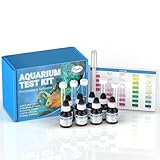
- 5-in-1 Master Test Kit: Monitor all 5 critical water parameters – pH, nitrite, nitrate, ammonia, and phosphate – in one comprehensive aquarium test kit. The rigorous analysis helps you maintain an ideal haven for your aquatic friends
- Freshwater & Saltwater Application: This aquarium water master test kit works perfectly for both freshwater and marine fish tanks. Precise color-matching charts are included – simply compare your water’s hue to the color swatches for instant results
- Enhanced Accuracy: Using professional liquid reagents, the aquarium water test kit delivers high accuracy that far exceeds traditional test strips. Get laboratory-quality results every time, safeguarding a stable and enjoyable fish tank environment
- Regular Testing: Complete with 265 measurements across all parameters – pH (100), nitrite (45), nitrate (50), ammonia (30), phosphate (40). This fish tank water testing kit supports months of consistent monitoring to keep your aquarium perfectly balanced
- Essential Fish Care: Your trusted solution to prevent fish loss from fatal ammonia, nitrite buildup, or pH imbalances! Proper water quality maintenance ensures your aquatic pets stay healthy and your plants thrive in optimal conditions
What to do if you suspect it
- Stop using suspect source water and avoid disturbing deep, black, foul-smelling substrate until you can work safely.
- Provide strong surface agitation and move fish to verified safe, conditioned water if their condition requires immediate rescue.
- Test the source and aquarium, inspect dead zones under decorations and service neglected filters.
- For well water or persistent problems, obtain professional water analysis rather than relying only on smell; odor can disappear even while conditions remain unsafe.
7. Overheated nonstick cookware
Health Canada warns that nonstick cookware can produce irritating or poisonous fumes when heated to high temperatures, such as an empty pan left on a burner. That is a legitimate household fume hazard for people and pets, but the guidance does not establish a specific aquarium-fish effect or show that normal cooking routinely poisons tanks.
Use the precaution without overstating the evidence: never heat an empty nonstick pan to smoking, turn off the burner if fumes appear, ventilate the room and keep the aquarium away from the kitchen plume. Do not pour overheated cooking residue, cleaning water or oil into the aquarium.
Independent reader supportYour contribution helps us test, update, and keep practical guides available for everyone.8. Household cleaners and disinfectants
Soaps, bleach products, bathroom cleaners and disinfectants can harm pets when used or stored incorrectly. EPA guidance emphasizes reading labels and following application and storage precautions. However, the available veterinary evidence does not establish that ordinary, correctly used cleaning around a room automatically poisons aquarium fish.
Also popular on Amazon

- Professional Quality Testing Kit: The AAwipes Aquarium test kit (100 strips) is developed by experts for fish enthusiasts. It offers 8-in-1 testing capabilities, made with high-quality fiber paper and non-bleeding colors. The kit measures key parameters like Free Chlorine, Nitrate, Nitrite, Hardness, Sodium Chloride, Total Alkalinity, pH and Ammonia nitrogen.
- Versatile Use for Freshwater and Ponds: This aquarium water test kit is versatile and suitable for both freshwater and saltwater environments. It can be used in various aquariums, fish tanks, ponds, pools, and shrimp tanks, making it easy to monitor water quality and ensure your filter functions properly. Experts recommend testing your aquarium water at least twice a week to maintain optimal water quality.
- Fast and Accurate Results: Get accurate results in minutes with just 3 steps: 1) Dip the test strip into water for 2 seconds for pads 1-7; dip pad 8 (Ammonia nitrogen) separately for 5 seconds. 2) Remove the strip without shaking off excess water. Hold horizontally for 30 seconds for pads 1-7, wait 180 seconds to read Pad 8 (Ammonia nitrogen). 3) Compare the colors to the chart for up to 99% accuracy and take necessary action.
- Extended Shelf Life: The test strips are packaged in a well-sealed bottle to ensure they remain effective over time. This protects the strips from moisture and other environmental factors, ensuring you have reliable testing materials on hand when needed.
- Convenient Use: With this kit, you can test your aquarium water at home without the need to send samples to a lab, saving you both time and money. Enjoy peace of mind knowing your aquarium water is balanced and safe without the stress or extra expense. By identifying potential issues, our fish tank testing kit helps prevent hidden water problems and ensures the safety and well-being of your fish.
Prevent the proven exposure routes
- Never clean aquarium equipment with a product that leaves an unverified residue.
- Do not spray glass cleaner, disinfectant or furniture polish toward an open tank.
- Store concentrates and buckets where spills cannot flow into the aquarium stand or sump.
- Wash hands and rinse tools before putting them into tank water.
- If a cleaner enters the aquarium, remove contaminated water and media only as advised by an aquatic veterinarian; indiscriminate replacement can cause additional temperature and chemistry shock.
9. Air fresheners, candles, incense, smoke and other aerosols
Fragrances, candles, incense, tobacco smoke and similar aerosols are common indoor air contaminants. Human or pet fume warnings do not, by themselves, prove that ordinary use at a particular distance is toxic to aquarium fish. The prudent response is exposure control, not a claim that every scent is a fish poison.
Keep these products away from open tanks and air intakes, avoid burning or vaping beside the aquarium, and ventilate without directing a contaminated draft across the water. Soot, ash or oily fragrance residue that settles on the surface is a direct contamination concern even when airborne toxicity has not been measured for fish.
Choosing the right prevention tools
| Tool | What to verify | Important limitation |
|---|---|---|
| Water conditioner/dechlorinator | Label explicitly covers the chlorine and/or chloramine used by your supplier; directions match the volume of new water. | No product should be assumed to remove metals or every contaminant unless its label says so. |
| Copper test kit | It measures the copper form and concentration relevant to your sample and provides a readable range for your species. | Use it when source water, symptoms or plumbing history justify investigation; universal testing is not required by the evidence. |
| Fitted aquarium cover | It closes gaps around the tank and equipment while maintaining ventilation and safe operation. | It may reduce liquid, vapor or dust entry but does not make pesticide treatment safe by itself. |
A simple prevention routine
- Identify your water disinfectant from the supplier and keep the appropriate conditioner beside the aquarium.
- Condition every batch of replacement water before it enters the tank.
- Run a copper test when plumbing, stagnant taps or unexplained post-change illness provide a reason.
- Keep pesticide labels and emergency contact numbers accessible; plan where fish can go before treating the home.
- Maintain filters and substrate so stagnant, oxygen-poor zones do not develop.
- Store cleaners, pesticides and solvents below the level of the aquarium and away from spill paths.
- Use lids, ventilation and physical distance to reduce incidental fumes, while recognizing that these measures are not substitutes for label compliance or water treatment.
When to seek urgent help
Contact an aquatic veterinarian or an animal poison-control service promptly after a pesticide release, untreated tap-water addition, suspected copper contamination or any event involving rapid gasping and multiple fish deaths. Record the product name, active ingredient, amount used, time of exposure, water source, conditioner dose and test results. Do not add random chemicals to “neutralize” a spill; an incorrect treatment can worsen the exposure or destabilize pH and oxygen.





Leave a Reply