
Bioluminescent algae is a common name for marine light-producing microorganisms—especially dinoflagellates—that emit brief blue or blue-green flashes when waves, bubbles, animals, or a hand disturb the water. Some identified cultures can be kept at home, but they are living marine cultures, not glowing decorations or pet food.
Bioluminescent algae are living marine microorganisms that flash when disturbed
Bioluminescent algae is a common, not strictly taxonomic, name for light-producing marine microorganisms. Most cultures sold for demonstrations contain single-celled dinoflagellates, including species in the genus Pyrocystis. When waves, bubbles, swimming animals, or a hand disturb the water, the cells can emit brief blue or blue-green flashes.
As an Amazon Associate I earn from qualifying purchases.
They are not glowing aquarium decorations, and they do not shine continuously. They are living cultures with a biological day-and-night rhythm, specific seawater and nutrient requirements, and a limited tolerance for rough handling. For pet owners, the most important distinction is that a culture can be kept as a science display, but it is not food for pets, a general-purpose aquarium additive, or something to release outdoors.
How does bioluminescent algae produce light?
Bioluminescence is light made by a living organism through a chemical reaction. In dinoflagellates, the reaction involves luciferin-related compounds and the enzyme luciferase. Mechanical stress causes a rapid change inside the cell, including a change in intracellular pH, which activates the light-producing reaction.
#1 Best Overall

- Work best on 10 gallon tanks with 20 inches long for better coverage; with two extendable brackets, this light also fits for fish tank from18 inch to 24 inch long
- Min size after assembled with dockig brackets: 18.5” L x 2.7” W, Light body without docking brackets: 17” L x 2.7” W. Tank thickness: No limit to rim size
- Configuration: Total 42 LEDs, 30 pcs 6500K white LED, 6pcs blue LED, 3 pcs pink LED, 3 pcs Green LED
- Mode: all lights on and all lights off; no timer; light brightness is not adjustable
- Super bright and energy efficient LEDs, suitable for all freshwater; NOTE:LIGHT IS NOT WATERPROOF,KEEP THE LIGHT AWAY FROM THE SPLASHING WATER
A flash may be triggered by:
- a wave or boat wake;
- a fish or other animal swimming through the water;
- air bubbles or gentle bubbling;
- a hand swirling a culture; or
- tapping or carefully moving the container.
Marine flashes are commonly blue or blue-green. Those shorter wavelengths travel relatively well through seawater, making them useful in the dark ocean environment.
The light is brief because each cell has a limited supply of the chemicals needed for repeated flashes. A healthy culture may become noticeably dimmer after being shaken several times in one night. That usually means the cells need their normal light phase to restore their luminescent chemistry; it does not necessarily mean the culture is dead.
Why does it glow at night?
Dinoflagellate bioluminescence follows a circadian rhythm. Darkness alone does not switch the cells on immediately. They must also be in their biological night. A culture placed in a dark room during its biological day may show little or no light.
Do these 3 things before closing this tab:
1Fix the driver behind crashes, sound loss and screen glitches2Clear out junk files and repair common Windows errors3Scan for outdated or missing drivers - takes under a minuteMany care guides use a roughly 12-hour light and 12-hour dark schedule. The exact schedule and lighting requirements depend on the strain and supplier, but consistency matters more than repeatedly changing the routine to chase a brighter display.
During the light phase, the organisms photosynthesize and carry out normal metabolism. During the dark phase, their bioluminescence is available when mechanical movement occurs. A timer helps keep that rhythm stable. An aquarium LED light with timer can provide the controlled light phase, but the lamp does not create bioluminescence and a blue aquarium light cannot make ordinary algae glow.
Why would a dinoflagellate flash?
The leading ecological explanation is defense. A sudden flash may startle a small grazer, make feeding more difficult, or act as a “burglar alarm” by attracting a larger predator that can attack the grazer. The exact benefit depends on the species and ecological situation, so this should not be treated as one identical purpose for every bioluminescent organism.
In the ocean, a dense population can make a breaking wave, wake, or swimmer’s movement look as though the water contains scattered blue sparks. A jar or aquarium culture is a small-scale version of the same disturbance response. Display intensity depends on the species, cell density, darkness, temperature, health of the culture, and amount of movement.
Free tools Windows power users keep installed
One-click scans. No signup required.
Which organisms are called bioluminescent algae?
The label hides several important biological distinctions:
Rank #2
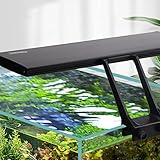
- DEFAULT MODE(24/7 Natural Mode): Gradient Orange light (sunrise) from 6am to about 8am; Gradient White light from about 8am to 10:00pm/22:00; Gradient Blue light (moonlight) from about 10:00pm/22:00 to 10:50pm/22:50; The 24/7 lighting aquarium lights are off in other time periods. The overall default time period can be delayed or advanced
- DIY MODE: Full spectrum aquarium light also can change the time + brightness + color. Setting time(TIMER key): 3 kinds of time, 6h, or 10h, or 12h; Brightness(up/down key): 5 kinds of brightness. Color(ON-OFF/ M key): White, Red, Blue, Green, Purple, Orange, Cyan, Cycle Color (no brightness selection)
- NEW UPGRADE: Clip style bracket( tank walls less than 0.9in thick), easy to install, aquarium LED light can be used for different thickness of glass, the body of the fish tank light can be taken off and installed horizontally or vertically. The separable adapter, even if it is damaged, no need to replace the whole light to avoid waste. Thicken aluminum to increase heat dissipation efficiency
- USEFUL FISH LIGHT: The hygger aquarium light is soft, the color rendering index is close to natural light, up to 85%, protecting eyes and fish, to refuse the discomfort caused by stroboscopic for fish and viewers. Using high-quality 2835 + 5050 model lamp beads, long service life, at least 50,000 hours. Easy to maintain
- 14W PRODUCT PARAMETERS: Power:14W; Led QTY:68PCS(White:32PCS/BLUE:12PCS/ RED:7PCS/GREE:3PCS/ RGB:14PCS); CRI:85; Application(for Fish Tnak long):12’’-20’’ ; Power Cord: 4.9ft+2.3ft; Input Votage:AC100-240V; Output Votage:DC20V; Kelvin: White 6500K, Blue 455nm, Red 620nm, Green 560nm; Lumens:817
| Organism or group | Why it matters |
|---|---|
| Pyrocystis lunula and Pyrocystis fusiformis | Examples of marine dinoflagellates used in educational and home culture products. |
| Lingulodinium polyedrum | A bioluminescent dinoflagellate associated with dramatic coastal displays and, in some settings, harmful red-tide events. |
| Dinoflagellates as a broader group | Many dinoflagellates are neither bioluminescent nor photosynthetic, so the group should not be treated as synonymous with glowing algae. |
| “Algae” in everyday language | A broad informal label covering many unrelated organisms. Not all algae glow, and most do not. |
Glowing does not automatically mean harmless. The Smithsonian’s material on Lingulodinium polyedrum notes its association with red-tide events that have caused fish and shellfish mortality in some locations. That does not mean a properly identified educational Pyrocystis culture has the same risk. It does mean people should not collect unidentified glowing water, add it to a pet aquarium, ingest it, or assume that every glowing beach is safe for swimming.
Can you grow bioluminescent algae at home?
Yes. Commercial and educational cultures can be maintained at home or in a classroom, but they require care. A live culture is more like keeping a small marine microorganism culture than owning a novelty liquid that glows forever.
If you want to observe the phenomenon directly, look for a live bioluminescent dinoflagellate culture or a supplier’s Pyrocystis culture. UTEX, Carolina Biological Supply, and specialist suppliers document living cultures and educational kits, but availability, strain, shipping conditions, and instructions can change. Follow the supplier’s instructions for the particular strain rather than combining advice from unrelated products.
The Tool Desk
Outbyte PC Repair FREERepair Windows errors before they cause bigger problemsFix Now →Outbyte Driver Updater FREEScan for outdated or missing drivers - takes under a minuteDriver Scan →1. Use proper marine water
Dinoflagellates need suitable salinity and marine minerals. Use the artificial seawater or marine medium specified for the culture. Ordinary table salt is not an adequate substitute: it does not reproduce the mineral composition of seawater and does not provide the nutrients a growing culture needs.
Evaporation can raise salinity, so avoid casually topping off a culture with concentrated saltwater. Use the supplier’s recommended method and water type.
2. Provide nutrients
Growing cells need more than saltwater. Culture media may contain nitrate, phosphate, trace metals, vitamins, and other components. Depending on the organism and supplier, instructions may specify a dedicated bioluminescent-dinoflagellate medium, F/2 medium, L1 medium, or another enriched seawater formulation.
A useful long-term supply is dinoflagellate culture medium. It is a maintenance consumable, not the same thing as aquarium salt or ordinary aquarium water. Use the formulation intended for the strain; an inappropriate nutrient mix can fail to support the culture or encourage contamination.
3. Keep the light schedule stable
Use a stable fluorescent or LED light source on a controlled schedule. A timer is valuable because the biological clock is part of the culture’s care. Do not leave the culture under bright light continuously, place it in irregular windows of sunlight, or keep changing the schedule to make it glow at a preferred time.
Rank #3
- Work best on tanks with 48 inches long for full cover effect; with two extendable brackets, this light also fits for fish tank from 48 to 54 inches long
- Light body without docking brackets: 45” L x 2.7” W. Tank thickness: No limit to rim size
- Configuration: Total 96 LEDs, 68 pcs 6500K white LED, 14 pcs blue LED, 7 pcs pink LED, 7 pcs Green LED
- MODE: all lights on and all lights off; no timer; light brightness is not adjustable
- Suitable for Fresh Water Tank: bright, energy efficient and long lasting full spectrum LEDs emit enough light for your fresh water fish NOTE: LIGHT IS NOT WATERPROOF, KEEP THE LIGHT AWAY FROM SPLASHING WATER
Observe it after the dark phase begins, in a genuinely dark room. Small amounts of room light can make a healthy display appear weak.
4. Control temperature
Temperature targets vary by strain and product. For example, one Carolina culture guide lists approximately 22 °C as an optimum, while UTEX lists 20 °C for its Pyrocystis lunula strain. These figures are not universal settings for every dinoflagellate. The supplier’s temperature range takes priority.
Avoid sudden temperature changes, hot windowsills, radiators, and unregulated aquarium heaters. Stability is generally more useful than trying to force a culture toward a single number.
5. Limit contamination
Bacteria and other contaminants can overgrow a culture or alter its chemistry. Sterile or clean media and glassware improve the chances of maintaining a culture over time. Do not use a dirty pet-food container, a vessel with soap residue, or equipment that has been exposed to household chemicals.
Do not assume that a culture belongs in a marine aquarium simply because it lives in seawater. A saltwater aquarium contains other organisms, nutrients, microbes, filtration, and lighting conditions that may not suit a purchased culture. Keep the culture separate unless a specialist’s instructions specifically say otherwise.
How should you stimulate a culture?
Use gentle, brief movement during the biological night. Swirling, tapping, or controlled bubbling can produce flashes. An aquarium air pump with air stone may be useful for an optional bubbling demonstration, but it is not required for basic maintenance.
Do not shake the container continuously. Repeated agitation can temporarily exhaust the cells’ available luminescent chemistry, causing the display to fade. Let the culture rest through its normal light phase so the cells can recover. If an air pump is used, keep the bubbling gentle enough to avoid splashing, foaming, evaporation, or physical damage to the culture.
Outdated Drivers Are Slowing You Down
One free scan finds every outdated or missing driver and matches the right update for your exact hardware.Free scan · exact hardware matchWindows Errors? Fix Them Before They Spread
Repair common Windows errors and clear accumulated junk for a smoother, more stable PC - no reinstall needed.Free scan · no reinstallWhy is my new culture not glowing?
A newly delivered culture may be alive even if it appears inactive. Shipping can expose it to vibration, temperature changes, oxygen and light conditions different from those at home, and a shifted day-night schedule. Care guidance from Carolina Biological Supply warns that recovery can take a week or more in some cases.
Rank #4

- Full Spectrum: The fish tank light contains 6500 K white light, 450 nm blue light and 660 nm red light. LUX: 2500; PAR: 55; CRI: 90. The vivid lights can reproduce the real colors of objects to relieve the visual fatigue, and thus improve the comfort of the environment.
- 2 Lighting Modes: Short press the M button repeatedly on the fish tank light to switch between daytime and night modes. Hold the M button for 3 seconds to turn all lights off. Simulate natural sunrise and sunset to energize your fish and give them a sound sleep.
- 6 Intensity Levels: Daytime Mode (all lights are on): Press the W button to control the brightness of white and red lights and press the B button to control that of the blue light. Night Mode (only blue light is on): Press the B button to adjust the luminance.
- For 12" to 18" Tanks: With an extendable bracket (min length: up to 11.5"; max length: up to 20"), the LED aquarium light always stays steady on the fish tank. Work best on tanks of 12 to 18 inches long.
- Heavy-duty Design: FCC-certified aquarium light. The clear board is strictly sealed with silicone to keep out moisture or droplets. Solid aluminum shell can accelerate heat dissipation. The long-lasting bulbs and ETL-certified adapter ensure safe and continuous lighting.
Work through this checklist before deciding the culture has failed:
- Restore the recommended light cycle. Do not keep it in darkness around the clock.
- Check temperature. Compare it with the instructions for the exact strain.
- Check the medium and salinity. Confirm that you have not used plain water or table salt.
- Allow recovery time. Shipping stress may suppress visible flashing for several days.
- Test it in darkness. Use a gentle swirl or tap during the expected biological night.
- Stop repeated testing. Constant shaking can make a recovering culture look even dimmer.
Warning signs such as a strong foul odor, unusual discoloration, mold-like growth, or persistent failure after the supplier’s recovery period are reasons to contact the supplier rather than adding random nutrients or household chemicals.
Is bioluminescent algae safe for pets?
Do not treat an unidentified glowing bloom as pet-safe. Do not let a dog, cat, bird, reptile, or other pet drink a culture, and do not use a purchased culture as food or add it to a pet’s aquarium without species-specific expert guidance.
Recommended Free Tools
Controlled educational cultures and natural coastal blooms are not interchangeable. A known Pyrocystis demonstration culture is a managed product with supplier instructions. A wild bloom may contain a different species, including organisms associated with harmful algal events. Keep culture containers closed or secured around curious pets, clean up spills promptly, and follow the product’s disposal directions.
Most importantly, never release a purchased culture into a pond, stream, ocean, aquarium system, or other outdoor environment. Carolina Biological Supply advises against environmental release and notes that laws may prohibit it even when an organism is already found in the region. Dispose of it according to local rules and the supplier’s guidance.
Independent reader supportYour contribution helps us test, update, and keep practical guides available for everyone.What to buy for a first demonstration
The most relevant purchase is a living culture or a complete teaching kit, not a generic blue lamp. A sensible setup may include:
- a labeled live dinoflagellate culture or bioluminescence teaching kit;
- the correct artificial seawater and enriched medium;
- a clean, suitable container with enough headspace;
- a stable fluorescent or LED light;
- a timer for the light/dark cycle; and
- optionally, gentle bubbling equipment for demonstrations.
A bioluminescence teaching kit can be convenient for classrooms or families because the culture, vessel, and instructions may be selected to work together. Check the current instructions, strain, temperature range, media requirements, shipping policy, and disposal guidance before purchasing. No kit eliminates the need to care for a living organism.
Natural glowing beaches: what the display does—and does not—tell you
In coastal water, dense populations of bioluminescent dinoflagellates can turn waves, wakes, and moving limbs blue. The phenomenon is real and widespread in marine ecosystems, but visual glow alone does not identify the species or prove that the water is safe.
Best Value
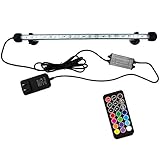
- Ultra bright and full spectrum RGB LEDs for showing vivid colors of aquatic plants and fish, can make your fish tank a colorful landscape. Ultra-bright SMD 5050 LEDs, which makes the fish tank lights 35% brighter than others.
- Excellent sealed design. The tank light is amphibious with IP68 Rating, can be fully submerged in water and work underwater. Two strong suction cup help fix cable firmly in the tank, fitting for aquarium, fish tank, pool, etc
- Safety low-voltage design. With low voltage of 12V, the LED aquarium light is safe and won't cause any harm to people or fish.
- Equipped with memory. The light fixture can remember last saved settings. The fixture interacts with the controller via upgraded sensor.
- Upgraded new remote. 75ft barrier-free sensing distance, no need to point remote at signal receiver. 19 modes and 12 frequently-used colors.
Before swimming, collecting water, or allowing pets near a reported glowing shoreline, check local health or environmental advisories. Avoid contact when a harmful algal bloom warning is active, when the water has an unusual odor or color, or when the species is unknown. Never bring wild glowing water home for a pet aquarium or home culture.
Bottom line
Bioluminescent algae usually means marine dinoflagellates that flash when mechanically disturbed. Their light comes from chemistry inside living cells, their brightness follows a day-night rhythm, and repeated stimulation temporarily reduces the available glow. You can maintain some identified cultures at home with artificial seawater, enriched medium, stable temperature, timed lighting, clean equipment, and patience. Keep them separate from pets and aquariums, do not ingest or release them, and never assume that an unidentified glowing natural bloom is harmless.
Frequently Asked Questions
Are all algae bioluminescent?
No. “Bioluminescent algae” is a common label, not a precise taxonomic group. It most often refers to marine dinoflagellates such as Pyrocystis. Many algae and many dinoflagellates do not produce light.
Quick wins for a faster PC:
Scan for outdated or missing drivers - takes under a minuteDriver Scan →Clear out junk files and repair common Windows errorsFree Scan →Do bioluminescent algae glow continuously?
No. Dinoflagellate cultures usually produce short flashes after movement, not a constant glow. Repeated stimulation can make them temporarily dim until they recover during the light phase.
Can I grow bioluminescent algae at home?
Some identified commercial cultures can be maintained at home with appropriate artificial seawater, enriched medium, stable temperature, timed lighting, clean equipment, and a dark observation period.
Is glowing seawater safe for dogs, cats, or other pets?
Do not assume so. Wild glowing water may contain an unidentified species or be associated with a harmful algal bloom. Check local advisories and keep pets away from unknown coastal blooms.
Can table salt replace marine culture medium?
No. Table salt does not reproduce seawater’s mineral composition and does not provide the nutrients needed for a healthy culture. Use the marine water and enriched medium specified for the strain.
What’s actually slowing this PC down?
Pick the symptom - the matching free tool is one click away.
The Bottom Line
Bioluminescent algae are usually light-producing marine dinoflagellates, not a single formal group of algae. They flash briefly when disturbed, glow only during their biological night, and need proper seawater, nutrients, lighting, temperature, and contamination control. A labeled culture can be an engaging home science display, but it should be kept away from pets, never added to an aquarium without expert guidance, and never released outdoors.
Quick Recap
Product prices and availability are accurate as of the date/time indicated and are subject to change. Any price and availability information displayed on Amazon at the time of purchase will apply.





Leave a Reply