
Some links on this page are affiliate links: if you buy through them we may earn a commission, at no extra cost to you.
There is no single food proven best for every Rottweiler. Choose a complete-and-balanced formula for the correct life stage, use a large-breed growth formula for puppies, measure portions, and adjust feeding to body condition, activity, health and veterinary advice. For adults, use an adult-maintenance food rather than continuing a calorie-dense growth diet indefinitely. The label’s nutritional adequacy statement is the most important place to start.
What “best dog food” means for a Rottweiler
A food is suitable only in relation to the dog eating it. Age, expected adult size, activity, body condition, appetite, stool quality, medical history and any veterinary diet all matter. The available guidance does not establish a Rottweiler-specific food that outperforms every other appropriate formula.
As an Amazon Associate I earn from qualifying purchases.
Free tools Windows power users keep installed
One-click scans. No signup required.
The first filter is life-stage adequacy. The Association of American Feed Control Officials (AAFCO) says the nutritional adequacy statement on the package is the key to meeting a pet’s nutritional needs. It tells you whether the food is complete and balanced for growth, adult maintenance, all life stages or a particular condition. Read the current package statement rather than relying on a product name, a breed photograph or an online listing. AAFCO’s consumer guidance explains how to select food.
A breed-specific label can be a useful description, but it does not prove nutritional superiority. A properly formulated large-breed puppy or adult-maintenance diet may be a sound choice even when “Rottweiler” is not printed on the front.
Popular on Amazon
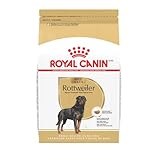
- FORMULATED FOR PUREBRED ROTTWEILERS: Royal Canin Rottweiler Adult Dry Dog Food is designed to meet the nutritional needs of purebred Rottweilers 18 months and older
- SPECIALIZED KIBBLE: Unique kibble shape is designed to help big dogs easily pick up, chew, and slow down their food intake
- HEART HEALTH: Taurine, EPA, and DHA for healthy cardiac function promote heart health
- MUSCLE SUPPORT: Helps maintain a giant breed’s muscle mass with appropriate protein content and L-carnitine
- WEIGHT MANAGEMENT: Promotes an ideal weight and supports joint and bone support with EPA and DHA from fish oil
What the package can and cannot tell you
The front panel is marketing; the adequacy statement, calorie declaration and feeding directions are decision-making information. Check that the product is labeled for dogs, identify the life stage, and note whether the statement says “complete and balanced.” For puppies, read the entire wording to see whether growth of large-size dogs is included. An “all life stages” statement may cover growth, but it still deserves the same close reading because not every formula has the same calorie density or feeding directions.
Record calories using the unit shown on the label, such as kilocalories per cup or per kilogram. Do not assume a scoop of one kibble supplies the same energy as a scoop of another. Keep the bag or take a photograph of the statement when comparing products, since online descriptions can be incomplete and formulas or labels can be updated.
Windows Errors? Fix Them Before They Spread
Repair common Windows errors and clear accumulated junk for a smoother, more stable PC - no reinstall needed.Free scan · no reinstallOutdated Drivers Are Slowing You Down
One free scan finds every outdated or missing driver and matches the right update for your exact hardware.Free scan · exact hardware matchChoosing food for a Rottweiler puppy
Look for growth of large-size dogs
Rottweiler puppies need controlled growth, not simply the most calories possible. Select a complete-and-balanced food whose adequacy statement covers growth of large-size dogs, where that wording applies to the puppy’s expected adult size. A large-breed growth diet is designed for the developmental demands of a bigger skeleton and should be fed in measured portions.
The AAFCO category used on one cited puppy label covers growth of large-sized dogs expected to weigh at least 70 lb (about 32 kg) as adults. That 70-lb figure is a label threshold, not a prediction that every Rottweiler will weigh exactly that amount. Check the statement on the package you buy because formulas and labels can change. AAFCO’s label guide describes life-stage statements and calorie information.
Why overfeeding is a problem
Fast, excessive growth can place unnecessary stress on developing bones and joints. The American Animal Hospital Association advises feeding a large-breed growth diet until skeletal maturity, avoiding overfeeding and avoiding excess calcium. Some large- and giant-breed dogs may not reach skeletal maturity until closer to 15–16 months, so a puppy should not be switched solely because it has reached a particular calendar birthday. AAHA’s nutrition and weight-management guidance explains large-breed growth.
Do not add calcium, mineral powders or other growth supplements unless a veterinarian specifically prescribes them. A complete food already supplies nutrients in a planned ratio; extra supplementation can disrupt that balance.
How to feed the puppy food
Use the manufacturer’s chart as a starting point, using the puppy’s age and expected mature weight. The chart is not a permanent prescription. Weigh or measure each meal, account for treats and chews, and watch the puppy’s weight trend and body condition. AAFCO notes that feeding directions may need adjustment for activity and condition. AAFCO’s feeding guidance and label guidance both stress this point.
Ask your veterinarian to assess growth if the puppy is gaining rapidly, losing weight, persistently hungry, reluctant to exercise, developing digestive signs or carrying more body fat than intended. A professional can adjust portions without sacrificing the nutrient profile needed for development.
Practical puppy portion checks
Base the starting amount on the puppy’s current weight, age and expected mature size, not on the weight of a littermate or an idealized breed chart. Divide the daily ration into meals appropriate for the puppy’s age and follow the veterinarian’s advice about meal frequency. Training treats, table scraps, dental chews and food used with medication all count. If several family members feed the dog, measure the full day’s ration in the morning so extras are visible.
Also popular on Amazon
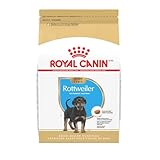
- FORMULATED FOR PUREBRED ROTTWEILERS: Royal Canin Rottweiler Puppy Dry Dog Food is designed to meet the nutritional needs of purebred Rottweilers 8 weeks to 18 months old
- SPECIALIZED KIBBLE: Unique kibble shape helps large dogs easily pick up and chew their food
- HEALTHY DEVELOPMENT: An exclusive complex of antioxidants, including vitamin E, helps support puppy development of the immune system
- MUSCLE SUPPORT: Provides bone and joint support with optimal levels of protein, calcium, and phosphorus, and added L-carnitine
- OPTIMAL STOOL: High-quality proteins and prebiotics support digestion and promote optimal stool quality in young dogs
Reassess after a growth spurt, a change in exercise, sterilization or a noticeable change in ribs and waist. A puppy that is constantly ravenous is not automatically underfed, and a puppy with a round belly is not necessarily thriving. Use the weight trend and body-condition examination, then make a modest adjustment or contact the veterinarian.
Choosing food for an adult Rottweiler
Use an adult-maintenance adequacy statement
Once growth is complete, select a complete-and-balanced food for adult maintenance unless a veterinarian has prescribed a therapeutic diet. A growth formula can be unnecessarily calorie-rich for a less-active adult. Adult-maintenance food is a different nutritional target, not merely a smaller serving of puppy food.
Continue to use the package’s calorie declaration and feeding directions, then adjust portions to the dog’s body condition, exercise, neuter status, appetite and weight trend. Two foods can both meet adult-maintenance requirements while requiring different cup or gram amounts because their energy densities differ.
Match calories to the individual
A working, highly active Rottweiler may need more energy than a companion dog that spends most of the day resting, while an older or recently sterilized dog may need less. The printed range gives you a controlled starting point; it does not account perfectly for every metabolism. Weigh the dog periodically under similar conditions, feel the ribs and look for a visible waist, and change the amount gradually when the trend moves away from a healthy condition.
If switching foods, compare calories per cup or kilogram before transferring the old portion. A lower-calorie food may require a larger measured volume, while a denser food may require less. Keep the unit consistent and follow the new product’s directions rather than combining two charts.
What’s actually slowing this PC down?
Pick the symptom - the matching free tool is one click away.
When an adult needs a veterinary plan
A label cannot diagnose or manage disease. A dog with persistent diarrhea, vomiting, itching, recurrent ear problems, urinary issues, abnormal weight change or another ongoing sign should be evaluated by a veterinarian. The clinician may recommend a specific nutrient profile, feeding method or therapeutic diet. The World Small Animal Veterinary Association (WSAVA) treats nutrition assessment as part of routine veterinary care and provides resources for evaluating food and feeding practices. See WSAVA’s global nutrition guidelines.
Concrete foods to compare
The following products illustrate how to read a label; they are examples, not universal winners or individualized prescriptions. Their manufacturers’ adequacy claims establish intended use, not superiority in a head-to-head Rottweiler trial.
| Example | Life stage and adequacy information | What the label provides | How to use the example |
|---|---|---|---|
| Purina Pro Plan Puppy Large Breed Chicken & Rice | Purina says feeding tests substantiate complete and balanced nutrition for all life stages, including growth of large-sized dogs expected to weigh at least 70 lb as adults. | Feeding ranges by age and projected mature weight. | Compare its adequacy statement, calories and portions with other large-breed growth foods; do not treat the claim as proof it is best for every puppy. |
| Purina Pro Plan Large Breed Chicken & Rice | Purina’s official information says feeding tests substantiate complete and balanced nutrition for adult maintenance. | Feeding directions organized by body weight. | Use the adult-maintenance statement and calorie declaration as comparison points, then tailor the amount to the individual dog. |
| Royal Canin Rottweiler Puppy | A UC Davis School of Veterinary Medicine product guide says it meets AAFCO nutrient levels for growth, including growth of large-size dogs. | The manufacturer’s guide includes a Rottweiler feeding chart that transitions to Rottweiler Adult at 19 months. | Use the chart as that manufacturer’s guidance only; 19 months is not a universal switch age. |
Before buying any example, verify the current package, formula name, adequacy statement, calorie content, feeding chart and availability. Online product pages can lag behind a reformulated bag. Confirm that the product you receive matches the life-stage claim you compared, especially when a retailer lists several sizes or recipes under one name.
These examples also show why a brand name alone is not enough. The puppy example supplies a large-size growth claim, the adult example supplies an adult-maintenance claim, and the breed-specific guide supplies a manufacturer schedule. Those are useful label facts, but none demonstrates that the food will be tolerated, preferred or optimally portioned by every Rottweiler.
Also popular on Amazon

- ACTIVE DOG FOOD: VICTOR’s Hi-Pro Plus formula is a gluten free, high protein dog food with a nutrient-dense, multi meat formula; this dry dog food’s super premium nutrition provides sustained energy for sporting dogs and dogs with high physical demands
- HIGH PROTEIN DOG FOOD: Packed with premium-quality beef, chicken, pork and fish meals; With 30% protein and 20% fat, it provides young dogs and mothers with key nutrients for healthy growth and vitality, making VICTOR Hi-Pro Plus a reliable choice
- FROM PUPPY TO ADULT: Suitable for all life stages, this premium dog food is ideal for pregnant dogs, lactating females and puppies; VICTOR Hi-Pro Plus for Dogs is formulated to meet the nutritional levels established by the AAFCO Dog Food Nutrient Profiles for All Life Stages, making it one of the best dog foods for all sizes, except for growth of large size dogs (70 lb. or more as an adult)
- PROPRIETARY VPRO BLEND: This super premium dry dog food has been formulated with our exclusive mix of supplements, vitamins and minerals which help maximize the genetic potential of every dog, regardless of breed, age, or activity level
- MADE IN THE USA: We proudly produce every bag of VICTOR kibble in our own Texas-based facility and do not waver in our commitment to high-quality nutrition. A majority of ingredients of our pet food come from ranches, farms and other trusted suppliers who are within a day’s drive of our East Texas plant
How to compare two foods without being misled
1. Confirm the nutritional adequacy statement
Find the small-print statement on the back or side of each package. It should identify the species and the intended life stage. For a puppy, look for growth wording that includes large-size dogs when appropriate. For an adult, look for adult maintenance. “All life stages” can include growth, but read the full statement to understand whether large-size growth is covered.
2. Compare calories and portions together
Record the food’s stated kilocalories per familiar unit, such as cup or kilogram, and compare the recommended amount for a dog of the same weight. A cup is not a standardized measure across foods. If you change formulas, recalculate the portion rather than transferring the old scoop size.
Feeding charts are starting points. Adjust gradually when body condition or weight trend shows that the dog is receiving too much or too little. Keep treats, table food, training rewards and dental chews within the daily energy plan.
3. Evaluate the individual dog
Observe appetite, stool consistency, vomiting, skin and coat, energy, weight trend and comfort during activity. A food that meets the label requirement can still be a poor practical fit if the dog will not eat it, cannot tolerate it or gains excess weight on the suggested amount. Report persistent signs to a veterinarian instead of repeatedly changing foods without a plan.
Quick wins for a faster PC:
Clear out junk files and repair common Windows errorsFree Scan →Scan for outdated or missing drivers - takes under a minuteDriver Scan →Repair Windows errors before they cause bigger problemsFix Now →4. Judge evidence, not ingredient-list marketing
WSAVA cautions that an ingredient list does not tell you ingredient quality and can mislead readers about overall food quality. Ingredient order alone cannot establish digestibility, nutrient adequacy, manufacturing controls or suitability for a particular dog. Use the adequacy statement, calorie declaration, feeding directions and reliable nutrition information together. WSAVA’s nutrition resources outline this broader assessment.
5. Check the company’s nutrition information
Look for clear contact information, complete feeding directions and answers about calories and formulation. If you cannot obtain basic label or nutrition information, that uncertainty is a reason to choose a more transparent option or ask your veterinarian for alternatives. Transparency does not make a food automatically superior, but it makes comparison possible.
6. Compare like with like
Compare puppy growth foods with other puppy growth foods and adult-maintenance foods with adult-maintenance foods. A higher protein percentage, a shorter ingredient list or a breed photograph does not make unlike life-stage products interchangeable. Keep the comparison focused on adequacy, energy density, directions, tolerance and the dog’s health needs.
Portion control and body-condition checks
Measured feeding is especially important during large-breed growth. Use a gram scale when practical; volume scoops can vary and kibble pieces are not identical. Divide the daily amount into meals appropriate for the puppy’s age and your veterinarian’s advice. Keep a written record when adjusting portions so you can relate a change to the dog’s weight and stool quality.
The Tool Desk
Outbyte Driver Updater FREEFix the driver behind crashes, sound loss and screen glitchesFind Drivers →Outbyte PC Repair FREERepair Windows errors before they cause bigger problemsFix Now →Body condition is more useful than a fixed cup amount. At a healthy condition, ribs should be readily felt under a thin covering, the waist should be visible from above and the abdomen should tuck upward behind the rib cage. Individual conformations vary, so have a veterinary professional confirm your assessment, particularly for a growing Rottweiler with a heavy build.
Also popular on Amazon

- REAL CHICKEN FIRST: Blue Buffalo dry dog food starts with real chicken as the first ingredient to help support healthy, lean muscles in adult dogs
- COMPLETE NUTRITION: This BLUE dog food provides balanced daily nutrition for adult dogs with chicken for protein, wholesome carbohydrates for energy, and other natural ingredients
- EXPERT-LED NUTRITION: Designed to help your pet thrive from the inside out, Blue Buffalo dog food formulas are developed by a dedicated team of veterinarians and animal nutritionists
- SUPPORTS IMMUNE SYSTEM HEALTH: BLUE Life Protection Formula dry dog food features exclusive LifeSource Bits, a precise blend of antioxidants, vitamins, and minerals that are formed at a lower temperature to ensure optimal potency
- WHOLESOME GRAINS: A delicious dry dog food made with brown rice, barley, and oatmeal to support gentle, regular digestion and steady energy for active dogs
Recheck after a food change, a major activity change, illness, sterilization or a noticeable weight shift. Make one controlled adjustment at a time and allow enough time to see the trend unless illness requires prompt care.
When should a Rottweiler switch from puppy to adult food?
There is no single age that applies to every Rottweiler. AAHA notes that some large- and giant-breed dogs may reach skeletal maturity closer to 15–16 months. The UC Davis product guide for Royal Canin’s Rottweiler line shows a manufacturer-specific transition to Rottweiler Adult at 19 months. These figures describe different kinds of guidance: one is a general maturity caution and the other is a particular feeding chart. Neither creates a universal rule.
Discuss timing with the veterinarian who is monitoring the dog’s growth and body condition. The decision can consider skeletal maturity, weight trend, body condition, activity and the adequacy statement of the food you plan to use. When a switch is appropriate, transition gradually according to veterinary or manufacturer instructions rather than replacing the food abruptly.
A gradual change also gives you a clearer way to identify intolerance. Introduce the new food in increasing proportions while reducing the old food, and pause or seek advice if vomiting, severe diarrhea, refusal to eat or other concerning signs occur. The exact transition schedule can vary with the dog and the products involved.
Independent reader supportYour contribution helps us test, update, and keep practical guides available for everyone.A practical selection checklist
- Identify the stage. Decide whether the dog is still growing, has reached adult maintenance, is senior, or needs a veterinary therapeutic plan.
- Read the adequacy statement. Confirm complete-and-balanced coverage for that stage; for a puppy, verify large-size growth wording when applicable.
- Record calories. Note the stated kilocalories per cup, kilogram or other unit and keep the unit consistent when comparing foods.
- Set a measured starting portion. Use the package chart for age, weight and expected mature size, then include treats in the daily plan.
- Monitor the dog. Track body condition, weight trend, appetite, stool and energy rather than assuming the printed amount is permanent.
- Adjust deliberately. Make modest changes when needed and seek veterinary advice for rapid growth, unexplained weight change or persistent clinical signs.
- Review at life-stage changes. Recheck the adequacy statement and calories when moving from puppy growth to adult maintenance or when the dog’s health or activity changes.
Common mistakes to avoid
- Choosing by breed name alone: “Rottweiler” on the package does not prove a formula is better than an appropriate large-breed diet.
- Feeding for appearance: A puppy should not be pushed to grow faster or become heavy because a larger body looks impressive.
- Adding calcium without advice: AAHA cautions against excess calcium during large- and giant-breed growth.
- Keeping the puppy portion after a formula change: Different calorie densities require different amounts.
- Assuming “all life stages” answers every question: Read whether the statement specifically covers large-size growth and check the calorie density.
- Treating an ingredient list as a quality score: WSAVA notes that lists alone cannot establish ingredient quality or overall food quality.
- Using one transition age for every dog: Maturity varies, and manufacturer charts are not universal veterinary rules.
- Ignoring persistent symptoms: Ongoing digestive, skin, urinary or weight problems need veterinary assessment rather than endless food swapping.
- Leaving food available without measuring: Free-choice access can make it difficult to identify how much a large-breed puppy or adult is actually eating.
- Comparing only the front of the bag: A prominent “large breed” or “natural” claim cannot replace the adequacy statement and calorie information.
Frequently asked questions
Is breed-specific Rottweiler food required?
No. A breed-specific recipe can be convenient, but the decisive checks are life-stage adequacy, calories, feeding directions and individual tolerance. An appropriate large-breed growth or adult-maintenance food does not need the breed name on the front.
Can I feed an adult Rottweiler puppy food?
Growth foods may be more calorie-dense than a less-active adult needs. Once growth is complete, an adult-maintenance formula is generally the more appropriate life-stage target unless a veterinarian recommends otherwise.
Does the 70-pound figure mean my Rottweiler should weigh 70 pounds?
No. It is the large-size growth threshold used in the cited AAFCO adequacy wording for one Purina puppy label. It describes the category covered by the statement, not an ideal weight for every individual dog.
Do these 3 things before closing this tab:
1Scan for outdated or missing drivers - takes under a minute2Clear out junk files and repair common Windows errors3Fix the driver behind crashes, sound loss and screen glitchesIs 15 or 16 months the required switch age?
No. AAHA identifies 15–16 months as a possible period closer to skeletal maturity for some large- and giant-breed dogs. The appropriate timing depends on the dog’s development and veterinary assessment.
Why does one food use fewer cups than another?
Energy density differs. Compare kilocalories per cup or kilogram and follow the new food’s chart; do not carry over the old scoop amount automatically.
Also popular on Amazon

- VET RECOMMENDED FORMULA- A daily nutritional supplement with a synergistic blend of essential vitamins, minerals, and antioxidants!
- TASTY SOFT CHEWS- Our delicious heart shaped soft chews help maintain optimal health in dogs no matter the breed, age or activity level! Easy to administer!
- DIETARY SUPPLEMENT- Perfect to supplement your dog's diet. Helps with skin & coat, digestion, bladder support, and overall health!
- MADE IN USA- Made in FDA, USDA and FSIS Regulated Manufacturing Facilities. All raw materials utilized are of the highest quality and are evaluated for purity and potency prior to use.
- Healthy Breeds offers an assortment of dog healthcare products, grooming products and treats for over 200 breeds! Make sure to search for your breed! Click the Healthy Breeds hyperlink above the title to see our amazon storefront!
Should I add calcium for stronger bones?
Do not add calcium or mineral supplements unless your veterinarian prescribes them. AAHA cautions against excess calcium during large- and giant-breed growth, and a complete food is formulated to provide nutrients in balance.
The bottom line for puppy and adult options
For a Rottweiler puppy, start with a complete-and-balanced large-breed growth food, feed measured portions and prevent excess calcium and overfeeding. For an adult, choose a complete-and-balanced adult-maintenance food and adjust calories to body condition, activity and veterinary guidance. Compare the adequacy statement, calories, feeding directions and the individual dog’s response. The cited puppy and adult products are useful examples of how to perform that comparison, not evidence that one brand or recipe is the best choice for every Rottweiler.
Recommended Free Tools
Frequently Asked Questions
What is the best dog food for a Rottweiler puppy?
Choose a complete-and-balanced food with an adequacy statement covering growth of large-size dogs when applicable. Use measured portions, monitor body condition and avoid excess calcium. No single brand is proven best for every puppy.
What is the best adult food for a Rottweiler?
Look for a complete-and-balanced adult-maintenance statement, compare calories and feeding directions, and adjust the amount to activity, body condition and veterinary advice.
When should a Rottweiler change from puppy to adult food?
There is no universal age. Some large dogs mature closer to 15–16 months, while one Royal Canin chart transitions at 19 months. Discuss the individual dog’s growth and condition with a veterinarian.
Are Rottweiler-specific formulas better?
Not automatically. Breed labeling describes a product, but it does not prove superiority over an appropriate large-breed growth or adult-maintenance formula.
How much should I feed my Rottweiler?
Start with the package chart and calorie declaration for the dog’s age, weight and expected mature size. Measure the daily amount, count treats and adjust gradually using weight and body-condition trends.
Can I give my Rottweiler calcium supplements?
Do not add calcium or mineral supplements unless a veterinarian directs you to do so. Excess calcium can disrupt large-breed puppy growth.
The Bottom Line
Choose by life-stage adequacy first: large-breed growth for puppies and adult maintenance for mature dogs. Compare calories and directions, measure portions, monitor body condition and involve your veterinarian when growth, symptoms or transition timing are uncertain.





Leave a Reply