Quick wins for a faster PC:
Scan for outdated or missing drivers - takes under a minuteDriver Scan →Clear out junk files and repair common Windows errorsFree Scan →Fix the driver behind crashes, sound loss and screen glitchesFind Drivers →There is no single spawning order for all freshwater fish. In a typical temperate North American lake or reservoir, spawning often follows the spring warming of the water: northern pike begin first, followed by yellow perch and walleye, then black crappie, smallmouth bass, largemouth bass and sunfish, with channel catfish often spawning latest. Trout and lake trout may follow a separate fall-spawning cycle.
There is no single spawning order for all freshwater fish. In a typical temperate North American lake or reservoir, spawning often follows the spring warming of the water: northern pike begin first, followed by yellow perch and walleye, then black crappie, smallmouth bass, largemouth bass and sunfish, with channel catfish often spawning latest. Trout and lake trout may follow a separate fall-spawning cycle.
As an Amazon Associate I earn from qualifying purchases.
That sequence is only a useful general pattern. Fish respond to water temperature, daylight, flow, dissolved oxygen, available spawning habitat and migration conditions—not to the calendar alone. Several species may spawn at the same time, and the order can change between lakes, rivers, regions and years.
What’s actually slowing this PC down?
Pick the symptom - the matching free tool is one click away.
Typical spring spawning order
| General position | Representative species | Approximate water temperature | Common spawning habitat |
|---|---|---|---|
| Usually earliest | Northern pike | Upper 30s to mid-40s °F | Shallow flooded vegetation |
| Early coolwater spawners | Walleye | Low 40s to about 50 °F | Gravel or rocky areas, often with moving or wind-driven water |
| Early coolwater spawners | Yellow perch | Mid-40s to lower 50s °F | Submerged vegetation or woody material |
| Middle of the sequence | Black crappie | Upper 50s to lower 60s °F | Firm, shallow bottoms |
| Middle to late | Smallmouth bass | Usually about 62–64 °F | Clean gravel nests |
| Late spring | Largemouth bass | Approximately 59–75 °F, depending on location and conditions | Shallow nesting areas |
| Late spring to early summer | Bluegill and pumpkinseed | Mid-60s to lower 70s °F | Shallow nesting colonies |
| Often latest | Channel catfish | About 72–73 °F | Protected cavities, bank holes or similar shelter |
These approximate ranges represent a generalized progression described in Wisconsin Department of Natural Resources habitat guidance and federal temperature references, not guaranteed thresholds for every population or waterbody. Wisconsin DNR habitat guidance and EPA temperature criteria provide useful examples of how spawning temperatures differ among species.
#1 Best Overall

- 【FONMANG Essential Fishing Tackle Kit】This 2025 new fishing tackle is designed by professional anglers for beginners. With 126 pieces of fishing gear, including 17 types of fishing lures and 13 kinds of accessories to assemble eight rigs like Texas, jig head, Carolina, and drop shot.
- 【Premium Quality and Unmatched Performance】Our fishing lures are made from high-quality materials, featuring premium bass lures with lifelike 3D eyes and realistic finishes that deliver outstanding performance which is rresistible to bass, trout, bluegill,crappie and walleye. These lures are equipped with sharp hooks and durable stainless steel components, ensuring reliability and effectiveness during your fishing adventures.
- 【Comprehensive Fishing Guide】— The fishing set includes a detailed fishing manual, covering essential fishing techniques on how to rig baits, tips for selecting the best fishing lures for different conditions, help you catch various types of fish in lakes, rivers, and currents, whether in freshwater or saltwater.
- 【Compact and Portable Tackle Box】The fishing tackle box measures just 18cm x 9.5cm x 3cm, making it compact and easy to carry in your fishing bag or backpack. Its adjustable compartments allow for clear organization of your lures, baits, and other fishing gear, ensuring quick and convenient access. It also comes packed with a variety of items, including 1 frog, 1 minnow, 1 lipless crankbait, 4 spinner lures,2 spoons and various types of soft plastic lures.
- 【Perfect Fishing Gift for Men and Anglers】— The FONMANG fishing kit is the ultimate fishing gift for any occasion. With its wide selection of fishing lures, durable components, and thoughtful features, it’s perfect for Father's Day, Valentine's Day, birthdays, or Christmas.
1. Northern pike usually spawn first
Northern pike are commonly among the earliest spring spawners. They may begin shortly after ice-out, when shallow water is still cold—often in the upper 30s to mid-40s °F.
Unlike bass and sunfish, pike generally do not build a clearly defined nest. They broadcast adhesive eggs over flooded vegetation, marshy margins and other shallow cover. The availability of suitable spring vegetation can therefore matter as much as the date or temperature.
2. Walleye and yellow perch follow, with substantial overlap
Walleye and yellow perch form the next broad coolwater spawning wave, but neither should automatically be called the universal next species. Their spawning windows overlap, and local conditions can put one ahead of the other.
Walleye commonly spawn in low-40s to approximately 50 °F water. Gravel and rocky shoals are typical sites, especially where wind or current provides some water movement. Yellow perch generally spawn in the mid-40s to lower-50s °F range, attaching long strands of eggs to submerged vegetation, branches or other structure.
A lake can therefore contain walleye and yellow perch spawning simultaneously, particularly during a rapid spring warm-up.
Rank #2

- 【Essential Fishing Tackle Kit】- PLUSINNO's high-quality bait provides beginners with a variety of options, capable of catching nearly any type of fish, from bass to trout. This versatile starter tackle box with tackle include Texas, Carolina, Florida, Split Shot, No Sinker, Jig Head, and Wacky rigs, totaling 7 types of lure rigs. It's the latest fishing gear for 2024, Whether you're targeting bass or other freshwater fish, this 137-piece baits set in a convenient box has everything you need.
- 【Versatile Fishing Accessories】- Our fishing tackle box is equipped with all the essentials for a successful freshwater fishing trip. It includes 1 pencil, 1 VIB, 1 minnow, 2 spinners, 3 spoon baits, 23 soft baits, and more. You'll also receive 20 splits, 15 offset hooks, 5 wacky hooks, 4 Jig Heads, 5 weights and sinkers, and 57 other accessories. With a wide range of fishing stuff, from common fishing lures to accessories, this fishing kit is a reliable choice for anglers across waters.
- 【Stunning Premium Fishing Tackle】- Unlock a superior angling adventure with our premium fishing gear. Meticulously crafted bass lures boast lifelike 3D eyes and ultra-realistic coatings, deceiving even the wariest of fish. Engineered fishing spoons produce irresistible bright flashes, luring your target with ease. Our rigorously tested baits, forged from premium materials, feature sharp hooks and durable stainless steel components, ensuring resilience against repeated saltwater exposure.
- 【Compact Fishing Equipment】- Compact at 6.9x4.7x1.2 inches, this portable tackle box kit effortlessly slips into your seat box or backpack, enabling seamless carrying on every fishing adventure. Its segmented, plastic design allows for easy identification and organized categorization of your bait accessories, eliminating clutter. Suitable for lakes, rivers, ponds, and streams, this versatile tackle kit empowers you to indulge in the joy of fishing at your favorite spots, anytime, anywhere.
- 【Perfect Fishing Gift】- Seeking the ideal present for the angler in your life? The PLUSINNO Fishing Lure Kit is the answer. This comprehensive fishing set includes diverse baits and accessories for all fishing occasions, eliminating extra purchases. Suitable for both experienced and beginner anglers, it's a fantastic gift choice for Father's Day, Valentine's Day, Thanksgiving, Christmas, and more. Practical, high-quality, and portable, this fishing bait kit is sure to impress.
3. Black crappie move in as the water reaches the upper 50s
Black crappie generally spawn after the earliest pike, perch and walleye activity, when water temperatures rise into the upper 50s or lower 60s °F. They usually move into shallow areas and build nests over firm substrate.
Their spawning may overlap the end of the walleye or perch period. “After” in a generalized chart does not mean that every walleye has finished before the first crappie begins.
Free tools Windows power users keep installed
One-click scans. No signup required.
4. Smallmouth bass usually precede the warmwater nest spawners
Smallmouth bass commonly spawn after the main coolwater wave, often when water reaches about 62–64 °F. They typically select clean gravel and prepare a visible nest in relatively shallow water.
Local observations can occur at lower temperatures, and the timing may shift with latitude, depth, weather and the characteristics of the lake or river. Smallmouth bass should therefore be treated as a middle-to-late spring species rather than assigned a fixed date.
5. Largemouth bass, bluegill and pumpkinseed spawn in warmer water
Largemouth bass, bluegill, pumpkinseed and other sunfish generally spawn later, once spring has warmed into the mid-60s through lower-70s °F. Largemouth bass build nests in shallow areas, while bluegill and pumpkinseed often form colonies of shallow nests.
Rank #3
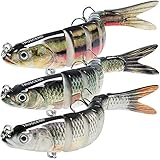
- Easy Catch Design – Three Actions in One Lure The Swimmax delivers wiggling, vibrating,gurgling and rattling noise at the same time. Steady retrieve triggers a lifelike swimming action with internal rattles that call fish from a distance – more actions, less effort. Ideal for family fishing.
- Heavy-Duty Dyneema Fiber Joint – Built to Last Unlike soft plastic joints that tear easily, the Swimmax features a strong Dyneema fiber connection between segments. This allows free movement while withstanding repeated strikes from toothy fish – no more broken jointed swimbaits.
- Wiggling & Vibrating Swim – Natural Baitfish Imitation The segmented body creates a seductive side‑to‑side wiggle combined with a tight vibrating swim. Mimics a wounded or fleeing baitfish with incredible realism – irresistible to bass, trout, and crappie.
- Rattling and Gurgling Noise – Attracts Fish from Afar Internal rattles produce rattling sound while segments disturb water and create gurgling noise that mimics feeding activity. This acoustic trigger draws curious predators even in murky water or low light – you'll get more strikes before the fish even see the lure.
- BKK Hook & Family-Friendly Design – Ready for Everyone Equipped with sharp, corrosion‑resistant BKK hooks, the Swimmax is easy to use and perfect for family fishing trips. Kids and adults alike can enjoy catching bass, trout, and crappie without complicated setups.
The calendar range can be broad. The U.S. Fish and Wildlife Service describes largemouth bass spawning as occurring in spring when water temperatures are roughly 59–75 °F. That wide range illustrates why a bass-spawning date in one state cannot reliably predict the timing in another.
Do these 3 things before closing this tab:
1Repair Windows errors before they cause bigger problems2Fix the driver behind crashes, sound loss and screen glitches3Clear out junk files and repair common Windows errors6. Channel catfish are often among the latest spring spawners
Channel catfish commonly spawn from late spring into summer after water reaches approximately 72–73 °F. They use protected cavities, holes along banks and comparable sheltered locations rather than the exposed gravel nests associated with many game fish.
The U.S. Fish and Wildlife Service gives an approximate April-through-July spawning window for channel catfish, with latitude affecting the actual dates. See its channel catfish species account for additional natural-history information.
Why water temperature matters more than the month
Fish are ectotherms: their body temperature and many biological processes are strongly influenced by their surroundings. As a result, spawning commonly responds to the temperature of the water rather than to a fixed calendar date.
The same day can represent very different spawning stages in different places. A deep northern lake may still be in the pike or walleye phase while a shallow southern reservoir is already seeing largemouth bass, bluegill or catfish spawning. Ice-out, cold fronts, spring rain, inflowing water, groundwater, elevation, water depth and wind exposure can all change the local progression.
Recommended Free Tools
Rank #4

- SPINNER FISHING LURES SET: This 12pcs spinner baits contains 2 different sizes of fishing lures 2.2''- 3''. Heavy weighted body: 0.13 - 0.23oz designed for catching more large fish. Ambitious anglers can choose the most suitable lure according to different sizes of fish species and different waters
- VIGOROUS SPINNING ACTION: The rooster tail fishing lures feature unique free-spinning blade and use an hand-made electroplated technique to retain the reflectivity of the metals and attract fish more easily. Its vigorous spinning action produces powerful sonic vibrations that call out to every fish in different areas
- EXCELLENT COMPONENTS - The effective trout lures combine the pulsating rooster tail, an ultra-sharp treble hook and a premium brass body to ensure excellent and long-lasting performance and enticement when retrieved slow or fast. The rugged solid brass blades will produce a thump you can feel
- ULTRA-SHARP TREBLE HOOK: The bass lures are equipped with ultra sharp fishing hook, which featuring high corrosion resistance and superb piercing power, making these fishing baits the most reliable fishing gear for bass fishing and trout fishing
- WIDELY FISHING SPECIES: These bass fishing lures can be widely used to catch trout, bass, crappie, walleye, pike, muskie, perch, snook, etc. This swimbait is quite suitable for both freshwater and saltwater and functions well in all water layers
Temperature is not the only trigger. Increasing daylight, dissolved oxygen, water level, current, access to gravel or vegetation, lake morphology and migration routes also matter. River fish may respond especially strongly to discharge, flow conditions and access to suitable gravel, so a river does not always follow the same pattern as a lake.
Fall-spawning freshwater fish do not fit the spring chart
The spring-warming sequence is incomplete if it is presented as a list of every freshwater fish. Some important coldwater species spawn in autumn instead.
- Brook trout normally spawn around September and October.
- Lake trout commonly spawn in fall, often in late October or November in northern U.S. waters.
See the U.S. Fish and Wildlife Service brook trout account for brook trout timing. Salmon and steelhead should also be treated separately: their return and spawning schedules vary by species, population and watershed. NOAA’s salmon life-cycle guidance explains why they cannot be assigned one generic place in a freshwater-lake spawning chart.
Independent reader supportYour contribution helps us test, update, and keep practical guides available for everyone.How to tell what is spawning in a particular lake
For a specific waterbody, the most reliable approach is to combine local fisheries information, a measured water temperature and habitat observations.
- Check the local authority first. State or provincial fisheries agencies may publish species-specific surveys, regulations or seasonal information for particular waters.
- Measure the water directly. Air temperature is a poor substitute. Take readings at the depth and shoreline area where fish are active, and compare several locations if the lake has distinct shallow, deep, inflowing or wind-exposed zones. A water temperature thermometer can make repeat observations easier, but one reading cannot prove that a species is spawning.
- Match temperature with habitat. Look for flooded vegetation for pike, gravel or rocky shoals for walleye, submerged vegetation or wood for yellow perch, firm shallow bottoms for crappie and sunfish, clean gravel nests for smallmouth bass and protected holes or cavities for catfish.
- Allow for overlap. Several species may be spawning at once, especially when temperatures rise quickly. Fish in shallow water are not necessarily spawning; they may be feeding, warming themselves or seeking cover.
- Check fishing regulations. Closed seasons, catch limits and spawning-related restrictions vary by jurisdiction and waterbody. For example, Wisconsin provides species- and waterbody-specific information through its fishing seasons guidance. Always verify the rules that apply where you are fishing.
Helpful field reference
A species-identification reference can be useful when a fish’s body shape, markings or fin pattern are unfamiliar. A freshwater fish field guide may help distinguish pike, perch, walleye, bass, sunfish, trout and catfish before you apply a spawning timeline. It will not provide exact dates for your local lake, so use it alongside local fisheries information and measured conditions. Disclosure: this article may earn a commission if you purchase through an approved product link.
Best Value

- INCLUDED IN EACH FISHING KIT: Each Mystery Tackle Box from Catch Co comes with a variety of baits and lures (minimum 5 different items) and other educational and fun content
- PRODUCTS: We work with the best brands in the fishing industry and ensure these products are both effective and specifically designed for freshwater bass (smallmouth and largemouth).
- INFORMATIONAL CONTENT: Get the best instruction and information to improve your fishing adventures by catching more fish with these helpful tips!
- MILLIONS OF BOXES: Our team has been sending boxes full of the best fishing gear since 2012 so join us today!
- BEST FISHING KIT: The Mystery Tackle Box from Catch Co is the best fishing kit for everyone this holiday season!
Bottom line
In a typical temperate North American lake, the generalized spring order is northern pike → yellow perch and walleye → black crappie → smallmouth bass → largemouth bass and sunfish → channel catfish. The order is not universal, the temperature ranges overlap, and local conditions can rearrange it. Brook trout and lake trout may spawn in fall, while salmon and steelhead follow population- and watershed-specific migration cycles. For the most accurate answer on a particular lake, trust measured water temperature and local fisheries guidance more than a fixed calendar.
Frequently Asked Questions
Do all freshwater fish spawn in the same order?
No. Freshwater fish do not follow one universal spawning order. The sequence changes with water temperature, latitude, flow, habitat, daylight and local conditions. Several species can also spawn at the same time.
Which freshwater fish usually spawn first?
Northern pike are commonly among the earliest spring spawners, often shortly after ice-out in shallow vegetated water. However, local conditions can allow another species to begin first in a particular waterbody.
PC Slower Than It Used to Be?
A free scan shows the junk files, broken settings and background clutter dragging Windows down - then fixes them in one click.Free scan · Windows 10 & 11Outdated Drivers Are Slowing You Down
One free scan finds every outdated or missing driver and matches the right update for your exact hardware.Free scan · exact hardware matchWhich freshwater fish spawn last?
In the generalized spring sequence, channel catfish are often among the latest, spawning when water reaches about 72–73 °F. Brook trout and lake trout may spawn later in the year, but they are fall spawners rather than late entries in the spring sequence.
How can I tell which fish are spawning in my lake?
Use local fisheries guidance together with water temperature and habitat observations. A measured temperature is more useful than the calendar, but temperature alone cannot prove that a fish is spawning.
The Bottom Line
General spring pattern: northern pike usually start first, followed by yellow perch and walleye, black crappie, smallmouth bass, largemouth bass and sunfish, and then channel catfish. Treat this as a temperature-driven guide for temperate North American waters—not a universal rule. Fall-spawning trout and lake trout belong in a separate cycle.
Quick Recap
Product prices and availability are accurate as of the date/time indicated and are subject to change. Any price and availability information displayed on Amazon at the time of purchase will apply.




