
House flies, fruit flies, drain flies, cluster flies, blow flies and fungus gnats are six fly types people commonly notice in and around homes. “Most common” is a practical household guide, not a measured worldwide ranking: lists change with region and with whether they count indoor pests, nuisance flies or filth-associated species. University of Maryland Extension describes the house fly as the most common fly found in and around homes, while other extension and public-health lists use different scopes.
The fastest way to identify one is to combine appearance with location. A tiny fly around fermenting fruit suggests a different source from a fuzzy fly beside a drain, a mosquito-like insect over potting soil or a metallic fly near a pet-waste bin. Correct identification matters because each type breeds in a different material, and killing adults without removing that material usually provides only temporary relief.
As an Amazon Associate I earn from qualifying purchases.
How to identify a household fly
Start with two observations: what the adult looks like and where you repeatedly find it. Size alone is unreliable because several unrelated flies are small and dark. Look for body color, wing shape, hairiness, eye color and whether the insects are fast, sluggish or hovering. Then inspect the nearby breeding material: food residue, a drain film, damp soil, garbage, animal waste or an entry point in the building.
Do these 3 things before closing this tab:
1Repair Windows errors before they cause bigger problems2Scan for outdated or missing drivers - takes under a minute3Clear out junk files and repair common Windows errorsThe six categories below are useful first-pass identifications, not a substitute for an entomologist when the source is unclear, maggots are present, or a persistent infestation could involve a hidden animal carcass. The University of California Agriculture and Natural Resources notes that a fly life cycle is often completed in 7 to 14 days, depending on species and environmental conditions; a new generation can therefore appear quickly when a breeding site remains.
#1 Best Overall

- Catch Flying Insects 24/7: This plug-in flying insect trap uses blue & UV light to attract and catch house flies, fruit flies, gnats, and flying pests. Its continuous attraction helps catch insects day and night for everyday indoor flying pest control.
- No-Mess Adhesive Cartridge: Disposable glue cartridge works like bug sticky traps by holding trapped insects hidden on the wall-facing adhesive pad, while the no-mess tab makes cartridge removal simple when it is time to toss and replace.
- Spray-Free, Zap-Free, Odor-Free Design: This quiet fly trap helps quickly and continuously control small flying insects indoors without spraying, zapping or added odors, making it a discreet everyday option in kitchens, living rooms, bathrooms, enclosed patios, and other indoor spaces.
- Family-Friendly Fly Trap: Safe for use around children and pets when used as directed.* Works best placed near the source - fruit bowls, trash bins and indoor plants, where flying insects and fungus gnats gather.
- Year-Round Indoor Fly Control: Blinking blue light reminds you to check the cartridge every six weeks. Includes 1 device & 1 cartridge for everyday fly control in your kitchen and home. Stock up on refills or choose a Value Pack to keep a fly catcher in every room.
Six common types of flies in and around homes
| Type | Appearance | Where adults are noticed | Larval breeding source | Typical pattern | First source-specific step |
|---|---|---|---|---|---|
| House fly (Musca domestica) | Dull gray, about 1/4 inch long, with four dark thorax stripes | Kitchens, rooms near doors and windows, trash areas | Feces, garbage and other decomposing organic matter | Indoor or outdoor; enters through openings | Remove and cover waste, pet feces and other organic sources |
| Fruit fly (Drosophila spp.) | Very small; often tan with red eyes | Fruit bowls, recycling, bottles, sweet or fermented spills | Ripening or rotting food and sugary residues | Usually indoors, especially kitchens | Discard overripe produce and scrub residues |
| Drain fly (moth or sewer fly) | Tiny, gray, fuzzy and moth-like | Sinks, showers, floor drains and bathrooms | Slimy organic buildup (biofilm) inside drains | Indoors wherever drains stay damp | Brush away the organic film inside the drain |
| Cluster fly | Sluggish, dark gray and nonmetallic; house-fly-like | Windows, lights, attics, wall voids and sheltered rooms | Earthworms outdoors | Adults gather indoors in fall, winter or spring | Seal cracks, vents and other entry points |
| Blow fly | Usually larger, metallic blue, green or sometimes coppery | Near garbage, animal remains, manure or pet-waste areas | Carrion, garbage, manure and decaying organic matter | Outdoor-associated; can enter and emerge indoors | Find and remove the decaying source |
| Fungus gnat | Delicate, small and long-legged, mosquito-like | Hovering over houseplants and windows near plants | Moist potting soil; fungi and sometimes plant roots | Indoors around frequently watered plants | Let the soil surface dry between waterings |
1. House flies: the gray flies around waste and doors
What they look like
An adult house fly is usually dull gray and about 1/4 inch (6 to 7 millimeters) long. Four dark stripes run down the thorax, the body section behind the head. It is the familiar fast-moving fly that lands on walls, food-preparation areas and windows.
Why they are in the house
House-fly larvae develop in feces, garbage and similar moist organic material. Outdoors, that can include animal manure or pet waste. Adults may enter through an open door, a torn screen or another gap, then move toward food, moisture and waste indoors. A sudden increase often means a bin, compost container, litter area or overlooked spill is supporting development nearby.
What to do
- Remove garbage, pet feces and other decomposing material promptly.
- Wash and dry waste containers, and keep lids closed.
- Repair screens and keep doors closed where practical.
- Protect food and clean food-preparation surfaces after a fly has contacted waste.
Fly paper or an indoor trap can reduce adults after sanitation and exclusion, but it cannot replace removal of the breeding material. House flies are filth-associated insects; that does not mean every individual causes illness, but contact with waste can transfer contamination to food and surfaces.
2. Fruit flies: tiny flies around produce and sweet liquids
What they look like
Fruit flies, also called vinegar flies, are much smaller than house flies. Many are tan or light brown with conspicuous red eyes. Their small size lets them emerge from residues that look insignificant, including a thin film in a bottle or a drop beneath an appliance.
Rank #2
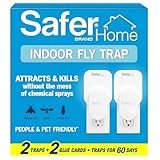
- PLUG-IN CONVENIENCE: Simply plug this indoor fly trap into any standard outlet and it starts working immediately to attract and capture fruit flies, gnats, moths, and other flying insects using UV LED light technology
- FAMILY-FRIENDLY PROTECTION: This gnat killer indoor uses no chemical insecticides, making it safe for use around children and pets when used as directed while providing effective pest control for your home environment
- DUAL-PACK VALUE: Includes 2 plug-in devices plus 2 StickyTech glue cards for comprehensive coverage, allowing you to protect multiple rooms or replace cards as needed for continuous insect trapping performance
- WIDE COVERAGE AREA: Each device protects up to 400 sq ft for a total of 800 sq ft coverage, making these fly traps indoor perfect for kitchens, bedrooms, living rooms, and other areas where flying pests gather
- DISCREET OPERATION: Versatile design rotates to fit any outlet orientation while the UV LED light attracts bugs 24/7 without disrupting your daily activities or sleep, keeping trapped insects hidden from view
Why they gather in kitchens
Drosophila larvae use ripening or rotting fruit, fermenting liquids and other sugary food residues. Common sources include fruit bowls, juice, wine or beer residue, recycling containers, compost caddies and damp cloths with food trapped in them. Adults may keep appearing for days after the obvious fruit has been removed because eggs or larvae remain in a container, drain edge or spill.
Source-first control
- Discard overripe produce and refrigerate fruit that will not be eaten promptly.
- Rinse cans, bottles and jars before placing them in recycling.
- Scrub counters, under-appliance edges, trash lids and sticky spots.
- Empty or wash compost and food-waste containers.
- Use a small trap only as supplemental adult control; continue looking for the residue sustaining the population.
A trap can show whether adults are declining, but trapping alone leaves the larval food in place. Do not pour pesticide into a food-preparation area or use any product where pets can reach it unless its label specifically permits that use.
3. Drain flies: fuzzy moth-like flies by sinks and showers
Recognition and source
Drain flies, also called moth flies or sewer flies, are tiny gray insects with a fuzzy, moth-like outline. They tend to rest on walls near sinks, showers, floor drains and other plumbing fixtures rather than flying long distances. Their larvae live in the slimy organic film coating the inside of a drain or trap, not in clean flowing water.
Free tools Windows power users keep installed
One-click scans. No signup required.
How to clear the breeding film
- Identify the drain where adults cluster, including little-used floor or utility drains.
- Remove the drain cover and scrub the inside walls, cover and accessible trap with a hard-bristle brush.
- Flush away loosened material according to the plumbing fixture’s instructions.
- Clean adjoining overflow openings and check for leaks or standing water.
- Repeat inspection if adults return; a second drain may be supplying them.
Simply pouring a quick chemical treatment down the drain may kill some larvae or adults without removing the film. Mechanical removal is the key step recommended by UC Agriculture and Natural Resources. Keep brushes and cleaning products away from pets, and never mix household chemicals.
Rank #3

- REUSABLE: TERRO fly trap can be emptied and refilled with bait and water to continue trapping flies
- EASY TO USE: Simply pour in the fly trap bait, then add water to the fill line and swirl to mix. Add more water as needed to keep the bait moist and flies submerged
- OUTDOOR FLY TRAPS: Attracts and traps flies outdoors
- IRRESISTIBLE TO FLIES: Combined with the fly bait, the trap’s color and diamond-shaped lid is designed to attract more flies
- SAY GOODBYE TO FLIES: Use these fly traps outdoors to attract, trap, and kill a variety of flies, including house flies, barn flies, and bottle flies; they go in for a treat but are unable to escape
4. Cluster flies: sluggish flies appearing at windows in cool seasons
How they differ from house flies
Cluster flies are dark gray, nonmetallic and generally slower than house flies. They can look similar at a glance, but they often collect in groups on sunny windows, around lights, in attics or inside wall voids. Their appearances commonly peak when adults move into sheltered spaces in fall, remain protected during winter, or emerge on warm days in late winter and spring.
Why sanitation is not the main answer
Cluster-fly larvae do not develop in garbage. They use earthworms outdoors, and adults seek protected buildings for shelter. Finding several at a window therefore points more strongly to an entry or overwintering site than to a dirty kitchen bin.
Exclusion and indoor cleanup
- Inspect window frames, soffits, vents, siding joints and utility penetrations for gaps.
- Repair screens and seal cracks with an appropriate sealant.
- Screen vents without blocking required airflow.
- Vacuum or swat adults indoors and empty the vacuum contents promptly.
Sealing entry points before the next seasonal movement is more durable than repeatedly killing the adults that have already entered. Large numbers emerging from inaccessible wall or ceiling spaces may justify a professional inspection.
Quick wins for a faster PC:
Scan for outdated or missing drivers - takes under a minuteDriver Scan →Repair Windows errors before they cause bigger problemsFix Now →Fix the driver behind crashes, sound loss and screen glitchesFind Drivers →5. Blow flies: metallic flies that can signal decaying material
Appearance and behavior
Blow flies are often larger than house flies and may shine metallic blue, green or copper. Color varies, so location and the presence of maggots are important clues. Adults are attracted to carrion, garbage, manure and other decomposing organic material.
Rank #4
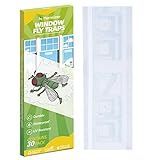
- No Trace Left - After peeling it off, there's nothing sticky will be left on the window, it will absolutely keep your window clean.
- Clean and Transparent - It will not affect the light transmittance of window, and not easily be spotted by the flies. -PLEASE NOTE: Unique Dual-Side Design. Must be installed with CATCH SIDE facing INDOORS towards the room to work correctly.
- Strong Viscosity - Adopting specially designed glue of no chemical and no pollution, there is no way to escape once the flies stick on it.
- Safe and Convenient - Odorless, non-toxic and Eco-friendly, it won't affect the health of babies or pets and easy to use.
- Included - Each package contains 30pcs disposable window fly trap. Ship new and old packaging at random. If there is any issue with quantity, please feel free to contact us.
When to investigate urgently
A few blow flies outdoors near a garbage or animal-waste container are not unusual. Repeated adults indoors, an odor, or unexpected maggots can indicate a concealed source such as a dead rodent in a wall, attic or crawlspace. They can also develop in forgotten garbage, a dead animal in a chimney or another inaccessible organic deposit.
Finding and removing the source
- Check indoor and outdoor waste containers, compost, pet-waste areas and places where an animal could be trapped.
- Look for odor, staining, maggots or flies concentrated at one vent, light fixture or wall section.
- Remove the source with gloves and suitable sanitation, or arrange a pest or wildlife inspection when it is inaccessible.
- Clean contaminated surfaces and keep food covered until the source is gone.
Adult sprays may provide short-term relief but will not stop emergence from a carcass or decomposing material. Because blow flies can contact waste, treat persistent indoor activity as a sanitation problem rather than merely a nuisance.
Independent reader supportYour contribution helps us test, update, and keep practical guides available for everyone.6. Fungus gnats: mosquito-like flies hovering over houseplants
What they look like
Fungus gnats are delicate, small, long-legged flies that can resemble miniature mosquitoes. They often hover in short, weak flights over potting soil or gather on nearby windows. Their association with plants and damp soil is usually more informative than their exact size.
Recommended Free Tools
Why wet soil produces them
Larvae develop in moist potting mix, feeding on fungi and, in some circumstances, plant roots. Frequent watering, poor drainage and saucers that stay wet create favorable conditions. Adults may be visible even after watering has changed because immature stages already present in the soil continue developing.
Best Value

- Catch Flying Insects 24/7: This plug-in flying insect trap uses blue & UV light to attract and catch house flies, fruit flies, gnats, and flying pests. Its continuous attraction helps catch insects day and night for everyday indoor flying pest control.
- No-Mess Adhesive Cartridge: Disposable glue cartridge works like bug sticky traps by holding trapped insects hidden on the wall-facing adhesive pad, while the no-mess tab makes cartridge removal simple when it is time to toss and replace.
- Spray-Free, Zap-Free, Odor-Free Design: This quiet fly trap helps quickly and continuously control small flying insects indoors without spraying, zapping or added odors, making it a discreet everyday option in kitchens, living rooms, bathrooms, enclosed patios, and other indoor spaces.
- Family-Friendly Fly Trap: Safe for use around children and pets when used as directed.* Works best placed near the source - fruit bowls, trash bins and indoor plants, where flying insects and fungus gnats gather.
- Year-Round Indoor Fly Control: Blinking blue light reminds you to check the cartridge every six weeks. Includes 2 devices & 2 cartridges for everyday fly control in your kitchen and home. Stock up on refills or choose a Value Pack to keep a fly catcher in every room.
Reduce the population without harming plants or pets
- Allow the soil surface to dry between waterings, while following the plant’s moisture needs.
- Correct drainage problems and empty standing water from saucers.
- Use yellow sticky cards near, but out of reach of, pets and children to monitor and trap adults.
- Inspect newly purchased or moved plants before placing them with the rest of the collection.
Sticky cards address flying adults; changing moisture conditions addresses the larval habitat. Do not let a pet chew treated leaves or sticky cards, and follow every product label if an insecticide is considered.
Why source removal works better than killing adult flies
Adult flies are the visible stage, but eggs and larvae remain in the material that supports them. UC Agriculture and Natural Resources summarizes the principle this way: “The best way to manage flies and prevent future infestations is to focus on exclusion, sanitation practices, and habitat modification that removes fly breeding sites and attractive conditions.” In practice, that means matching the intervention to the type: clean food residue for fruit flies, brush drain biofilm for drain flies, dry plant soil for fungus gnats, seal entry points for cluster flies, and remove waste or carrion for house and blow flies.
Traps, fly paper, sticky tape and electrocution light traps are supplemental tools. UC ANR notes that fly paper and electrocution light traps work best after exclusion and sanitation have reduced fly numbers, and that different traps suit different species. A light trap designed for flying adults will not remove larvae in a drain, pot or garbage bin.
A practical identification and response checklist
- Record the setting: note whether flies are concentrated at fruit, a drain, houseplants, windows, waste or a pet area.
- Inspect the material: look for fermenting residue, slime, damp soil, feces, garbage, manure, carrion or a building gap.
- Compare body features: gray stripes suggest a house fly; red eyes and fruit suggest a fruit fly; fuzzy wings by plumbing suggest a drain fly; metallic color suggests a blow fly; sluggish window clusters suggest a cluster fly; long legs over soil suggest a fungus gnat.
- Remove or modify the source: clean, dry, discard, seal or repair according to the suspected type.
- Protect people and pets: cover food, clean preparation surfaces, store waste securely and keep traps or chemicals inaccessible to animals.
- Recheck after the life-cycle window: because many fly life cycles can complete in 7 to 14 days under suitable conditions, continued emergence after cleaning means a source may remain or a second source needs inspection.
When to seek professional help
Arrange an inspection when blow flies and maggots persist indoors, the source appears inside a wall or ceiling, a drain infestation returns after thorough cleaning, or sealing and sanitation do not reduce a recurring seasonal cluster-fly problem. Bring a photo and note the room, time of year and suspected source. If a product is used, read the label for the target pest, application site, ventilation requirements and restrictions around pets. Never assume one insecticide or trap is appropriate for all six fly types.
What these six types have in common—and what they do not
All six are small-fly problems that become easier to solve when the breeding habitat is identified. They are not interchangeable, however. House and blow flies are associated with waste and decay; fruit flies with fermenting food; drain flies with plumbing biofilm; fungus gnats with wet plant soil; and cluster flies with sheltered building spaces while their larvae develop outdoors in earthworms. That distinction is why a correct first observation saves time and avoids unnecessary pesticide use.
Quick Recap
Product prices and availability are accurate as of the date/time indicated and are subject to change. Any price and availability information displayed on Amazon at the time of purchase will apply.





Leave a Reply