Free tools Windows power users keep installed
One-click scans. No signup required.
Pet insurance may not pay for care tied to a condition that existed before coverage began, treatment during a waiting period, or services the policy specifically excludes. The definitions, waiting periods, and exceptions depend on the policy and state law, so check the actual policy form—not just a summary of benefits—before enrolling or filing a claim.
What pet insurance commonly doesn’t cover
Most pet insurers exclude pre-existing conditions, and hereditary or congenital conditions are also common exclusions, according to the National Association of Insurance Commissioners (NAIC). Policies may also exclude or limit routine, preventive, dental, behavioral, hereditary, or elective care. These are common categories to check, not exclusions that apply identically to every plan.


A deductible, coinsurance or reimbursement share, and coverage limit work differently from an exclusion: they can reduce or cap payment for eligible care, while an exclusion removes a service or condition from coverage under the applicable terms. Compare both types of contract terms. The Washington State Office of the Insurance Commissioner recommends reviewing deductibles, copays, limits, waiting periods, and exclusions.
How pre-existing conditions can affect coverage
A pre-existing condition is generally a policy-defined category involving a condition that existed, showed signs, or received medical attention before the contract’s coverage trigger. The exact definition and evidence rules vary. A formal diagnosis is not necessarily the only relevant factor: the insurer may review symptoms, veterinary advice, testing, or treatment documented before enrollment.
#1 Best Overall
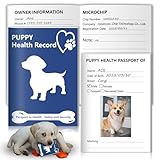
- Product Include:When you choose our dog vaccines records tracker, you'll receive one notebook.This 12-page puppy health journal has 8 dedicated pages for tracking your pup’s health, vet visits, and key details, with 4 blank pages at the end for jotting down extra notes, pet-related info, or anything else you want to record.
- Ideal Size for Record Keeping:Each dog vaccine record book measures 5x3.5 inches folded; 5x7 inches unfolded, allowing for easy portability and storage.These handy health records notebook for dogs with double sided printing, featuring enough space for all your pets important information,plus, it has dedicated spots for sticking on vaccine stickers and adding cute puppy photos.They offer a stylish and organized approach to pet health documentation, a must have addition to your pet supplies.
- Premium Quality: The puppy health record tracker’s cover features 300gsm coated paper with vibrant full-color printing and a protective laminate finish. Inside, 100gsm high-quality offset paper pages are durable and ink-resistant, ensuring no bleeding from pens or markers—so your records stay neat and easy to read.
- Effortlessly Track Vaccinations and More:The canine health record booklets pages include:owner and puppy information,medical history and hospitalizations,vaccination record and sticker,dog service providers,fecal examinations and de-worming,heartworm screening, prevention and treatment etc.This record keeping tool will ensure every important detail is accounted for and make this task easy, organized, and straightforward.Add this essential tool to your pet supplies for a happier, healthier pet.
- Essential for Pet Owners:Designed for veterinary clinics and pet owners, these puppy vaccination record books make tracking key health details—like shots, checkups—simple and organized. When you’re away and leave your pup with a sitter or family, the dog medical record and vaccine book serves as a quick reference for their medical history. Plus, dedicated sections for photos, physical markings, and ID info prepare you for emergencies, helping you recover your friend quickly if they get lost.
The California Department of Insurance cautions that prior medical advice or treatment can affect whether a new policy pays for care related to that condition. The Illinois Department of Insurance says genetic conditions are often treated as pre-existing. Do not assume that a symptom, genetic condition, or later diagnosis will be treated the same way by every insurer; the policy wording and your pet’s records matter.
Some policies may distinguish among chronic, curable, hereditary, or congenital conditions, but the available guidance does not establish a universal rule for when a condition becomes eligible again. Ask the insurer to point to the governing language rather than relying on a general description.
What a waiting period means—and what happens if a problem starts during it
A waiting period is the span after purchase or the policy’s effective date during which some or all coverage has not started. California’s consumer guidance says treatment costs incurred before the applicable waiting period ends are not covered. The duration, the types of coverage affected, and when the clock starts depend on the policy and applicable state rules; there is no single duration established for all U.S. plans.
If symptoms or an injury arise during a waiting period, check the exact policy terms and ask the insurer how it will treat later care for that problem. Do not assume that coverage will begin automatically when the waiting period ends: the contract may also address conditions that first showed signs or received treatment during that span.
Quick wins for a faster PC:
Repair Windows errors before they cause bigger problemsFix Now →Scan for outdated or missing drivers - takes under a minuteDriver Scan →Clear out junk files and repair common Windows errorsFree Scan →Ohio’s rule is state-specific
Ohio Revised Code §3970.05 requires waiting periods and associated requirements to be disclosed before purchase. For a new policy, it limits waiting periods to 30 days for illnesses and orthopedic conditions not resulting from an accident; the statute also says waiting periods do not apply to renewal of existing coverage. It further provides: “A condition for which coverage is afforded under a pet insurance policy shall not be considered a preexisting condition under any renewal of that policy.” These are Ohio requirements, not a nationwide rule. See the current Ohio statute, whose page identifies the latest legislation as effective January 22, 2025.
Other exclusions and limits to inspect
The Nevada Division of Insurance identifies several areas where coverage is not uniform across plans. Check whether your policy excludes or offers coverage for:
Rank #4
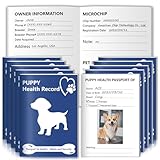
- Sufficient Quantity:When you choose our dog vaccines records, you'll receive 10 notebook.Whether you're a breeder, veterinary practice, or multi pet household, this will ensure you have enough documentation on hand for managing each pet's health history。Every puppy vaccination record book has 12-page puppy health journal has 8 dedicated pages for tracking your pup’s health, vet visits, and key details, with 4 blank pages at the end for jotting down extra notes, pet-related info, or anything else you want to record.
- .Ideal Size for Record Keeping:Each dog vaccine record book measures 5x3.5 inches folded; 5x7 inches unfolded, allowing for easy portability and storage.These handy health records notebook for dogs with double sided printing, featuring enough space and columns for all your pets important information,plus, it has dedicated spots for sticking on vaccine stickers and adding cute puppy photos.They offer a stylish and organized approach to pet health documentation, a must have addition to your pet supplies.
- Premium Quality: The puppy health record tracker’s cover features 300gsm coated paper with vibrant full-color printing and a protective laminate finish. Inside, 100gsm high-quality offset paper pages are durable and ink-resistant, ensuring no bleeding from pens or markers—so your records stay neat and easy to read.
- .Effortlessly Track Vaccinations and More:The canine health record booklets pages include:owner and puppy information,medical history and hospitalizations,vaccination record and sticker,dog service providers,fecal examinations and de-worming,heartworm screening, prevention and treatment etc.This record keeping tool will ensure every important detail is accounted for and make this task easy, organized, and straightforward.Add this essential tool to your pet supplies for a happier, healthier pet.
- Essential for Pet Owners:Designed for veterinary clinics and pet owners, these puppy vaccination record books make tracking key health details—like shots, checkups, and treatments—simple and organized. When you’re away and leave your pup with a sitter or family, the dog medical record and vaccine book serves as a quick reference for their medical history, ensuring care stays on track even in your absence. Plus, dedicated sections for photos, physical markings, and ID info prepare you for emergencies, helping you recover your friend quickly if they ever get lost.
- Preventive or routine care.
- Dental care not associated with an accident or injury.
- Behavioral treatment.
- Hereditary or breed-specific conditions.
- Elective procedures.
This is a checklist of examples, not a complete list of possible exclusions. If a service is not excluded, payment may still be reduced by a deductible or coinsurance, or capped by a per-condition, annual, or other limit. Check how the policy treats each item and how renewals affect ongoing coverage.
Independent reader supportYour contribution helps us test, update, and keep practical guides available for everyone.Questions to ask before buying or making a claim
Read the policy documents and ask the insurer for clear answers to these questions. California and Washington consumer guidance also recommends comparing waiting periods, pre-existing-condition terms, deductibles, copays, limits, and exclusions.
Recommended Free Tools
Best Value

- All-in-one pet care tracking: vaccinations, vet visits, medical exams, medications and more
- Easy access to pet’s health info: stay organized and on top of your pet's health
- Ample writing space: never run out of space; designed to last entire life of pet
- High-quality materials: durable and elegant design for long-lasting use
- Portable size: convenient A5 size, perfect for on-the-go; practical for vet visits and storage
- What exact definition of “pre-existing condition” applies? Do symptoms, veterinary advice, testing, or treatment count before a formal diagnosis?
- Does the policy distinguish curable conditions from chronic ones? If eligibility can return, what policy language and conditions govern that?
- What waiting period applies to accidents, illnesses, orthopedic conditions, and optional coverage? When does each period begin?
- How does the policy treat a condition that first shows signs or receives care during a waiting period?
- Are hereditary, congenital, dental, behavioral, preventive, or elective services excluded, limited, or available through an endorsement?
- What are the deductible, reimbursement or coinsurance rate, per-condition or annual limits, and renewal terms?
- What veterinary records or examination are required, and how will the insurer use them to assess exclusions?
State rules can add requirements, so consult your state insurance department and the current policy form for your location. An NAIC model law is not binding by itself; it applies only where adopted by a jurisdiction. The NAIC Pet Insurance Model Law is a model, not a substitute for checking your state’s law.
Why veterinary records are worth organizing
Medical records can help you understand what an insurer may review when deciding whether a condition is pre-existing. Keep veterinary notes, test results, and treatment history organized, and ask the insurer what records it requires. Organizing records does not change the contract or guarantee that a claim will be paid.
Quick Recap
Product prices and availability are accurate as of the date/time indicated and are subject to change. Any price and availability information displayed on Amazon at the time of purchase will apply.




