
Quick wins for a faster PC:
Scan for outdated or missing drivers - takes under a minuteDriver Scan →Clear out junk files and repair common Windows errorsFree Scan →Fix the driver behind crashes, sound loss and screen glitchesFind Drivers →If your newly adopted dog heads for an open door, patrols the fence, or repeatedly tries to get away, treat it as an immediate escape and safety problem—not proof that the dog wants the shelter back. Stress, fear, anxiety, upheaval, an unmet medical need, or unfamiliar surroundings can all produce escape-seeking behavior, and the behavior alone cannot identify which explanation applies.
Prevent another escape first. Supervise closely, secure doors and fencing, block routes to the outside, and provide a quiet, secure area whenever you cannot watch the dog. Then make the first days predictable and low-pressure, arrange a veterinary examination, and involve the adoption organization if attempts continue or anyone is at risk.
As an Amazon Associate I earn from qualifying purchases.
What “trying to return to the shelter” usually means
Adopters often use this phrase when a dog pulls toward the route used to leave the home, waits by an exterior door, searches for openings in a fence, or bolts when a door opens. There is no evidence in the guidance from Houston BARC, Cornell University, the American Animal Hospital Association (AAHA), or Nashville’s transition handout that this behavior means the dog literally remembers the shelter as home or is deliberately rejecting the adopter.
A newly rehomed dog has just experienced major changes in people, smells, sounds, handling, location, and daily schedule. Houston BARC explains that a new dog may look for a way out because of stress, anxiety, or fear. Cornell similarly describes fleeing through an open door when a dog is frightened during upheaval. Those explanations are possibilities, not a diagnosis for an individual dog. Medical discomfort, prior learning, or a home-and-dog mismatch may also need to be considered by a veterinarian and the adoption organization.
#1 Best Overall

- Engineered for Ultimate Strength: Constructed from 1/2 inch diameter rock climbing rope, this heavy duty dog leash is distinctively durable and strong. It is designed to withstand the strongest pulls from large and energetic dogs, giving you peace of mind that your pup won't break free during walks
- Comfortable Padded Handle: Say goodbye to rope burn. Our soft, cushioned foam handle provides an amazing grip and protects your hands from sudden tugs. Enjoy longer walks and extended training sessions with total comfort, even if your dog is a puller
- Maximum Nighttime Visibility: Highly reflective threads are woven through the entire length of the rope (not just painted on), keeping you and your fur baby visible to passing cars and cyclists during early morning jogs or late-night strolls. Perfect for urban streets and low-light environments
- Tangle-Free 360° Swivel: Featuring a heavy-duty metal clasp that rotates 360 degrees, this ensures the rope never gets twisted or tangled, no matter how much your dog moves around. The zinc alloy hook is rust-proof and easy to clip onto any dog collar or harness in seconds
- Versatile for Any Activity: Park walks, trail hikes, or yard training. Offers ideal balance of freedom and control. Comes in 4ft, 5ft, 6ft lengths and 12 colors. 3/8" diameter suits small to medium dogs – lightweight and non-bulky. For medium and large dogs, choose 1/2" diameter
Do not wait for the dog to “decide” to stay. Escape attempts can lead to traffic injuries, getting lost, falls, fights, or exposure. Management and calm adjustment support can begin immediately while you gather case-specific help.
What to do right now
1. Supervise every interaction with exits
Keep the dog with an attentive adult whenever the dog has access to the home. Close exterior doors before opening another door, and prevent the dog from following you through entryways. Ask household members to use the same routine so a well-meaning person does not leave an entrance open.
Inspect every route to the outside: front and back doors, garage doors, basement or balcony doors, gates, fence gaps, and spaces beneath or beside fencing. Secure loose latches and block openings that the dog could squeeze, climb, dig, or push through. Cornell also advises securing loose hazards and exits. A leash can support controlled handling during outdoor breaks, but it is not a substitute for a secure barrier and active supervision.
What’s actually slowing this PC down?
Pick the symptom - the matching free tool is one click away.
2. Use a secure area when you cannot watch
Houston BARC’s shelter guide states: “Confine your new dog in a safe area when you’re not able to supervise him.” Choose a quiet room or other secure space where the dog cannot reach an exterior exit or hazardous object. Keep the area comfortable with water, appropriate bedding, and familiar toys or other objects the dog already knows.
A pet gate may help manage access to a quiet area, but it cannot guarantee containment. Select and position any barrier according to the dog’s size, strength, climbing ability, and behavior. If the dog can defeat the barrier, use a more secure room and seek advice from the adoption organization or veterinarian.
Rank #2

- 【Professional Retractable Dog Leash】 The ultimate combination: 16 ft strong nylon reflective tape, impact-resistant ABS housing, and a stainless steel anti-chew cable. This design greatly reduces the risk of being bitten through, extending the leash’s lifespan. Augwind’s retractable leash is specifically designed for small to medium dogs under 50 lbs, offering the best value on the market
- 【Safe & Effective】16 ft Strong Reflective nylon webbing; Over 100,000 retraction times; Max anti-jerk tensile strength: 350 lbs; . Whether day or night, on the street or lawn, the Augwind retractable leash makes every walk safe and easy
- 【Quick Lock System】 Operate the pause, lock, and unlock buttons with a single thumb. Enjoy smooth braking and instant response. The Augwind retractable dog leash ensures the safety of both you and your pet on every outing
- 【2026 Equipment Upgrades】1. Reflective webbing 2. Chrome-plated, rust-proof 360° rotating clasp 3. Ergonomic soft silicone handle 4. Reserved slot for poop bag holder 5. Stainless steel anti-chew cable
- 【2-Year Warranty】 We are a professional pet products company committed to bringing the safest, most practical, and affordable pet products to pets and their owners. We promise to solve any quality issues within 2 years. We provide 24/7 after-sales service. If you have any questions, please feel free to contact us
3. Handle outdoor breaks as controlled trips
Use a leash and stay with the dog for every outdoor break while the dog is adjusting. Check the yard before opening the door and keep the route from the safe area to the exit controlled. Do not assume that a familiar-looking yard is secure until you have checked the perimeter and observed how the dog responds to it.
A standard leash is a modest safety aid for supervised handling; no particular leash design is established by these sources as escape-proof. If the dog slips equipment, bolts, or shows unusual strength or panic, stop and contact the adoption organization and veterinary team for an individualized plan rather than experimenting with increasingly restrictive equipment.
Make the first days quiet and predictable
Give the dog a retreat
Set up a low-traffic safe space before expecting the dog to socialize. Keep food and water there, use familiar bedding or toys when available, and allow the dog to rest without being pulled out. A dog that retreats is communicating a need for distance. Let the dog choose whether to approach you.
Use a calm voice and slow movements. Avoid crowding, reaching over the dog, staring, or repeatedly calling the dog out of the retreat. Calmly place meals and water, then give the dog time. The goal is not to force affection; it is to make the home predictable enough that the dog can begin to relax.
Keep a steady daily rhythm
Feed, provide outdoor breaks, offer brief play when the dog seeks it, and schedule quiet downtime at roughly consistent times. Predictability reduces the number of surprises the dog must process. Keep initial outings short and necessary rather than turning the first week into a tour of the neighborhood or a series of introductions.
Rank #3
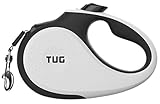
- Small Retractable Dog Leash is Suitable for Dogs Under 35 lbs; Medium For Dogs Under 55 lbs; Large For Dogs Under 110 lbs; Retractable Leashes Not Suitable For Chewing
- 16 ft Tape Retractable Dog Leash With Easy-Adjust Retraction; 360 Degree Tangle-Free Inlet
- Quick Lock And Unlock Feature - Easy Roll-On and Roll-Off With Your Thumb
- Super Comfortable Grip For Those Long Walks! Ergonomic Anti-Slip Handle
- Heavy Duty Internal Coil For Consistent Retraction and Recoil
AAHA’s quoted trainer, Leanne James, LVT, ABC-DT, CPDT-KA, IAABC-ADT, advises: “relax with your dog, take it easy the first couple of weeks and really don’t plan on them being the same dog in a couple of months.” She also says, “Don’t bring them everywhere, don’t have everybody come to your house. Don’t do anything overly exciting or overstimulating. Just literally chill with your dog for about a week or so.” These comments support a low-stimulation transition, not a promise that every dog will settle within one week.
The Tool Desk
Outbyte Driver Updater FREEFix the driver behind crashes, sound loss and screen glitchesFind Drivers →Outbyte PC Repair FREERepair Windows errors before they cause bigger problemsFix Now →Reduce visitors and intense stimulation
Delay parties, crowded outings, and forced greetings. Ask visitors to wait until the dog has had time to learn the household routine. When someone must visit, keep the dog in the secure retreat if that is where the dog feels safest, and do not require an interaction.
Introduce resident pets cautiously. Houston BARC advises allowing time to adjust before introducing resident pets, visitors, or other dogs. AAHA recommends that resident dogs meet the newcomer outside the home, even if they met at the shelter. Follow the adoption organization’s instructions and separate animals whenever an adult cannot supervise them.
Understand the 3-3-3 adjustment framework without treating it as a deadline
AAHA presents the 3-3-3 rule as an expectation-setting framework: the first three days, three weeks, and three months. It is not a measured outcome statistic, a scientific deadline, or a guarantee that waiting alone will solve a safety problem. Dogs vary widely, and rehoming may be traumatic for some.
| Period | Useful expectation | What to do |
|---|---|---|
| First 3 days | The dog may be overwhelmed, quiet, restless, fearful, or unable to show its usual behavior. | Prioritize containment, rest, food, water, supervised breaks, and a small predictable routine. |
| First 3 weeks | The dog may begin revealing more of its personality as the environment becomes familiar; behavior can change as the dog settles. | Continue low-pressure interactions, secure management, gradual introductions, and consistent daily care. |
| First 3 months | Adjustment may continue, but there is no promise that every dog follows this timeline. | Keep professional support involved if escape attempts, fear, aggression, or other unwanted behavior persists. |
A dog that appears calm at first may become more active or expressive later. Conversely, a frightened dog may become more withdrawn. Neither change proves that the adoption is failing. It does mean you should keep observing, documenting, and adjusting the plan with professional guidance.
Rank #4

- ENHANCED NIGHT VISIBILITY: Keep your dog safe during early morning or evening walks. The upgraded double-sided reflective stitching catches streetlights and car headlights brightly, ensuring you both remain highly visible to traffic in low-light conditions
- CUSHIONED ANTI-BURN HANDLE: A savior for hands when walking active dogs that pull. The soft, thick interior padding prevents painful rope burn and strain, providing a secure, comfortable grip for better control when your furry friend lunges. Includes a sturdy metal D-ring for clipping poop bag dispensers
- PERFECT 6FT BALANCE: The ideal length for urban walks, offering your dog enough freedom to sniff around while keeping them close enough for easy command in busy areas. Choose the 3/4'' width for small breeds, or the robust 1.0'' width for powerful medium to large dogs
- HEAVY-DUTY TANGLE-FREE CLASP: Features a strong metal spinning snap that allows 360° movement, preventing frustrating leash tangles so your dog can move freely around you. Built with high-density nylon webbing for reliable daily strength. NOTE: While tough for pulling, this nylon material is NOT chew-proof. Don't leave unattended with chewers
- COMPLETE THE LOOK: Available in vibrant colors tailored to match your dog's style. For the ultimate coordinated walking set, pair this leash with our matching Joytale reflective nylon collar
Do not punish growling, snapping, or other warning signals
Houston BARC explains that growling, baring teeth, and snapping communicate boundaries and feelings. Reprimanding those signals can suppress the warning without resolving the underlying fear or discomfort, increasing the risk that a later response appears more sudden.
If the dog growls or snaps, stop the interaction, create distance, and move people or animals away calmly. Do not corner the dog, grab the collar in anger, yell, or force the dog out of its retreat. Once everyone is safe, write down what happened: who was present, what occurred immediately beforehand, where the dog was, and what ended the interaction. Share that record with the veterinarian, adoption organization, or qualified behavior professional.
Use calm redirection and positive reinforcement for behavior you want to see, such as moving away from an open door, settling in the safe area, or checking in with a handler. Reinforcement should never require the dog to approach a frightening person or situation before the dog is ready.
Independent reader supportYour contribution helps us test, update, and keep practical guides available for everyone.Arrange veterinary and adoption support
Book the initial veterinary examination
Houston BARC recommends a full-service veterinary examination within 72 hours of adoption. Use that appointment to discuss the escape behavior, appetite, elimination, sleep, fear responses, pain signs, previous records, and any medication or medical restrictions supplied by the shelter. Bring written observations rather than relying on memory.
Recommended Free Tools
A veterinary examination cannot by itself determine every behavioral cause, but it can identify medical concerns that may affect comfort or behavior and establish a plan for follow-up. Ask the veterinarian what changes require an urgent call and whether referral to a qualified behavior professional is appropriate.
Best Value

- Upgrade: The product has been modified to use nylon thread directly sewing, very strong.All handles was sewn onto the leash instead of the cord ties.Package includes: frosted zipper bag,two handles dog leash.
- MAXIMUM TOUGHNESS AND DURABILITY: Nearly 2X thicker and stronger than standard dog leashes. 3mm thick and 1” wide with tightly webbed nylon for enhanced rugged construction.
- DUAL HANDLES FOR TOTAL CONTROL: Soft Neoprene and padded handle, comfortable than ever ;Equipped with an extra traffic handle for amazing control. Use the standard handle for those casual dog walks or quickly grab the built in traffic handle to guide your pup through crowded areas with ease.
- 360° Rotating Clasp: Swivel clasp prevents the leash from twisting and dog getting tangled. Heavy-duty metal clasp makes our training leashes last longer than most ones. Premium components for maximum strength
- BE SAFE AND VISIBLE AT NIGHT: Luminous reflective threading keeps you both safe and visible on your late-evening walks. Enjoy a large 2” heavy duty clip for added safety and thick D-ring to attach your favorite dog training clicker or dog poop bag holder.Packaging details:Frosted zipper bag,Dog leash with D ring
Contact the adoption organization
Ask the shelter or rescue for post-adoption support and all available records, including known triggers, behavior observations, medical history, and handling recommendations. Staff may recognize patterns that are difficult to interpret during the first days at home. Tell them exactly how the dog attempts to leave and what safety measures you have already put in place.
Find humane, force-free behavior help when needed
AAHA advises consulting a veterinarian and a certified canine behavior consultant if the dog does not settle or shows unwanted behavior. Its expert also identifies referral to a board-certified veterinary behaviorist as an option. Verify a professional’s credentials, methods, location, availability, and fees before scheduling.
Ask prospective trainers how they handle fear, escape attempts, growling, and aggression. Favor humane, force-free methods and avoid anyone who recommends intimidation, pain, or punishment for warning signals. A professional should be willing to explain the plan, safety precautions, and how progress will be measured.
Outdated Drivers Are Slowing You Down
One free scan finds every outdated or missing driver and matches the right update for your exact hardware.Free scan · exact hardware matchPC Slower Than It Used to Be?
A free scan shows the junk files, broken settings and background clutter dragging Windows down - then fixes them in one click.Free scan · Windows 10 & 11When the situation is urgent
Prioritize containment and call the veterinarian or adoption organization promptly when any of these occur:
- The dog repeatedly reaches doors, gates, or fences despite reasonable management.
- The dog escapes, is injured, or may have eaten a hazard.
- The dog shows panic, attempts to break through barriers, or cannot settle enough to eat, drink, rest, or eliminate normally.
- The dog threatens, bites, or snaps at a person or animal, or a household member cannot safely follow the management plan.
- Children, frail adults, resident pets, or other animals could be exposed to an unsafe interaction.
Until you receive case-specific advice, keep the dog separated from people or animals involved in the incident and remove access to exits. Do not test the dog again to see whether the behavior has improved.
A practical first-week checklist
- Inspect and secure every exterior door, gate, fence line, and other exit.
- Choose a quiet, secure room for unsupervised periods.
- Keep the dog under direct supervision when loose in the home.
- Use a leash and stay present for outdoor breaks.
- Provide familiar bedding or toys, food, water, and a low-traffic retreat.
- Keep meals, potty breaks, play, and rest predictable.
- Limit visitors, outings, and other intense stimulation.
- Do not force the dog from its retreat or force introductions.
- Arrange the recommended veterinary examination within 72 hours.
- Ask the adoption organization for records and post-adoption guidance.
- Record escape attempts, triggers, warning signals, appetite, sleep, and injuries.
- Seek qualified behavior support if the dog is not settling or safety is uncertain.
What not to assume
An escape attempt does not establish that the dog dislikes you, that the shelter was better, or that the adoption must end. It also does not prove a single cause such as separation anxiety. The available guidance is general; it cannot determine why one dog is trying to leave, whether a medical issue is involved, or whether a particular home setup is secure. Those questions require the dog’s history, an examination, and observation of the actual behavior.
Likewise, the absence of an escape attempt does not mean the dog is fully adjusted. Continue secure management and gradual routines while the dog learns the household. Safety practices should change only when the dog’s behavior and professional advice support that change.
Quick Recap
Product prices and availability are accurate as of the date/time indicated and are subject to change. Any price and availability information displayed on Amazon at the time of purchase will apply.





Leave a Reply