Quick wins for a faster PC:
Repair Windows errors before they cause bigger problemsFix Now →Scan for outdated or missing drivers - takes under a minuteDriver Scan →Clear out junk files and repair common Windows errorsFree Scan →Feed goats good-quality forage or browse as the foundation of their diet, keep clean water accessible, and choose minerals with local forage and water conditions in mind. Add grain or concentrate only when the goat’s forage and life stage indicate a need; growing kids and pregnant or lactating does may need more energy or protein than maintenance animals. Change feeds gradually and seek local professional guidance for a precise ration.
Forage quality and nutritional needs vary, so one feed recipe or grain amount does not suit every goat. Body condition, growth, pregnancy, lactation, production, and the quality of available forage all matter.
Key takeaways
- Good-quality pasture, browse, or hay should form the foundation of a goat’s diet.
- Keep clean, fresh water readily accessible. Intake varies with conditions and the goat’s physiological state.
- Choose a mineral plan with the herd’s local forage and water conditions in mind.
- Grain is conditional, not a replacement for forage. Excess concentrate, inadequate roughage, and abrupt diet changes can cause digestive problems.
- Kids, growing goats, pregnant does, and lactating does may need different rations from maintenance animals.
- Use forage testing and local veterinary, Extension, or nutritionist guidance when balancing a ration.
What should goats eat every day?
Every day, goats need good-quality forage or browse, clean water, and a mineral plan suited to the herd and its local conditions. Forage may come from pasture, browse, or grass or legume hay. Add grain or formulated concentrate only when the goat’s life stage, body condition, production, or forage quality indicates an additional need.
Goats browse and select leafy plant material, but that does not mean every plant is safe. Identify and exclude poisonous plants, and do not assume that hungry goats will avoid them. Forage quality and availability can change with plant maturity, growing conditions, and storage.
Free tools Windows power users keep installed
One-click scans. No signup required.
#1 Best Overall
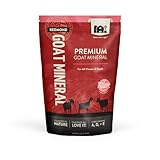
- CORRECTS MINERAL DEFICIENCIES: Harvested from an ancient sea deposit in Central Utah, Goat Mineral Mix starts with our expansive profile of 60+ trace minerals and is fortified with selenium (30 ppm), manganese, cobalt, copper, iodine, zinc and vitamins A, D and E.
- NO FILLERS OR CHEMICAL PROCESSING: 100% sea minerals and vitamins with no filler, byproducts, or chemical processing
- GOATS LOVE IT: Animals tend to turn up their noses at low salt/heavy mineral mixes. Fortunately, Redmond Minerals naturally contains a higher salt to mineral ratio that uses your goats’ instinctual cravings to regulate their mineral intake. When offered a choice, animals go for delicious Redmond Minerals every time!
- CRAFTED BY FARMERS: Founded by farmers over 50 years ago, Redmond is proud of our roots and legacy of supporting healthy farms the world over. We often hear from customers “our animals just do better on Redmond,” -- we are happy to help your farm simplify your mineral program, save money, and improve the health and productivity of your operation
A practical daily feeding setup is:
- Forage: Clean, mold-free pasture, browse, or hay as the diet’s foundation.
- Water: Fresh, clean water readily accessible to every goat.
- Minerals: A mineral plan selected with local forage and water conditions in mind.
- Supplemental feed: Concentrate only when the goat’s needs and the whole ration justify it.
What is the best feed for goats?
There is no single best bag of feed for every goat. The foundation is clean, good-quality forage that is appropriate for the animal’s needs and available in sufficient quantity. Forage quality depends on plant species, maturity, growing conditions, and storage; appearance alone cannot establish its nutrient value. A maintenance goat with adequate forage may not need grain, while a growing kid or pregnant or lactating doe may need additional nutrition.
| Feed option | What to consider | How to use it | Main caution |
|---|---|---|---|
| Pasture and browse | Plant species, maturity, cleanliness, availability, and local conditions | Use suitable forage as the diet’s foundation | Identify and exclude poisonous plants; do not assume all plants are safe |
| Grass or legume hay | Nutrient quality varies with species, maturity, growing conditions, and storage | Use clean hay when grazing is unavailable or inadequate | Appearance alone cannot establish nutrient quality |
| Mineral supplement | Declared formulation, the rest of the ration, and local forage and water conditions | Choose an appropriate plan for the herd | A product label alone cannot replace assessment of the whole ration |
| Grain or concentrate | The goat’s stage, body condition, forage supply, and ration needs | Use only when a genuine nutritional need exists | Excess concentrate or abrupt changes can cause digestive problems |
Can goats live on hay alone?
Good-quality hay can provide much of the diet for some maintenance goats, but hay alone is not automatically a complete feeding plan. Goats need clean water and an appropriate mineral plan, and hay may not meet the needs of growing kids or pregnant and lactating does. Forage testing can help determine whether the hay suits the animals and the ration.
Hay quality varies with plant species, maturity, growing conditions, and storage. Inspect it for mold or spoilage and avoid feeding contaminated forage. Forage analysis is more useful than judging nutrient content by color or smell alone. Oklahoma State University Extension’s goat nutrition guidance recommends laboratory forage analysis.
What is the best hay for goats?
The best hay depends on its plant type, maturity, cleanliness, nutrient quality, availability, and the needs of the goat eating it. Grass and legume hay can both be appropriate; the whole ration and the animal’s life stage determine whether a particular hay is suitable.
Rank #2
- MINERALS – 63 naturally occurring trace minerals, for improved absorption and utilization
Inspect hay before feeding it. Avoid moldy or spoiled forage, and check for unfamiliar plants that may be toxic. Appearance alone cannot establish the nutrient content. Oklahoma State University Extension’s goat nutrition guidance recommends forage analysis when balancing a ration. This can be especially helpful when animals are growing, pregnant, lactating, or not maintaining condition.
How much water does a goat need?
Merck Veterinary Manual estimates 2–4 gallons per day for a 50-kg goat under maintenance conditions. This is a context-specific estimate, not a universal target: water intake varies with temperature, activity, forage moisture, pregnancy, and lactation. Keep clean, fresh water readily accessible rather than rationing it to a fixed daily amount.
Check water access and cleanliness regularly. If intake or performance is unexpectedly low, consider the goat’s health, environment, diet, and access to water, and consult a veterinarian when needed. Merck Veterinary Manual’s goat nutrition guidance discusses water requirements.
What kind of minerals do goats need?
Mineral needs depend on the complete ration and local conditions. Forage and water contribute minerals, and trace-mineral availability varies geographically. Choose an appropriate goat mineral plan after considering the forage, water, other feed, and local conditions; a product label alone cannot establish that the full ration is balanced.
The Tool Desk
Outbyte PC Repair FREEClear out junk files and repair common Windows errorsFree Scan →Outbyte Driver Updater FREEScan for outdated or missing drivers - takes under a minuteDriver Scan →Rank #3

- Full of vitamins and minerals that help maximize overall health and well-being of your herd
- HERDLIFE BILLY BLOCK / PREMIUM GOAT MINERALS / 4LB
- Made in the USA
In small herds, loose mineral and salt are often offered free-choice, but the appropriate approach depends on the herd and local conditions. Avoid stacking supplements without accounting for the combined ration. Consult local veterinary or Extension guidance if you have a specific mineral concern. Merck Veterinary Manual’s nutrition guidance for goats discusses goat nutrition and mineral management.
Can goats eat sheep feed or sheep mineral?
Do not assume sheep and goat mineral or feed are interchangeable. Mineral needs depend on local forage and water conditions and the complete ration. Choose an appropriate plan for goats rather than making a substitution based on the product name alone. For a specific ration question, ask a veterinarian, Extension educator, or qualified livestock nutritionist.
Do goats need grain?
Goats do not automatically need grain. A maintenance goat with adequate forage may not need cereal grain. Growing kids and pregnant or lactating does may require additional energy or protein, depending on their condition and the forage available. Concentrate choice and amount depend on the whole ration; grain is not a way to make poor forage adequate.
Introduce new concentrate gradually and maintain adequate roughage. Excess high-energy feed, inadequate roughage, and abrupt changes can cause digestive problems, including acidosis. Oregon State University Extension advises making feed changes gradually over a week or two. Oregon State University Extension’s sheep and goat feeding guidance provides further advice.
What’s actually slowing this PC down?
Pick the symptom - the matching free tool is one click away.
Rank #4
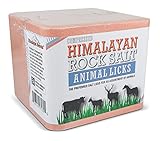
- 100% NATURAL & MINERAL-RICH: Crafted from pure Himalayan rock salt, each lick contains 84 essential minerals and trace elements that support hydration, bone strength, and overall animal wellness.
- DURABLE COMPRESSED DESIGN: Formed under high pressure to resist crumbling and withstand outdoor conditions, ensuring long-lasting mineral supplementation for your animals.
- SAFE & COMFORTABLE FOR ANIMALS: Smooth edges and a polished surface make licking safer and gentler on animals’ tongues while promoting steady mineral intake.
- IDEAL FOR LIVESTOCK & WILDLIFE: Suitable for horses, cows, goats, sheep, deer, and other farm or wild animals, a perfect mineral supplement for multi-species care.
- SUSTAINABLY SOURCED: Our Himalayan rock salt is sourced from the foothills of the Himalayas in Pakistan, supporting sustainable and ethical mining practices, bringing natural nutrition to your animals.
There is no universal grain amount for every goat. Consider weight, body condition, forage supply and quality, life stage, and the full ration. Use forage analysis and local professional advice when balancing a precise ration.
How should goats be fed at different life stages?
Needs vary with weight, body condition, growth, pregnancy, lactation, and production. Pregnant and nursing does need adequate feed, with particular attention to the final six weeks of pregnancy. These stages do not create one universal feed recipe; assess the individual animal and forage, and seek local guidance for ration adjustments.
| Goat or situation | Feeding priority | When supplementation may be appropriate | Important consideration |
|---|---|---|---|
| Maintenance adult | Good-quality forage and clean water | When forage and the animal’s condition indicate a need | A maintenance goat with adequate forage may not need grain |
| Kid or growing goat | Forage and adequate nutrition for growth | When the whole ration indicates additional energy or protein is needed | Assess forage quality and the individual animal |
| Pregnant doe | Adequate nutrition and maintenance of health and condition | When forage and condition do not meet needs | Pay particular attention to the final six weeks of pregnancy |
| Lactating doe | Adequate feed and readily accessible water | When the whole ration and production needs call for it | Requirements vary; use forage analysis and local guidance |
| Other production situations | A ration matched to body condition, forage, and production | When assessment identifies a shortfall | Avoid applying a single pounds-per-day rule to every goat |
Penn State Extension’s goat nutrition and feeding guidance discusses feeding in relation to goat needs. A late-pregnant or lactating animal should not automatically be managed like a maintenance goat.
Independent reader supportYour contribution helps us test, update, and keep practical guides available for everyone.How can you build a safe goat-feeding plan?
- Identify the animal’s needs: Consider weight, body condition, growth, pregnancy or lactation, and production.
- Evaluate the forage: Check its type, maturity, cleanliness, availability, and storage.
- Test uncertain forage: Use a forage laboratory when balancing a ration or investigating poor performance.
- Provide water: Keep clean, fresh water readily accessible.
- Consider local minerals: Assess forage and water conditions and the whole ration when choosing a mineral plan.
- Add concentrate only for a reason: Base the decision on the individual goat and its complete ration.
- Change feeds gradually: Allow goats time to adapt to new forage or concentrate; Oregon State University Extension advises transitions over a week or two.
- Monitor the goats: Watch appetite, body condition, growth, and general health, and seek veterinary advice for concerns.
What foods and feeding practices should goats avoid?
- Moldy or spoiled forage: Do not feed forage that is moldy or spoiled.
- Poisonous plants: Identify and exclude toxic plants; do not assume goats will avoid them.
- Excess concentrate or inadequate roughage: This can contribute to digestive problems.
- Abrupt diet changes: Introduce new forage and concentrate gradually.
- Unassessed mineral substitutions: Do not assume a product intended for another species or a generic livestock blend suits the herd’s local conditions.
When is a feeding problem an emergency?
General feeding guidance cannot diagnose a sick goat. Pregnancy toxemia and other metabolic or digestive problems require veterinary attention. If a goat is ill, may have eaten a poisonous plant, or has a sudden serious change in condition, contact a veterinarian promptly. Do not try to diagnose or treat a specific condition by changing supplements alone.
Recommended Free Tools
Best Value
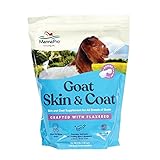
- SKIN AND COAT SUPPLEMENT FOR ALL BREEDS OF GOATS: Specially formulated with essential nutrients to support healthy skin, a shiny, glossy coat, and overall well-being in goats of all breeds, helping them look and feel their best every day.
- CRAFTED WITH FLAXSEED: Packed with Omega-3 fatty acids, this supplement nourishes skin, enhances coat shine, supports overall health, and promotes a glossy, healthy coat while contributing to your pet’s daily wellness and vitality.
- GREAT FOR SHOW GOATS: Supports a sleek, shiny coat and healthy skin, helping goats achieve a polished, vibrant appearance, making it an ideal choice for show animals, competitions, and overall well-being.
- PROVIDES NUTRIENTS FOR HEALTHY SKIN & SUPPORTS A SLEEK, SHINY COAT: Packed with essential vitamins and minerals, this supplement promotes skin hydration, enhances coat luster, and supports overall health and vitality for your pet.
- MADE IN THE USA: Proudly crafted in the USA using high-quality ingredients, this supplement ensures optimal nutrition for your goats, supporting healthy skin, a shiny coat, and overall well-being while meeting the highest standards of quality.
The central rule is to build the diet around good-quality forage, keep clean water accessible, choose minerals with local conditions in mind, and add concentrate only when the individual goat’s needs call for it. For a precise ration, use forage analysis and local professional guidance.
FAQ
What do goats eat every day?
Good-quality forage or browse is the foundation. Keep clean, fresh water accessible and choose an appropriate mineral plan for the herd’s local conditions. Add concentrate only when the goat’s needs and the full ration indicate it is appropriate.
Can goats live on hay alone?
Good-quality hay can provide much of the diet for some maintenance goats, but it does not automatically make a complete feeding plan. Water, minerals, forage quality, and the goat’s life stage also matter.
Do goats need grain?
Not always. A maintenance goat with adequate forage may not need grain, while a growing kid or pregnant or lactating doe may need additional nutrition. Assess the whole ration and introduce any concentrate gradually.
How much water does a goat need?
Merck Veterinary Manual estimates 2–4 gallons daily for a 50-kg goat under maintenance conditions, but intake varies with conditions and physiological state. Keep clean, fresh water readily accessible rather than treating that estimate as a universal target.
How quickly should I change a goat’s feed?
Make feed changes gradually so goats can adapt. Oregon State University Extension advises transitions over a week or two.
What should I feed a pregnant or lactating goat?
Pregnancy and lactation can raise nutritional needs, but there is no universal feed recipe. Assess the doe’s condition and forage, pay particular attention to the final six weeks of pregnancy, and consult a veterinarian, Extension educator, or qualified livestock nutritionist for a specific ration.
Quick Recap
Product prices and availability are accurate as of the date/time indicated and are subject to change. Any price and availability information displayed on Amazon at the time of purchase will apply.




