Brackish water fish include species that tolerate changing mixtures of fresh and salt water. In natural estuaries, representative examples include white perch, anchovies, silversides, juvenile spot, coastal flatfish, mullet, and some freshwater-tolerant fish. Aquarium species commonly associated with brackish setups include mollies, bumblebee gobies, puffers, archerfish, monos, scats, and larger gobies—but these fish have very different adult sizes and care requirements.
What is brackish water?
Brackish water is water that is saltier than freshwater but less salty than seawater. It forms where rivers and streams meet the ocean, especially in estuaries, tidal creeks, coastal marshes, lagoons, and river mouths. It is not a single, fixed type of water: salinity can change with the tide, rainfall, evaporation, wind, season, and the amount of freshwater flowing downstream. NOAA explains how estuarine animals adapt to changing salinity.
As an Amazon Associate I earn from qualifying purchases.
The fish found there therefore vary by location and by time. Some live in brackish water throughout their lives, some enter only as juveniles, and others move between freshwater and seawater to feed, migrate, or spawn.
Crashes, No Sound, or Screen Glitches?
Random freezes, missing sound and display glitches usually trace back to one bad driver. Find and replace yours safely.Free scan · under a minutePC Slower Than It Used to Be?
A free scan shows the junk files, broken settings and background clutter dragging Windows down - then fixes them in one click.Free scan · Windows 10 & 11Why can some fish live in brackish water?
Fish that tolerate a wide range of salinities are called euryhaline. Their bodies can adjust how they take in and remove salts and water as the surrounding conditions change. This ability allows them to use habitats that many strictly freshwater or strictly marine fish cannot tolerate.
#1 Best Overall
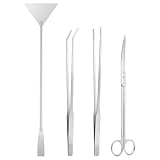
- 4 in 1 Long Aquarium Tools Kits: The aquascape tools kit contains 1 x 10" aquarium scissors, 1 x 10.6" straight long tweezer, 1 x 10.6" curved feeding tongs, and 1 x 12.56" Aquarium substrate spatula. One set of terrarium supplies to help you better manage your aquarium and terrariums. This aquascaping tools are long and slender enough to easily use in any gallon fish tank, good as fish tank accessories. It suits both beginner and experienced people.
- Rust-proof and Stainless Steel Material: The 4pcs of aquarium supplies are made of high-quality stainless steel material, rustproof and corrosion-proof, sturdy, and long-lasting. With the protection of the rustproof coating, every tool has excellent corrosion resistance.
- Multi Functions and Applications: Ohtomber aquascape tools is ideal for all types of grooming, maintaining, and sorting out aquatic plants in water as an aquarium accessories. Aquarium scissors could help you trim the plant, furnish the aquarium landscape with driftwood cornerstones, sand, and aquarium algae scraper could be applied to scrap the algae and smooth out plant stratum substrate. Do use it to maintain a comfortable environment for fish in an aquarium tank now!
- Minimizing interference: Long aquascaping tools can prevent accidental injuries to Aquarium plants and damage to the environment. Long aquarium tweezer can adjust driftwood, and feed little reptiles instead of putting your hands into water. It is very effective in precise operation and avoiding getting your hands wet. Similarly, Long aquarium scissors are suited for small or thin water plants and help trim excess parts. It won't hurt the plant's cross-section.
- Maintenance tips: In order to extend tool life and keep performing well, we recommend that you rinse off the saltwater attached to the tools surface and then wipe up to keep dry.
An estuary can contain several fish communities at once. A shallow, nearly fresh upper estuary may hold freshwater-tolerant species, while the mouth may support marine fish. Between them is a constantly shifting zone where brackish-water species are especially common.
It is useful to place estuarine fish into three groups:
- Permanent or frequent residents: fish that can remain in brackish water for long periods.
- Nursery users: juveniles that shelter and grow in shallow estuaries before moving to deeper or saltier water as adults.
- Visitors and migrants: fish that enter to feed or reproduce and later return to freshwater or the sea.
Finding a species in an estuary does not automatically mean it can live permanently in a home brackish aquarium. Wild fish have access to much larger habitats and natural changes in salinity, temperature, food, and water flow.
Fish that live in brackish water in the wild
White perch
White perch (Morone americana) are euryhaline fish found in freshwater, brackish water, and coastal areas. They may move between saltier bays and fresher rivers, including seasonal movements associated with spawning. Their ability to use this gradient makes them a good example of a fish that does not fit neatly into a “freshwater” or “saltwater” category. The U.S. Geological Survey’s white perch fact sheet documents this broad habitat use.
Anchovies
Bay anchovies and related anchovies are often important members of estuarine food webs. Juveniles can be abundant in mid-estuary brackish areas, where they provide food for larger fish, wading birds, and other predators. Their abundance may change substantially with season, salinity, and local water conditions. Research on the Shark River Estuary describes the role of small fishes, including anchovies, in this type of habitat; see the USGS estuary study.
Silversides
Silversides are small schooling fish commonly represented in tidal-creek and estuarine fish communities. They often occupy shallow water and may be particularly noticeable in marshes and protected creeks. In sampling of the Suwannee River estuarine system, silversides occurred among the dominant fish groups alongside juvenile spot, bay anchovies, and grass shrimp. The exact silverside species depends on the region; the USGS Suwannee estuarine survey provides a regional example rather than a universal species list.
Spot
Spot (Leiostomus xanthurus) are coastal fish whose juveniles commonly use shallow estuarine areas in parts of the Atlantic and Gulf coasts. Young spot may enter brackish creeks and marsh edges, where these protected waters function as nursery habitat. Their distribution is geographic, so a fish list from one American coast should not be assumed to apply to every estuary worldwide.
What’s actually slowing this PC down?
Pick the symptom - the matching free tool is one click away.
Rank #2

- Contains one (1) API TAP WATER CONDITIONER Aquarium Water Conditioner 16-Ounce Bottle
- Neutralizes chlorine, chloramines and other chemicals to make tap water safe for fish
- Prevents tap water chemicals from causing gill destruction, tissue irritation and fish death
- Super strength, high concentration formula
- Use when adding or changing water and when adding new fish to freshwater and saltwater aquariums
Flounders and other coastal flatfish
Many coastal flatfish use estuaries during their early life stages. Shallow, sheltered areas offer food and some protection from larger offshore predators. Which flounder species occur in brackish water depends on the coastline and estuary. More broadly, NOAA identifies estuaries as important nursery habitat for many marine and coastal species.
Mullet and other coastal fish
Mullet and numerous other coastal fish can move between marine water, brackish reaches, and freshwater sections of rivers. Their movements may follow food, temperature, tides, reproduction, or changing river flow. As a result, the fish community in a brackish marsh is controlled not just by average salinity but also by habitat structure, freshwater inflow, tidal exchange, and seasonal conditions. USGS research on the San Francisco Estuary illustrates how fish assemblages change along a salinity gradient.
Freshwater-tolerant fish, including common carp
Some fish normally described as freshwater species can also enter brackish estuaries. Common carp are primarily freshwater fish, but they have been recorded in brackish estuaries, bays, and marshes, including waters with considerably elevated salinity. This is evidence of their ability to occur in those environments—not a recommendation to keep carp in a typical home brackish aquarium. The USGS common carp fact sheet describes these records.
Regional estuarine species
Some fish associated with brackish water are important only in particular regions. In the San Francisco Estuary, for example, fish assemblages along the salinity gradient have included native species such as Sacramento splittail, tule perch, and Sacramento pikeminnow. Their presence shows why “brackish-water fish” cannot be reduced to a worldwide checklist. Geography, local water chemistry, and the species’ life stage all matter.
Fish commonly kept in brackish aquariums
Aquarium fish sold or discussed as “brackish” have different requirements. Some tolerate mildly salty water, some need a more marine environment as they mature, and others are simply adaptable freshwater fish that can handle certain conditions. Before buying any fish, identify its scientific name, expected adult size, minimum aquarium volume, diet, behavior, and long-term salinity range.
Mollies
Mollies are livebearers frequently kept in freshwater or brackish conditions. Their adaptability can make them a more accessible starting point than large predatory brackish species, but they still need acclimation, stable water quality, suitable temperature, and compatible tankmates. A molly’s ability to tolerate salt does not mean every molly should be moved abruptly from freshwater to a high-salinity aquarium. Aqueon’s brackish-fish guidance discusses mollies alongside other species with substantially different needs.
Bumblebee gobies
Bumblebee gobies (Brachygobius spp.) are small gobies commonly associated with brackish aquariums. Their small adult size makes them suitable for some smaller setups than the fish listed below, but it does not make them effortless fish. They need stable water, appropriate small foods, hiding places, and carefully chosen tankmates. Several species are sold under similar common names, so identification matters. Aquarium Co-Op’s brackish aquarium guide includes bumblebee gobies and general setup considerations.
Rank #3

- The aquarium brush made of high quality sponge, could remove the algae quickly and effectively, keep your fish tank a clean environment
- The brush handle made of premium plastic, sturdy and durable, with non-slip handle surface, make this clean work more easily
- Designed with a hole on the end of the handle, more convenient for you to hanging and store
- This algae scraper brush suitable for glass fish tank but not suitable for acrylic and plastic fish tank
- Dimension of sponge:3”x2.5”; Length of handle:12.5”
Archerfish
Archerfish (Toxotes spp.) are famous for shooting a jet of water at insects above the surface. They are fascinating estuarine fish, but they are not beginner community fish. Depending on the species, they can become large, behave as predators, require substantial swimming space, and need a secure aquarium because they may jump or shoot water from the tank. A store label saying “archerfish” is not enough to determine the adult care plan.
Monos and scats
Monos and scats are coastal and estuarine fish often offered for brackish aquariums. They can grow considerably and may require more salt as they mature or as their long-term care plan changes. They are generally poor choices for a small community aquarium, and successful breeding is difficult in ordinary home conditions. The Ornamental Fish International care sheet covers monos, scats, and archerfish together.
Brackish puffers
Some puffer species are sold for brackish aquariums, but “brackish puffer” is not a complete identification. Puffers differ widely in adult size, aggression, salinity requirements, and diet. Many are fin-nippers or solitary predators, and their specialized teeth require suitable hard foods. Do not place a puffer in a community aquarium until the exact species and its adult behavior have been confirmed.
Dragon gobies and violet gobies
Dragon gobies, also called violet gobies, are larger gobies associated with brackish systems. They may spend much of their time near the bottom and can be sold while still deceptively small. Their eventual size, feeding behavior, and need for a carefully planned habitat make them unsuitable for many small community tanks. A brackish fish care sheet from Petco lists them among species requiring more planning.
Colombian shark catfish and datnoids
Colombian shark catfish and datnoids also appear in brackish-fish guides. They should be approached as long-term projects rather than convenient community additions: some become large, some are predatory, and their water, diet, and tankmate requirements can change over time. The common name alone does not tell you whether a fish is appropriate for your aquarium. Aqueon’s care overview groups these fish with other species whose adult requirements differ considerably.
Recommended Free Tools
How to choose fish for a brackish aquarium
1. Identify the exact species first
Ask for the scientific name, not only a trade name such as “brackish puffer,” “shark catfish,” or “goby.” Closely related species may differ in adult size and salinity tolerance. Check whether the fish is genuinely brackish long term, merely tolerant of occasional salt, or expected to move toward marine conditions as it matures.
2. Plan for the adult fish
Do not size the aquarium around the juvenile in the shop. Archerfish, monos, scats, larger gobies, catfish, datnoids, and many puffers can outgrow the tanks in which they are commonly sold. Include swimming space, turning room, filtration capacity, a secure lid where appropriate, and enough space to separate aggressive or incompatible fish.
Rank #4
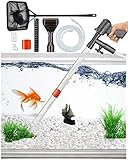
- Mufti-functional cleaning kit: Aquarium gravel vacuum cleaner kit is a mufti-functional aquarium cleaner that uses (adopts)the siphon design principle, which includes the aquarium, aquarium sand washing, algae scraping, fish excrement cleaning, aquarium residual debris, and aquarium water changing. Quick water change gives fish (provides)a clean and comfortable aquarium living environment.
- New safety design: new manual press design, no electricity required and silent while working. Fish tank cleaning tools uses a high-quality pressure resistant air bag, durable, super strong siphon pressure can quickly draw out the muddy water in the fish tank. The aquarium vacuum pipe has a filter net attached to the filter basket to block the blockage caused by the suction of gravel, while preventing your cute fish and the small gravel in the bathtub from being sucked out of the tank.
- Easy to install: This newly upgraded aquarium vacuum is easier to use than traditional fish tank vacuum. Simply hold the handle and press several times until you see water begin to flow out. You can also use a tube to agitate the gravel in the aquarium, causing fish manure, food debris, etc. to drain out of the aquarium with the current. The aquarium cleaning tools is securely attached to the aquarium so you can easily release your hands.
- A wide range of multi-combination accessories: aquarium cleaner vacuum crusher is suitable for different types and sizes of fish tanks, equipped with 2 water pipes and 1 joint, press pump, water flow clip, water pipe clip extended outlet hose, aquarium temperature stickers, fishing nets, plastic algae scraping plate, and detailed aquarium vacuum pump manual.
- Easy to use: The aquarium cleaning kit dust and water changer is hand-held, easy to use and operate, the aquarium cleaners can work stably and efficiently without electricity and without noise, which greatly saves your time and brings more convenience for fish tank cleaning.
3. Match the whole community
Two species may both be called brackish but still be poor tankmates. Compare adult size, temperament, feeding speed, activity level, preferred water conditions, and whether either fish is predatory. Bumblebee gobies, for example, should not be treated as interchangeable with large predatory species simply because both occur in brackish-fish lists.
4. Measure salinity instead of guessing
There is no universal brackish-water salinity that suits every species. The correct target depends on the fish and its life stage. Follow a species-specific care range, then measure the aquarium rather than relying on how much salt was added. The final concentration depends on the actual water volume, salt formulation, and existing water chemistry.
Quick wins for a faster PC:
Clear out junk files and repair common Windows errorsFree Scan →Scan for outdated or missing drivers - takes under a minuteDriver Scan →A salinity refractometer for brackish aquariums is a practical tool for checking this central parameter. A suitable hydrometer can also be used, provided its scale and accuracy match the range being measured. Calibrate and use the instrument according to its instructions, and measure consistently before and after water changes.
Salt should be mixed into replacement water before it enters the aquarium unless a species-specific care plan says otherwise. Do not compensate for evaporation by adding more saltwater: when water evaporates, salt remains behind, so topping off with appropriately treated fresh water is normally necessary to avoid gradually raising salinity. Confirm the procedure for the species and system you keep.
5. Monitor the rest of the water quality
Salinity is only one part of aquarium care. Biological filtration, ammonia, nitrite, nitrate, pH, temperature, oxygenation, and waste production also matter. A general aquarium water test kit can help monitor those conditions, but acceptable values and maintenance schedules should be interpreted alongside the species’ care requirements. A test kit cannot make an undersized or overstocked aquarium suitable.
6. Treat salt as a controlled husbandry choice
Use an aquarium or marine salt mix intended for the system rather than adding an arbitrary quantity of household salt. First determine the target salinity and confirm that the fish, plants, invertebrates, filter bacteria, and decorations can tolerate it. A marine-style mix may also affect pH and mineral content, so observe the complete water chemistry after mixing.
Do these 3 things before closing this tab:
1Scan for outdated or missing drivers - takes under a minute2Clear out junk files and repair common Windows errors3Fix the driver behind crashes, sound loss and screen glitchesWild brackish fish versus aquarium brackish fish
| Question | Wild estuary | Home aquarium |
|---|---|---|
| How stable is salinity? | It may change with tides, rain, river flow, season, and evaporation. | The keeper must maintain a deliberate, species-appropriate range. |
| How much space is available? | Fish can move between fresher and saltier zones. | The tank may offer only one water condition and limited escape routes. |
| Why is the fish present? | It may be a resident, juvenile, migrant, or temporary visitor. | It must be suited to continuous captive care, not just short-term tolerance. |
| What determines survival? | Habitat, food supply, predators, flow, temperature, and salinity gradient. | Tank size, filtration, diet, compatibility, acclimation, and maintenance. |
This distinction is the most important qualification in any answer to “what fish live in brackish water?” A field record demonstrates that a species can occur in that environment under particular circumstances. It does not prove that the fish belongs in a home aquarium or that it can live there indefinitely.
Best Value

- New digital aquarium thermometer: LED display fish tank thermometer with professional LCD visual effect, the fish tank and aquarium water temperature can be displayed clearly, despite the night light, and can be easily read. Mini compact body design is suitable for a variety of different types of fish tanks and aquariums, is a must have fish tank accessories.
- Safe wireless touch design: The digital fish tank thermometer comes with a touch power button, which can be easily awakened by clicking. The built-in high sensor probe measures the water temperature for fish tank, well-organized wire in the fish tank to protect the fish from being swallowed or electrocuted, providing a clean and safe living environment for the pet fish axolotl turtle.
- Simple installation: The tank thermometer does not need any installation tool to remove the adhesive on the back, stick it on the outside of the tank below the tank water level, and after standing for 5 minutes, it can accurately and real-time monitor the aquarium temperature change.
- Accurate data: tank thermometer aquarium measurement range of the tank thermometer is 0°C~60°C, the accuracy is 0.18°C, and the error is ±1 °C. This is suitable for axolotl tank, turtle thermometer, saltwater fish tank accessories, betta fish tank thermometer, etc..
- Long life battery: Thermometer for aquarium fish tank is powered by a CR2032 battery (included), and the battery lasts up to 12 months. The wireless aquarium digital thermometer will automatically enter the sleep mode after 5 seconds of no operation, extend the battery life, and be more environmentally friendly and energy saving.
Quick checklist before buying a brackish fish
- Do I know the exact scientific name?
- What is the fish’s adult length and minimum recommended aquarium size?
- Does it need brackish water permanently, temporarily, or only during part of its life?
- What salinity range is appropriate for this species and life stage?
- Can the other fish tolerate the same water and behavior?
- Will the aquarium provide suitable food, hiding places, swimming room, filtration, and oxygenation?
- Do I have a reliable way to measure salinity and test basic water quality?
- What will I do if the fish outgrows the aquarium or becomes aggressive?
Bottom line
Brackish water supports a varied community rather than one fixed group of fish. In nature, examples include white perch, anchovies, silversides, juvenile spot, coastal flatfish, mullet, and certain freshwater-tolerant species such as common carp, along with region-specific estuarine fish. In aquariums, mollies and bumblebee gobies are commonly discussed alongside more demanding fish such as puffers, archerfish, monos, scats, dragon gobies, Colombian shark catfish, and datnoids.
Choose by exact species and adult requirements—not by the word “brackish” on a label. Measure salinity, maintain the entire water chemistry, and remember that a fish’s ability to visit an estuary is not proof that it is suitable for permanent life in a home tank.
Frequently Asked Questions
What is brackish water?
Brackish water is partly salty water where freshwater and seawater mix, most often in estuaries, tidal creeks, coastal marshes, lagoons, and river mouths. Its salinity changes with tides, rainfall, river flow, evaporation, season, and wind.
The Tool Desk
Outbyte Driver Updater FREEFix the driver behind crashes, sound loss and screen glitchesFind Drivers →Outbyte PC Repair FREERepair Windows errors before they cause bigger problemsFix Now →What is the easiest fish to keep in a brackish aquarium?
Yes, some mollies and bumblebee gobies are commonly kept in brackish aquariums, but their requirements are not identical. Confirm the species, acclimate it carefully, and maintain stable, measured water conditions.
Can any fish found in an estuary live in a brackish fish tank?
No. Fish found in an estuary may be temporary visitors, juveniles using it as a nursery, or migrants. Wild occurrence does not prove that the species can live permanently in a home aquarium.
What salinity do brackish aquarium fish need?
There is no single salinity target for all brackish fish. The correct range depends on the exact species and sometimes its life stage. Use a refractometer or suitable hydrometer and follow species-specific care guidance.
The Bottom Line
The short answer: brackish water is home to euryhaline fish such as white perch, anchovies, silversides, juvenile spot, mullet, some flatfish, and various regional estuarine species. Common aquarium choices include mollies and bumblebee gobies, while puffers, archerfish, monos, scats, and larger gobies require much more careful planning. Always identify the exact species and measure its required salinity rather than treating “brackish” as one universal recipe.
Free tools Windows power users keep installed
One-click scans. No signup required.
Quick Recap
Product prices and availability are accurate as of the date/time indicated and are subject to change. Any price and availability information displayed on Amazon at the time of purchase will apply.




