
Do these 3 things before closing this tab:
1Clear out junk files and repair common Windows errors2Fix the driver behind crashes, sound loss and screen glitches3Repair Windows errors before they cause bigger problemsSome links on this page are affiliate links: if you buy through them we may earn a commission, at no extra cost to you.
Every newt is a salamander, but not every salamander is a newt. “Salamander” is the broad name for tailed amphibians in the order Caudata, also called Urodela. “Newt” is a narrower common-name category used mainly for salamanders in the family Salamandridae, especially many members of the subfamily Pleurodelinae.
Newts often spend more of their lives in or near water and may have rougher skin or a flattened swimming tail. Those are useful clues, not rules: salamanders vary enormously, and appearance alone is not always enough to identify one safely or accurately.
As an Amazon Associate I earn from qualifying purchases.
Recommended Free Tools
The relationship in one sentence
Think of the terms as nested categories:
- Salamander: the broad group of tailed amphibians.
- Newt: a narrower name commonly used for certain salamanders, particularly salamandrids.
In scientific classifications, many familiar newts fall under Caudata → Salamandridae → Pleurodelinae. The family Salamandridae also contains salamanders that are not usually called newts, so “newt” is not a completely separate order from “salamander.” It is a common-name and taxonomic grouping whose boundaries can vary somewhat among sources and regions.
How salamanders and newts usually differ
| Feature | Salamanders broadly | Newts, generally |
|---|---|---|
| Taxonomic scope | A broad group of tailed amphibians | A narrower salamander category, commonly associated with Salamandridae and Pleurodelinae |
| Life history | May be terrestrial, aquatic, subterranean, or a mixture | Often have a strong aquatic or semi-aquatic phase, especially for breeding or adulthood |
| Skin | Highly variable; often moist and smooth, but not always | Frequently rougher, granular, or warty-looking, although some are relatively smooth |
| Tail | Usually retained in adulthood, with shape varying by species | May become laterally flattened during aquatic phases, helping with swimming |
These are field-identification tendencies rather than diagnostic definitions. A smooth-skinned animal is not automatically a salamander that is “not a newt,” and an aquatic salamander is not automatically a newt.
Popular on Amazon

- 【Newly Upgraded Bell-Mouth Design】 :This newly upgraded heating lamp with a TFNN bell-mouth design provides a wider range of UVA/B ultraviolet rays compared to the design of ordinary models. It can simultaneously heat and illuminate multiple reptiles. The light is adjustable, making it suitable for different seasons and various reptiles, and it is extremely convenient to use.
- 【Upgrade Timer】:The reptile heat lamp offers three timing cycle modes (3H/6H/12H), enabling all-night cyclic timing with automatic on/off functions. Additionally, it has three adjustable heating brightness levels. You can use the "+/-" buttons to adjust the temperature to find the most suitable setting for your pet, which is more conducive to heating and supplementing calcium for your pet. It provides more direct sunlight and higher UVA/B turtle basking light, simulating natural sunlight and promoting the pet's appetite and calcium absorption.
- 【360°Rotatable Swan Neck 】 : This heating lamp is made with a 15.8-inch swan neck. The independently rotating head is constructed from stainless steel tubing, capable of rotating 360 degrees. It allows for flexible control of the light's distance and angle without deformation, ensuring a wider coverage of the light. It can simultaneously provide heating and supplementary lighting for multiple tanks and pets, and can be applied to small habitats of various sizes such as pet boxes, turtle tanks, glass ball boxes, enclosures, aquariums.
- 【Upgraded Quality Material】 :The reptile heat lamp clip, lamp tube and lampshade are made of high-quality metal, featuring heat resistance. The clip has a stronger gripping force. It can be firmly and easily installed in any position and fixed effectively. It has two built-in electroplated bulbs, with power ratings of 50W and 75W respectively. The silver-plating process is adopted to ensure anti-oxidation and explosion-proof performance, and the vacuum glass tube extends the lifespan of each bulb. These bulbs simulate the solar spectrum and increase the temperature to achieve the best health condition for pets.
- 【Wide Use】 : This TFNN bell-mouth heating lamp is suitable for most amphibians, reptiles, and plants, including turtles, bearded dragons, lizards, geckos, frogs, toads, snakes, chickens, birds, and even fish and plants.
Life cycle: often the most helpful distinction
Many salamanders begin life as aquatic larvae and later transform into terrestrial adults. Others remain aquatic, live underground, or retain larval characteristics into adulthood. The group is too diverse for one life cycle to describe every salamander.
Newts commonly maintain a stronger connection with water. Depending on the species, adults may return to ponds or streams to breed, spend much of the year in water, or alternate between terrestrial and aquatic stages.
The eastern newt’s three-stage cycle
The eastern newt (Notophthalmus viridescens) illustrates why the word “newt” often suggests a more complicated relationship with water. It commonly passes through:
- An aquatic larva that develops in water.
- A terrestrial juvenile called an eft that lives on land for a period.
- An aquatic adult that may return to ponds or other water bodies.
Not every newt follows this exact pattern. Some salamandrids have terrestrial adults, aquatic adults, or different arrangements of life stages. The important point is that many newts have a recurring aquatic phase, while salamanders as a whole show much wider variation.
Can you tell them apart by appearance?
Sometimes, but visual clues should be treated cautiously.
Skin
Many newts have skin that looks rough, granular, or warty, particularly compared with the smooth, moist appearance of many terrestrial salamanders. However, not all newts are rough-skinned, and many non-newt salamanders have textured skin. Skin texture can also change with age, season, breeding condition, and time spent in water or on land.
What’s actually slowing this PC down?
Pick the symptom - the matching free tool is one click away.
Also popular on Amazon
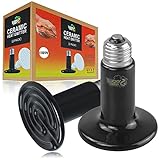
- 🦎No Light Emitted - The heat lamp bulb only generates heat during use, and does not emit light. It provides sufficient heat for your pets so that they can feel the warmth you made for it in a cold environment. Especially when it is used at night, it will not affect the pet's sleep.
- 🦎Heating UP Fast - After turning on the reptile ceramic heat bulb for 10 seconds, you can clearly feel the rapid rise in temperature, and it only takes 4 minutes for the reptile heat lamp to reach the rated temperature.
- 🦎Sturdy - LUCKY HERP reptile heat emitter is made of thick special ceramic material, and the heat light bulb shell is stronger and more durable than ordinary heating lamps. Our reptile light bulbs last up to 10,000 hours. Use in standard E26 lamp base, 120 volts and easy to install.
- 🦎Safety Instructions - You must use good quality ceramic lamp holders. When using the reptile basking bulb, keep a distance of more than 30cm from reptiles. Do not turn on the chicken heat lamp immediately after turning it off, and do not turn the bulb on and off frequently.
Tail
A newt living in water may have a tail that is compressed from side to side, giving it a fin-like shape useful for swimming. This is a helpful clue, but it is not exclusive to newts. Other aquatic salamanders can also have swimming-adapted tails.
Color and body shape
Color is especially unreliable as a general rule. Newts can be brown, green, orange, red, black, or boldly patterned, depending on the species and life stage. The same species may look substantially different as a larva, terrestrial juvenile, and adult.
For reliable identification, use the animal’s geographic location, habitat, body shape, skin, tail, markings, and life stage together. A regional amphibian field guide is much more useful than trying to apply a single “rough equals newt, smooth equals salamander” rule.
Examples of newts
- Eastern newt (Notophthalmus viridescens): Found in eastern North America and known for its larva–eft–adult life cycle.
- Rough-skinned newt (Taricha granulosa): A Pacific North American newt in the genus Taricha, classified within Salamandridae and Pleurodelinae.
- Fire-bellied and crested newts: Common names used for several salamandrids, often referring to distinctive coloration or crests rather than a separate order.
Examples of salamanders that are not usually called newts
- Red-backed salamander (Plethodon cinereus): A lungless salamander and a familiar example of a salamander outside the usual newt category.
- Hellbender (Cryptobranchus alleganiensis): A large, fully aquatic salamander. Its aquatic lifestyle does not make it a newt.
- Axolotl: A highly aquatic salamander that retains juvenile features into adulthood. It is commonly called an axolotl, not a newt.
- Mole salamanders: A group that includes terrestrial or semi-aquatic species with very different lifestyles from many familiar newts.
These examples show why neither habitat nor one physical trait can define “newt.” The broader salamander group includes animals that are aquatic, terrestrial, subterranean, lungless, large, tiny, smooth-skinned, and textured.
Crashes, No Sound, or Screen Glitches?
Random freezes, missing sound and display glitches usually trace back to one bad driver. Find and replace yours safely.Free scan · under a minuteWindows Errors? Fix Them Before They Spread
Repair common Windows errors and clear accumulated junk for a smoother, more stable PC - no reinstall needed.Free scan · no reinstallWhat salamanders and newts have in common
Both are amphibians with permeable, glandular skin. Keeping that skin moist is important for normal physiology, and many salamanders exchange gases through it. Approximately two-thirds of salamander species are lungless and rely heavily on skin-based respiration.
Many salamanders, including some newts, can regenerate structures such as limbs and tails. Regeneration is an active area of biological research, but it should not be exaggerated as a direct promise of human medical treatments.
Also popular on Amazon

- The Light Dome with heat resistant ceramic socket can accommodate either reptile heat lamp or reptile basking bulb and ceramic heat emitter (Max. 150W).
- The Reptile Dome has an extra deep aluminum reflector dome that increases light, UVA output.
- The light can be easily turned on and off by the On/Off switch, mounted on the extra long power cord (180 cm/6 ft).
- This Reptile Light Fixture fits kinds of bulbs incl.; Daylight Basking Spot, Daytime/Night Time Heat Bulb, Natural Light, Reptile ceramic heat emitter.
- UL Listed Ceramic Socket with E26 Interface. ReptiKing Reptile Dome is warranted to be free for replacement if any damage or deformation. No hesitate to contact us if you need any support.
Are newts poisonous?
Some newts produce potent defensive toxins, but toxicity is not what makes an animal a newt. Toxicity varies among species, populations, and circumstances, and some salamanders that are not called newts also have chemical defenses.
Because amphibian skin is delicate and permeable, avoid handling wild salamanders or newts unnecessarily. Do not allow a dog or cat to chew on an unfamiliar amphibian. If a pet may have mouthed or swallowed one, remove access to the animal and contact a veterinarian or a pet poison service promptly, especially if the pet shows abnormal behavior, drooling, vomiting, weakness, tremors, or breathing problems. Do not attempt home treatment unless a veterinary professional tells you to.
Why the distinction matters for conservation
Newts and other salamanders are sensitive to changes in their surroundings. Threats vary by species and region but include habitat loss and degradation, pollution, disease, invasive species, and climate change. Eastern newts, for example, can be affected by habitat degradation, pollution, and emerging diseases.
One important disease concern is Batrachochytrium salamandrivorans, commonly called Bsal. Laboratory studies have found eastern newts highly susceptible, and wildlife authorities have treated salamander chytrid disease as a U.S. preparedness and management concern.
Amphibians are the most threatened vertebrate class overall according to the second Global Amphibian Assessment, with particularly high extinction risk in several salamander families. Simple actions help: keep pollution and pesticides away from ponds and streams, never release captive amphibians, avoid moving amphibians between locations, and clean or disinfect footwear before entering salamander habitat when appropriate.
Independent reader supportYour contribution helps us test, update, and keep practical guides available for everyone.How to identify one without harming it
- Observe from a distance. Use a phone camera or binoculars rather than picking the animal up.
- Record the location and habitat. Note the region, nearby water, vegetation, soil, and whether the animal was found under cover, in a stream, or in a pond.
- Consider life stage. A larva, eft, breeding adult, and nonbreeding adult may look different.
- Use a regional guide. Compare range maps and identification keys, not just photographs.
- Do not move it. Return natural cover carefully if it was lifted to look underneath, and avoid transferring mud, water, or animals between habitats.
A regional guide is usually the best purchase for beginners because identification depends so heavily on geography. A specialist reference such as Salamanders & Newts of the World is better suited to serious enthusiasts, students, and readers who want broader natural-history coverage.
The Tool Desk
Outbyte PC Repair FREERepair Windows errors before they cause bigger problemsFix Now →Outbyte Driver Updater FREEFix the driver behind crashes, sound loss and screen glitchesFind Drivers →Also popular on Amazon

- Simulated Sunlight: Most amphibians and reptiles are poikilotherms, whose body temperature changes with their environment. Therefore, sunlight and temperature affect the growth, development and reproduction of reptiles. The REPTI HOME reptile heat lamp is able to simulate sunlight, and create an area for reptiles to bask in the sun, which provide a comfortable habitat for your reptile pet
- Rapid Heating Up: REPTI HOME Reptile heating bulb uses an advanced shape design and mature technology, allows light and heat to concentrate below the bulb, greatly reducing heat loss. More efficient and faster to heat than regular bulbs. After a few seconds of opening, you can feel the temperature rise, and after a few minutes the temperature can reach the temperature that amphibians need.
- Suitable for Various Reptiles: Reptile heat lamp bulbs can create a living environment closer to nature, suitable for various reptiles or amphibians, including bearded dragons, tortoises, turtles, lizards, snakes, iguanas, geckos, chameleons, frogs, toads, chickens, puppies, hedgehog, hermit crabs, etc
- Standard of Use: Each product includes 2 pack 100 watt reptile heat light in one box, the other bulb can be used as a spare or replacement, and the heating bulb can be used for 2,000 to 3,000 hours. And heat light are recommended to be used 4-6 hours a day and replaced every 3 months. Keep at least 30 cm away from reptiles and keep the surface of the bulb dry and away from water
- Note: When using this reptile heat lamp, avoid splashing water onto the basking bulb and do not use it with dimmers, thermostats, or rheostats. Do not turn on the heating bulb immediately after it is turned off, and do not turn on andoff the bulb freouently. This will shorten the lifespan of the light bulb. Do not use it when the voltage is unstable.
Salamander vs. newt: the quick answer
If you remember only one fact, remember this: a newt is a kind of salamander. Newts often have a more pronounced aquatic or semi-aquatic life cycle, rougher-looking skin, and a swimming-adapted tail, but those traits are tendencies rather than universal rules. To identify a particular animal, rely on species, location, life stage, and habitat together.
Frequently Asked Questions
Are newts and salamanders the same animal?
Newts are salamanders, but the terms are not interchangeable in both directions. “Salamander” describes the broad group of tailed amphibians, while “newt” is a narrower common-name category used mainly for certain salamandrids.
Are all salamanders land animals?
No. Salamanders include terrestrial, aquatic, subterranean, and semi-aquatic species. Hellbenders and axolotls, for example, are aquatic salamanders but are not usually called newts.
Do all newts have rough or warty skin?
No. Rough or granular skin is common among many newts, but some are relatively smooth. Skin texture should be combined with geography, habitat, markings, tail shape, and life stage.
Can I pick up a wild newt or salamander?
It is best to observe wild amphibians without handling them. Their permeable skin is vulnerable to contamination, and handling or moving them can contribute to disease spread. Keep pets from mouthing unfamiliar amphibians as well.
The Bottom Line
Bottom line: “Newt” is a narrower category within the much larger salamander group. Newts often spend more time in water and may have rougher skin or flattened tails, but dependable identification requires a regional guide and attention to habitat, location, and life stage.





Leave a Reply