Do these 3 things before closing this tab:
1Scan for outdated or missing drivers - takes under a minute2Repair Windows errors before they cause bigger problems3Fix the driver behind crashes, sound loss and screen glitchesMost kittens should not leave their mother before 8 weeks of age. For a healthy kitten raised normally, 8 to 12 weeks is a common range for moving to a new home—but readiness also depends on independent eating, healthy development, litter-box progress, and social maturity.
Most kittens should not leave their mother before 8 weeks of age. For a normally reared, healthy kitten, bringing it home sometime between 8 and 12 weeks is a common veterinary and welfare recommendation. Age is only the starting point, however: the kitten should also be healthy, developing steadily, eating independently, and coping normally with litter-box use and social interaction.
As an Amazon Associate I earn from qualifying purchases.
A kitten that is sick, underweight, still dependent on nursing or bottle-feeding, or not gaining strength may need to remain with its mother—or receive foster and veterinary care—longer than the usual timeline.
What’s actually slowing this PC down?
Pick the symptom - the matching free tool is one click away.
Why kittens should stay with their mother and littermates
A mother cat provides much more than milk. During the first weeks, kittens learn by watching and interacting with her. She helps them develop feeding habits, grooming routines, elimination and litter-box behaviors, and appropriate responses to play.
#1 Best Overall

- SQUEEZE BOTTLE - 60ml nursing bottle for newborn kittens and puppies, 2.1 ounce capacity, small animal feeding bottle is easy to squeeze and easy to control the amount of milk.
- SMALL ANIMAL FEEDER SET - 1ml for small nipples, 3ml, 5ml, 10ml for medium and large nipples, 60ml feeding bottles can be freely combined with (small, medium, large) nipples.
- 5 REPLACEABLE NIPPLES - Different sized nipples to meet the needs of small animal at every stage, the soft rubber-tipped nipple prevents scratching the gums of newborn kittens and puppies.
- 5ML BROWN FEEDER - The brown 5ml syringe is made of light-safe material to prevent photosynthesis of medication, use a separate dedicated feeder for better use when your pet is sick.
- NEWBORN KITTENS & PUPPIES GIFT - Suitable for newborn and not yet teething small animals, kittens, puppies, hamsters, chinchillas, squirrels, rabbits, etc. you will be a very gentle owner, take care of it, love it and grow with it.
Littermates are important teachers too. Through wrestling, chasing, biting, and setting boundaries, kittens learn how hard is too hard when they play. Those early experiences can support better social skills with people and other cats.
Safe, positive handling by people is also valuable during this period. The best approach is usually not to choose between maternal care and socialization: keep healthy kittens with their mother and siblings while gently introducing them to calm human contact, ordinary household sounds, and other age-appropriate experiences.
Kitten weaning timeline
Weaning is a gradual transition from nursing to eating kitten food. A kitten beginning to eat solid food is not automatically ready to be separated from its mother.
About 4 weeks: introduction to solid food
Normal weaning commonly begins at around 4 weeks. You can offer a shallow dish of kitten food softened with warm water or prepared as a thin gruel. Keep nursing available for a normally reared litter while the kittens learn to lap and eat.
Rank #2
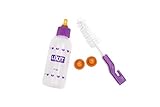
- COMPLETE NURSING KIT: The Lixit nursing kit will provide you with everything you need for nursing baby pets that require bottle feeding
- ACCURATE AMOUNTS: The Lixit bottle comes with measuring marks on the side to ensure you are proving your baby pets with accurate amounts of fluid.
- ALL SMALL PETS: The 2oz Kit is recommended for Small Puppies, Kittens, Guinea Pigs, Ferrets, Rabbits, Raccoons, and Squirrels, other small pets. The 4oz kit has larger nipples and is recommended for Large Puppies, Monkeys, Piglets and other large babies.
- EXTRA NIPPLES: The Lixit kit comes with 3 nipples. The nipples are not pre punched so you can adjust the flow rate as needed.
- EASY TO CLEAN: The Kit comes with a convent brush to easily clean the bottle when you are done.
About 4 to 5 weeks: eating practice and foster care in special cases
Some kittens can eat wet food on their own at this age. In found-kitten situations, kittens that are eating may sometimes be brought indoors for foster care and socialization. That is different from deciding that a healthy litter should be permanently separated from its mother at 4 or 5 weeks.
About 5 to 6 weeks: more independent eating
Offer lightly moistened kitten food, with small amounts of dry kitten food and fresh water available as the kittens progress. Continue monitoring whether each kitten is actually eating, gaining weight, and remaining active—not merely whether food has been placed in the room.
Wet kitten food formulated for growth can be a practical part of this transition. It supports practice with independent eating, but it does not replace the mother’s care and does not, by itself, make a kitten ready for adoption.
About 8 to 10 weeks: complete weaning for many kittens
Many kittens are fully weaned at approximately 8 weeks, while complete weaning may take until 10 weeks. Individual development varies. A kitten should be eating reliably without nursing or bottle-feeding before it changes homes in an ordinary adoption situation.
Rank #3
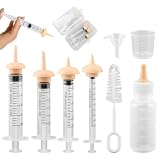
- One-Stop Scientific Feeding: Designed specifically for newborn kittens, puppies, and various small animals, this kit includes a 50ml professional feeding bottle, four precision syringes of different capacities (1ml, 3ml, 5ml, 10ml), four biomimetic nipples, as well as a funnel and measuring cup. From precise feeding immediately after birth to supplemental feeding during the transition period, this single kit meets all your care needs.
- Precise Measurement for Safe Feeding: Recognizing that newborn pets are extremely sensitive to feeding amounts, the kit includes four syringes of different sizes, each featuring clear, durable graduations. This allows you to control feeding with milliliter-level precision based on your pet’s weight and age, effectively preventing choking or digestive strain caused by overfeeding.
- Bio-Mimetic Nipples: Made from ultra-soft, food-grade silicone, these bio-mimetic nipples replicate the natural feel of a mother dog or cat’s mouth. They are bite-resistant and gentle on the mouth. Multiple nipple shapes are available to suit pets of different sizes and developmental stages, increasing the success rate of feeding.
- Easy to Clean, Comes with a Dedicated Storage Case: The included cleaning brush easily reaches the bottom of bottles and syringes, ensuring no milk residue remains. All accessories are neatly stored in a transparent storage jar/container, making it convenient for home storage and keeping your tools organized and ready to use—whether you’re traveling with your pet or on the go.
- Essential Professional Tools for Young Pets: Whether caring for orphaned puppies or kittens, administering medication to sick adult pets, or providing nutritional support for frail premature pets, this multifunctional kit offers the most professional support. The included measuring cup and funnel make the process of mixing formula more precise and spill-free, making it the ideal assistant for pet owners and animal rescuers.
Readiness checklist before a kitten leaves
Before arranging adoption or moving a kitten to a new home, check all of the following:
- Age: The kitten is at least 8 weeks old in a normal rehoming situation. Keeping a kitten with its mother and littermates toward the 8-to-12-week end of the range may be beneficial when circumstances allow.
- Independent eating: It eats kitten food reliably and is not dependent on nursing or a bottle.
- Healthy development: It is alert, active for its age, and gaining weight steadily. Severe weakness, poor growth, persistent diarrhea, breathing problems, eye problems, or other illness should be assessed before adoption.
- Normal elimination: It uses a litter box or is progressing normally toward independent litter-box use.
- Social development: It has had gentle, positive handling and normal interaction with its mother and littermates. It should not be rushed out of the litter merely to increase human exposure.
- Veterinary planning: A veterinary visit is arranged around the time of adoption, or sooner if the kitten is ill, unusually small, or not thriving. The veterinarian can assess overall health and create an individualized plan for vaccinations, deworming, and parasite prevention.
If any of these items is uncertain, postponing the move—or asking a veterinarian or experienced rescue foster for guidance—is safer than relying on the kitten’s age alone.
What if the mother cat is missing?
Do not assume that outdoor kittens have been abandoned. A mother may be searching for food or waiting nearby until people leave. If the kittens are warm, dry, quiet, and appear cared for, observe from a discreet distance and check periodically to see whether she returns.
While monitoring, provide a dry, clean shelter if it is safe to do so, and keep other animals away. Do not automatically take healthy, nursing kittens away from a mother who may return.
Rank #4

- Soft silicone pacifier: Soft silicone pacifier, even if the newborn kitten and dog without teeth can suck and drink smoothly, and will not choke when drinking milk
- Pinhole liquid outlet: As long as the newborn kittens and puppies suck or nibble, the milk can flow out smoothly, thus achieving the purpose of feeding
- Anti-choking valve design: The bottle body is controlled by the pressure valve, which can limit the flow in the drop inlet and control the milk flow to prevent choking
- Capacity: 20 ml
Contact a local kitten rescue, shelter, foster program, veterinarian, or neonatal-care service if the mother does not return, cannot nurse, rejects the kittens, or is sick, injured, or dead. Get help promptly if the kittens are cold, limp, persistently crying, visibly dehydrated, injured, or unable to feed.
Orphaned and rejected kittens follow a different schedule
An orphaned kitten cannot simply be treated like a healthy kitten that is old enough for adoption. Very young kittens need warmth, frequent feeding, careful hygiene, and monitoring. A rescue or veterinarian can help determine the kitten’s approximate age and feeding plan.
Hand-fed kittens may begin the weaning process at approximately 3 weeks, but this is an emergency-care pathway—not evidence that healthy kittens should be removed from their mother at 3 weeks. During the transition, offer a suitable kitten milk replacer as directed, then gradually introduce gruel and reduce the replacer as the kitten eats more kitten food.
The Tool Desk
Outbyte Driver Updater FREEScan for outdated or missing drivers - takes under a minuteDriver Scan →Outbyte PC Repair FREERepair Windows errors before they cause bigger problemsFix Now →Never use cow’s milk as a substitute. It can cause digestive upset and diarrhea and does not provide the appropriate nutrition for a young kitten. A kitten that will not feed, develops diarrhea, becomes weak, or fails to gain weight needs prompt professional advice.
Best Value

- Comes with soft nursing nipples designed to fit the oral structure of newborn kittens and puppies, simulating natural sucking feeling to let little pets feed comfortably without rejection.
- Featured replaceable accessories design, you can easily swap out worn or aging parts individually, no need to throw away the whole feeding set for long time use.
- Equipped with practical portable storage to organize all feeding tools neatly in one place, keep items tidy and avoid loss at all times.
- Designed as emergency ready feeding supplies, perfect for unexpected newborn pet care, stray pet rescue and daily emergency feeding needs anytime.
- All-in-one newborn pet feeding kit matches daily nursing demands of kittens and puppies, also suitable for small birds, hamsters and rabbits for multi-purpose use.
Preparing for the move at 8 to 12 weeks
- Confirm the kitten’s age and history. Ask when it was born, whether it has been nursing, what it has been eating, and whether it has had illness or parasite treatment.
- Keep food consistent at first. Bring home the same kitten food the kitten has been eating, then make any change gradually to reduce stomach upset.
- Set up a quiet room. Provide food, water, a low-sided litter box, bedding, hiding places, and safe toys. Limit the kitten’s initial territory rather than giving it immediate access to the entire home.
- Arrange a veterinary examination. The first routine kitten visit is commonly scheduled around 6 to 8 weeks, with timing adjusted for the kitten’s condition and prior care. If adoption occurs later, arrange the visit promptly and bring all available records.
- Continue gentle socialization. Let the kitten approach people at its own pace. Short, positive interactions are preferable to forced handling or overwhelming introductions.
- Plan introductions carefully. If other pets live in the home, use gradual scent exchanges and supervised introductions. Keep the new kitten separate until a veterinarian has advised you about health precautions and parasite or infectious-disease risks.
Common mistakes to avoid
- Taking a kitten at 4 or 5 weeks because it is eating some food: Early solid-food practice does not equal readiness for permanent separation.
- Using exactly 8 weeks as a guarantee: Eight weeks is a practical minimum for ordinary rehoming, not a promise that every individual kitten is ready that day.
- Using food to replace maternal care: Wet food helps with weaning but cannot replace learning from the mother and littermates.
- Buying milk replacer for a healthy nursing litter as a routine substitute: Milk replacer is mainly relevant when a kitten is orphaned, rejected, or being hand-fed.
- Giving cow’s milk: Do not use it as kitten formula.
- Assuming outdoor kittens are abandoned without observing: Give a returning mother a chance to care for them when the situation is safe.
So, when can kittens leave their mom?
For most healthy kittens raised by their mother, not before 8 weeks is the safest general rule, and a homecoming between 8 and 12 weeks is often appropriate. The best timing depends on more than a calendar: the kitten should be fully or nearly fully weaned, eating independently, developing normally, using the litter box, and receiving appropriate veterinary planning.
If the mother is absent or the kittens are sick or too young to thrive, do not use the ordinary adoption timeline. Contact a veterinarian, shelter, rescue, or neonatal foster program for an individualized plan.
Frequently Asked Questions
Can a 6-week-old kitten leave its mother?
A 6-week-old kitten may be able to eat wet food, but it is generally too young for routine permanent separation from its mother and littermates. Continue maternal care when possible and ask a veterinarian or rescue for advice if separation is unavoidable.
Quick wins for a faster PC:
Scan for outdated or missing drivers - takes under a minuteDriver Scan →Clear out junk files and repair common Windows errorsFree Scan →Fix the driver behind crashes, sound loss and screen glitchesFind Drivers →Does eating solid food mean a kitten is ready to leave its mom?
No. Weaning food is not a substitute for maternal care, littermate interaction, or the social learning that occurs during the early weeks. A healthy litter should not be separated early simply because the kittens can lap food.
What should I do if I find kittens without their mother?
Observe from a distance if the kittens are safe, warm, and otherwise cared for; the mother may be nearby or returning after finding food. Contact a local shelter, rescue, veterinarian, or foster program if she does not return or the kittens appear ill, cold, weak, injured, or unable to feed.
Can I give cow’s milk to a kitten whose mother is missing?
Use a species-appropriate kitten milk replacer only when the kitten is orphaned, rejected, or being hand-fed, and follow professional feeding guidance. Do not give cow’s milk, which can cause digestive upset and diarrhea.
The Bottom Line
Keep normally reared kittens with their mother and littermates until at least 8 weeks; many are best moved between 8 and 12 weeks. Independent eating, healthy growth, litter-box progress, social development, and veterinary care all matter. Orphaned or struggling kittens need a rescue or veterinary plan rather than an ordinary adoption schedule.
Free tools Windows power users keep installed
One-click scans. No signup required.
Quick Recap
Product prices and availability are accurate as of the date/time indicated and are subject to change. Any price and availability information displayed on Amazon at the time of purchase will apply.




