
Do these 3 things before closing this tab:
1Repair Windows errors before they cause bigger problems2Scan for outdated or missing drivers - takes under a minute3Clear out junk files and repair common Windows errorsThere is no single date when dog walking “started.” Dogs have lived alongside people for at least 14,000 years, but the evidence does not show that Ice Age communities took companion dogs on the recreational walks familiar today. The modern routine emerged much later, as dogs moved from working and street animals into family life—especially in nineteenth-century cities—and as paid pet-care businesses and digital platforms developed.
It is also important to qualify the phrase “billion-dollar industry.” Published U.S. figures usually combine dog walking with pet sitting or place it inside much broader pet-care categories. They show a substantial and growing market, but none of the cited statistics is a current, dog-walking-only billion-dollar valuation.
As an Amazon Associate I earn from qualifying purchases.
When did taking the dog out for a walk start to be a thing?
The best-supported answer is a gradual transition, not an invention date. Ancient DNA establishes a long relationship between humans and domestic dogs. Historical records show dogs living in towns and cities. Nineteenth-century social change helped create the recognizable family pet. Only in the contemporary period did walking become a clearly defined paid service that could be booked through businesses and online platforms.
What’s actually slowing this PC down?
Pick the symptom - the matching free tool is one click away.
Those are connected stages, but they are not the same practice. A dog accompanying a hunter, a dog roaming an English street, and an owner taking a pet around the block for exercise belong to different social settings. Treating them as one unbroken tradition would go beyond the evidence.
#1 Best Overall
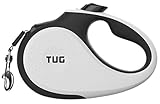
- Small Retractable Dog Leash is Suitable for Dogs Under 35 lbs; Medium For Dogs Under 55 lbs; Large For Dogs Under 110 lbs; Retractable Leashes Not Suitable For Chewing
- 16 ft Tape Retractable Dog Leash With Easy-Adjust Retraction; 360 Degree Tangle-Free Inlet
- Quick Lock And Unlock Feature - Easy Roll-On and Roll-Off With Your Thumb
- Super Comfortable Grip For Those Long Walks! Ergonomic Anti-Slip Handle
- Heavy Duty Internal Coil For Consistent Retraction and Recoil
What the earliest evidence tells us about dogs and people
Domestic dogs were widespread by the end of the Ice Age
A Natural History Museum report on ancient DNA describes dog remains dated to about 15,800–14,300 years ago, including material from Gough’s Cave in Britain and Pınarbaşı in Türkiye. The researchers’ evidence indicates that dogs were widely distributed across Europe and Türkiye by at least 14,000 years ago. Dr Selina Brace, an ancient-DNA researcher at the museum, called pushing the date of the earliest genetically identified dog back 5,000 years “a significant breakthrough.”
This evidence supports early domestication and close human-dog relationships. It does not identify a leisure walk, a leash, a regular exercise schedule or a modern household pet. Hunter-gatherer groups may have traveled with dogs for many purposes, but the surviving remains cannot tell us that people practiced today’s companion-dog walk.
Dr Silvia Bello, a Natural History Museum researcher and study author, said the work “sheds new light on the complex lives of hunter-gatherer communities at the end of the Ice Age.” The statement is about those communities and their dogs, not about the origin of a modern consumer habit. Read the Natural History Museum’s account of the findings.
Urban dogs existed long before the modern pet walk
Dogs were familiar features of late-medieval and early-modern English streets. Historical research describes them as ubiquitous in urban areas and records complaints about nuisance, danger and control. That tells us cities had to regulate dogs; it does not prove that residents routinely took a dog out for a planned recreational circuit.
Rank #2

- 【Professional Retractable Dog Leash】 The ultimate combination: 16 ft strong nylon reflective tape, impact-resistant ABS housing, and a stainless steel anti-chew cable. This design greatly reduces the risk of being bitten through, extending the leash’s lifespan. Augwind’s retractable leash is specifically designed for small to medium dogs under 50 lbs, offering the best value on the market
- 【Safe & Effective】16 ft Strong Reflective nylon webbing; Over 100,000 retraction times; Max anti-jerk tensile strength: 350 lbs; . Whether day or night, on the street or lawn, the Augwind retractable leash makes every walk safe and easy
- 【Quick Lock System】 Operate the pause, lock, and unlock buttons with a single thumb. Enjoy smooth braking and instant response. The Augwind retractable dog leash ensures the safety of both you and your pet on every outing
- 【2026 Equipment Upgrades】1. Reflective webbing 2. Chrome-plated, rust-proof 360° rotating clasp 3. Ergonomic soft silicone handle 4. Reserved slot for poop bag holder 5. Stainless steel anti-chew cable
- 【2-Year Warranty】 We are a professional pet products company committed to bringing the safest, most practical, and affordable pet products to pets and their owners. We promise to solve any quality issues within 2 years. We provide 24/7 after-sales service. If you have any questions, please feel free to contact us
The distinction matters because “walking” can mean several things: an animal traveling with a person, a dog being driven away from a crowded street, a working dog being exercised, or a household pet being taken out for leisure. The surviving historical record often cannot distinguish among them. The University of East Anglia repository summarizes the evidence on nuisance dogs in this period. See the University of East Anglia research record.
How the family dog changed the meaning of a walk
Nineteenth-century London was a major turning point
Historian Philip Howell’s work, discussed by the University of Cambridge, presents nineteenth-century London as a crucial setting in which the family dog recognizable today was shaped. Urbanization, changing domestic ideals, commercial pet keeping and animal-rights activity altered how people understood dogs. Animals increasingly appeared not only as workers or street inhabitants but as companions with a place in the household.
That interpretation does not assign dog walking a single birth year. Instead, it explains why a regular walk became socially meaningful: a companion dog needed care, exercise and supervision, while owners increasingly viewed time spent with the animal as part of family life. The same period also saw the growth of businesses and products built around pets. Read Cambridge’s overview of Howell’s historical account.
Recommended Free Tools
Why urban living encouraged routine walks
Dense housing limited where dogs could roam. Streets, parks and enclosed properties created practical questions about waste, safety, nuisance and control. A planned outing offered owners a way to provide movement while managing those constraints. The routine was shaped by local space and social expectations rather than by one universal custom adopted everywhere at once.
Rank #3

- INSTANT CONTROL WITH ONE CLICK LOCK - Stop your dog instantly with a smooth one-click lock and brake system that responds fast in any situation. Stay in full control during walks, even in crowded areas or around other dogs.
- STRONG TAPE BUILT FOR REAL PULLING - Reinforced nylon tape and durable internal mechanism handle daily pulling with ease. Designed for small, medium, and large dogs up to 100 lbs without compromising control or safety.
- 20.1 FT FREEDOM WITHOUT TANGLES - Enjoy 16.4 ft of smooth extension with a 360° tangle-free system that prevents twisting and jamming. Your dog explores freely while you maintain steady, controlled movement.
- COMFORTABLE GRIP THAT REDUCES STRAIN - Ergonomic anti-slip handle fits naturally in your hand, reducing fatigue during long walks. Ideal for daily use, jogging, and training with dogs that pull or move unpredictably.
- RELIABLE FOR DAILY WALKS & TRAINING - Designed for real-life use—walking, training, and outdoor activity. Smooth retraction, consistent performance, and easy handling make every walk safer and more enjoyable.
Leashes, collars, designated paths and later parks made the activity more visible. They also separated an owner-supervised walk from an animal simply moving through a neighborhood. The modern idea of a dog walk therefore reflects both affection and urban management.
When dog walking became paid work
From informal help to a defined service
For much of the twentieth century, owners commonly relied on family, neighbors or household employees when they were away. As work schedules, commuting and apartment living changed, care during the day became a service someone could sell. Dog walking joined boarding, grooming, training and pet sitting in a wider professional pet-care sector.
The U.S. Bureau of Labor Statistics describes apps and online platforms that connect pet owners with local walkers and other providers. Technology reduced the need to find a caregiver solely through personal contacts and made one-off bookings, recurring schedules, reviews and digital payments easier to arrange. The platform model did not invent the walk; it made an existing need more visible and scalable.
Business models vary. A solo walker may serve a small neighborhood, while a company may dispatch several workers, offer group walks and provide updates through an app. Revenue can include walking, pet sitting, transportation or other services, so a company’s sales should not automatically be treated as dog-walking revenue. See the Bureau of Labor Statistics’ explanation of technology and pet-care growth.
Rank #4
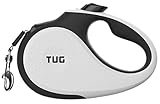
- Small Leash is Suitable for Dogs Under 35 lbs; Medium For Dogs Under 55 lbs; Large For Dogs Under 110 lbs; Retractable Leashes Not Suitable For Chewing
- 16 ft Tape Leash With Easy-Adjust Retraction; Tangle Free 360 Degree Tape Movement
- Quick Lock And Unlock Feature - Easy Roll-On and Roll-Off With Your Thumb
- Super Comfortable Grip For Those Long Walks! Ergonomic Anti-Slip Handle
- Note: Large Leash May Be Larger Than Expected; Please Review Dimensions Before Purchase
How big is the dog-walking industry?
The answer depends on what is being counted. The figures below are U.S. measures from different years and sources. They use different denominators, so they should not be plotted as if they were one continuous dog-walking market series.
| Figure | What it measures | How to interpret it |
|---|---|---|
| $5.8 billion in 2017 | U.S. pet-care-service sales reported by the Census Bureau in 2020 | Includes grooming, boarding, training, pet sitting and other services; not dog walking alone. Census said sales doubled over the decade ending in 2017. |
| About $236,000 per business in 2017 | Average annual sales for a U.S. pet-sitting and dog-walking business, in Census data reported in 2020 | An average business-sales figure before operating expenses, not a walker’s income or a customer’s price. |
| $631 million in 2017 | Pet-sitting and dog-walking revenue combined, using Census data as reported by BLS in 2024 | The two services are combined. BLS presents this as 12% of a $5.4 billion total in its 2017 Economic Census comparison. |
| $10.7 billion in 2021 | Total U.S. pet-care-services revenue reported by BLS in 2024 | A broad category whose revenue more than quadrupled from 2004 to 2021; it is not dog-walking revenue. |
| $158 billion in 2024 | Total U.S. pet-industry spending, APPA’s actual-sales figure published in 2025 | APPA’s $14.3 billion “Other Services” category combines boarding, grooming, insurance, training, pet sitting, pet walking and other services. |
| $165 billion in 2026 | APPA projection for total U.S. pet-industry sales | A forecast for the entire pet industry, not actual dog-walking sales and not a dog-walking-only estimate. |
The Census Bureau’s 2020 account provides the $5.8 billion and approximately $236,000 figures. Review the Census Bureau’s definitions and 2017 data. The BLS article provides the $631 million combined line and the $10.7 billion broad-sector figure. Read the BLS comparison. APPA’s statistics page explains its 2024 actual sales and 2026 projection. Check APPA’s current market categories.
Why “billion-dollar dog-walking market” can mislead
A headline can reach a billion dollars by combining several services or counting the entire pet economy. That may be useful context for investors or policymakers, but it answers a different question from “How much do people spend on dog walking?” The narrowest figure in this set is still combined with pet sitting, while the larger totals include many unrelated services.
Quick wins for a faster PC:
Scan for outdated or missing drivers - takes under a minuteDriver Scan →Repair Windows errors before they cause bigger problemsFix Now →Four labels should accompany any market number: the year, the geography, the service scope and the metric. “U.S.,” “2017,” “pet sitting and dog walking combined,” and “industry revenue” describe a materially different measure from “global,” “2026,” “walking only,” and “projected consumer spending.”
Best Value
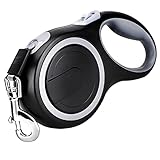
- 1.Simple, practical and comfortable. A ergonomic and anti-slip rubberized handle fits in your hand well for those long walks.
- 2.26ft tape leash with easy-adjust retraction that allows your canine pal to explore but still remain within safe distance. Tangle-free 360 degree tape movement.
- 3.Professional strap ---extremely sturdy 26ft strap---for medium and large dogs up to 110lbs.
- 4.You can push the button all the way down to lock the leash, or click the button back to easily reel your dog back in. It will remains locked as long as the button is pressed. For safety reasons, the lock is locked when the belt is tensioned; when you need to unlock, pull the dog back, or push the dog leash forward.
- 5.Note:1.Do not let your dog chewing the leash, a 5 pound dog can easily pull off the leash if it has a little breakage.2.Don't pull the rope to the end, it is easy to damage the spring, so it won't retractable. Stop it in time.
What professional dog walking involves today
Commercial access is not the same as a private dog owner’s access
Rules depend on the country, land manager and site. England’s Department for Environment, Food & Rural Affairs says commercial walkers may use public rights of way, but the right to walk on access land does not automatically include commercial activity. A walker should confirm whether commercial use is permitted, check site-specific restrictions and carry appropriate insurance.
Land managers may require leads in sensitive areas, at particular times or across an entire site. Those conditions can protect livestock, wildlife, visitors and the dogs themselves. They are not a universal legal rule for every location.
Group size and control
England’s woodland guidance reports an average commercial group of six dogs and notes that there is no national limit. It emphasizes that only dogs a walker can effectively control should be taken together and cites a professional charter recommending no more than six. The recommendation is England-specific guidance, not a worldwide maximum.
Before booking or operating a service, clarify:
- Whether the route permits commercial activity and where dogs may be off lead.
- How many dogs will be in a group and how the walker handles incompatible or reactive dogs.
- What insurance the business carries and what responsibility the owner retains.
- How leads, emergency contacts, heat, illness, traffic and lost-dog incidents are managed.
- Whether the service includes transport, waiting time, medication or only the walk itself.
DEFRA’s England guidance sets out the access, lead, insurance and control considerations for commercial walkers. Read the official guidance.
What the history explains—and what it does not
The long history explains why walking feels ordinary now. Dogs have deep roots in human communities; urban societies made their presence a matter of public management; nineteenth-century households increasingly treated them as companions; and modern work patterns created demand for paid help. Each stage supplied conditions for the next.
It does not show that a modern dog walk existed unchanged from prehistory, that every historical dog was a pet, or that one statistic proves a billion-dollar walking-only market. Those claims collapse distinct evidence into a story that the sources do not support.
The most accurate account is therefore both older and newer than the familiar image: the human-dog relationship is ancient, the family-pet walk is comparatively modern, and the paid service is a contemporary business built around changing urban lives.
Free tools Windows power users keep installed
One-click scans. No signup required.
Quick Recap
Product prices and availability are accurate as of the date/time indicated and are subject to change. Any price and availability information displayed on Amazon at the time of purchase will apply.





Leave a Reply