
Skunks live wherever they can find cover, a dry resting place, and nearby food. In the wild, that may be a short burrow, an enlarged abandoned mammal tunnel, a hollow log, a rock crevice, a culvert, or dense vegetation. Around homes, the same needs are met by the protected gaps beneath decks, porches, sheds, outbuildings, concrete slabs, foundations, and crawlspaces. Most skunks leave their shelter after dark, so finding a likely den does not mean the animal is inside all day. The safest way to reclaim a structure is to remove food attractants, confirm that the den is empty, and then install a durable exclusion barrier; blocking an occupied den can trap adults or kits.
Where skunks live in general
Skunks are adaptable habitat generalists rather than animals tied to one particular landscape. Striped skunks use a mixture of woods, brush, open fields, wooded ravines, rocky outcrops, pastures, timber, and water nearby, according to the North Carolina Wildlife Resources Commission. Indiana’s wildlife agency also lists wetlands, forests, agricultural edges, and urban areas. These habitats provide a combination of hiding cover, insect and small-animal prey, fruit, and access to water.
As an Amazon Associate I earn from qualifying purchases.
Eastern spotted skunks are more strongly associated with covered open country, thickets, dense brush, woodland edges, and rivers or streams. Local species matter when you interpret tracks, den size, and activity, but both types can use natural cavities and human structures when those places offer darkness and protection.
The Tool Desk
Outbyte Driver Updater FREEScan for outdated or missing drivers - takes under a minuteDriver Scan →Outbyte PC Repair FREEClear out junk files and repair common Windows errorsFree Scan →Natural places skunks use for shelter
A skunk may excavate its own den, modify a tunnel made by another animal, or simply settle into an existing cavity. Dens are usually close to the ground and concealed by vegetation, debris, rocks, or a structure.
#1 Best Overall

- Stop skunk damage under your home and around other areas of your backyard by using this granular formula.
- The smell and taste of the granules provides dual action protection to convince skunks that your yard is dangerous and quickly trains them to avoid the treated areas.
- Convenient 6-pound resealable bag contains enough product to cover up to 3,500 square feet for all season use. Can be applied as a protective border or evenly spread over the specific areas you'd like to protect.
- Shields your landscaping, gardens, patios and porches by discouraging skunks from your property.
- Easy to apply, no spraying or mixing needed. Each application is long lasting and should last around 30 days during normal rainfall and irrigation.
| Shelter type | How skunks use it | What to look for |
|---|---|---|
| Self-dug burrow | Short excavation in a slope or well-drained soil | Low entrance, loose soil, fresh claw marks |
| Abandoned mammal burrow | Skunk enlarges a groundhog, gopher, gopher-tortoise, or other tunnel | Existing hole widened or newly cleared |
| Brush, wood, hay, or debris pile | Animal rests in the protected interior without digging | Flattened vegetation, tracks, odor, or a small gap under the pile |
| Hollow log or tree | Uses a natural cavity above or near ground level | Dark opening with worn soil or tracks nearby |
| Rocks and crevices | Shelters between rocks, in a rock pile, or in a fissure | Hidden entrance and compacted dirt around the opening |
| Culvert or drainpipe | Uses a dry, protected pipe or drainage structure | Tracks or droppings along the pipe, especially where it meets soil |
The U.S. Fish and Wildlife Service describes striped-skunk dens as generally short and shallow, extending a few meters and reaching about a meter underground. Slopes with good drainage are preferred, because a den that stays dry is safer during rain and snow. A burrow can have more than one entrance, and a concealed secondary opening may be several feet from the obvious hole.
Why yards and buildings attract skunks
Human structures create the same conditions as a natural den: darkness, a stable temperature, protection from predators, and little disturbance. A skunk can enter through a gap only a few inches high if the opening leads to a quiet cavity.
Common residential shelter sites
- Under decks and porches, particularly where the bottom edge is open.
- Under sheds, trailers, garages, and other outbuildings.
- Along foundations or beneath a concrete slab where soil has washed out.
- Inside crawlspaces, basements, or garages reached through a damaged vent, door, or wall opening.
- Under wood piles, stacked materials, landscaping rocks, and dense ornamental plants.
- In an attic or similar enclosed space when an exterior opening provides access.
Washington Department of Fish and Wildlife lists dens under wood and rock piles, buildings, porches, and concrete slabs, as well as rock crevices, culverts, drainpipes, and hollow trees. A den beneath a shed, porch, or outbuilding may be used briefly. A female may remain longer when mating or raising young and the location continues to provide quiet, reliable cover.
Do these 3 things before closing this tab:
1Repair Windows errors before they cause bigger problems2Scan for outdated or missing drivers - takes under a minute3Clear out junk files and repair common Windows errorsWhy females may stay longer
Females seeking a place to mate or raise kits favor dark, quiet, defensible spaces. The North Carolina Wildlife Resources Commission specifically recommends repairing vent covers and installing barriers around buildings, decks, and porches to prevent access. A den that appears inactive during a single daytime inspection can still be occupied at night or during the nesting period.
Rank #2

- STRONG REPELLER - This unique blend of ingredients causes mild irritation to animal's nasal passages. When an animal touches, tastes, or smells Repels-All Animal Repellent, it triggers the natural instinct to escape/avoid and the pest leaves.
- ANIMALS AFFECTED - Our granules repel species of squirrel, deer, rabbit, chipmunk, mouse, skunk, rat, beaver, raccoon, porcupine, bird, groundhog and more rodent species.
- DEFEND YOUR GARDEN AND HOME - Apply around homes, gardens, garbage cans, barns, swimming pools, sheds, woodpiles, decks, patios, and campsites to prevent grazing, chewing, gnawing, nibbling and browsing damage to plants and property.
- BIODEGRADABLE - Repels-All granules are biodegradable and will not harm animals, lawns, gardens, flowerbeds, or other desirable plants when used as directed.
What a skunk den looks like
No single feature proves that a skunk is living at a site. Use several clues together and observe from a distance.
- Entrance: a low opening near a foundation, deck, porch, shed, woodpile, or slope. The opening may be partly hidden by grass or debris.
- Disturbed soil: loose earth, a shallow scrape, or fresh digging around the entrance.
- Tracks: five toes on each foot, often with visible claw marks. Tracks may appear in soft soil, mud, or snow along the route to food.
- Droppings: feces near feeding areas or along a regular travel path rather than neatly inside the den.
- Odor: a strong skunk smell can indicate recent activity, but odor alone cannot show whether the den is occupied.
- Multiple openings: a second entrance may be hidden under vegetation, a structure, or a pile of material.
A hole by itself is not evidence of a skunk. Groundhogs, foxes, rodents, and other animals use similar openings. Do not put your hands into a hole, shine a face-level light into it, or seal it while an animal may be inside.
When skunks leave the den
Most skunks are nocturnal. They commonly emerge after dark to forage and return before daylight, which is why a den can be hard to inspect directly. Skunks are generally solitary, although several may share a winter den or gather during unusually cold weather.
They do not enter true hibernation. Wildlife agencies describe periods of cold-weather dormancy or torpor instead: activity decreases, but the animal can leave when conditions and food availability permit. A daytime sighting is therefore not automatically abnormal. A skunk may be feeding, caring for young, searching for a new shelter, or responding to a disturbance at its usual den.
Rank #3
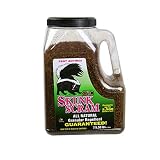
- Stop skunk damage under your home and around other areas of your backyard by using this granular formula.
- The smell and taste of the granules provides dual action protection to convince skunks that your yard is dangerous and quickly trains them to avoid the treated areas.
- Convenient 5.5 lb shaker jug contains enough product to for all season use. Can be applied as a protective border or evenly spread over the specific areas you'd like to protect.
- Shields your landscaping, gardens, patios and porches by discouraging skunks from your property.
- Easy to apply, no spraying or mixing needed. Each application is long lasting and should last around 30 days during normal rainfall and irrigation.
How to check whether a den is occupied
- Keep people and pets away. Choose a viewing point that does not place you between the entrance and open cover. Bring pets indoors, especially at dusk and overnight.
- Inspect in daylight from a distance. Look for fresh soil, tracks, droppings, or a recently used path without approaching the opening.
- Watch the entrance over more than one night. Activity can vary with weather, food availability, and the presence of kits. A single quiet observation is not enough to establish vacancy.
- Look for alternate entrances. Check the opposite side of a deck, porch, shed, foundation, or pile before considering any barrier.
- Stop if you find evidence of young. Kits may be hidden while the female forages. Do not separate a mother from kits or force an animal into a confined space.
Because a den may be occupied only intermittently, professional assessment is appropriate when the opening is under a building, when young may be present, or when local law controls exclusion, trapping, or relocation.
How to stop a skunk from taking shelter under a house
Exclusion works best as a sequence, not as an emergency attempt to close the first hole you see.
1. Remove food and water attractants
- Bring outdoor pet food and water bowls inside before nightfall.
- Use garbage cans with tight-fitting, secured lids.
- Pick up fallen fruit and clean spilled birdseed.
- Keep compost enclosed and remove meat, dairy, or other strongly scented scraps.
- Reduce clutter and dense ground-level cover next to the structure.
Removing attractants does not evict a den occupant immediately, but it reduces the reason to return and makes later exclusion more effective.
Free tools Windows power users keep installed
One-click scans. No signup required.
2. Repair the structure
Replace broken crawlspace and foundation vents, repair damaged siding or skirting, and close gaps around garages, basements, sheds, and porches. Indiana’s wildlife guidance recommends blocking abandoned groundhog holes, fencing deck and porch bottoms, and closing access to sheds, garages, basements, and attics.
Rank #4
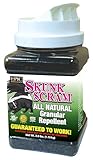
- REPELS BY NATURAL TASTE AND SMELL - This repellent contains a proprietary blend of natural biodegradable ingredients designed to repel skunks in 2 ways. It makes food in the area taste bad disrupting the digestive system. The granual also makes surrounding nests and environments become repellent by smell.
- DURABLE LONG LASTING APPLICATION - Our granule repellent is long lasting and won’t wash out in the rain. Effective during all seasons.
- EASY TO APPLY - Starting from the center portion of the damage, sprinkle by lightly shaking the repellent in a circular pattern away from the damage. You will notice in 3‐4 days no additional damage and may notice more activity outside the perimeter of the applied repellent. Repeat application towards the direction in which you want the skunks to exit the property.
- CHILD, PET AND ANIMAL SAFE - EPIC Repellents use all natural ingredients that do not harm animals or humans when used as instructed. The product is safe to use around pets and children. The products’ granules also completely disintegrate in the environment and are environmentally safe, making the product an eco-friendly option compared to other repellents or device that use plastics or non-natural ingredients.
- THE EPIC GRANUAL DIFFERENCE - There are alot of repellent products and devices out there. EPIC granual repellents offer unmatched application area precision compared to devices, pouches and liquids. Our founders role as a zoo keeper taught us that no two animals are the same. We have engineered our formulas to be laser targeted toward a specific pest by study of specific animal habit and preference.
3. Confirm that the route is clear
After you have identified every entrance and allowed time for normal nighttime activity, use a temporary, easily removable indicator at the suspected exit rather than packing the hole with soil. If the indicator is disturbed, the animal is still using the opening. Never use a method that could entrap a skunk inside a wall, crawlspace, or under a slab.
4. Install a digging-resistant barrier
Use securely fastened hardware cloth or wildlife-exclusion mesh. Extend the barrier to solid framing and bury the lower edge where digging is possible; a buried edge or outward-facing underground apron prevents an animal from simply pushing beneath the fence. Close every potential entrance in the same project so the skunk is not redirected into a basement, garage, or wall cavity.
5. Protect a specific outdoor area
A motion-activated water sprinkler can discourage visits to a garden or other limited area after food and shelter attractants have been addressed. It is a supplementary deterrent, not a substitute for repairing an opening under a building.
What’s actually slowing this PC down?
Pick the symptom - the matching free tool is one click away.
Situations that need extra care
A den under a deck, porch, or shed
These sites can be temporary resting places or longer-term nursery dens. Check for alternate exits and possible kits before installing a skirt or lattice. If you cannot establish that the space is empty without disturbing the animal, use a licensed wildlife-control professional.
Best Value

- REPELS COMMON YARD PESTS: Safer Brand Critter Ridder repels raccoons, skunks, dogs, cats, squirrels, groundhogs, and chipmunks
- NATURAL PEST CONTROL: Uses oil of black pepper, piperine, and capsaicin to keep critters away
- REPELS BY TASTE & SCENT: Dual-action formula repels animals by scent and taste
- 30 DAY PROTECTION: Long-lasting granules provide up to 30 days of protection from yard pests
- EASY TO USE: Apply Critter Ridder granules with lawn spreader or by hand
Skunks in a crawlspace, basement, or attic
Do not chase an animal into a sealed interior space. Close indoor access to living areas, keep pets and children away, and arrange an inspection that identifies the exterior entry point. After the animal has left, clean and repair the space so the same route cannot be reused.
A daytime skunk
Daylight activity alone does not prove disease or aggression. Give the animal a clear route away from people, keep pets inside, and avoid cornering it. Seek professional help if it appears injured, unable to move normally, or repeatedly enters occupied rooms.
Local rules
Wildlife regulations differ by state and municipality. North Carolina prohibits relocation of skunks, so a method that may be legal elsewhere is not lawful there. Check the rules where you live before trapping, transporting, or attempting to relocate an animal; a licensed professional can explain the permitted option.
Prevention checklist for each season
- Inspect vent covers, foundation joints, deck edges, porch skirting, and shed floors for new gaps.
- Keep garbage, compost, pet food, and fallen fruit secured, especially from spring through autumn when nighttime foraging is frequent.
- Store firewood and materials off the ground or in a way that does not create a hollow cavity.
- Trim dense vegetation that touches the foundation while preserving habitat away from buildings.
- After storms or construction, check for washed-out soil beneath slabs and steps.
- Before sealing any opening, verify that no adult or kits remain inside and that all alternate exits are accounted for.
What is known—and what is not—about den locations
Government wildlife sources consistently describe the shelter types and exclusion practices above, but they do not provide a dated, nationally comparable percentage showing how often skunks choose burrows versus decks, sheds, culverts, or other sites. Local species, weather, development patterns, and seasonal den use change the odds. Treat the habitat descriptions as a practical guide to inspection, not as a prediction that one shelter type will be used everywhere.
The practical answer
Skunks live in short burrows, borrowed tunnels, natural cavities, dense cover, and the protected spaces people unintentionally create beneath buildings. Their nighttime routine can hide a den from casual observation, and winter torpor or a female raising kits can change activity patterns. The reliable response is to identify every opening, remove attractants, confirm vacancy, and then install buried, securely fastened mesh. When young may be present, the den is inside a structure, or local law is uncertain, professional wildlife-control advice is the safest next step.
Quick Recap
Product prices and availability are accurate as of the date/time indicated and are subject to change. Any price and availability information displayed on Amazon at the time of purchase will apply.





Leave a Reply