
A donkey makes a bray. People often write the sound as “hee-haw,” but real donkey calls vary from barely audible to thunderously loud and may not sound exactly like the familiar cartoon version.
A donkey makes a bray. The familiar written imitation is “hee-haw,” although a real donkey’s call may be much quieter, louder, harsher, or more wavering than the cartoon version.


As an Amazon Associate I earn from qualifying purchases.
What is a bray?
Bray is both the name of the donkey’s characteristic vocalization and the verb used to describe making it. A bray is usually loud and distinctive, often seeming to rise and fall or alternate between tones. “Hee-haw” is an English-language approximation, not an exact transcription of every donkey’s call.
Individual donkeys have their own braying styles. Some calls are barely audible, while others can carry over a considerable distance. The sound can also vary according to the animal, its surroundings, and the situation, so not every bray will sound identical.
#1 Best Overall
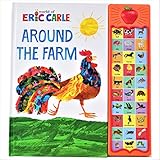
- 30 sound buttons, each representing a different animal.
- Children press button to hear animal name and sound associated with animal.
- Recommended for children ages 3 and older.
- Illustrated by renown children's book creator Eric Carle.
Donkey, ass, and burro: are they the same animal?
In most contexts, donkey, ass, and burro refer to the same animal: Equus asinus.
- Donkey is the most familiar everyday term.
- Ass is another common name and appears in scientific and traditional terminology.
- Burro is especially common in parts of North America, including discussions of free-roaming or feral donkeys.
The words can carry contextual differences without identifying different species. For example, “burro” is often used for wild animals in the western United States, while “donkey” is more common for domestic animals. That is a usage preference, not a firm biological distinction.
Could a mule make a bray?
A mule may make a bray-like or otherwise equine vocalization, but a mule is not another name for a donkey. A mule is a hybrid produced by crossing a female horse with a male donkey. It has donkey ancestry, but it should be identified as a mule rather than automatically called a donkey.
Windows Errors? Fix Them Before They Spread
Repair common Windows errors and clear accumulated junk for a smoother, more stable PC - no reinstall needed.Free scan · no reinstallOutdated Drivers Are Slowing You Down
One free scan finds every outdated or missing driver and matches the right update for your exact hardware.Free scan · exact hardware matchRank #2

- Six double-sided, interactive pages feature animals from 12 categories such as the forest, the ocean and the shore
- Explore three play modes that teach about animal names, animal sounds and fun facts
- This fully bilingual book lets kids learn about animals and sing songs in English and Spanish
- Fun facts about animals provide an early introduction to science concepts
- Intended for ages 18+ months; requires 2 AA batteries; batteries included for demo purposes only; new batteries recommended for regular use
This is one reason sound alone is not always conclusive when several equines are nearby. If the animal cannot be seen, the careful answer is that a donkey is the most likely source of a conventional bray, while a mule may also produce a related-sounding call.
How to identify the animal when you cannot see it
Sound is a useful first clue, but combine it with the surroundings and any visual evidence available.
- Listen to the call. A loud, harsh, wavering “hee-haw” strongly suggests a donkey.
- Consider the location. Barns, farms, petting zoos, pastures, and areas known for free-roaming burros all increase the likelihood.
- Look for physical confirmation. Donkeys generally have large heads, long ears, and a tail with a cow-like tuft rather than the full, flowing tail commonly associated with a horse.
- Check for other equines. If horses, mules, or donkeys are all present, do not rely on the sound alone.
Donkeys also have acute hearing, and their ears can move independently to help locate the general direction of sounds. That behavior is interesting context, but it does not enable a human listener to identify every donkey remotely.
Rank #3
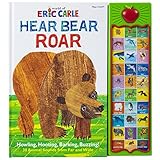
- Hands on interaction engages young readers
- Connecting words with pictures builds vocabulary
- Multisensory reading experiences stimulate the imaginations of young readers
- Features the amazing art of Eric Carle, writer and illustrator of The Very Hungry Caterpillar
- Includes an amazing amount of animals: grizzly bear, deer, fox, wolf, dolphin, lobster, wale, blue jay, bee, owl, seagull, bat, spider, woodpecker, monkey, leopard, goat, eagle, polar bear, penguin, walrus, seal, buffalo, horse, elephant, snake, lion, prairie dog, mouse, and a brown bear
Bray versus neigh: the common confusion
A donkey brays; a horse typically neighs or whinnies. Both are equids, so their calls may be confused when the animal is far away or hidden. However, the conventional answer to “Which animal brays?” is a donkey.
Free tools Windows power users keep installed
One-click scans. No signup required.
A mule can complicate the comparison because its vocalizations may reflect both horse and donkey traits. If you need a certain identification, use the animal’s appearance, location, markings, and known identity along with the call.
Is “hee-haw” an accurate description?
It is accurate as a familiar spelling, but not as a precise acoustic description. Written animal sounds depend on the language and culture of the listener, and real brays differ in pitch, rhythm, duration, and loudness. Some may sound like a clear two-part “hee-haw,” while others are rougher, longer, or less recognizable.
Rank #4
For ordinary listening, the combination of a loud, wavering call and a donkey-like setting is usually enough to make a sensible identification. Researchers and educators can make more systematic comparisons by recording calls and examining their frequencies with tools such as spectrograms. That level of analysis is useful for difficult cases, but it is unnecessary for answering the basic question.
For learning animal calls
If the goal is to teach children or compare several farm-animal vocalizations, an animal sound recording can be a useful educational supplement. It is not necessary to identify a donkey, and recordings should be treated as examples rather than proof that every donkey sounds exactly the same.
Quick answer
The animal that makes a bray is a donkey. Its call is commonly written as “hee-haw.” The animal may also be called an ass or, in some North American contexts, a burro. A mule has donkey parentage and may make a related sound, but it is a separate hybrid, not a synonym for donkey.
Frequently Asked Questions
Which animal makes a bray?
A donkey makes a bray. The call is often written as “hee-haw,” although real brays vary considerably in loudness, pitch, and rhythm.
Is a burro the same as a donkey?
Usually, yes. In common usage, a burro is a donkey, particularly in parts of North America. “Burro” is often used for free-roaming or feral animals, while “donkey” is common for domestic animals.
Is a mule a donkey?
No. A mule is a hybrid produced by crossing a female horse with a male donkey. Mules may make donkey-like calls, but mule and donkey are not interchangeable terms.
What is the difference between a bray and a neigh?
A donkey typically brays, while a horse typically neighs or whinnies. Because mules and other equines can make varied sounds, visual and location clues are useful when certainty matters.
The Bottom Line
Bottom line: A donkey makes a bray, commonly imitated as “hee-haw.” Use the location and the animal’s appearance to confirm the identification, especially where horses or mules are also present.
Quick Recap
Product prices and availability are accurate as of the date/time indicated and are subject to change. Any price and availability information displayed on Amazon at the time of purchase will apply.





Leave a Reply