
Cat grass usually means young wheat, oat, barley, or rye—not catnip. All four are reasonable starting points when grown in clean soil and offered fresh, but veterinary sources do not identify one variety as best for every cat. Choose a clearly labeled seed or blend, grow it indoors where you control the soil and chemicals, and let your cat’s preference and your home’s growing conditions guide the choice. Grass is optional for a cat eating a nutritionally complete diet.
What “cat grass” means
“Cat grass” is a convenient name for tender cereal-grass shoots grown for cats to nibble. The term most often covers wheatgrass, oat grass, barley grass, rye grass, or a blend of those seeds. It is not catnip: catnip is a different plant with different effects, while cat grass is generally offered as fresh roughage and environmental enrichment.
As an Amazon Associate I earn from qualifying purchases.
The Texas A&M College of Veterinary Medicine and Biomedical Sciences describes the role proportionately: “Cat grass is not a required part of a cat’s diet if the food they are eating is well-balanced, but it is something that many cats enjoy,” said Lori Teller, clinical associate professor. A cat that ignores grass is not necessarily missing a nutrient, and a cat that seeks it out should still receive a balanced main diet.
The four common types compared
No cited veterinary source establishes a universal winner among wheat, oat, barley, and rye. Compare the seed identity on the label, whether you are buying a single variety or a blend, how the plant performs in your available light and container, and what your cat actually likes.
#1 Best Overall

- Your Cat Deserves the Best: Our cat grass blend adds important nutrients to your cat’s diet, including wheat grass, oat, barley and rye. Organic and loaded with all the fiber your pet needs for healthy digestion, our cat grass kit provides hairball control for cats as well as a tasty edible grass treat.
- Cat Plant Magic: Add a soil disk, a splash of water, and a sprinkling of seeds, and watch your cat grass planter kit sprout like magic. Read our Cat Ladies insert for easy-to-follow instructions and growing tips, and watch your organic cat grass sprout up to 4” in just 4–7 days. No green thumb required.
- Good for Cats, Good for All: Not only are our grow kits organic and GMO-free, but our cat grass for indoor cats deters them from eating toxic household plants and digging up your favorite blooms, making our cat grass good for cats and their humans.
- Purrfectly Giftable: A great gift for cat moms everywhere, our cat grass growing kit keeps your feline friends healthy and happy while keeping your house looking greener and cleaner.
- What’s Inside: Our Cat Grass Growing Kit includes 3 organic soil disks (number may vary), 3 packages of our locally sourced cat grass seed blend, 3 BPA-free containers, and simple instructions.
| Type | What the sources establish | Practical choice |
|---|---|---|
| Wheatgrass | Catster describes it as quick and easy to grow and suggests offering it at roughly 4–6 inches. Those are source-specific growing suggestions, not a universal veterinary rule. | A straightforward single-seed trial if you want a commonly used option and fast-growing shoots. |
| Oat grass | VCA includes oat among the varieties owners can try. PetMD quotes Mark Waldrop, DVM, discussing oat as a choice, but the available evidence does not show clinical superiority. | Useful in a blend or as a separate pot when you want to see whether your cat prefers its texture or taste. |
| Barley grass | Barley is common in cat-grass blends. Catster calls it a tall-growing type, but comparative height and nutrient claims are not veterinary recommendations. | A reasonable second trial alongside wheat or oat, especially if you want to compare growth habit. |
| Rye grass | VCA lists rye among the cereal grasses used for cats. The reviewed authoritative material does not rank it above the other types. | Appropriate as a labeled single seed or part of a blend when it grows well in your setup. |
Single seed or blend?
A single seed makes it easier to know what your cat prefers and which plant is performing well. A blend gives you several textures and growth habits in one pot, but the label may not reveal which seed produced the shoots your cat favors. If you are troubleshooting poor growth, begin with one clearly identified variety before changing several variables at once.
How to choose a safe starting seed
- Read the seed identity. Look for wheat, oat, barley, rye, or a named mixture intended for growing, rather than an unidentifiable lawn-seed product.
- Match the variety to your space. All four need adequate light after sprouting. A shallow, stable container is more important than a decorative planter.
- Use your cat as the preference test. Offer one fresh pot, observe whether it is nibbled, and try another labeled variety if interest is low.
- Plan for replacement. Grass is a short-lived crop in a cat’s pot. If you want a continuous supply, sow another container about a week after the first.
How to grow cat grass indoors
The most detailed veterinary growing directions come from VCA. PetMD, quoting Waldrop and instructions attributed to the Humane Society, gives a similar schedule: keep seed moist while it sprouts, then move it to a sunny location and offer it at about 3–4 inches.
Rank #2

- Healthy Alternative to Cat Treats: Cats crave the taste of grass, and our cat grass adds important nutrients, like niacin and B vitamins, to your cat’s diet; It also provides cats with the fiber they need for healthy digestion and hairball control
- Cat Grass For Indoor Cats: Cat-A’bout cat grass reduces your cat’s urge to eat house plants; Each cat grass kit includes everything required to grow grass except water; Can be grown year round and makes a great gift
- Easy & Fast Cat Grass Kit: Our unique formula requires watering only once and sprouts magically straight from the container; CatGrass Plus has a 98% germination rate so your cat can start enjoying healthy, vibrant grass in as little as one week
- From Nose to Toes We've Got Your Pet Covered: Our goal is to improve the human-animal bond by offering a complete line of innovative, solutions-driven products and accessories for animals, both small and large
- Trusted by Professionals: Miracle Care health and grooming products have been trusted and recommended by veterinarians and professional groomers for more than 40 years; Proudly Made in the USA in our Dayton, OH facility
Gather the supplies
- A shallow container with drainage holes
- A heavy pot or tray that is difficult for a pawing cat to tip
- Ordinary potting soil
- Clearly labeled cat-grass seed or a named blend
- Room-temperature water
- A loose plastic cover for the sprouting stage
- A bright, sunny indoor location for established shoots
Follow these steps
- Prepare the pot. Use a shallow container with drainage. Fill it about three-quarters full with potting soil, leaving room for watering and the seed covering.
- Sow the seed. Spread seed over the soil surface in a reasonably even layer. Cover it with approximately 1/4 inch of soil and water gently so the soil is damp without being washed out.
- Create a sprouting environment. Place a loose plastic cover over the container. Keep it at room temperature and away from direct sunlight while the seeds germinate. VCA reports sprouts in about 3–7 days.
- Expose the shoots to light. Remove the cover as soon as sprouts appear and move the pot to direct sunlight. Continue watering sparingly; the soil should stay damp, not wet.
- Wait for usable height. VCA says grass is generally ready in 10–14 days or at about 4 inches tall. PetMD’s guidance is approximately 3–4 inches, while Catster’s wheatgrass advice uses roughly 4–6 inches. Treat these as practical source-specific ranges rather than a single required height.
- Offer the pot safely. Set it where the cat can reach the grass but cannot easily knock the container over. Remove any loose cover before the cat has access.
- Replace declining growth. A crop may last up to three weeks. Replace yellowing or wilted shoots with a fresh sowing instead of trying to revive unhealthy growth.
Keeping a steady supply
Sow a second pot about one week after the first. With staggered containers, one batch can be growing while another is being offered. Keep each pot’s soil condition and age in mind, because an older crop is more likely to become sparse, wilted, or contaminated if overwatered.
The Tool Desk
Outbyte PC Repair FREERepair Windows errors before they cause bigger problemsFix Now →Outbyte Driver Updater FREEScan for outdated or missing drivers - takes under a minuteDriver Scan →Safety: what to avoid
Mold and persistently wet soil
Too much water can encourage mold. Inspect the soil and blades regularly. If mold appears or the grass looks sickly, remove the planter and start a fresh batch; do not trim away only the visible patch and continue offering the pot.
Rank #3

- Complete Kit: Cat grass kit includes cat grass seeds, coconut coir soil discs, wooden cat grass planter, and mini tools.
- Indoor Friendly: Cat grass for indoor cats with easy indoor grass for cats to grow year-round.
- Digestive Support: Grass for cats helps hairball control and supports healthy digestion.
- Fast Sprouting: Just add water, plant cat grass seed, and see catgrass sprout in days.
- Pet Friendly: Plants for cats and dogs, ideal pet grass for cats in any home.
Toxic houseplants nearby
Cats may not reliably distinguish edible grass from a poisonous houseplant. Keep known toxic plants out of reach and check a current toxic-plant reference, such as the ASPCA list, before placing greenery where your cat can investigate. Cat grass does not make other plants safe.
Untreated outdoor lawn grass
Outdoor grass may have been exposed to pesticides or other lawn chemicals, and its soil can carry intestinal-parasite eggs. Indoor growing makes the seed, soil, water, and fertilizer exposure easier to monitor. Do not assume a blade from an unfamiliar lawn is equivalent to a clean indoor crop.
Rank #4
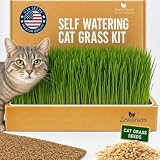
- EASIEST WAY TO GROW EDIBLE CAT GRASS FOR INDOOR CATS IN YOUR HOME. Water once at the beginning and that’s it! No need to use messy soil or have to calculate how much water to give on daily basis. Guaranteed to grow in just a few days with no green thumb required.
- BEAUTIFULLY STYLISH: Our Cat Grass Growing Kit system includes a dish washer friendly grass tray measuring 12” x 6” (one of largest Cat grass systems on Amazon!) and insert for continual use, a beautiful bamboo surround because we want it to look good in your home, 1 biodegradable hemp mat, full instructions and certified organic USDA non-GMO wheatgrass seeds with an incredible germinate rate.
- CONVENIENT REFILLS AVAILABLE SEPERATELY: Make growing your own grass for cats a healthy habit and hobby with our easy to use economical refill packs so you will never be without. One kit produces 72 square inches of grass for your purry love!
- WATCH THE MAGIC HAPPEN: No soil needed which means that no chance of your purry love pulling out seeds and dirty soil all over the place! Simply soak seeds, pour water over hemp mat, spread the seeds out and cover with the black out lid, for 3 days and then take the lid off and your wheatgrass will be ready in another 3 – 4 days!
- ZERO RISK SATISFACTION: Our seeds have an excellent germination rate and are guaranteed to grow. If you need any help, our US based ZestiGreens team would love to help you as we want you and your furry friends to love growing your own cat grass as much as we do. We offer full refunds if you are unhappy for any reason.
Large or repeated amounts
VCA warns that overeating grass may cause vomiting. If grass is not vomited, its insoluble fiber could potentially contribute to a blockage. VCA gives a general guideline that treats should make up no more than 10% of total calories; that is a broad treat framework, not a prescription that a cat needs a particular amount of grass. Ask a veterinarian for advice if your cat consumes an entire pot quickly, repeatedly seeks out large amounts, or vomits after eating it.
Quick wins for a faster PC:
Fix the driver behind crashes, sound loss and screen glitchesFind Drivers →Clear out junk files and repair common Windows errorsFree Scan →Blades caught in the mouth or throat
Seek veterinary advice promptly for excessive swallowing, gagging, retching, drooling, sneezing, nasal discharge, or vomiting after grass eating. These signs can indicate irritation or a blade lodged in the mouth, throat, or nasal passage. Do not pull at a deeply lodged blade or delay care while waiting for it to pass.
Best Value

- 🌱 Grows in Just 3-7 Days – Fast & Foolproof: Our 100% wheat grass seeds germinate quickly and reach 4–6 inches tall in as little as 3–7 days. No green thumb required. Simply soak seeds for 6 hours, sprinkle on soil, water once, and place on a sunny windowsill. Watch your indoor cat grass kit sprout like magic – perfect for impatient cats and busy owners alike.
- 🌾 Premium Wheat Seeds – High Germination & Freshness This 3-pack contains high-germination wheat seeds, carefully selected for consistent, vigorous growth.
- 🐱 Helps Support Natural Hairball Management: Fresh wheat grass provides natural fiber that helps your cat expel hairballs and support healthy digestion. The tender greens act as a gentle internal aid, reducing hairball formation while satisfying your cat's instinct to chew on plants – keeping them away from toxic household flowers and your favorite blooms.
- 🐰 A Healthy Treat for Small Pets Too: Not just for cats! Rabbits, guinea pigs, hamsters, and even reptiles love this fresh wheat grass supplement. Unlike dry hay alone, our nutrient-rich greens provide essential vitamins, hydration, and natural foraging enrichment. Grow a living snack that supports oral health and overall well-being for all your small furry family members.
- 🎁 Complete 3-Piece Growing Kit—Everything You Need: Each kit includes 3 packets of wheatgrass seeds, 1 BPA-free container, 3 sheets of coconut coir growing medium, and easy-to-follow instructions. Just add water and watch it grow. Whether you’re a first-time cat owner or a seasoned “plant parent,” this kit is perfect for year-round indoor gardening. It makes an excellent gift for cat lovers everywhere.
Confusing cat grass with catnip
Catnip and cat grass are different plants. A cat’s response to catnip does not predict whether it will eat grass, and catnip is not a substitute for the cereal-grass growing method described here.
Independent reader supportYour contribution helps us test, update, and keep practical guides available for everyone.What benefits are realistic?
Fresh grass can provide roughage and enrichment: some cats like the texture, scent, and act of grazing. Those are reasonable, limited benefits. The cited sources do not establish that one variety prevents disease, treats kidney disease, reliably prevents hairballs, or replaces veterinary care. Do not use grass to alter a prescribed diet or to manage vomiting, constipation, or another symptom without professional guidance.
For a cat eating a nutritionally complete, balanced food, grass is optional. A veterinarian can weigh the potential value of extra roughage against the cat’s age, gastrointestinal history, diet, and any tendency to consume non-food items.
Do these 3 things before closing this tab:
1Clear out junk files and repair common Windows errors2Scan for outdated or missing drivers - takes under a minute3Repair Windows errors before they cause bigger problemsFixing common growing problems
| Problem | Likely adjustment |
|---|---|
| Seeds have not sprouted after the expected window | Check that the seed was covered lightly, the soil stayed damp, and the container was at room temperature. Avoid saturating it while waiting. |
| The pot tips when the cat approaches | Move the crop into a heavier container or a stable tray with a low profile. A shallow pot is useful, but it must still resist pawing. |
| Shoots become pale or stretched | After sprouting, remove the cover and provide direct sunlight. Keep watering modestly. |
| Your cat ignores the grass | Do not force access or add unsafe attractants. Try a fresh crop of a clearly labeled wheat, oat, barley, or rye type and observe whether texture, height, or location changes interest. |
| The crop declines before three weeks | Replace yellowing or wilted growth and begin a staggered pot rather than extending the life of unhealthy shoots. |
Buying seeds or a growing kit
VCA notes that cat-grass seeds are available online, at nurseries, and in pet stores, and that complete growing kits are also available. A kit can simplify the container-and-soil setup, while a seed packet gives you more control over the variety and lets you compare single types. Choose products that identify the seed, provide basic growing directions, and do not rely on unsupported claims about medical effects, guaranteed performance, or special nutritional properties.
Whether you buy a packet or a kit, keep the same checks: drainage, clean growing media, moderate watering, sunlight after sprouting, and prompt replacement of moldy or declining plants.
Quick Recap
Product prices and availability are accurate as of the date/time indicated and are subject to change. Any price and availability information displayed on Amazon at the time of purchase will apply.





Leave a Reply