
PC Slower Than It Used to Be?
A free scan shows the junk files, broken settings and background clutter dragging Windows down - then fixes them in one click.Free scan · Windows 10 & 11Crashes, No Sound, or Screen Glitches?
Random freezes, missing sound and display glitches usually trace back to one bad driver. Find and replace yours safely.Free scan · under a minuteCall the animal-services or animal-control agency that serves the place where you found the animal. It can tell you whether an officer will come, where to take the animal, how to report the find, and what local rules apply. If the animal is aggressive, badly injured, or unsafe to approach, stay back and request professional assistance rather than trying to capture it.
Do not assume a shelter or rescue group can accept an animal without notice. Cats, kittens, dogs, and injured animals often follow different procedures, and the correct contact depends on your location.
As an Amazon Associate I earn from qualifying purchases.
Start with safety, not capture
An unfamiliar animal can be frightened, sick, or protective. Severe injury may make an otherwise calm animal behave aggressively. Keep children and pets away, avoid cornering the animal, and do not attempt to put a leash, collar, or carrier on it if you cannot do so without risk.
Free tools Windows power users keep installed
One-click scans. No signup required.
When the animal is aggressive or cannot be approached
Move to a safe distance and call the local animal-control or animal-services agency. Describe the behavior, exact location, species, size, visible injuries, and whether people or traffic are at immediate risk. Los Angeles County specifically directs finders to call for help with sick, injured, or aggressive dogs; the same safety principle applies wherever you are.
#1 Best Overall

- Pet Carrier: 17.5” L x 11” W x 11” H, Recommended max load of 16 lbs cats small dogs. Please do not choose your carrier based on weight--please reference your pet's length and height in selecting a pet carrier size.
- Fits for under-seat dimensions of most airlines. Every airline has a specific set of rules and regulations, please contact with airline before flying with your cats small dogs.
- Mesh windows for ventilation, top and side entry with locking zippers for safety. Carrying handles, adjustable shoulder strap which can also be used as seatbelt, and back strap can fasten the pet carrier to your luggage.
- Pet carrier comes with a removable base insert, which creates a solid surface for your pet to stand on, along with a removable & hand washable cozy fleece pet bed, which offers a cozy sleeping space for your traveling cats small dogs.
- "Toys for pets, of textile materials". Mostly used as a Toy of Fabric Pet Home for pets playing and relaxing.
When the animal appears injured or ill
Contact animal services or a veterinary provider before moving it. Explain what you can see and ask whether an officer, shelter, or clinic should handle transport. A clinic may provide urgent care or scan for a microchip, but clinics differ in whether they accept found animals, so call first.
When you can safely contain it
If the animal is calm and you can keep it without endangering anyone, tell animal services exactly where it is and whether you can hold it temporarily. The agency may arrange pickup or ask you to bring the animal to a designated facility. Do not transport an animal until the receiving organization confirms that it accepts that species and gives you instructions.
The practical decision path
- Record the basics. Note the address or landmark, date and time, species, approximate size, color, sex if known, collar or tags, and distinctive markings. Take a photograph only from a safe distance.
- Call the agency serving that location. Search for the city or county animal-services or animal-control office where you found the animal. Tell the dispatcher whether the animal is contained, loose, injured, aggressive, or with young.
- Follow the local intake route. You may be offered officer pickup, a shelter drop-off, a field report, or instructions to keep the animal temporarily. These options are not uniform between jurisdictions.
- Ask about identification. Find out where a microchip can be scanned and how to register the animal as found. Animal services, shelters, and some veterinary clinics can direct you.
- Coordinate before contacting volunteer groups. A rescue may help with foster placement or a species-specific case, but it may be full or lack authority to take a stray. Obtain local instructions before moving the animal between organizations.
Who should you call?
| Organization | Best first use | What it may do | Important limitation |
|---|---|---|---|
| Animal control or municipal/county animal services | A loose dog, an unsafe animal, or uncertainty about local rules | Dispatch an officer, arrange pickup, direct you to a shelter, scan for a chip, record a found-animal report, or explain temporary care | Species coverage, hours, pickup, and legal duties vary; it may not provide 24-hour service for every animal |
| Public or private shelter | Reporting or surrendering an animal when local rules direct you there | Scan for a chip, document the find, provide intake, or explain reunification steps | Capacity and legal intake routes differ; call before bringing an animal, especially an injured animal, kitten, wildlife species, or unusual pet |
| Rescue group | Foster placement, species-specific assistance, or community-cat support after coordination | Offer a foster home, specialized care, or networking with other rescuers | Usually voluntary, capacity-limited, and not the official reporting authority; it may decline the case |
| Veterinary clinic | Urgent medical assessment or a possible microchip scan | Provide treatment or scan identification, then refer you to the proper agency | Participation in found-animal intake is optional; call before arriving |
Dogs: usually begin with animal services
For a loose dog, the local animal-services agency is generally the most useful first call. Give the exact location, direction of travel if it is moving, description, visible tags, and whether you can safely keep it contained. Fairfax County’s procedure illustrates the variation you may encounter: animal services can arrange to come to the finder or ask the finder to bring the dog or another animal to a facility, where staff can check lost-and-found records and scan for a microchip.
What’s actually slowing this PC down?
Pick the symptom - the matching free tool is one click away.
That Fairfax process is an example, not a nationwide rule. Another county may require a shelter drop-off, accept only certain species, or send an officer only when the animal is a public-safety concern. Ask which option applies before you put the dog in a vehicle.
Rank #2
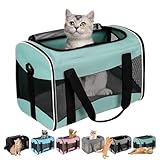
- [PRODUCT DIMENSIONS] Pet travel carrier size : 17x11x11 inches, recommended up to 15 lb pets, it is suitable for large, medium cats and small dogs. Please don't choose your airline cat carrying case based on weight, please refer to your pet's length and height when choosing a pet carrier size.
- [AIRLINE APPROVED] This cat carrier is designed with airline approved, it can fit comfortably under most flight seats, we can take our pets wherever we want. Dog travel carrier offers two attachment loop handles that can be used as a dual harness or as a luggage strap for balanced carry and secure transport.
- [EXCELLENT MATERIAL] Collapsible cat carrier is made of polyester fabric, supported by a steel ring, washable, wear-resistant and durable. The three sides and the top of this pet carrier are nylon mesh, scratch-resistant and not easy to damage, it can not only check your pet in real time, but also ensure enough air circulation.
- [SAFE AND COMFORTABLE] Dog travel bag has metal zippers on the top and side entrances, durable and not easy to deform, it allows your pets to enter and exit easily. The cat carrying case is equipped with an anti-escape safety buckle, which can effectively prevent pets from accidentally falling. It is suitable for car rides and vet rides.
- [PORTABLE AND FOLDABLE] Pet travel carrier comes with a detachable and hand washable wool pet bed, it can provide a comfortable sleeping space for your traveling pet. The cat travel case comes with an adjustable shoulder strap and handle for easy portability. When not in use, you can fold it up for storage.
Healthy outdoor cats need a different assessment
A cat seen outdoors is not automatically lost. It may be an owned pet allowed outside or a community cat cared for by people in the neighborhood. Los Angeles County distinguishes a cat seen briefly from one that has remained in an area over time, and ASPCA guidance discusses community-cat programs rather than routine shelter intake for healthy community cats.
If the cat is healthy and mobile
Call animal services or a local shelter before moving it. Describe how long it has been present, whether it appears well fed, and whether it has an ear-tip, collar, or other visible identification. Ask whether the local policy favors leaving the cat in place, filing a found report, arranging a scan, or bringing it to a facility.
If the cat is injured, sick, or in immediate danger
Use the injured-animal route instead of assuming community-cat guidance applies. Call animal services or a veterinary provider and explain the symptoms and hazards. If professionals tell you to transport an injured cat and you can do so safely, ask what container they recommend; ASPCA describes an open-topped carrier or box for this situation. Never use a carrier to approach an animal that is unsafe to handle.
Kittens: check the situation before separating them
Kittens found alone may still have a mother nearby. ASPCA advises assessing their condition and circumstances rather than assuming abandonment. Observe from a safe distance and note whether the kittens are warm, alert, clean, nursing, or visibly ill, without putting yourself at risk.
Rank #3

- High Quality Design:Sturdy steel cage structure and wooden support board maintain good spatial stability and shape. Breathable mesh windows on four sides,which can ensure good air circulation and views,make pets have a comfortable and safe travel.It can also be easy for you to check on your pets.There is a front pocket to store pet toys,treats,etc.
- Dimension and Weight:Made of durable tear-resistant fabric.Four easy entrances for pets. Dimensions: 17 inch x 11 inch x 11 inch (L*W*H), suitable for pets up to 16 lbs.Please don't choose your carrier based on weight only,consider your pet's length and height when choosing a carrier.
- Airline Approved & Safty:Can be placed under the seats of most airplanes(Four non-slip feet on the bottom to prevent movement), and comfortably on the seat next to you in a car or bus.It has a adjustable shoulder strap.Can also be fastened to the car seat with a safety belt or shoulder strap to keep your pet safe.
- Easy to Clean :You can clean the stains and dirt on the surface with a soft cloth.Soft mat inside the pet carrier is removable and washable.You can take it out and wash it easily to solve all stains.
- Easy to Collapsible & Lightweight:When not in use,fold it into a flat,space saving and easy to store.Only 2.2lbs,it's easier to carry around.It can also used as a toy of pet house,allowing pets to play in a safe space to relax and rest.
Contact a local shelter or veterinarian promptly if kittens appear sick, injured, cold, or in immediate danger. Call before transport so you know whether the facility accepts young kittens, has space, and wants the mother and litter handled together. If they appear healthy, ask animal services or the shelter for location-specific instructions about monitoring and reunification.
How to report the find and identify an owner
Prepare a precise description
Write down the location, time, route the animal took, coat pattern, approximate age and size, sex if known, collar and tag details, and distinctive marks. Note whether the animal is safely contained and whether you observed symptoms or threatening behavior. These details help staff match your report to a missing-animal record.
Request a microchip scan through an approved location
Ask animal services, a shelter, or a veterinary clinic where to obtain a scan. A chip scan is an identification step, not proof that an organization is required to accept the animal. If a chip is found, staff can explain how reunification contact is handled and what information you may share.
Do these 3 things before closing this tab:
1Scan for outdated or missing drivers - takes under a minute2Clear out junk files and repair common Windows errors3Fix the driver behind crashes, sound loss and screen glitchesFollow the agency’s lost-and-found process
Some agencies create a formal found report, while others direct you to a shelter database or require a notice at a particular facility. Follow the instructions for posting a found-animal notice and for checking owner reports. Do not publish every identifying detail if the agency advises reserving some information for verification.
Rank #4
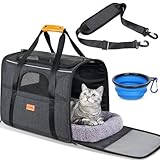
- 【 Spacious & Comfortable Cat Carrier 】The large cat carrier provides ample space for your feline friend to move, turn, and stretch during travel. Measuring 17.3 x 12.2 x 13.4 inches, it is wider and taller than most cat carriers, ensuring your pet feels comfortable and at ease while on the go.
- 【Balanced Mesh Design】Unlike other cat carrier hard, our cat carrier soft strikes the perfect balance with 40% mesh surface area. This ensures your pet can observe the surroundings and breathe easily while feeling safe and secure at the same time. The cat carrier large is suitable for pets in all kinds of situations.
- 【Built-in Dual-Sided Cushion】The detachable pad offers two distinct comforts: a cool side for summer and a super-soft, warm side for winter. You can easily flip it to match the season, providing the perfect temperature for your pet in any weather.
- 【Includes Foldable Bowl】Designed for on-the-go use, our foldable bowl carries 410g of food or 20oz of water. After use, simply collapse it and attach it directly to your pet's collar or leash, perfect for keeping your pet fueled and hydrated anywhere.
- 【Safe & Durable】Safety is our top priority, and the pet carrier for cat is equipped with a secure buckle to prevent your pet from escaping. The cat carrier soft is made of reinforced snow silk fabric and hard mesh material, ensuring durability and preventing any tearing during long-distance travel.
Using shelters and rescues responsibly
Call a shelter before showing up
Ask whether it accepts found animals from your location, whether intake is appointment-based, and whether it handles the species and condition involved. A shelter may be the legal intake point in one jurisdiction and only an advisory resource in another. Injured animals, kittens, wildlife, and exotic species commonly require separate instructions.
Approach rescues as coordinated partners
Rescue groups can be valuable when a shelter lacks a suitable foster placement or when a case needs species-specific support. Their capacity is limited, however, and acceptance is voluntary. Professional rescue guidance recommends notifying animal control and coordinating with the shelter and other rescues when a group takes in a stray. That coordination gives an owner more than one chance to locate the animal and prevents conflicting records.
Do not transfer the animal repeatedly
Every handoff can lose location, medical, or reporting information. Choose the route directed by the agency serving the area, keep the original finder details, and tell each organization what has already been reported or scanned.
Quick wins for a faster PC:
Clear out junk files and repair common Windows errorsFree Scan →Fix the driver behind crashes, sound loss and screen glitchesFind Drivers →Local law changes the answer
There is no single legal rule for every country, state, county, or city. Fairfax County allows different pickup or drop-off arrangements depending on circumstances. Los Angeles County publishes separate procedures for dogs and cats. Agriculture Victoria identifies specific legal routes for found cats and dogs and advises calling a clinic before bringing in a lost pet to confirm that the clinic accepts animals for reunification.
Best Value
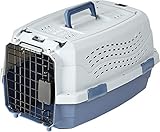
- Hard sided pet carrier with 2 doors for front and top entry; suitable for cat or extra-small dog breeds, such as chihuahuas and toy poodles (up to 11 pounds)
- Durable plastic construction with steel wire front door; screws keep the top and bottom sections securely connected
- Top door can swing open to the left or right for easy access and convenience
- Plenty of ventilation on sides, top, and back of the carrier
- Note: Be sure to measure the size of the pet when choosing carrier size
England and Wales provide another example: DEFRA says local authorities have statutory responsibility for stray dogs and require a seven-full-day holding period after collection. That requirement applies there; it should not be presented as a rule for the United States or for other jurisdictions. Ask the agency serving the place where you found the animal which reporting, holding, and return rules apply.
Common mistakes and how to avoid them
- Trying to catch an unsafe animal: Keep distance and call animal services with a behavior and location description.
- Assuming every outdoor cat is homeless: Ask about owned outdoor pets and community-cat policy before removing a healthy cat.
- Taking kittens away immediately: Assess whether a mother may be nearby and obtain shelter or veterinary guidance.
- Driving to a shelter without notice: Confirm intake, species coverage, hours, and transport instructions first.
- Calling only a rescue: A rescue may help voluntarily but may not be the required reporting authority.
- Posting without a formal report: Ask local animal services how to record the find and arrange a chip scan.
- Assuming one jurisdiction’s process applies elsewhere: Treat examples from another county, state, or country as illustrations and verify your own agency’s current rules.
A quick call checklist
Have this information ready when you contact animal services, a shelter, rescue, or clinic:
- Exact location and the time you found the animal
- Species, approximate size, color, sex if known, and identifying markings
- Visible collar, tags, ear-tip, or other identification
- Whether the animal is contained, loose, injured, ill, aggressive, or with young
- Whether you can safely keep it temporarily
- Whether you can safely transport it if the agency requests that
- Your request for the correct microchip-scan and found-report procedure
The safest default is simple: contact the animal-services agency responsible for the location, describe the animal accurately, and follow its instructions. Shelters, rescue groups, and veterinary clinics can become part of the solution, but their roles and intake capacity depend on local policy and the animal’s condition.
Quick Recap
Product prices and availability are accurate as of the date/time indicated and are subject to change. Any price and availability information displayed on Amazon at the time of purchase will apply.





Leave a Reply