Do these 3 things before closing this tab:
1Repair Windows errors before they cause bigger problems2Scan for outdated or missing drivers - takes under a minute3Clear out junk files and repair common Windows errorsFish can lose scales after an injury or fight, or because parasites or skin disease have damaged the skin. Poor water quality and other stress can weaken a fish’s defenses and contribute to further damage or infection. Missing scales alone do not identify the cause. Check your fish’s behavior and aquarium conditions, and contact a veterinarian who treats fish if the loss is spreading, sores appear, or your fish has changes in appetite, breathing, swimming, or activity.
What can cause a fish to lose scales?
Scales help protect the skin. When one comes off, the damaged area can become an entry point for pathogens; UF/IFAS notes that a break in the skin or a removed scale creates an opening for them. That does not mean every missing scale is infected, but it does make the underlying cause and the fish’s overall condition important.
Injury or aggression
Handling, a rough net, contact with sharp decorations, or getting caught in a narrow gap can remove scales. Fighting, chasing, and fin-nipping tankmates can also injure a fish. Consider whether the problem began after handling or a change in the tank, and look for a repeated source of contact or aggression.
Parasites or skin disease
Parasites can damage skin, fins, or gills, and breaks in the skin can allow bacteria to invade. Ulcers may occur alongside scale loss and can expose deeper tissue. Bacterial, viral, fungal, and parasitic problems can look similar, so scale loss—or even a sore—does not establish a particular diagnosis.
#1 Best Overall

- Contains one (1) API LIQUID SUPER ICK CURE Freshwater and Saltwater Fish Medication 4-Ounce Bottle
- Treats "ich" white spot disease in fish and secondary bacterial fish infections
- Quickly kills ich parasite, typically within 24 hours of first dose
- Use only in freshwater and saltwater aquariums not with reef aquariums
- Dose every day for five days when symptoms first start occurring
Water quality and stress
Unstable or unsuitable water, temperature stress, inadequate oxygen, crowding, and poor nutrition can stress fish and make disease more likely. UF/IFAS describes species-appropriate pH and temperature and adequate dissolved oxygen as parts of good water quality. Its discussion of at least 5 mg/L dissolved oxygen concerns cultured fish management; it is not a universal target for every home aquarium or species.
What to check now
- Observe the fish. Note whether it is eating, swimming, breathing, and behaving normally. Look for redness, ulcers, fuzzy growth, pale patches, swelling, or scale loss spreading to other areas. These signs help indicate how concerning the situation is, but they do not reveal the cause by themselves.
- Look for a source of injury. Check for recent handling, sharp décor, tight gaps, or tankmates that chase or nip the affected fish. Address an obvious continuing source of trauma.
- Test the water. Merck Veterinary Manual recommends routine testing of pH, ammonia, nitrate, and nitrite. Use an aquarium water test kit suited to your setup, and interpret results according to the needs of the species and aquarium type; a test kit checks water conditions, not disease.
- Keep conditions stable. Maintain appropriate water conditions and good sanitation. Avoid sudden changes or improvised treatments while you are trying to identify the problem.
When should you contact a fish veterinarian?
Seek prompt advice from a veterinarian who treats fish if scale loss is widespread or worsening, there are open or deep ulcers, or your fish is lethargic, refusing food, swimming abnormally, or having difficulty breathing. Merck notes that more complicated fish diseases require veterinary treatment. There is no single scale-loss threshold or timeline that applies to every species and situation.
Rank #2
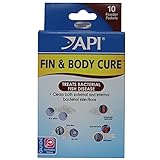
- Contains one (1) API FIN and BODY CURE Freshwater Fish Powder Medication 10-Count Box
- Treats body slime, eye cloud, fin and tail rot, open red sores, gill disease, and hemorrhagic septicemia
- Causes slight discoloration of water that can be fixed by adding activated charcoal
- Use only in freshwater aquariums
- Use daily for four days when symptoms of bacterial diseases appear
If the fish is a koi
Koi herpesvirus (KHV) can cause sloughing scales, but scale loss alone does not establish KHV. Concern rises when it occurs with a cluster of signs such as breathing difficulty, abnormal gill appearance or mucus, skin redness or ulcers, reduced appetite, lethargy, sunken eyes, or erratic swimming. UC Davis School of Veterinary Medicine reports that KHV mortality rates are highest 48–72 hours after the first clinical signs. That is a disease-specific warning for suspected KHV in koi, not a general timeline for other fish with missing scales. Contact an aquatic veterinarian promptly if a koi shows several compatible signs.
Independent reader supportYour contribution helps us test, update, and keep practical guides available for everyone.Should you isolate the fish or use medication?
If infection is suspected, ask a fish veterinarian or qualified aquatic health professional whether isolation is appropriate. Merck describes quarantine as a way to limit accidental spread of infectious disease and make observation and treatment easier; the right approach depends on the fish and the aquarium.
The Tool Desk
Outbyte PC Repair FREEClear out junk files and repair common Windows errorsFree Scan →Outbyte Driver Updater FREEScan for outdated or missing drivers - takes under a minuteDriver Scan →Rank #3
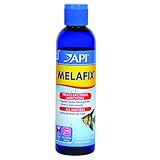
- Contains one (1) API MELAFIX Freshwater Fish Bacterial Infection Remedy 4-Ounce Bottle
- Heals bacterial infections and repairs damaged fins, ulcers and open wounds
- Contains natural, botanical tea tree extract to quickly and rapidly help fish
- Helps treat newly-introduced fish to reduce risk of disease outbreak in freshwater aquariums
- Use daily for a week when treating infections and for 3 days as a preventive when adding new fish
There is no one-size-fits-all medication or salt treatment for scale loss. Some skin, scale, or gill problems may be treated with medicated water, but treatment depends on the cause and circumstances. Correcting the primary stressor matters, and severe ulcers may require antibiotics prescribed by an aquatic veterinarian. Do not choose medication or an antibiotic based on missing scales alone; ask a veterinary professional to assess the fish and recommend treatment.
Quick Recap
Best Value
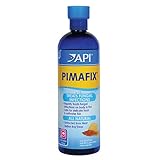
- Contains one (1) API PIMAFIX Antifungal Freshwater and Saltwater Fish Remedy 16-Ounce Bottle
- Rapidly and safely treats fungal infections on body and fins of fish
- Contains all-natural extract from West Indian Bay Trees to help with fungus and cottony growth
- Helps heal internal and external bacterial infections in freshwater, saltwater and reef aquariums
- Use daily for a week when treating infections
Rank #4

- For use in freshwater or marine aquaria.
- Easily absorbed through both skin and gills; ingestion not required.
- Does not adversely affect the filter bed and is easily removed with carbon.
- Safely and effectively treats several fungal, and bacterial fish diseases (dropsy, popeye, fin/tail rot, septicemia).
- When used in a medicated food mix, it is excellent for treating bacterial infections in tanks that contain invertebrates.
Product prices and availability are accurate as of the date/time indicated and are subject to change. Any price and availability information displayed on Amazon at the time of purchase will apply.




