PC Slower Than It Used to Be?
A free scan shows the junk files, broken settings and background clutter dragging Windows down - then fixes them in one click.Free scan · Windows 10 & 11Outdated Drivers Are Slowing You Down
One free scan finds every outdated or missing driver and matches the right update for your exact hardware.Free scan · exact hardware matchCattle need iodine to make thyroid hormones T4 and T3, which help regulate energy metabolism. Goiter—an enlarged thyroid, especially in a newborn calf—is the most recognizable sign of iodine deficiency, but a swollen neck or poor reproductive performance alone does not confirm the cause. If you see affected calves or a herd pattern, ask a veterinarian to examine the animals and review the complete ration before changing iodine supplementation.
Gestating cows and newborn calves deserve particular attention. Iodine imbalance during pregnancy can affect the developing calf, and severe deficiency may be associated with weak or hairless calves or stillbirths. These signs have other possible causes, so prompt assessment is more useful than treating by appearance alone.
What iodine does in cattle
Iodine is a component of thyroxine (T4) and triiodothyronine (T3). These thyroid hormones help regulate the rate of energy metabolism. Inadequate dietary iodine can impair hormone production, and the thyroid may enlarge as it tries to compensate.
The iodine supply a particular animal needs depends on its class and life stage, the complete ration, and the sources of iodine in its feed and supplements. There is no single supplement amount suitable for every herd. Excess iodine can also be harmful, so do not assume that more is better.
The Tool Desk
Outbyte PC Repair FREERepair Windows errors before they cause bigger problemsFix Now →Outbyte Driver Updater FREEFix the driver behind crashes, sound loss and screen glitchesFind Drivers →#1 Best Overall

- 4 Lb. Trace Mineral Brick
- Contains 6 Core Micro-minerals Required For Animal Health
- Minerals Include Zinc, Manganese, Cobalt, Copper, Iodine and Iron
- For All Classes Of Breed and Dairy Cattle, Pigs and Horses
- Major Health Problems Can Arise Without This Product
Which cattle are most vulnerable?
The most recognizable deficiency sign is goiter in a newborn calf. Illinois Extension identifies goiter in newborn calves as the first sign of iodine deficiency. Weak or hairless calves, stillbirths in severe cases, and reduced reproductive performance or retained placentas have also been reported, but none of these signs is specific to iodine deficiency.
A newborn calf’s condition may reflect the dam’s diet during pregnancy. That possibility makes the gestational ration relevant when investigating a calf, but does not prove that iodine was the cause.
Signs that should prompt an investigation
| Finding | What it may mean | What to do |
|---|---|---|
| Enlarged thyroid or swelling in a calf’s upper neck | Goiter is possible, but other conditions can also cause neck swelling. | Have a veterinarian examine the calf and consider look-alike conditions. |
| Weak or hairless calves, stillbirths, or repeated neonatal problems | Iodine deficiency is one possibility, particularly if cases form a pattern. | Document affected animals and review the dams’ diets with a veterinarian. |
| Reduced reproductive performance or retained placentas | These may be associated with iodine problems, but have many possible causes. | Assess herd health and nutrition rather than treating based on the sign alone. |
| One animal with a neck swelling | A single case does not establish herd-level iodine deficiency. | Seek an examination and check for other affected animals. |
These findings are clues, not a diagnosis. Other nutritional, infectious, inherited, or structural conditions may produce similar signs.
What goiter means—and what it does not mean
Goiter is enlargement of the thyroid gland. When iodine is insufficient, thyroid hormone production may be impaired and the gland may enlarge as it attempts to compensate. As the Merck Veterinary Manual explains, goiter is not synonymous with hypothyroidism: an enlarged gland may compensate for reduced iodine availability, and its size alone does not establish thyroid function.
What’s actually slowing this PC down?
Pick the symptom - the matching free tool is one click away.
Rank #2

- CORRECTS MINERAL DEFICIENCIES: Harvested from an ancient sea deposit in Central Utah, Beef Mineral Mix starts with our expansive profile of 60+ trace minerals and is fortified with added phosphorus, calcium, selenium (60 ppm), magnesium, cobalt, copper, iodine, zinc and vitamins A, D, & E.
- HIGHLY PALATABLE TO YOUR HERD: Redmond's higher salt to mineral ratio makes our mixes much more palatable than those other heavy mineral mixes. When offered a choice between our mixes and other minerals, animals choose Redmond every time!
- LOW DAILY COSTS: Reduce your costs on custom mineral mixes.
- NO CHEMICAL PROCESSING: All of our products are unrefined. Beef mineral mix is free of fillers and dyes. Whether your approach is organic or conventional, Redmond Beef Mineral Mix can help you get back to what you love about raising animals.
- CRAFTED BY FARMERS: Founded by farmers over 50 years ago, Redmond is proud of our roots and legacy of supporting healthy farms the world over. We often hear from customers “our animals just do better on Redmond,” -- we are happy to help your farm simplify your mineral program, save money, and improve the health and productivity of your operation.
Neck swelling also has other possible explanations. The Veterinary Handbook lists conditions such as bottle jaw and abscesses among the possible differentials. A veterinarian should interpret the finding in context rather than assuming it is goiter or iodine deficiency.
Why iodine supply can be difficult to assess
Risk depends on geography, the complete ration, feed and forage composition, and animal class. Primary deficiency can result from inadequate dietary iodine. Secondary deficiency may occur when feed compounds interfere with iodine uptake or normal thyroid hormone synthesis.
Goitrogenic feeds
Some feed compounds can interfere with iodine use or thyroid hormone production. Oklahoma State University Extension discusses thiocyanate associated with white clover and glucosinolates in some brassicas, including kale, turnips, and rape. Mississippi State University Extension also discusses goitrogenic feeds and iodine supply.
Finding one of these feeds in a ration does not prove it caused a problem. Review the actual diet and overall circumstances with a veterinarian or livestock nutrition professional, especially if neonatal or reproductive concerns occur.
Do these 3 things before closing this tab:
1Repair Windows errors before they cause bigger problems2Scan for outdated or missing drivers - takes under a minute3Clear out junk files and repair common Windows errorsRank #3

- Certified Organic Kelp for Livestock Health: Enriched with high-quality organic kelp powder, this supplement provides essential minerals to support the health and vitality of cattle, goats, and horses across all life stages.
- Balanced Calcium-Phosphorus Ratio: With a 2:1 calcium to phosphorus ratio, this kelp supplement helps to ensure optimal mineral balance, promoting bone and muscle strength for mixed herds and pasture-raised animals.
- Natural & Non-GMO Sea Kelp Formula: Made from 100% non-GMO ingredients, this sea kelp powder includes organic dried kelp and other essential minerals for a clean and natural supplement you can trust.
- Supports Digestion and Nutrient Absorption: Includes organic kelp granules and plant-based nutrients that aid in digestion, helping animals better absorb vital nutrients from their diet.
- Ideal for Mixed Herds in All Environments: Perfectly suited for mixed pastures, this kelp-based mineral mix is designed to be a versatile supplement for cattle, goats, and horses, delivering reliable mineral support in any setting. This mineral should not be fed to sheep as it contains copper.
When to act
Contact a veterinarian about calf or herd patterns
Seek veterinary advice when a calf has thyroid-area swelling, when weak or hairless calves occur, or when stillbirths or other neonatal problems form a pattern. A herd reproductive concern is also a reason to investigate when there is a plausible dietary risk. The veterinarian can examine the animals, review the ration, and consider other causes that look similar.
Review the ration when feed or management changes
Revisit the iodine supply when the forage, feed, mineral program, or feeding system changes, or when goitrogenic ingredients are part of the diet. Consider gestating cows and newborn calves when reviewing the relevant feeding history.
Do not treat a swelling as proof
Do not give iodine to the whole herd solely because one calf has a neck swelling. A neck mass has possible look-alike causes, and goiter itself does not establish a specific thyroid functional disorder.
How suspected iodine deficiency is assessed
Assessment is stronger when clinical findings are considered alongside the animal’s diet and laboratory information. Oklahoma State University Extension describes an assessment that may include clinical signs and analysis of soil, forage, water, feed or supplement mineral concentrations, tissue concentrations, and response to treatment.
Rank #4

- A convenient, ready-to-use trace mineral salt designed specifically for sheep. Each 10 lb bag contains essential trace minerals blended with the appropriate amount of salt at the mill to ensure consistent and accurate nutrition.
- Ideal for small flocks, this premixed formula eliminates the need to blend your own, saving time and reducing waste.
- No mixing required! Just open, portion and feed
- High levels of zinc and iodine for hoof health
- Maximum Selenium intake according to FDA restrictions
- Describe the pattern. Record which animals are affected, their age or life stage, the signs observed, and relevant birth or reproductive outcomes.
- Reconstruct the ration. List the feed, forage, water, mineral, and other supplement sources relevant to the animals and time period under investigation.
- Review labels and intake. Record iodine sources, product directions, and how much cattle are actually consuming. Do not assume that different products or feeding rates are interchangeable.
- Check for possible goitrogens. Note relevant forage and feed ingredients, including white clover and brassicas such as kale, turnips, and rape.
- Plan testing with the veterinarian and laboratory. Select tests to answer a specific clinical question and interpret results alongside the clinical and dietary picture.
What laboratory testing can and cannot show
The Michigan State University Veterinary Diagnostic Laboratory notes that iodine measures need interpretation: low iodine can precede functional deficiency, and its guidance identifies thyroid iodine as the best assessment of functional status described on its page. A laboratory result should be interpreted with the animal’s signs and dietary information; a single result does not replace examination and ration review.
Independent reader supportYour contribution helps us test, update, and keep practical guides available for everyone.Preventing and correcting an iodine problem
Iodine-containing cattle minerals and iodized salt are recognized dietary sources. Extension guidance also discusses EDDI and calcium iodate as iodine sources. The appropriate source depends on the animal and complete ration; use product directions and professional ration guidance rather than choosing a product based on symptoms alone.
Missouri Extension says iodized salt is adequate in most instances, while also noting that ration context matters. This is not a guarantee that any salt product or free-choice program will suit every herd. Review the product label, animal class, feeding directions, actual intake, and other iodine sources with a veterinarian or nutritionist.
Excess iodine can be harmful. Mississippi State University Extension describes adverse effects associated with iodine toxicity, including reduced intake and weight gain and respiratory signs. Do not stack iodine-containing products or use iodine supplements as a do-it-yourself treatment for goiter, infertility, retained placentas, or weak calves.
Best Value
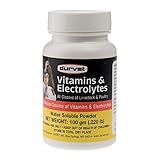
- Vitamins & Electrolytes. Dairy Feed Supplements And Health Aids
- Manufacturer: DURVET INC D
Producer checklist for a suspected iodine problem
- Determine whether the concern affects one animal or represents a pattern.
- Document calf, neonatal, or reproductive findings and seek veterinary advice.
- Review the relevant ration, including feed, forage, water, minerals, and supplements.
- Check product labels and actual intake; do not assume a product is supplying its intended amount.
- Note possible goitrogenic feeds such as white clover and certain brassicas.
- Plan any laboratory testing with the veterinarian and use results in context.
- Make supplementation changes only after assessing the animal and complete diet.
FAQ
Does a swollen neck prove that a calf is iodine deficient?
No. It could be goiter, but other conditions can cause neck swelling, and goiter alone does not establish thyroid function. Have a veterinarian examine the calf.
What is the first sign of iodine deficiency in cattle?
Illinois Extension identifies goiter in newborn calves as the first sign. Other reported signs include weak or hairless calves and reduced reproductive performance, but these are not specific to iodine deficiency.
Can goitrogenic feed cause iodine problems?
Some feed compounds can interfere with iodine uptake or thyroid hormone synthesis. Oklahoma State University Extension discusses thiocyanate associated with white clover and glucosinolates in some brassicas. Their presence alone does not diagnose a deficiency; review the actual ration and animal findings.
Should I give iodine to a weak or hairless calf?
Do not treat by appearance alone. These signs can have other causes. Ask a veterinarian to assess the calf and review the dam’s relevant diet before changing supplementation.
Free tools Windows power users keep installed
One-click scans. No signup required.
Can excess iodine be harmful?
Yes. Excess iodine can also cause harm, so supplementation should be chosen for the animal and complete ration with professional guidance.
The bottom line
Iodine is essential for thyroid hormones, and goiter in a newborn calf is an important sign to investigate. Swelling, weak or hairless calves, stillbirths, and reproductive problems do not prove iodine deficiency. Document the pattern, review the complete ration and possible goitrogenic feeds, and involve a veterinarian before changing iodine supplementation.
Quick Recap
Product prices and availability are accurate as of the date/time indicated and are subject to change. Any price and availability information displayed on Amazon at the time of purchase will apply.




