
Conservationists are testing a way to make rhino horns easier to detect in border and cargo screenings: implanting a measured, low-activity radioactive source in the horn. The aim is to make illegal shipments riskier for traffickers—not to irradiate or poison the rhino. Early measurements support the approach’s technical feasibility, but a reduction in poaching has not been demonstrated.
How radioactive marking is meant to work
The Rhisotope Project places a measured radioactive source in a rhino’s horn so radiation detectors at airports and border checkpoints may flag it. The project presents this as a way to disrupt illegal horn supply chains by making transport more likely to trigger screening, seizure, or other consequences. It is not a method intended to harm people or animals through exposure.
As an Amazon Associate I earn from qualifying purchases.
In an Associated Press report published July 31, 2025, project chief scientific officer Professor James Larkin said tests found marked horns detectable inside full 40-foot shipping containers. That result is attributed to Larkin as reported by AP; it does not guarantee that every marked horn will be found in every shipment or by every screening system. AP report, July 31, 2025
Detectability and deterrence are separate steps. A marker that can be detected under test conditions might increase the risk of trafficking, but that alone does not show that poaching has fallen.
#1 Best Overall
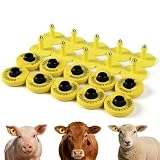
- 【Industry Standard Compliance & Reliable Performance】Designed to meet ISO 11784/11785 global standards, this RFID ear tag ensures seamless integration with most livestock management systems used in the U.S. Operating at 134.2KHz, it provides a stable reading distance of 3-10 cm, guaranteeing reliable and fast animal identification during sorting, vaccination, and sales.
- 【Extremely Durable & Built for Harsh Environments】Crafted from high-grade TPU material, this ear tag is exceptionally flexible, tear-resistant, and weatherproof. It withstands extreme temperatures from -20°C to 120°C, making it perfect for all climates and even sterilization processes. It’s built to last the entire life of the animal without cracking or fading.
- 【Enhanced Data Management & Traceability】This is an RFID animal ear tag with a unique identification code only and no data storage function.Once applied to an animal, the code acts as its exclusive identifier.You can record the animal’s detailed information on a computer using this code.The code on the ear tag can be read by a handheld reader to retrieve all related animal information,helping you manage your farm in a more standardized and digital way.It supports efficient cloud-based livestock management, epidemic prevention,and full lifecycle traceability from farm to table.
- 【Long-Term Investment with Proven Lifespan】Engineered for durability, this tag supports over 100,000 read/write cycles and boasts a data retention period of over 10 years. This guarantees that the animal’s identification and data remain secure throughout its life, providing a cost-effective and reliable solution for modern farms.
- 【Easy Application & Universal Use】With compact dimensions of 30x13mm, this tag is suitable for a wide range of animals, including cattle, pigs, sheep, and goats. Its design ensures easy and secure application with standard tag applicators, minimizing stress on the animal. It is the ideal tool for improving efficiency in animal husbandry, breeding programs, and food safety compliance.
What the rhino safety study found
A peer-reviewed paper in Scientific Reports, published April 15, 2026, describes an initial implantation phase completed in June 2024 and a measurement campaign in January 2025. Researchers studied 21 white rhinos: 16 with implanted sources and five controls. They measured radiation dose and count rates at the horn base, mid-horn, forehead, and eye-socket region.
The authors reported no adverse biological effects in the measured animals and said all recorded dose rates were below deterministic thresholds. Those findings apply to the animals and conditions studied; they are not a guarantee of zero risk for every rhino or future use. The paper also gives model-based risk estimates using human risk factors applied to the highest dose rates recorded at the horn base:
Rank #2
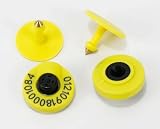
- 1.Material: TPU 2.Frequency: 134.2KHZ. 3.Color:yellow. 4.Working Mode:Read and write 5.waterproof. 6.protocol: ISO11784/ISO11785 FDX-B 7.Endurance:> 100,000 times 8.Data Storage:> 10 years
- Package include: 100pcs 134.2khz ISO11784/11785 FDX-B rfid ear tag for animal management
- About 2.8 × 10⁻⁷ estimated probability of inducing non-melanoma skin cancer.
- 4 × 10⁻¹⁰ estimated probability of fatality.
These figures are modeled estimates, not observed cases or direct measurements of cancer or fatality. The paper’s findings are more specific than a blanket claim that the procedure is “completely safe.” Clark et al., Scientific Reports, April 15, 2026
What’s actually slowing this PC down?
Pick the symptom - the matching free tool is one click away.
How the pilot and public launch differ
The research pilot took place in South Africa’s UNESCO Waterberg Biosphere in Limpopo, from June 24, 2024, to January 15, 2025. The University of the Witwatersrand announced the live-animal research phase in June 2024. University of the Witwatersrand, June 25, 2024
Rank #3

- 20-Pack Animal ID ISO Compliant Transponder RFID Microchip Tag
AP later reported a public launch involving five rhinos on July 31, 2025, following trials involving about 20 rhinos. That launch was a later milestone, not the same event as the 2024–2025 research pilot. AP report, July 31, 2025
Independent reader supportYour contribution helps us test, update, and keep practical guides available for everyone.What is still unproven
The published measurements provide evidence about radiation levels and observed biological effects during the study, and support the feasibility of marking horns and checking their detectability. The available sources do not quantify a reduction in poaching, establish that the method causes more seizures, or demonstrate lasting deterrence across rhino populations. Those remain hoped-for conservation outcomes rather than proven results.
Rank #4

- 【Industry Standard Compliance & Reliable Performance】Designed to meet ISO 11784/11785 global standards, this RFID ear tag ensures seamless integration with most livestock management systems used in the U.S. Operating at 134.2KHz, it provides a stable reading distance of 3-10 cm, guaranteeing reliable and fast animal identification during sorting, vaccination, and sales.
- 【Extremely Durable & Built for Harsh Environments】Crafted from high-grade TPU material, this ear tag is exceptionally flexible, tear-resistant, and weatherproof. It withstands extreme temperatures from -20°C to 120°C, making it perfect for all climates and even sterilization processes. It’s built to last the entire life of the animal without cracking or fading.
- 【Enhanced Data Management & Traceability】Features a 512-bit EEPROM memory, organized into 16 sectors. This allows for storing not just a unique ID, but also vital information like birth date, vaccination records, and medical history. It is the cornerstone for effective cloud-based animal management, epidemic control, and full lifecycle traceability from farm to table.
- 【Long-Term Investment with Proven Lifespan】Engineered for durability, this tag supports over 100,000 read/write cycles and boasts a data retention period of over 10 years. This guarantees that the animal’s identification and data remain secure throughout its life, providing a cost-effective and reliable solution for modern farms.
- 【Easy Application & Universal Use】With compact dimensions of 30x13mm, this tag is suitable for a wide range of animals, including cattle, pigs, sheep, and goats. Its design ensures easy and secure application with standard tag applicators, minimizing stress on the animal. It is the ideal tool for improving efficiency in animal husbandry, breeding programs, and food safety compliance.
Broad routine deployment also depends on regulatory status and operational safeguards. The available material does not establish whether approval for wider use has been granted by the relevant national regulator as of October 4, 2026. The project’s official overview describes the approach and its conservation purpose. The Rhisotope Project
Quick Recap
Best Value

- [ TPU Construction] Crafted from durable TPU material to cracking and odors, these ear withstand harsh farm conditions including rain, mud and extreme temperatures from -20°C to 65°C ensuring reliable long-term performance for livestock management without causing irritation to animals
- [EM4305 Chip Technology] Featuring advanced EM4305 chips operating at 134.2kHz low frequency with reading distance up to 40cm, these integrate seamlessly with automated systems like intelligent weighing and feeding for precise animal data collection across cattle sheep and pig operations
- [Secure One Piece Design] Engineered with a single-unit structure that minimizes rates while enabling quick and sturdy attachment using standard ear tag pliers, making large-scale farm installations efficient and reducing labor costs during routine animal tracking procedures
- [Versatile Farm Applications] Optimized for multiple agricultural uses including animal illness monitoring inventory control and slaughter record keeping, these electronic enhance operational safety and efficiency in diverse livestock management scenarios from goat herds to cattle ranches
- [Complete Tracking Solution] Includes 10 male and 10 female ear tag pairs with randomly assigned numbers for immediate deployment, providing for farm animal identification that supports ISO 11784/5 FDX-B protocols and 512bit data storage capabilities
Product prices and availability are accurate as of the date/time indicated and are subject to change. Any price and availability information displayed on Amazon at the time of purchase will apply.





Leave a Reply