
Quick wins for a faster PC:
Fix the driver behind crashes, sound loss and screen glitchesFind Drivers →Repair Windows errors before they cause bigger problemsFix Now →Some links on this page are affiliate links: if you buy through them we may earn a commission, at no extra cost to you.
Short answer: Dogs lick people for several overlapping reasons. Licking may be a friendly way to seek social contact, a learned request for attention, an investigation of salty skin or interesting scents, a greeting behavior, or—depending on the dog’s body language—a sign of appeasement or uncertainty. It can also become important when it is sudden, repetitive, difficult to interrupt, or linked with pain, itch, nausea, anxiety, or another medical problem.
A lick is not a one-word translation of what a dog feels. A relaxed dog licking a familiar person during a greeting may be seeking closeness or attention. A dog that licks while crouching, avoiding eye contact, flattening its ears, or trying to retreat may be uncomfortable rather than affectionate. Veterinary behavior guidance supports interpreting the situation, what happens before and after the licking, and the dog’s whole body—not the tongue movement alone. VCA Animal Hospitals describes several possible explanations, while behavioral studies show that licking-related signals change with social and emotional context.
As an Amazon Associate I earn from qualifying purchases.
Outdated Drivers Are Slowing You Down
One free scan finds every outdated or missing driver and matches the right update for your exact hardware.Free scan · exact hardware matchPC Slower Than It Used to Be?
A free scan shows the junk files, broken settings and background clutter dragging Windows down - then fixes them in one click.Free scan · Windows 10 & 11Occasional licking of intact human skin is usually low concern. Face and mouth licking should nevertheless be discouraged, especially around children, open wounds, eyes, and people at higher risk of infection. If the behavior has changed or your dog cannot disengage from it, treat it as a veterinary question as well as a training issue.
Why do dogs lick people?
Dogs do not all lick for the same reason, and more than one explanation can apply at once. For example, a dog may notice the salty taste of skin, lick because the behavior has earned attention in the past, and enjoy the social contact at the same time.
Popular on Amazon

- Premium Soft Chew Toys for Dogs - These adorable dog crinkle toys no stuffing ducks provide your four-legged best friend with an interactive chew toy that makes noise, keeps them engaged, and is gentler on teeth, gums, and dental health
- Cute and Colorful Duck Shape - Shaped like a real duck these dog crinkle toys for small dogs, medium dogs, and every size in between comes in 6 unique colors and provides a more puppy friendly shape that's easy to carry around
- No Fluff, No Mess Design - Unlike messy bones, ropes, or other toys for aggressive chewers these dog crinkle toys won't leave behind a mess after they're done playing. They also boast reinforced fabric and stitching to help them hold up to chewing
- Active Play, Tossing, and Retrieving - Our cute duck chew toys for dogs can be used for bonding with your puppy, reducing stress or separation anxiety, or simply giving them an active outlet for channeling aggression or intense play
- GREAT GIFT: Whether you’re looking for an exciting birthday, holiday or a just-because gift for your furbaby, you can’t go wrong with these incredibly fun dog toys. Click ‘Add to Cart’ now! Please note that our toys are not edible or meant for consumption.
The most useful questions are: What happened immediately before the licking? What does the dog’s body look like? What does the person do afterward? Can the dog stop when asked or redirected?
1. Social contact and affiliation
Licking can be part of a dog’s attempt to initiate or maintain contact with a familiar person. Dogs are social animals, and licking appears in several canine social and developmental settings. Puppies lick around an adult dog’s muzzle, and mother dogs lick puppies for grooming and other early-caregiving functions. That background makes social or relationship-seeking licking plausible—but it does not turn every lick from a pet dog into a literal kiss or prove that the dog is expressing love.
“Affiliative” or “social” is more accurate than treating licking as a universal translation. Your dog may be saying, in effect, I want to interact, without the behavior identifying exactly whether it wants petting, reassurance, play, food, or simply proximity.
2. Attention that has been accidentally rewarded
Dogs repeat behaviors that produce consequences they value. If licking reliably leads to petting, laughter, eye contact, conversation, food, play, or an animated attempt to push the dog away, the behavior may become a successful attention-seeking strategy.
Even saying “Stop!” can reward a dog that wants interaction. A small study of dogs with repetitive behaviors found that owner-provided consequences could help maintain licking and other repetitive actions in some individual dogs. The lesson is not that every licker is manipulative; it is that the dog-human interaction can strengthen a behavior. Read the study on owner consequences and repetitive behavior.
Inconsistent rules can also keep the behavior going. If face licking is welcomed during cuddles but punished during breakfast, the dog receives an unclear message and may try more often. Decide what you want the dog to do instead, then reward that alternative consistently.
What’s actually slowing this PC down?
Pick the symptom - the matching free tool is one click away.
3. Sweat, salt, food, and scent
Human skin carries odors and tastes that dogs can investigate. Sweat may leave salt on the skin, while skin oils, food residue, and changes in scent can make a person interesting. Feet are often especially appealing because they are sweaty, strongly scented, and easy for a dog to reach when someone is sitting. After exercise, hot weather, eating, or handling food, licking may increase.
Dogs may also investigate skin after a person applies lotion, sunscreen, ointment, or another topical product. This is a sensory explanation, not proof that a dog is using its person as a salt lick every time. The American Kennel Club discusses sweat, scent, and learned reinforcement as possible reasons for foot licking.
4. Puppy and canid behavior
Puppies solicit food from adult canids by licking or sniffing around the muzzle. Wild wolves also transfer food to pups by regurgitation. In a field study of a free-ranging wolf pack, researchers observed regurgitative food transfers during six summers between 1988 and 1996; pups received 81% of the recorded regurgitations. USDA Forest Service research describes the wolf observations.
This is useful evolutionary context, but it is not an explanation to apply automatically to a modern dog licking a human. It does not show that a pet dog expects a person to regurgitate food, and human face licking is not equivalent to puppy feeding behavior.
5. Appeasement, uncertainty, or stress
Licking-related behavior can occur when a dog is trying to reduce social pressure or communicate that it is not a threat. This is better described as appeasement or uncertainty than as a fixed submission ritual.
Look closely at the type of licking. A dog licking a person’s hand is not doing the same thing as a dog briefly flicking its own tongue over its nose. The latter is often called lip licking or nose licking and can be a stress-related signal in context. Repetitive licking of paws, limbs, a flank, or a wound is self-licking; licking furniture, floors, bedding, walls, or the air is object or air licking. These behaviors can have different medical and behavioral implications.
In a study of 116 dogs, lip licking and looking away varied across threatening, conflict-related, and greeting situations and were associated with active submission during some greetings. Another study of 17 adult family dogs found that mouth licking occurred more often after the dogs viewed negative human facial expressions than positive ones, and more often toward human than dog stimuli. These studies support a possible communication or appeasement function in some situations—not a universal meaning for all licking. See the 116-dog appeasement study and the emotional-stimulus study.
6. A request for food, play, a walk, or access
Some dogs lick before dinner, when a person picks up a leash, or when play is about to begin. If licking has preceded those rewards often enough, it may become a learned request. The dog does not necessarily understand that licking is impolite; it has learned that licking helps make something happen.
Free tools Windows power users keep installed
One-click scans. No signup required.
Also popular on Amazon

- Premium Soft Chew Toys for Dogs – These adorable dog crinkle toys no stuffing ducks provide your four-legged best friend with an interactive chew toy that makes noise, keeps them engaged, and is gentler on teeth, gums, and dental health.
- Cute and Colorful Duck Shape – Shaped like a real duck these dog crinkle toys for small dogs, medium dogs, and every size in between comes in 6 unique colors and provides a more puppy friendly shape that’s easy to carry around.
- Interactive Squeaker and Crinkle Sounds – [Brand] dog crinkle toys no stuffing designs boast an audible squeaker inside the duck’s head and crinkle paper running through the body to give your pup multiple ways to have fun playing.
- No Fluff, No Mess Design – Unlike messy bones, ropes, or other toys for aggressive chewers these dog crinkle toys won’t leave behind a mess after they’re done playing. They also boast reinforced fabric and stitching to help them hold up to chewing.
- GREAT GIFT: Whether you’re looking for an exciting birthday, holiday or a just-because gift for your furbaby, you can’t go wrong with these incredibly fun dog toys. Click ‘Add to Cart’ now! Please note that our toys are not edible or meant for consumption.
Teach a calmer request instead. Ask for a sit, a hand target, a toy retrieval, or a trip to a mat, and provide the food, walk, or play after the alternative behavior. Otherwise, starting an exciting activity immediately after a lick may reinforce the lick.
Does licking mean my dog loves me?
It may be part of a friendly, affiliative interaction, but licking is not a reliable standalone measure of affection. Judge the emotional state of the dog by the entire interaction:
| More consistent with relaxed social contact | More concerning for discomfort or appeasement |
|---|---|
| Loose, relaxed body | Crouching, leaning away, or trying to retreat |
| Soft eyes and relaxed facial muscles | Flattened or pinned ears, wide eyes, or a tense face |
| Voluntary approach and the ability to walk away | Tail tucked or held very low, freezing, hiding, or attempting to escape |
| Calm or playful behavior before and after the lick | Repeated yawning, lip licking, gaze avoidance, trembling, or escalating distress |
A dog that approaches, licks briefly, and then chooses to settle or leave may be comfortable. A dog that licks while a person looms over it, stares, hugs it, holds its face, or blocks its exit may be trying to cope with pressure. Do not assume that a face lick means the dog wants a closer hug or more handling.
Is licking a sign of submission or dominance?
Licking should not be used to diagnose a dominance relationship. Some licking-related signals can communicate appeasement or peaceful intent in a particular interaction, but that is not the same as accepting a permanent lower rank in a household.
The American Veterinary Society of Animal Behavior rejects dominance-based explanations as a general framework for household behavior and warns that dominance theories can lead owners toward coercive handling. Do not use an “alpha” roll, forced submission, intimidation, or physical punishment to stop licking. Those approaches can increase fear and may damage the dog’s trust without teaching a useful replacement behavior.
Why does my dog lick my face, hands, or feet?
| Target | Possible reasons | What to check |
|---|---|---|
| Face or mouth | Close social contact, food-related scent, learned greeting behavior, puppy-derived muzzle-licking patterns, or appeasement | Whether the dog is relaxed or anxious; whether the person is crouching, leaning over, staring, hugging, or blocking the dog’s exit |
| Hands | Food residue, interesting smells, petting or attention history, greeting, or a request for something | Whether licking follows cooking, eating, training treats, or an interaction the dog wants to continue |
| Feet | Sweat, salt, strong odor, easy access, boredom, habit, or attention-seeking | Recent exercise, hot weather, new socks or shoes, lotion, ointment, medication, or an unusual odor |
| Arms or other exposed skin | Social contact, taste, scent investigation, or learned attention | Whether the behavior is brief and interruptible or has become repetitive and intense |
| One particular spot | A new odor, food residue, skin product, wound, or a learned target | Changes in the skin or product exposure; do not assume the dog has detected cancer, low blood sugar, pregnancy, or another disease |
| Skin treated with lotion or medication | The product may smell or taste interesting | Prevent licking until the product is absorbed or covered as directed. Some human topical medicines are toxic to dogs. |
What a 2024 study says about face licking
In a 2024 study of dogs approaching household members before walks, dogs were more likely to lick an owner’s mouth when the owner was crouching than when the owner was standing. The same study reported that 73% of dogs had jumped on household members before walks at some point in their lives. The finding shows that access, posture, and situation affect the behavior; it does not establish one universal meaning for face licking. Read the pre-walk dog-human interaction study.
When is licking normal, and when should I call the vet?
Usually low concern
- The licking is occasional and occurs during greetings or relaxed interaction.
- Your dog stops when you calmly move away or offer another activity.
- The behavior is longstanding and is not increasing.
- There are no signs of pain, skin damage, vomiting, diarrhea, appetite change, anxiety, or other illness.
There is no universal “normal number” of licks. Frequency matters less than the change from your dog’s baseline, the intensity, whether the dog can disengage, and whether other symptoms are present.
Schedule a veterinary appointment
Contact your veterinarian if licking is new, escalating, difficult to interrupt, or interfering with sleep, eating, movement, interaction, or normal rest. An appointment is also appropriate when your dog:
- Repeatedly licks people, objects, the air, or itself for extended periods.
- Targets one person, object, or body area obsessively.
- Licks paws or skin until it becomes red, swollen, hairless, moist, raw, or bleeding.
- Paws at its mouth, drools, swallows repeatedly, vomits, has diarrhea, loses appetite, loses weight, seems restless, or shows abdominal discomfort.
- Begins licking after an injury, surgery, medication change, environmental change, or stressful event.
- Develops new repetitive licking or confusion in older age.
Possible medical contributors include allergies, parasites, skin infection, pain, neuropathy, dental or oral disease, gastrointestinal disease, food sensitivity, metabolic illness, and nausea. Anxiety and compulsive behavior are also possibilities. A veterinary behavior reference from Merck Veterinary Manual recommends ruling out medical causes before diagnosing a canine compulsive disorder.
Record a short video when it is safe to do so and note what happened before and after the licking. That information can help your veterinarian distinguish a social habit from pain, itch, gastrointestinal discomfort, fear, or a repetitive behavior problem.
Seek urgent veterinary care when
- There is repeated vomiting or retching, severe abdominal pain, bloating, collapse, marked weakness, or pale gums.
- You suspect the dog swallowed a human medication, toxic cream, chemical, or other poison.
- Sudden disorientation, seizure-like activity, fly-biting, or other unusual neurologic signs occur.
- Self-licking has caused a rapidly worsening wound or significant tissue damage.
Do not assume every lick is an early sign of a serious disease. The warning pattern is a sudden or persistent change, inability to stop, self-injury, or associated illness.
Is it safe to let a dog lick your face?
The safest rule is not to allow dogs to lick a person’s face or mouth. An occasional lick on intact skin from a healthy household dog is unlikely to make a healthy adult ill, but saliva can carry organisms and should not be treated as sterile or “cleaner than human saliva.” The CDC advises preventing pets from licking faces and mouths and preventing dogs from licking open wounds or broken skin.
Do these 3 things before closing this tab:
1Fix the driver behind crashes, sound loss and screen glitches2Clear out junk files and repair common Windows errors3Scan for outdated or missing drivers - takes under a minute| Situation | Practical guidance |
|---|---|
| Intact skin of a healthy adult | Risk from an occasional lick is generally low, but calmly wash the area and redirect the dog if you prefer to avoid contact. |
| Mouth, nose, or eyes | Prevent contact. Rinse the area with clean water if saliva gets in, and seek medical advice if symptoms or special risk factors are present. |
| Open wound, eczema, surgical site, or broken skin | Do not allow licking. Wash the area thoroughly with soap and water. |
| Children | Supervise interactions, keep dogs away from children’s faces, and teach children to wash their hands after handling pets. |
| Higher-risk people | Use stricter precautions if someone is immunocompromised, has no spleen, diabetes, cancer, HIV, or alcohol-use disorder, or is an older adult or very young child. |
| Unknown, stray, unvaccinated, sick, or abnormally behaving dog | If saliva reaches broken skin, the eyes, nose, or mouth, contact a healthcare professional or local public-health authority promptly. Rabies risk depends on the animal and exposure circumstances. |
The CDC identifies Capnocytophaga as a rare but potentially serious infection associated mainly with bites or saliva entering an open wound. Most people who have contact with dogs do not become ill, but people with weakened immune systems and certain other conditions are more vulnerable. Contact a healthcare professional after a concerning exposure, especially if the person is high-risk, the wound is deep, the dog is sick or unknown, or symptoms develop.
Can a dog’s licking harm the dog?
Yes. A dog can ingest a human topical medication by licking recently treated skin. The ASPCA warns that some compounded topical creams, including products containing NSAIDs such as diclofenac or flurbiprofen, can cause serious toxicity in pets. The risk depends on the product and amount, so do not wait for symptoms if your dog has licked medicated cream.
Also popular on Amazon
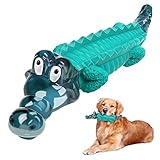
- DOG CHEW TOY FOR AGGRESSIVE CHEWERS: This dog toy designed for daily molar care and moderate chewing play, this 9.5" x 2.5" alligator dog toy fits Australian Shepherd, Doodle, Labrador Retriever and other medium-chewing breeds, this dog toy no squeaker
- DOG TOYS FOR LARGE DOGS MILK FLAVORED: This dog chew toy is equally suitable for large and medium-sized dogs, featuring a subtle but charming milk scent that dogs love. The milk flavor will attract your pets to longer play sessions, reduce their anxiety and boredom, and help release the dog's pressure and reduce destructive behavior. Suitable for ag 20-80lbs
- ALLIGATOR SHAPE & TEETH CLEANING: The large dog toys feature a cartoon alligator design that attracts the dog's attention by shapes. The raised part of the back can help dogs clean their teeth, and biting and chewing can effectively prevent the formation of dental calculus. Choosing the right dog toys can help them develop good chewing habits and enhance chewing ability
- EASY TO CLEAN: The dog toys for aggressive chewers are easy to clean with a little bit of soap and warm water, making them ready to be played with again quickly
- DOG TOYS PRESENT: The dog toys for aggressive chewers help your pets develop good chewing habits and bring fun, making them a suitable dog birthday gift, Thanksgiving day and Christmas gift. Bright color dog chew toy is easy to find when throwing it in your large yard
How to stop unwanted licking without making it worse
Use a reward-based plan that teaches the dog what to do instead. The goal is not merely to suppress the tongue movement; it is to identify the reason for the behavior and make an appropriate alternative more rewarding.
1. Identify the trigger and consequence
For several days, record:
- What happened immediately before the licking.
- Which person or body part the dog targeted.
- Whether the dog was excited, anxious, bored, hungry, tired, or seeking access to food, play, a walk, or attention.
- What the person did afterward.
- Whether the dog could disengage when the person moved away or offered another activity.
If the dog looks frightened, stiff, avoidant, or distressed, do not simply ignore it indefinitely. Increase distance, stop forcing the interaction, and arrange veterinary or behavior advice if the pattern continues.
2. Remove attention calmly
If attention appears to be reinforcing the licking:
- Turn away or calmly remove the body part.
- Avoid talking, laughing, pushing, eye contact, or dramatic gestures.
- Wait for a brief pause in the licking.
This is not punishment. It is a way to stop paying for the unwanted behavior. If pushing the dog away is exciting or playful for your dog, physical interaction may be rewarding it.
3. Cue an incompatible alternative
Once the dog pauses, ask for a behavior it cannot perform while licking, such as “sit,” “touch,” “go to your mat,” or “four paws on the floor.” Start with a behavior the dog already knows and can perform calmly.
Recommended Free Tools
4. Reward the alternative immediately
Give the dog the reward it values: a treat, toy, calm petting, praise, or access to the desired activity. If the dog was licking to start a walk or game, wait for the calm alternative before providing that access. Do not launch into an exciting game immediately after the lick, or the game may still reinforce the sequence.
Ask visitors to ignore jumping and licking, then greet the dog only after it sits, stands calmly, or settles on a mat. Use a leash, baby gate, or distance around children and guests when necessary—not as a correction, but to prevent rehearsal while the dog learns.
5. Offer an appropriate outlet
Depending on the dog and your veterinarian’s advice, provide a food puzzle, frozen food toy, dog-safe lick mat, stuffed toy, chew, sniffing game, short training session, or calm grooming interaction. These alternatives can meet a need for licking, chewing, investigation, or engagement, but they do not treat pain, itch, nausea, anxiety, or a compulsive disorder.
Use reward-based training throughout. AVSAB recommends reward-based methods and advises against aversive training, including physical or psychological punishment. If licking is compulsive, causes injury, is associated with fear or aggression, or does not improve after medical issues are addressed, ask your veterinarian about a qualified certified behavior consultant or veterinary behaviorist.
The Tool Desk
Outbyte PC Repair FREERepair Windows errors before they cause bigger problemsFix Now →Outbyte Driver Updater FREEFix the driver behind crashes, sound loss and screen glitchesFind Drivers →A practical interpretation guide
| What is happening | More likely possibilities | What to do |
|---|---|---|
| Brief licking during a relaxed greeting | Social contact, attention, taste, or a learned greeting | Allow it if welcome; otherwise redirect calmly. |
| Licking after exercise or sweating | Salt and odor investigation | Wash the skin, remove access, or redirect; check for topical products. |
| Licking while crouched, ears back, tail low, and gaze averted | Appeasement, uncertainty, or stress | Increase distance and stop forcing interaction. |
| Licking before dinner, a walk, or play | Learned request or anticipation | Reward a calm alternative, not the lick. |
| Sudden persistent licking of a person or object | Medical issue, anxiety, repetitive behavior, or changed reinforcement | Record video and schedule a veterinary evaluation. |
| Paw or skin licking with redness or hair loss | Itch, pain, allergy, infection, or self-trauma | Arrange a veterinary examination. |
| Licking after a medicated cream was applied | Possible toxic ingestion | Contact a veterinarian or animal poison-control service. |
| Face or mouth licking directed at a child or high-risk adult | Preventable saliva exposure | Redirect, wash the area, and prevent future face licking. |
Common myths about dogs licking people
- “Every lick means love.” Licking can be affiliative, but it can also be attention-seeking, sensory investigation, appeasement, or a symptom of discomfort.
- “Every lick means submission.” Some licking-related signals are appeasing in specific contexts. That is not a reason to describe the dog through a dominance hierarchy.
- “My dog can diagnose illness by licking me.” Dogs can notice scents, but no reliable evidence reviewed here supports using human-directed licking to diagnose cancer, low blood sugar, pregnancy, or another disease.
- “Ignoring the dog always fixes it.” Removing attention can help when attention is the reward. It will not resolve pain, itch, nausea, fear, or compulsive behavior.
- “A lick mat cures licking.” A lick mat can provide a safe alternative outlet, but it is not a substitute for diagnosing an underlying medical or behavioral problem.
- “Dog saliva is dangerous in every situation.” Serious infection is uncommon, but avoiding saliva on faces, mucous membranes, wounds, and broken skin is sensible—especially for people at higher risk.
Frequently Asked Questions
Can a dog’s licking detect a human disease?
Dogs may notice changes in scent, but licking is not a reliable diagnostic test for cancer, low blood sugar, pregnancy, or another disease. If licking suddenly focuses on one area, check for food residue, a skin product, or an injury, and consult a doctor or veterinarian when there are other concerns.
Should I let my dog lick my child’s face?
No. Prevent face and mouth licking, supervise children around dogs, and redirect the dog to a calm alternative. Wash skin after an unwanted lick, and do not allow saliva near a child’s eyes, mouth, open wound, eczema, or broken skin.
What should I do if my dog licks human medicated cream?
Contact your veterinarian or an animal poison-control service promptly. Some human topical products, including certain diclofenac or flurbiprofen creams, can seriously harm dogs. Have the product name and strength available, and do not wait for symptoms.
The Bottom Line
Bottom line: A lick can be a greeting, a request, a taste test, a way to seek contact, or an appeasement signal. Watch what happens before and after it, read the rest of your dog’s body language, and reward a calm alternative if the licking is unwanted. Treat a sudden, compulsive, self-injuring, or symptom-linked change as a veterinary question—not simply a training nuisance. For human safety, keep dog saliva away from faces, mouths, eyes, wounds, broken skin, and recently medicated skin.
Quick wins for a faster PC:
Scan for outdated or missing drivers - takes under a minuteDriver Scan →Clear out junk files and repair common Windows errorsFree Scan →




Leave a Reply