A cat that pounces on your ankles or bites your toes is most often playing a hunting sequence, with your moving foot standing in for prey. That explanation fits kittens and young cats best, and it is especially likely when a cat has too few outlets for its energy or has learned that hands and feet are fun to chase. Not every foot attack is play, though. Fear, redirected arousal, and pain can produce a similar-looking lunge, so the timing and the cat’s body language matter when you decide what to do.
What a foot attack usually looks like
Play-related foot attacks follow a recognizable pattern. The cat stalks you from a hiding place, such as under a bed, behind a doorway, or around a sofa corner. It waits, then pounces as your foot passes or moves under a blanket. It may grab the foot with its front paws and bite or kick with its back legs. The ASPCA’s “Aggression in Cats” guidance lists stalking, chasing, ambushing, pouncing, grasping, and biting as normal parts of play, which is why a moving foot can trigger the same sequence a cat would use on a toy mouse.
Play and predatory behavior
This is the most common explanation for a cat that targets feet. Cats are built to stalk and pounce, and when they do not get enough appropriate outlets, that drive can be redirected onto whatever moves nearby.
Why feet become targets
- Feet move in predictable ways. Walking, shuffling under a blanket, or dangling a foot off the bed creates a moving target at ground level, which is exactly where a stalking cat is looking.
- Feet are close and unprotected. A cat can reach them without any warning, so the hunt feels like it succeeds.
- Attacks can be learned. If a cat has batted at bare feet during play before, or if someone has encouraged it to chase hands or feet, the cat has learned that this target gets a response.
Who is most at risk
VCA Animal Hospitals’ “Play and Predatory Aggression in Cats” (practice edit July 2019) describes under-stimulation, unused energy, and a lack of appropriate play as contributors to play-related aggression. It notes that the behavior can continue into adulthood, particularly in cats under two years old that have no other feline companions. That is a risk pattern, not a rule: many cats under two never attack feet, and some adult cats do.
#1 Best Overall

- A NEW CHOICE FOR INDOOR ENTERTAINMENT: Endless fun for your cat! Designed for indoor environments, this interactive toy ball rolls quickly across the carpet and emits an appealing cat-attracting chittering sound. Not only does it stimulate your cat's hunting instincts, it also allows them to enjoy outdoor chasing indoors while reducing the risk of furniture scratching
- INTELLIGENT INTERACTION AND FUN: This automatic cat toy is your pet's new playmate. It has two modes: ① Normal mode (green light), which runs for five minutes and then automatically shuts off. ② Intelligent mode (blue light), after running for five minutes the exercise ball automatically enters the dormant mode, when your cat touches it again, the exerciser will interact with your cat again. So whether it's a long game or a short interaction, this interactive cat ball meets the needs of both you and your pet, allowing your pet to entertain itself while you're busy
- TWO SPEEDS FREELY SWITCHING: The BABORUI interactive cat toy offers two speeds, fast and slow, which can be freely switched at any time. Even if your cat is cute and short-legged, it can still keep up with the pace of the exercise ball
- TRIPLE FUN, TRIPLE HAPPINESS: This cat toys for indoor cats comes with three fun tails that provide your cat with triple the fun. They can have endless fun chasing and catching the ball, while the sound of the bells on the tails will further stimulate their curiosity and desire to chase
- SAFE MATERIAL, LASTING AND DURABLE: We understand that your pet's safety is of utmost importance to you. The shell of this kitten toys is made of safe silicone material, so you don't need to worry even if your pet chews it. The durable design means it can withstand daily wear and tear, providing long-lasting companionship for you and your pet
Fear, redirected arousal, and pain
Not every lunge is playful, and treating a fearful or hurting cat as if it were playing can make things worse. Cornell Feline Health Center’s “Feline Behavior Problems: Aggression” (updated December 2016) distinguishes play aggression from several other types.
Fear aggression
Fear-driven aggression typically shows flattened ears, hissing, bared teeth, a low crouch, a tucked tail, and raised fur. A cat in this state is trying to make a threat go away, not to hunt. If your foot approaches a cat that is cornered or frightened, it may swat or bite defensively.
Rank #2
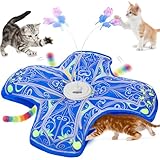
- Top-Tier Dual Interactive Fun: Qraxond's new indoor cat toy has dual motors, controlling random rotation of butterfly and plush tail swing rod accessories, bringing fun, exciting play for kittens and adult cats. Hide-and-Seek: The animal tail-shaped plush hides under the cover cloth, rotating irregularly to appear/disappear, creating a hide-and-seek game. It mimics real prey, bringing unpredictable chases to stimulate the cat's brain and senses. Irregular Rotating Butterfly: The top has an auto-rotating butterfly that rotates, pauses or swings to simulate real flight, keeping the cat engaged. Various interactions ensure the cat gets enough exercise to avoid obesity
- 3 Adjustable Speed Modes: Customize the excitement with separate buttons for the butterfly and tail. Choose from 3 settings: Steady (Blue Light), Active (Purple Light), and Random (Yellow Light). Suitable for high-energy cats to burn off steam or for calm cats to enjoy gentle play. Keep your feline entertained and prevent boredom, especially when they are home alone
- Touch-Sensitive Activation: Your Cat's in Control! With smart touch-sensor technology, just tap the device to fire up the fun mode, it will kick off a 5-minute automatic play session instantly. Right after the play session ends, it switches directly to touch-sensitive standby mode, where the purple indicator light flashes every 20 seconds. Simply tap again to reactivate it for another 5-minute cycle. This smart loop ensures your cat gets sufficient exercise and prevents overstimulation
- Large Rechargeable Battery: Enjoy long-lasting play with the built-in 2500mAh battery. It charges fully in just 2.5 hours via the included USB cable (use a 5V adapter only). The efficient auto on/off cycle extends battery life, making it convenient for busy pet owners while ensuring your cat gets healthy, moderate exercise
- Realistic Bird Chirping: Elevate the hunt with lifelike sound. The built-in speaker emits authentic bird chirps to attract your cat's attention and stimulate their prey drive. Combined with the random motions of the butterfly and tail, it creates an irresistible and engaging play experience that keeps your cat happily chasing even when they're by themselves
Redirected aggression
A cat can become aroused by something it cannot reach, such as an outdoor cat visible through a window, and then lash out at whoever is nearby. The ASPCA notes that the original trigger is often missed, which can make an attack seem to come “out of the blue.” If the attacks follow a window, a visitor, or a sound you did not notice, redirected arousal is a likely explanation.
Pain or illness
Pain matters most when aggression is new, or when it happens during touch, movement, or a particular activity. Cornell recommends ruling out medical causes before relying on behavioral or environmental management. Conditions it names include hyperthyroidism, osteoarthritis, dental disease, and central nervous system problems. The ASPCA also advises a complete veterinary examination, because medical problems can cause or contribute to aggression.
What’s actually slowing this PC down?
Pick the symptom - the matching free tool is one click away.
Rank #3

- Ball Cat Toy: Multi-level cat toy with 3 tiers and 6 spinning balls—keeps indoor cats active, curious, and entertained
- Enrichment: Encourages batting, swatting, and chasing to satisfy hunting instincts and enhance everyday enrichment
- Durable & Safe: Sturdy, non-slip base and a secure safety bar for hours of safe independent play
- Feline Favorite: Designed for older kittens and adult cats alike; great for multi-cat homes or gifting; not recommended for kittens under 12 weeks
- Expandable: Enjoy on its own or pair with Catstages Topper Toys (sold separately) for even more interactive chaos
How to tell the causes apart
The table below summarizes the cues each explanation tends to show. It is a guide for deciding what to do next, not a diagnosis.
| Clue | Play or predatory | Fear | Redirected arousal | Pain or illness |
|---|---|---|---|---|
| Typical sequence | Stalks from a hiding place, pounces as a foot passes, grasps and bites | Attacks when cornered or approached while frightened | Lunges at a nearby person after reacting to something out of reach | Reacts when touched, moved, or during a specific activity |
| Body language | Focused stare, crouched stalk, tail lashing, ears back, dilated pupils (ASPCA and VCA list these as cues to note) | Flattened ears, hissing, bared teeth, low crouch, tucked tail, raised fur (Cornell) | Agitated, often directed at the person nearest a trigger; the trigger itself may not be visible to you | Not stated as a sign pattern in the sources reviewed; watch for guarding a body area |
| Timing | Predictable times, rooms, or corners; often evenings or when energy builds | Follows approach, handling, or a visitor | Follows a sight or sound from outside or elsewhere in the home | Tied to movement or touch, sometimes with a sudden change |
| Onset | Often early life, or a pattern that has been present for a while | Can be longstanding or tied to a specific experience | Can appear with new triggers | Often new; a change from the cat’s usual behavior is a warning sign |
What to do now
Start with a short log, then build a play plan around what it shows. If the pattern is clearly play-oriented, these steps are reasonable first management:
Rank #4

- [Trending Interactive Entertainment]: Potaroma's new indoor cat toys provide an engaging, stimulating play experience for kittens and older cats alike. This automated toy features a rotating butterfly on the top, a removable cover, an enticing feather wand hidden under the cover, consisting a hide-and-seek game. This interactive toy is a great birthday gift for enriching your pet's daily life. Even when left at home alone, your cat can play by itself independently like having a party
- [Advanced Electronic Irregular Motion]: Powered by a smart motorized system, this electric cat toys deliver irregular movements to keep your cat entertained. The play experience includes spinning, chasing, and hunting elements that mimic real-life prey, especially the chasing feather that pops out unpredictably, stimulating your kitty's brain and senses
- [Multi Modes for Indoor Fun]: Features a range of captivating movement modes that stimulate cat's natural instincts to chase, pounce, and play. 3 rotating modes of chasing feather; Simultaneous or seperate working of chasing feather and spinning butterlfy; What's more, the cover can be removed to expose the chasing feather completely for more fun. The diverse play options ensure your cat gets the mental and physical stimulation and enough exercise to eliminate boredom
- [Durable]: Built to withstand even the most aggressive play sessions, thanks to its durable design and high-quality materials. The motors inside the toy are designed to move smoothly and resist wear and tear. Whether your cat loves to chew, scratch, or paw at their toys, Potaroma's cat toy can handle it all. Experience the magic of Potaroma's interactive cat toy, making it a must-have for cat owners seeking a durable and entertaining option for their pets
- [Rechargeable & Large Capacity Battery]: Provide hours of fun for your furry friend. With a built-in rechargeable battery that offers a long-lasting charge, your kitten can enjoy uninterrupted self playtime for up to several days. No need for frequent recharging, making it a convenient choice for busy pet owners. Keep your cat entertained and happy with our innovative cat toys, featuring a battery that's as powerful as your cat's curiosity
- Keep an incident log. Record the time, the room, what was happening just before, where the cat was hiding or watching from, its body language, and any outside sound, animal, visitor, or household event. VCA recommends keeping a journal of times and locations for ambush attacks, and the record will show whether attacks cluster around a particular room or hour.
- Schedule interactive play before the predictable attack window. Use a wand toy or another moving object to let the cat stalk, chase, and pounce. VCA recommends wand toys and similar objects for this purpose, and kitten guidance notes that a wand lets a cat play without contact with the owner’s body.
- Keep the toy at a distance from your hands and feet. Cornell advises that the distraction object stay far enough away that the cat cannot bite or scratch you during play.
- Rotate toys and avoid small, swallowable pieces. VCA describes toy variety and rotation for cats with different play preferences. Choose toys that are too large to swallow.
- Block the launch spot if attacks come from one place. If a cat consistently ambushes from a particular corner, under-bed space, or doorway, limit access to that spot during high-risk times. Cornell and VCA both describe preventing access to attack locations as a practical step.
Stop teaching the cat that feet are toys
Do not invite the cat to bat at bare feet or hands, even as a joke. The ASPCA identifies human encouragement of hand- and foot-chasing as a contributing factor in play aggression. If you have been wiggling your toes under the blanket or letting the cat chase your ankles, stop that game and switch to a toy you control.
Independent reader supportYour contribution helps us test, update, and keep practical guides available for everyone.Do not punish, corner, or grab the cat
Physical punishment is not a fix. Cornell warns that hitting a cat can make it fearful, and it may be read as another form of play. VCA similarly says physical punishment can worsen aggression or make the cat avoid its owner. If the cat appears highly aroused or frightened, do not grab it or try to pin it down. Create distance, give it space to settle, and let it come down on its own. If safe management is difficult, ask a professional for advice rather than improvising.
Recommended Free Tools
Best Value

- 1. KEEP CATS VERY ENTERTAINED : Cats are crazy about chaser games! Combine string and feather into a great cat toys for indoor cats, this cat toy is an irresistible lure for cats! Swing the feathers " cat lure " will get your cats excited and stimulate their natural " hunt instinct ", making them run and jump like a wild animal, driving your cats crazy with joy! Even adult cat play like a kitten again!
- 2. CLASSIC PRACTICAL INTERACTIVE CAT TOY : This cat wand toy can really get your cats to do a lot exercise while entertainment, release their energy, feeling happy and relaxed. Also it's fun to watch cats go nuts for this cat feather toy . Spend some quality time with your feline friend, your companionship and interaction are the happiest things in their lives
- 3. CAT TOYS INTERACTIVE FOR INDOOR CATS : Pack includes: 2PCS Cat Wand + 9PCS Feather Worms Replacements + 2PCS Extra Strings with Clasp. This cat stick toy can be used for longer periods of time. The variety attachments can hook on other cat teaser toy and dangling toy. Feathers like bird and the worm cat toy like tail, are the cats favorite teaser. This is great cat toys for bored indoor adult cats and also kitten
- 4. TELESCOPIC CAT FISHING POLE TOY DESIGN : This cat toy wand extends from 15” in to 38.9”. Very lightweight, flexible, durable, portable and easy to store. The fully extend cat feather wand is extra long ( 38.9 in) plus the string (23.6in) which cover a large space for playing. Cat-teasing is no longer a tough job for you. You can even sit on the couch watching TV while teasing cats with this cat toys
- 5. HIGH QUALITY AND SAFETY : The feather cat toy made from Safe, natural feather. The telescopic cat feather wand made of new material with higher elasticity and hardness. Our clasp is easy to open and close for changing feathers
When to see a veterinarian
Arrange a veterinary visit if any of the following apply:
- The attacks are new, or the cat’s behavior has changed recently.
- The attacks are escalating or are more intense than before.
- Anyone has been injured, or bites break the skin.
- The cat shows signs of pain or illness, or reacts badly to being touched or moved.
- The behavior is hard to explain after you have kept a log and tried play management.
A veterinary exam matters because medical problems can contribute to aggression, and Cornell recommends working with a veterinarian first. If the problem remains unmanageable with these steps, Cornell suggests a veterinary behaviorist, a specialist who can assess the cat and build a structured plan. Attacks that cause injury or cannot be safely redirected should be treated as a clinical and behavioral concern, not a bad habit.
For sources, see Cornell Feline Health Center’s “Feline Behavior Problems: Aggression” (December 2016 update), VCA Animal Hospitals’ “Play and Predatory Aggression in Cats” (July 2019 practice edit) and “Kitten Behavior and Training – Play and Investigative Behaviors” (July 2019 practice edit), and the ASPCA’s “Aggression in Cats” guidance.
Quick Recap
Product prices and availability are accurate as of the date/time indicated and are subject to change. Any price and availability information displayed on Amazon at the time of purchase will apply.




