
Recommended Free Tools
Most dogs that prefer to be hand-fed are responding to a learned routine, reassurance, or a more rewarding eating experience. But a sudden preference for hand-feeding can also mean the dog wants to eat but finds the bowl, kibble, chewing, or swallowing uncomfortable.
The key question is whether your dog still seems hungry and able to eat, or whether the dog’s overall appetite and well-being has changed.
As an Amazon Associate I earn from qualifying purchases.
Most dogs that prefer to be hand-fed are responding to a learned routine, reassurance, or a more rewarding eating experience. But a sudden preference for hand-feeding can also mean the dog wants to eat but finds the bowl, kibble, chewing, or swallowing uncomfortable.
The Tool Desk
Outbyte PC Repair FREEClear out junk files and repair common Windows errorsFree Scan →Outbyte Driver Updater FREEFix the driver behind crashes, sound loss and screen glitchesFind Drivers →The key question is not simply, “Will my dog eat from my hand?” It is: does the dog still seem hungry and able to eat, or has the dog’s overall appetite and well-being changed? A dog that eagerly takes soft food from your fingers but walks away from dry kibble may have mouth pain or difficulty chewing. A dog that eats less food in every form may be nauseated, ill, stressed, in pain, or reacting to medication.
#1 Best Overall
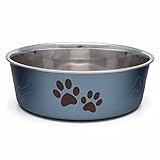
- STAINLESS STEEL & DURABLE - This Bella Bowl (27 oz, 6.75" x 2") features a stainless steel design with a poly-resin exterior great for dog food mat, which makes them dish washer safe and easy to keep clean and hygienic. Perfect cat food bowl or dog water bowl for home & travel.
- REMOVEABLE RUBBER BASE - This feature prevents and ensures no spill water bowl for dogs. It’s perfect for puppy food and makes an excellent addition to your dog feeding station. Watch the bowl stand steady on your pet food mat, making it a great complement to your dog mat and other dog stuff.
- PATENTED AWARD-WINNING DESIGN – Bella Bowls are renowned for being the bestselling bowls in the pet industry. The Bella Bowl Stainless Steel Bowls come in a variety of sizes, making this versatile dog food bowl perfect for all pets—from puppy bowls and small bowls to dog bowls large breed and everything in between! These bowls are also ideal for use as a cat water bowl, with smaller sizes being highly recommended for cat bowls for indoor cats.
- REAL STEEL STYLISH & COLORFUL DOG FEEDER – Available in a wide range of vibrant colors, this dog bowl seamlessly complements any pet supplies collection or dog accessories and makes a fantastic addition to your home’s décor. The Bella Bowls come in beautiful hues like blueberry and artichoke, making them a perfect fit for your dog bowl mat or cat food mat.
- VETERINARIAN RECOMMENDED – This stainless steel dog bowl and stainless steel cat bowls have all the benefits of stainless steel making them hygienic and clean. Bella bowls are truly a must-have for any cat feeding station and essential addition to your dog supplies.
Why dogs may prefer being hand-fed
1. Hand-feeding has become a rewarding social routine
Your hand may represent more than food. It can also predict praise, eye contact, affection, training, and safety. If hand-feeding began when your dog was shy, newly adopted, sick, recovering from surgery, or learning to trust you, the routine may have become especially valuable.
Veterinary and behavior guidance recognizes hand-feeding as a useful way to build trust, focus, and positive associations with a person’s hands—particularly with fearful or cautious dogs. If your dog is energetic, maintains a healthy weight, eagerly eats the same food from your hand, and shows no signs of pain or illness, a learned social preference is plausible.
That does not mean your dog is “manipulating” you, and it does not prove that hand-feeding has created permanent dependence. It means the dog has learned that this particular way of eating is safe, rewarding, or more interesting than eating alone.
Do these 3 things before closing this tab:
1Repair Windows errors before they cause bigger problems2Scan for outdated or missing drivers - takes under a minute3Clear out junk files and repair common Windows errors2. The dog may dislike something about the bowl or feeding location
Sometimes the food is acceptable but the eating context is not. A bowl may slide across the floor, clang against a tag, reflect light, be located in a busy walkway, or place the dog close to people, other pets, or interruptions. Some dogs may also dislike the sensation of putting their face into a particular bowl.
These are possibilities to test, not diagnoses. There is no single bowl type that is right for every dog, and a bowl preference should not be used to explain away a new appetite change or apparent pain.
As a low-risk first adjustment, move the meal to a quiet, familiar location. Use a stable feeding dish, keep other animals from crowding the dog, and allow the dog to eat without being rushed or watched closely. PetMD’s veterinary-reviewed guidance also lists a quiet location and limited hand-feeding as ways that may encourage a dog to eat during some gastrointestinal upsets—but those measures do not replace veterinary care when illness is possible.
3. Hand-feeding may make eating physically easier
When you offer small pieces by hand, you may be changing several mechanics at once: the pieces may be softer or smaller, the dog may eat more slowly, and the dog may not need to reach into a deep or unstable bowl. That can make a painful or difficult eating process look like a behavioral preference.
Rank #2

- STAINLESS STEEL & DURABLE - This Bella Bowl (27 oz, 6.75" x 2") features a stainless steel design with a poly-resin exterior great for dog food mat, which makes them dish washer safe and easy to keep clean and hygienic. Perfect cat food bowl or dog water bowl for home & travel.
- REMOVEABLE RUBBER BASE - This feature prevents and ensures no spill water bowl for dogs. It’s perfect for puppy food and makes an excellent addition to your dog feeding station. Watch the bowl stand steady on your pet food mat, making it a great complement to your dog mat and other dog stuff.
- PATENTED AWARD-WINNING DESIGN – Bella Bowls are renowned for being the bestselling bowls in the pet industry. The Bella Bowl Stainless Steel Bowls come in a variety of sizes, making this versatile dog food bowl perfect for all pets—from puppy bowls and small bowls to dog bowls large breed and everything in between! These bowls are also ideal for use as a cat water bowl, with smaller sizes being highly recommended for cat bowls for indoor cats.
- REAL STEEL STYLISH & COLORFUL DOG FEEDER – Available in a wide range of vibrant colors, this dog bowl seamlessly complements any pet supplies collection or dog accessories and makes a fantastic addition to your home’s décor. The Bella Bowls come in beautiful hues like blueberry and artichoke, making them a perfect fit for your dog bowl mat or cat food mat.
- VETERINARIAN RECOMMENDED – This stainless steel dog bowl and stainless steel cat bowls have all the benefits of stainless steel making them hygienic and clean. Bella bowls are truly a must-have for any cat feeding station and essential addition to your dog supplies.
Watch for clues that your dog wants food but is struggling to grasp, chew, or swallow it:
- approaching the bowl and then walking away;
- dropping kibble or chewing unusually slowly;
- swallowing food without chewing;
- coughing, gagging, or choking while eating;
- drooling or pawing at the mouth;
- preferring soft food while avoiding dry food or hard treats; or
- eating on only one side of the mouth.
Dental pain is an important possibility
Dental disease can cause oral pain, difficulty eating, and reduced appetite. Cornell veterinary guidance lists bad breath, drooling, bleeding, facial swelling, and difficulty eating among signs that can accompany dental disease. Dogs often hide mouth pain, so the absence of dramatic behavior does not rule it out.
A fractured tooth can be particularly confusing. A dog may appear interested in food, approach the bowl, and then leave because biting down hurts. Other clues can include avoiding hard treats or chew toys, dropping food, reacting to cold water, chewing on one side, or resisting touch around the face.
Hand-feeding may temporarily help because you are offering smaller pieces, softer food, or a slower delivery. It does not repair a diseased or fractured tooth. Do not respond by giving bones, antlers, hooves, or other extremely hard chews: hard chewing items can fracture teeth and worsen the problem.
Free tools Windows power users keep installed
One-click scans. No signup required.
A normal-looking mouth at home also does not necessarily show the full extent of dental disease. Cornell notes that definitive dental assessment commonly involves an anesthetized oral examination, probing, and full-mouth dental radiographs. Your veterinarian can determine what examination is appropriate.
Other medical reasons a dog may eat only from your hand
Decreased appetite is often an early sign of a health problem. Possible causes include gastrointestinal disease, nausea, pain, medication effects, toxins, and systemic illness. VCA notes that medical causes are more common than nonmedical causes when decreased appetite occurs with listlessness, although stress and anxiety can also reduce eating.
Stress may follow a move, a new baby or pet, the absence of a favorite person, or the loss of another household companion. Stress can make eating alone feel less safe. Even then, a new or persistent appetite change deserves attention rather than being labeled “picky eating” automatically.
Rank #3

- Stainless Steel Pet Bowl: Made for daily food or water use with a simple, practical design
- Silicone Nonslip Bottom: Helps reduce sliding and noise on smooth feeding surfaces
- Wide, Stable Shape: Designed to sit steadily during everyday meals
- Easy to Clean: Smooth stainless steel surface rinses clean and is dishwasher safe
- Stackable Design: Bowls can be stacked for compact storage when not in use
Medication matters, too. Dogs taking an NSAID or another drug should not be assumed to have a training issue when appetite changes. Cornell’s NSAID guidance identifies decreased or increased appetite, vomiting, stool changes, behavior changes, and altered drinking or urination as warning signs that require contact with a veterinarian.
Hand-fed food versus overall appetite: a useful comparison
| What you observe | What it may suggest | What to do |
|---|---|---|
| Eats the full meal from your hand, remains energetic, and has no other symptoms | A learned routine, social preference, or feeding-context issue is possible | After medical causes are considered, gradually teach independent eating |
| Accepts soft food or treats but avoids kibble and hard treats | Dental pain or difficulty chewing is possible | Arrange a veterinary examination rather than simply changing bowls |
| Approaches food but drops it, chews slowly, drools, gags, or paws at the mouth | Mouth, jaw, throat, or esophageal discomfort is possible | Contact a veterinarian promptly |
| Eats less even from your hand and seems tired, nauseated, painful, or unwell | General illness, medication effects, stress, or pain may be involved | Seek veterinary advice; do not wait for a training solution |
| Refuses all food, vomits, has diarrhea, loses weight, or has a swollen or painful abdomen | A potentially urgent medical problem | Call your veterinarian or an appropriate urgent-care service |
When should you call a veterinarian?
Contact a veterinarian promptly if the hand-feeding preference is new, persistent, or accompanied by:
- pain or apparent difficulty while eating;
- weight loss or a noticeable reduction in total food consumed;
- lethargy, weakness, or unusual behavior;
- vomiting or diarrhea;
- drooling, bad breath, bleeding, or facial swelling;
- difficulty chewing or swallowing;
- excessive thirst or changes in urination; or
- a tense, swollen, or painful abdomen.
VCA Urgent Care advises prompt evaluation for decreased appetite or apparent pain while eating and identifies more than 12 hours without eating as an urgent-care threshold. Other veterinary guidance commonly uses a 12-to-24-hour window for concern, but there is no safe universal waiting period for every dog.
Call sooner for a puppy, a diabetic dog, a senior dog that seems willing to eat but cannot, or a dog with vomiting, diarrhea, chronic disease, or important medication exposure. Age, size, medical history, medications, and accompanying symptoms all change the level of risk. Individual veterinary advice overrides a general time guideline.
What to record before the appointment
A short food-and-symptom log can help your veterinarian distinguish a preference from a physical eating problem. Record:
Quick wins for a faster PC:
Clear out junk files and repair common Windows errorsFree Scan →Scan for outdated or missing drivers - takes under a minuteDriver Scan →- when the change began and whether it was sudden;
- how much of the normal meal your dog actually consumes;
- whether the dog accepts dry food, wet food, treats, or only soft food;
- water intake and changes in urination;
- vomiting, diarrhea, stool changes, drooling, or coughing;
- energy level, signs of pain, and changes in weight;
- current medications, including NSAIDs; and
- what happens at the bowl compared with what happens when food is offered by hand.
Do not pry open your dog’s mouth, force food, syringe-feed without veterinary instruction, or give human medication. These actions can cause injury, aspiration, toxicity, or a delay in treating the real problem.
How to move from hand-feeding to independent eating
Only begin a transition after your veterinarian has considered medical causes—or when the behavior is longstanding, mild, and your dog is otherwise clearly well. The aim is not to punish the dog for seeking reassurance. It is to make independent eating predictable and rewarding.
Rank #4
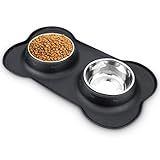
- Capacity: Small size: 12oz Holds 1 Cup to 1.5 Cups food, double small dog bowls, rubber mat: 18"*10"*1.6", no spill pet dishes for puppy small dogs cats under 18lbs. Large Size: Holds 2 to 3 Cups each metal bowl (5.8" Dia*2.7" H), mat: 19"*11"*2.8", food dishes for small to meduim size dogs up to 35 pounds. X Large size: Set of 2 piece 50oz large dog Bowls, holds 6 Cups each (7.4" Dia*2.8" H), rubber bottom: L:23"* W:13", great for large dog breeds, medium to large dogs up to 125lbs.
- Double Dog & Cat Bowls: Set of 2 Dog & Cat Bowls for messy eaters, one for water and the other for food. The bowls is made of high quality stainless steel which makes it rust resistant. Both silicone stand and stainless steel bowl are dishwasher safe.
- Stainless Steel Bowls: Anti-corrosion and heat resistant, the non slip stainless steel dog or cat bowl is durable for long-term use and healthy for your beloved pets especially for holding hot food, and easy to clean, detachable from silicon mat and dishwasher safe.
- No-Spill Silicone Mat: The extra large base of the silicone stand catches any spills so your floor stays clean and Keep Bowls staying in the same place when your boy or girl dog is eating.
- Safe Food Grade Material for your pets: Our dog bowls are made of stainless steel and silicone mat, both are non-toxic, odorless and food grade. This is a fantastic dog cat puppy food and water dish to prevent messy eating and drinking! Handy all in one feeder for messy pups, new puppy or Small Medium Large dogs. Please do not hesitate to contact us should you need any help.
- Keep meals consistent. Offer the dog’s complete food at regular mealtimes. Avoid turning every refusal into a new menu of increasingly tempting foods.
- Control extras. Large amounts of treats, table food, or repeated food changes can reduce interest in the regular diet. Count treats as part of the day’s calories.
- Start with a few hand-fed pieces. Offer a small amount calmly, then place the next pieces in the bowl immediately beside your hand.
- Increase distance gradually. Over several meals, put more food into the bowl and provide fewer pieces directly from your fingers.
- Reduce pressure. Sit nearby if your dog needs reassurance, but avoid hovering, coaxing continuously, scolding, or staring at the bowl.
- Stop if the dog becomes distressed or stops eating. Reassess the plan and contact your veterinarian if the change reveals pain or a broader appetite problem.
A defined mealtime can help prevent an endless negotiation, but do not rigidly withhold food from a dog that is ill, very young, diabetic, or showing signs of pain. Ask your veterinarian how long your individual dog can safely go without eating.
Independent reader supportYour contribution helps us test, update, and keep practical guides available for everyone.Would a different feeder help?
Once medical causes have been considered, a novel feeding method can provide some of the attention, activity, and predictability that made hand-feeding appealing. Food puzzles, lick-style feeders, slow feeders, and foraging activities are enrichment tools—not treatments for dental pain, nausea, vomiting, swallowing problems, or appetite loss.
What’s actually slowing this PC down?
Pick the symptom - the matching free tool is one click away.
A dog food puzzle toy can be a reasonable transition for a medically cleared dog that enjoys working for food. Begin with an easy puzzle and use part of the dog’s normal meal rather than adding uncounted treats. Choose a size-appropriate, durable design, supervise the first sessions, and remove it if the dog chews off or swallows pieces or begins guarding it.
A slow feeder dog bowl may suit a dog that eats too quickly or benefits from a more structured alternative to food delivered from your fingers. It is not appropriate to use a feeder change to postpone a dental examination when the dog drops food, avoids hard food, drools, or appears painful. Some dogs may also find complicated ridges frustrating, so start with a simple design and watch how the dog actually eats.
For dogs that enjoy sniffing, a snuffle mat for dogs can turn part of a regular kibble meal into supervised foraging. Account for the food placed in the mat, keep the mat clean, and do not leave it available to a dog that tears off and swallows fabric. If your dog needs wet food or cannot safely pick up pieces, ask your veterinarian which feeding format is suitable.
The best tool is the one your dog can use comfortably and safely. A feeder should not be hard to chew, so avoid bones, antlers, hooves, and similarly rigid chews as “dental” or feeding solutions.
The bottom line
A dog may want to be hand-fed because your hands provide reassurance and attention, because the routine has been rewarded, or because hand-feeding makes the food easier to manage. But a dog that will eat only from your hand may also be hungry but experiencing dental pain, nausea, illness, stress, or trouble grasping, chewing, or swallowing.
Best Value
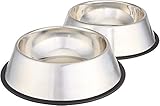
- Set of 2 stainless-steel food bowls for puppies, dogs, cats, or kittens
- Max fill (to the rim) 38 oz / 1.15 L each bowl, recommended fill up to 28 oz/ 0.8 L, perfect for dry kibble, wet food, treats, or water.
- Rust resistant; offers a healthy alternative to plastic; doesn’t hold odors
- No-slip design; rubber base protects floors and prevents bowls from sliding while your pet eats
- Dishwasher-safe for easy cleaning
Check the pattern, not just the hand-feeding itself. If the change is new, persistent, or paired with pain or other symptoms, call your veterinarian. If your dog is medically cleared, use calm mealtimes and a gradual transition—possibly with a supervised puzzle feeder, slow feeder, or foraging mat—to rebuild comfortable independent eating.
Frequently Asked Questions
Does hand-feeding mean my dog is spoiled?
Not necessarily. If your dog is energetic, maintains weight, eats the same food eagerly from your hand, and has no pain or illness signs, hand-feeding may simply be a learned social routine. A new or persistent change still deserves attention.
Why will my dog eat from my hand but not from the bowl?
It can make eating easier by providing smaller, softer pieces or more reassurance, but it does not treat dental disease, nausea, pain, or swallowing problems. If your dog avoids the bowl, hard food, or chewing, contact a veterinarian.
Outdated Drivers Are Slowing You Down
One free scan finds every outdated or missing driver and matches the right update for your exact hardware.Free scan · exact hardware matchPC Slower Than It Used to Be?
A free scan shows the junk files, broken settings and background clutter dragging Windows down - then fixes them in one click.Free scan · Windows 10 & 11How long can a dog go without eating before seeing a vet?
Call promptly if the dog has pain while eating, weight loss, lethargy, vomiting, diarrhea, drooling, bad breath, facial swelling, difficulty chewing or swallowing, or a painful abdomen. More than 12 hours without eating may warrant urgent-care evaluation, and puppies, diabetic dogs, seniors, and dogs with chronic disease may need help sooner.
How can I stop hand-feeding my dog?
After medical causes have been considered, offer a few pieces by hand and place the next pieces in the bowl. Gradually reduce hand-fed pieces over several meals, keep the feeding area calm, limit treats, and stop if the dog becomes distressed or stops eating.
The Bottom Line
Hand-feeding can be a harmless learned routine, but it can also hide pain or illness. A dog that eats only soft food, drops kibble, drools, loses appetite, or seems unwell should be evaluated by a veterinarian. After medical causes are ruled out, transition gradually and use enrichment feeders only as feeding aids—not as treatment.
Quick Recap
Product prices and availability are accurate as of the date/time indicated and are subject to change. Any price and availability information displayed on Amazon at the time of purchase will apply.





Leave a Reply