Birds’ feet do get cold. In many species, the toes and exposed foot surfaces can approach just above freezing while the body core remains around 38–41°C. Birds survive winter by protecting the core—not by keeping their feet as warm as the rest of the body.
Birds’ feet do get cold. In many species, the toes and exposed skin of the feet may cool to just above freezing while the bird’s body core stays near its normal temperature of roughly 38–41°C. Birds survive winter not by keeping their feet warm like the rest of the body, but by limiting heat loss and preventing living tissue from freezing under ordinary conditions.

As an Amazon Associate I earn from qualifying purchases.
The main adaptation is a built-in countercurrent heat exchanger in the legs. Blood vessels, specialized anatomy, insulation, and behavior work together to protect the bird’s core while allowing its feet to remain comparatively cold.
The Tool Desk
Outbyte Driver Updater FREEScan for outdated or missing drivers - takes under a minuteDriver Scan →Outbyte PC Repair FREEClear out junk files and repair common Windows errorsFree Scan →How countercurrent heat exchange keeps a bird warm
Warm arterial blood leaving the body normally carries a great deal of heat toward the feet. If that blood arrived at the toes at core temperature, the feet would lose heat rapidly to cold air, snow, water, or ice. The bird would then have to replace that lost heat with additional metabolic energy.
#1 Best Overall

- Blend of Wild Birds' favorite seeds and grains
- Packaged at one of five manufacturing facilities located throughout the USA
- Rich with black oil sunflower
Instead, arteries carrying blood toward the foot run close to veins carrying colder blood back toward the body. Heat passes from the warmer outgoing arterial blood into the cooler returning venous blood. This vascular arrangement is often described as a rete, including the rete tibiotarsale in the lower leg.
- Warm blood leaves the body through an artery.
- As it travels down the leg, it transfers heat to nearby cold venous blood returning from the foot.
- The blood reaching the foot is therefore cooler than the bird’s core blood.
- The returning blood has been partly reheated before it reaches the body.
This arrangement does not create heat. It recycles heat that would otherwise escape. It reduces the temperature difference between the foot and its surroundings, while helping preserve the temperature of the trunk and vital organs.
The same principle is used in many animals that need to exchange heat efficiently between adjacent blood vessels. Comparative anatomical research has found artery–vein associations of this kind in numerous bird species, although the exact arrangement and effectiveness vary among species.
What’s actually slowing this PC down?
Pick the symptom - the matching free tool is one click away.
Why birds can tolerate cold feet
A bird’s foot is not simply a smaller version of a human hand or foot. The exposed lower leg and foot contain substantial amounts of bone, tendons, scales, and keratinized tissue, with relatively little muscle and other water-rich soft tissue compared with a human extremity.
That structure matters because freezing causes much of its damage in living, water-rich cells. A bird’s feet still contain living tissues and blood vessels, so they are not immune to cold injury. But the anatomy leaves less vulnerable soft tissue exposed than a comparable human body part would have.
Blood also continues to circulate through the foot. The countercurrent system supplies oxygen and nutrients while minimizing the amount of body heat delivered to the exposed surface. The result is a foot that can become very cold without usually freezing solid during the conditions and exposure times the bird encounters.
There is no single temperature that is safe for every bird’s feet. The outcome depends on species, age, health, acclimatization, wind, moisture, contact with cold surfaces, exposure time, and whether the foot is injured. A cold-adapted wild ptarmigan and a tropical pet bird should not be assumed to have the same limits.
Rank #2

- Large 2.5 LB Capacity, Easy Refill & Cleaning: Holds up to 2.5 lbs of seed, reducing frequent refills while providing a convenient feeding solution for everyday backyard bird feeding. The wide opening, removable metal lid, and detachable seed tray allow quick filling and easy cleaning without tools.
- 0.47" Mesh Hole Size for More Bird Species: Features a 0.47-inch metal mesh feeding surface that allows various wild birds to cling comfortably while feeding. The larger mesh design is suitable for cardinals, chickadees, woodpeckers, nuthatches, and many other backyard birds.
- All-Metal Construction with Closed Hanging Ring: Built with a sturdy all-metal mesh body, lid, and tray for long-lasting outdoor durability. The strong metal construction helps resist squirrel damage, while the enclosed hanging ring provides strong support and stable hanging
- Weather-Resistant Lid & Round Seed Tray: Features a 6-inch weather-resistant metal lid that helps shield seeds from rain and snow, while the matching 6-inch round seed tray provides a comfortable feeding and perching area. Multiple drainage holes help keep seeds fresher.
- Versatile Feeder for Multiple Seeds & Birds: Designed for sunflower seeds, mealworms, and suet nuggets, this feeder attracts cardinals, chickadees, woodpeckers, nuthatches, and other backyard birds, bringing more bird-watching enjoyment to gardens and outdoor spaces.
Birds can control how much blood reaches their feet
Countercurrent exchange is only part of the system. Birds can also adjust peripheral blood flow. In cold conditions, they can constrict superficial vessels and reduce the temperature of the leg and foot surface. In warmer conditions, they can increase blood flow to the legs, allowing the legs to act as thermal windows that release excess heat.
Infrared-thermography studies of wild birds have found that birds can regulate heat loss through their legs particularly effectively. During cold conditions, leg-surface temperatures may fall below the temperature of the plumage surface, while the trunk remains much more stable.
This is an important correction to a common mental picture: the feet are not kept at the bird’s core temperature and then somehow protected from the cold. The bird deliberately allows the extremities to cool so that the body does not have to spend as much energy heating them.
Behavior helps protect the feet, too
Birds do not rely on blood vessels alone. They frequently reduce exposure by changing posture:
- Standing on one leg: A resting bird may pull one foot up into the warm abdominal feathers and use the other briefly, then switch legs.
- Tucking the feet: Small birds may draw their feet into belly feathers when temperatures fall.
- Crouching: Lowering the body can allow feathers to cover more of the legs and feet.
- Choosing sheltered perches: Protection from wind and wet surfaces reduces the rate of heat loss.
One-legged standing is not exclusively a cold-weather behavior; birds may do it for balance, rest, or comfort. But in cold conditions, pulling a foot into the feathers reduces the amount of exposed surface area and gives that foot a chance to warm intermittently.
What happens in extremely cold weather?
Cold-adapted birds protect their core through a combination of excellent insulation, increased heat production, blood-flow control, and cold extremities.
Svalbard ptarmigan
In research on Svalbard ptarmigan, birds were exposed to air temperatures ranging from 0°C down to −30°C. Leg-skin temperature changed much more than trunk-skin temperature, while core temperature remained tightly regulated. The birds increased metabolic heat production as conditions became colder.
That pattern shows the basic strategy clearly: the bird allows the periphery to become cold while spending energy to maintain the temperature of the central body.
Rank #3

- ELEVATED GROUND FEEDING DESIGN: Designed as a raised ground bird feeder, the 4-inch elevated tray helps keep seeds cleaner and creates a comfortable feeding space for cardinals, bluebirds, finches and other ground-feeding birds
- DURABLE RECYCLED POLY LUMBER CONSTRUCTION: Built with weather-resistant recycled poly lumber, this feeder resists cracking, rotting and fading while maintaining its appearance over time. Enjoy a durable, low-maintenance feeding station
- METAL MESH BASE KEEPS SEED FRESHER: The durable metal mesh bottom allows rainwater to drain quickly while improving airflow beneath the seed. Better drainage and ventilation help reduce moisture buildup, helping maintain a cleaner feeding area
- FOLDABLE LEGS FOR COMPACT STORAGE: The support legs fold neatly beneath the tray, creating a compact, flat profile for convenient storage when not in use. Easily tuck it away between seasons or transport it wherever backyard birds gather
- Ideal Gift Choice: The 13.3 x 10.2 inch tray holds up to 5 lbs of seed, providing plenty of space for multiple birds to feed together. Enjoy relaxing backyard bird watching or surprise bird lovers, gardeners and nature enthusiasts with a thoughtful gift
Whooping cranes and wading birds
Mechanistic models of Whooping Cranes have treated the legs as countercurrent heat exchangers and, under cold conditions, modeled leg temperature as relatively close to ambient temperature. The validated model also represented the energetic consequences of wading and heat exchange.
For a bird standing in cold water, keeping the legs warm would be particularly expensive. A cold leg can therefore be an effective energy-saving design, provided circulation continues and the tissues remain above their freezing limit.
Chickens
Experiments in chickens provide a useful reminder that this adaptation has a cost. Chickens can prevent their feet from freezing at very low ambient temperatures, but maintaining that protection requires energy. Changes in blood flow to the feet can materially alter the bird’s total heat loss.
Free tools Windows power users keep installed
One-click scans. No signup required.
Domestic poultry should not automatically be treated as equivalent to wild birds from severe climates. Breed, housing, acclimatization, age, health, moisture, and access to shelter all affect cold tolerance.
Do birds’ feet stick to ice?
Bird feet generally do not stick to ice in the dramatic way a warm, wet object might. The usual explanation is that the foot surface is kept near—but generally above—the freezing point of its tissues without being warm enough to melt a substantial film of ice beneath it. With less melting and refreezing at the contact point, there is less opportunity for the foot to become bonded to the ice.
The countercurrent system helps by keeping the foot relatively cold and reducing heat transfer from the body to the contact surface. Scales and other surface tissues may also influence contact with ice, but the broad explanation is heat conservation and controlled temperature—not a magical nonstick coating.
“Birds can never stick to ice” is too absolute. Wet feet, unusual ice conditions, prolonged exposure, severe cold, poor circulation, injury, or contamination could create a risk. Birds are highly cold-tolerant, not invulnerable.
Do birds have antifreeze in their feet?
There is no need to invoke a universal antifreeze chemical to explain ordinary winter survival. The established explanation is freeze avoidance: birds cool their extremities, conserve heat through countercurrent exchange, regulate blood flow, and use behavior to limit exposure while keeping vital living tissues from freezing.
This differs from true freeze tolerance in some amphibians and invertebrates, which can deliberately allow part of their body water to freeze while using cryoprotective substances to limit cellular damage. Birds generally avoid freezing their living tissues rather than functioning normally after a large portion of their feet has frozen.
Can birds get frostbite?
Yes. A bird’s feet are adapted to tolerate cold, but they are not guaranteed to be frostbite-proof. Sufficiently low temperatures, long exposure, strong wind, wetness, restricted circulation, illness, and injury can overwhelm the protective system.
Risk is also species-specific. A bird evolved for Arctic or subarctic conditions may tolerate cold that would be dangerous to a tropical species, a recently transported bird, or a captive bird that has not acclimatized. Pet birds and domestic poultry need appropriate shelter and husbandry; their wild relatives’ adaptations are not a reason to expose them to extreme weather.
Crashes, No Sound, or Screen Glitches?
Random freezes, missing sound and display glitches usually trace back to one bad driver. Find and replace yours safely.Free scan · under a minuteWindows Errors? Fix Them Before They Spread
Repair common Windows errors and clear accumulated junk for a smoother, more stable PC - no reinstall needed.Free scan · no reinstallFor wild birds, avoid handling a healthy bird simply because its feet look cold. If a bird appears injured, is unable to perch, remains immobile, or has visibly damaged or discolored tissue, contact a licensed wildlife rehabilitator rather than attempting to warm or treat the feet yourself.
Why the body—not the toes—is the priority
The foot is expendable compared with the bird’s core organs, muscles, and brain. Natural selection therefore favors a strategy that protects the trunk even if the feet become much colder. The bird’s circulation acts like a heat-recovery system: it gives the extremities enough warmth and blood flow to remain viable, but not so much warmth that the body continually loses heat to the environment.
That strategy is a trade-off. Warmer feet would be safer in some conditions, but they would also increase heat loss and energy expenditure. Colder feet conserve energy, but only up to the point where circulation and tissue temperature remain adequate.
Independent reader supportYour contribution helps us test, update, and keep practical guides available for everyone.Optional reading and observing species
For anatomy and physiology, Handbook of Bird Biology, 3rd Edition, is the closest match to this topic. An illustrated Bird Anatomy reference can be useful for readers who want to see how bones, tendons, scales, and other structures differ from a human foot.
Recommended Free Tools
If you want to identify the species you see using these adaptations, a North American bird field guide such as the National Geographic Field Guide to the Birds of the United States and Canada, 8th edition, is more appropriate than an anatomy reference. Identification guides will not explain the physiology in depth, but they can help you compare birds from different habitats and climates.
Best Value
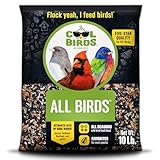
- Brings All the Birds to the Yard: Crafted to attract songbirds of every shape, size, and color all year long
- The Ultimate Bird Buffet: Blended with sunflower, safflower, millet, peanuts and wholesome grains to attract more of all birds, all year round
- Fuel for Every Feathered Friend: Energy and protein-packed to support year-round feeding
- Feeds Ground and Feeder Birds Alike: Appeals to both perching and ground-feeding favorites like doves, jays and sparrows
- Feeder-Friendly Formula: Works with tray, tube, hopper, platform, and smart camera feeders-specially crafted bird seed for outside feeders in any season
What about heated perches?
Heated or thermal perches are a specialized poultry-management concept, not a general requirement for wild birds. In one controlled study, circulating water at about 30°C was used in warmed perches for laying hens experiencing cold stress below 10°C. USDA-supported work has also investigated thermal perches.
Those findings may be relevant to poultry keepers managing birds in cold housing, but research equipment and conditions should not be confused with a universal consumer product recommendation. Any heated perch for laying hens would need to be appropriately designed, guarded against burns and electrical hazards, and evaluated in the context of the flock’s housing, ventilation, bedding, and access to shelter.
The short answer
Birds’ feet do become extremely cold. Countercurrent heat exchange cools blood before it reaches the feet and reheats it on the way back to the body. The feet’s anatomy, controlled blood flow, insulating feathers, and behaviors such as tucking and standing on one leg help the bird conserve heat and avoid freezing its tissues.
Do these 3 things before closing this tab:
1Clear out junk files and repair common Windows errors2Fix the driver behind crashes, sound loss and screen glitches3Repair Windows errors before they cause bigger problemsBut the adaptation has limits. Birds do not have universally antifreeze-filled feet, and no species is completely protected from frostbite or other cold injury. The bird protects its core first, allowing its feet to be cold—but usually still alive and functional.
Frequently Asked Questions
How cold do birds’ feet get?
Birds’ feet can approach just above freezing while the body core remains near 38–41°C. They are cold, but circulation and heat-exchange adaptations usually prevent their living tissues from freezing under ordinary conditions.
Can birds get frostbite on their feet?
Yes. Birds are cold-tolerant, not frostbite-proof. Extreme cold, wetness, wind, prolonged exposure, injury, illness, or poor circulation can cause cold injury, and tolerance varies greatly by species.
Why don’t birds usually stick to ice?
Bird feet are generally kept near—but usually above—the freezing point of their tissues and are not typically warm enough to melt and refreeze a film of ice beneath them. However, unusual conditions can still create a risk of sticking.
Quick wins for a faster PC:
Clear out junk files and repair common Windows errorsFree Scan →Scan for outdated or missing drivers - takes under a minuteDriver Scan →Do birds have antifreeze in their feet?
The main explanation is countercurrent heat exchange and controlled thermoregulation, not a universal antifreeze chemical. Birds generally avoid freezing their living tissues rather than deliberately tolerating large amounts of frozen body water.
Do birds need heated perches in winter?
No. A heated perch is a specialized poultry-management tool studied for laying hens under cold stress. It is not generally necessary for wild birds and should not replace proper shelter and husbandry for domestic poultry.
The Bottom Line
Birds do not keep their feet warm; they keep them just warm enough. Countercurrent blood flow, low-soft-tissue anatomy, circulation control, insulation, and behavior protect the body’s core while the feet remain cold. In sufficiently severe, wet, prolonged, or unusual conditions, birds can still suffer cold injury.
Quick Recap
Product prices and availability are accurate as of the date/time indicated and are subject to change. Any price and availability information displayed on Amazon at the time of purchase will apply.




