
Quick wins for a faster PC:
Scan for outdated or missing drivers - takes under a minuteDriver Scan →Repair Windows errors before they cause bigger problemsFix Now →Fix the driver behind crashes, sound loss and screen glitchesFind Drivers →When a short-beaked echidna gets hot, it can blow mucus bubbles from its nostrils. The bubbles break over the beak, leaving the tip wet so evaporation can remove heat from blood flowing through a sinus beneath it.
The often-repeated “18°F cooler” figure compares two surface regions measured in wild animals. It does not mean an echidna’s whole body, or its core temperature, suddenly drops by 18°F.
As an Amazon Associate I earn from qualifying purchases.
How the mucus-bubble cooling trick works
The behavior begins in the nose. Warm short-beaked echidnas (*Tachyglossus aculeatus*) push mucus through their nostrils, forming bubbles at the end of the beak. As each bubble bursts, it spreads moisture over the beak tip. Drying that thin film requires energy: water changes from liquid to vapor and takes heat from the surface as it evaporates.
Windows Errors? Fix Them Before They Spread
Repair common Windows errors and clear accumulated junk for a smoother, more stable PC - no reinstall needed.Free scan · no reinstallCrashes, No Sound, or Screen Glitches?
Random freezes, missing sound and display glitches usually trace back to one bad driver. Find and replace yours safely.Free scan · under a minuteThat surface is unusually useful because a blood-filled sinus lies directly beneath the beak tip. Cooling at the wet surface can therefore cool blood in the sinus before that blood returns to the circulation. The mechanism is local rather than a whole-body refrigeration system. The authors of the 2023 field study describe the arrangement as a “wet bulb globe thermometer,” with the moist beak acting as an evaporative window that maximizes heat loss.
#1 Best Overall
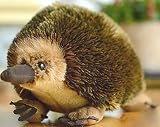
- 20cm Echidna lifelike doll
- No plastic pellets or bean bag filler.
- Cute, soft and squeezable.
- Super Lovely for collection
“The moist tip of their beak, with an underlying blood sinus, functions as a wet bulb globe thermometer, maximizing evaporative heat loss via an evaporative window.”
That wording comes from the abstract of the Cooper and Withers study in Biology Letters. An interview with author Christine Cooper explains that earlier laboratory work had shown bubble blowing when echidnas became hot, leading researchers to hypothesize an evaporative-cooling role; the ABC Radio National interview records that explanation.
What the 18°F number actually measures
The headline number comes from a difference between two regional surface-temperature means in thermal images. The study reported a mean beak-tip surface temperature of 19.3 ± 0.27°C and a high regional mean of 29.2 ± 0.27°C at the ear orifice. Their difference is about 9.9°C, commonly rounded to 18°F.
| Measured region | Mean surface temperature | What the value represents |
|---|---|---|
| Beak tip | 19.3 ± 0.27°C | Infrared surface temperature of the mucus-cooled tip |
| Ear orifice | 29.2 ± 0.27°C | Mean surface temperature of a warmer regional site |
| Difference | About 9.9°C (about 18°F) | A regional surface comparison under the observed conditions |
Neither measurement is a direct reading of core temperature. Thermal imaging records radiation from the skin or other exposed surfaces; it does not directly measure internal temperature, blood-flow rate or the temperature of every organ. The 18°F claim therefore should be read as “the beak tip was about 18°F cooler than the warmer comparison region in these images,” not “the echidna cooled its body by 18°F.”
Rank #2

- ITEM INCLUDES (FOR AGES 3 & UP - CSPIA SAFETY WARNING: NOT FOR USE BY CHILDREN 3 YEARS OF AGE AND UNDER): Knuckles cuddle pillow measures 7.50" x 16.5" x 18.50". The perfect size to snuggle while sleeping.
- EASY CARE (FOR AGES 3 AND UP): To maintain the animated cartoon character's color and vibrancy, simply spot clean as needed.
- SOFT PLUSH QUALITY: Your little one would love to hug and snuggle up with their favorite pillow pal by their side. Made of super soft plush material, this pillow pet is a comfy and colorful accessory to a child's bedroom, nursery, playroom and a cute home decor addition.
- OFFICIALLY LICENSED PRODUCT: This product is an authentic, officially licensed item, guaranteeing quality and compliance with the licensor's standards, because your trust matters to us.
- SONIC KNUCKLES DESIGN: Fans of the Sonic the Hedgehog video games and movies will love to snuggle this adorable Knuckles-shaped cuddle pillow. Knuckles comes to life with this plush three-dimensional character pillow perfect for your little gamer.
The values are means with an uncertainty of ±0.27°C in the study’s report, not a guarantee for every echidna. Beak temperature can change with air temperature, wind, posture, activity, wetness and the animal’s recent exposure to heat. A different habitat or weather pattern could produce a different gap.
How the cool beak was documented in the wild
Christine E. Cooper and Philip Carew Withers published the primary paper on January 18, 2023. They used infrared thermal video to observe free-living short-beaked echidnas at Dryandra Woodland and Boyagin Nature Reserve in Western Australia. Recordings covered 34 days spread across 2020 and 2021 and represented all 12 months of the year.
- Animals recorded: 124 echidnas were reported in the field data.
- Ambient conditions: air temperatures during recording ranged from 10.7°C to 37.4°C.
- Instrument: infrared thermal video, which maps surface temperatures without capturing an internal temperature directly.
- Identification limit: most animals could not be individually identified, so some may have been recorded on more than one day.
The PubMed record for the study provides the bibliographic details. Because the work was conducted on wild animals across seasons, it shows that the cool beak is a naturally occurring thermal pattern rather than an artifact of a laboratory setup. It does not establish one fixed temperature difference for every population or climate.
Do these 3 things before closing this tab:
1Repair Windows errors before they cause bigger problems2Scan for outdated or missing drivers - takes under a minute3Clear out junk files and repair common Windows errorsThree thermal windows echidnas can use
The beak is one component of a broader heat-management system. The field paper identifies three kinds of “thermal windows,” each relying on a different physical process.
Rank #3

- Step into the charm of Hedgehogs: With their distinctive spiny coats and curious noses, hedgehogs are nature's little explorers. The Pocketkins Eco Hedgehog beautifully captures the spirit and cuteness of this nocturnal critter, making it an irresistible companion for all wildlife enthusiasts.
- It's not just about feeling good, but doing good too: Every Pocketkins Eco Hedgehog is a commitment to quality and the environment. Crafted from select recycled materials, it promises lasting softness without leaving a heavy footprint on our beautiful planet. Embrace, enjoy, and eco-empower!
- This stuffed animal makes a great gift: perfect for baby showers, birthday gifts, holiday gifts, room decoration, and themed parties. This is also perfect for teaching children about wildlife.
- Toy Safety: Exceed the requirements set by CPSIA (USA) and EN71 (EU) for safety standards and specifications.
- Wild Republic is the global leader in designing and manufacturing realistic and whimsical plush and toy for kids of all ages since 1979. The company was founded on the principle of fostering the curiosity of wildlife and the wonders of nature.
| Mechanism | Body region | How heat exchange is controlled |
|---|---|---|
| Evaporation | Moist beak tip over a blood sinus | Mucus bubbles wet the surface; evaporation removes heat and can cool sinus blood. |
| Posture | Ventral surface and inner sides of the legs | These areas are relatively poorly insulated, so changing posture can expose or shield them. |
| Piloerection and insulation | Spines and the skin beneath them | Flexible spines alter the insulating layer when they are raised or relaxed. |
The ventral surface and the insides of the legs are useful because they do not have the same heavy insulation as the spiny back. An echidna that turns, stretches or changes its stance can alter how much of those regions is exposed to air and radiant heat. The spines provide another adjustable layer: their insulating effect changes with piloerection, the raising and lowering of the spines.
These routes complement one another. A beak can provide evaporative cooling while posture changes passive heat exchange elsewhere, and the spines can limit heat gain or loss by modifying insulation. None of the three mechanisms replaces the others.
Why evaporating mucus can cool blood
Evaporation is especially effective when the surrounding air is warmer than the animal’s preferred surface temperature but still dry enough to accept additional water vapor. The energy needed to vaporize water comes from the wet beak surface. Because the sinus lies immediately underneath, the temperature of blood in that sinus can be influenced by the cooling surface.
The Tool Desk
Outbyte Driver Updater FREEScan for outdated or missing drivers - takes under a minuteDriver Scan →Outbyte PC Repair FREERepair Windows errors before they cause bigger problemsFix Now →A 2016 physiology review, “Reexamining Echidna Physiology: The Big Picture for Tachyglossus aculeatus acanthion”, reports that short-beaked echidnas can increase evaporative water loss above thermoneutrality. It identifies cooling of the nasal blood sinus with nasal mucus as a possible contributor to that enhanced evaporative cooling. The review supplies physiological context; the 2023 thermal-video study supplies the direct field measurements of the cool beak surface.
Rank #4

- IDEAL COLLECTIBLE PLUSH - At Aproximately 7 inches (17.78 cm) tall, this stuffed collectable soft toy is perfect to display and decorate your bed, sofa, home office and other places. Can also be used as a nap pillow toy.
- GIFT IDEA FOR SONIC THE HEDGEHOG FANS - This plush is the perfect present for toddlers, kids, men, and women of all ages. Great toys for Children's Day, Mother's Day, Christmas Day, Birthday, Anniversaries or any special day
- EXPAND YOUR COLLECTION - Add this unique Sonic The Hedgehog plushie to your growing assortment of Funko figures, and seek out other rare and exclusive collectible items for a complete set
- OFFICIALLY LICENSED - This stuffed Knuckles the Echidna doll is OFFICIALLY Licensed Merchandise by Sonic The Hedgehog produced by Funko
- LEADING POP CULTURE BRAND - Trust in the expertise of Funko, the premier creator of pop culture merchandise that includes vinyl figures, action toys, plush, apparel, board games, and more.
Evaporation also has a trade-off: heat leaves with water vapor, so greater cooling can mean greater water loss. The echidna’s ability to combine the moist beak with posture and insulation gives it alternatives instead of requiring maximum evaporation at all times.
What an echidna’s cooling response may look like
- Heat load rises. A warm day, direct sun, activity or a hot substrate increases the need to lose heat.
- Mucus reaches the nostrils. The echidna blows bubbles through its nose, producing droplets that spread over the beak tip when they burst.
- The beak surface evaporates. Water leaving the wet tip carries away heat from the surface.
- Sinus blood is exposed to the cooling effect. The blood-filled sinus under the tip is positioned to benefit from that local temperature drop.
- Posture and spines add control. The animal can expose poorly insulated ventral or inner-leg regions and vary the insulating effect of its spines.
This sequence is a functional explanation of the observed anatomy and behavior, not a claim that every echidna performs each step in an identical order. The field cameras documented thermal patterns and bubble behavior, while infrared imaging did not directly track sinus blood flow.
Independent reader supportYour contribution helps us test, update, and keep practical guides available for everyone.Do not confuse hot-weather cooling with hibernation
Echidnas also regulate temperature in cold weather, but hibernation and torpor are separate behaviors from mucus-bubble cooling. They involve changing body temperature and metabolic state rather than cooling a small exposed surface by evaporation.
Hibernation in cold months
In a 2007 study of 14 free-ranging echidnas, researchers found behavioral thermoregulation during hibernation. During the coldest months examined, the animals moved to warmer hibernacula and showed a preferred body-temperature range of 8–10°C. Those are body-temperature measurements associated with hibernation, not beak-tip surface readings. The findings are reported in “Cooling rates and body temperature regulation of hibernating echidnas”.
Best Value

- 【Hassle-Free Experience】- Ships in a vacuum-sealed bag for protection (allow 24-48 hours for it to fully fluff up). Customer satisfaction guaranteed: Have questions? Our friendly team is always happy to help!
Deep torpor and arousals
A separate 2002 investigation of seven free-ranging Tasmanian echidnas documented deep torpor bouts interrupted by arousals, with seasonal differences in when hibernation occurred. Its focus was timing and torpor patterns, not the evaporative window at the beak. See “The timing of hibernation in Tasmanian echidnas”.
What the fire studies do—and do not—show
One 2016 prescribed-burn study found that study echidnas used torpor and lowered body temperature during and after fire exposure. The paper, “Cool echidnas survive the fire,” supports torpor as part of the animals’ response to that disturbance.
It does not establish that blowing mucus bubbles is a fire-survival mechanism. The bubble behavior is documented as a way to dissipate heat at the beak under warm conditions; the fire work concerns torpor and whole-body temperature changes. Treating the two findings as the same adaptation would mix distinct measurements and biological processes.
Free tools Windows power users keep installed
One-click scans. No signup required.
How strong is the “18°F cooler” claim?
The claim is well grounded when stated narrowly: in thermal images collected from wild echidnas in Western Australia, the mean beak-tip surface was about 10°C (18°F) cooler than the reported warm ear-orifice region. It becomes misleading when the comparison is widened to the whole animal.
- It is a surface-temperature difference, not a core-temperature drop.
- It compares two body regions, not the beak with the animal’s average body temperature.
- It is a mean under observed conditions, not a fixed cooling effect guaranteed in every climate.
- The imaging shows temperature patterns but does not directly measure blood flow through the sinus.
- Some recorded animals may have appeared on more than one day because most were not individually identifiable.
Within those limits, the result is biologically important: it links a visible behavior, a wet beak surface and a blood sinus in a way that explains how a small exposed region can become a powerful heat-loss site.
Quick Recap
What to remember about echidna heat management
- Mucus bubbles originate at the nostrils and wet the beak when they burst.
- Evaporation from that wet tip removes heat, potentially cooling blood in the sinus beneath it.
- The famous 18°F figure is the approximate difference between measured beak-tip and ear-orifice surface temperatures: 19.3°C versus 29.2°C.
- Posture exposes poorly insulated ventral and inner-leg regions, while spine position changes insulation.
- Hibernation, torpor and responses to fire involve separate whole-body temperature regulation and should not be presented as the bubble trick.
Product prices and availability are accurate as of the date/time indicated and are subject to change. Any price and availability information displayed on Amazon at the time of purchase will apply.





Leave a Reply