
The Tool Desk
Outbyte Driver Updater FREEScan for outdated or missing drivers - takes under a minuteDriver Scan →Outbyte PC Repair FREEClear out junk files and repair common Windows errorsFree Scan →Diarrhea is a sign, not a diagnosis. In cats, it can follow a sudden food change or stressful event, but parasites, infections, toxins, intestinal disorders, and diseases elsewhere in the body are also possible. How urgent it is depends on how severe and persistent it is, whether other symptoms are present, and your cat’s age and health.
When should you call a veterinarian?
Contact a veterinarian promptly if your cat has severe or bloody diarrhea, or diarrhea alongside weakness, fever, vomiting, abdominal pain, dehydration, loss of appetite, or weight loss. Do not wait for a duration threshold if your cat seems ill.
As an Amazon Associate I earn from qualifying purchases.
Cornell advises seeking care as soon as possible when diarrhea lasts longer than a day or two and the cat also has signs of illness elsewhere in the body. VCA advises contacting a veterinarian when frequent liquid or semi-liquid stools continue for more than two days. These are not reasons to delay care when symptoms are severe or your cat’s condition is worsening. Ongoing fluid loss can lead to dehydration and an electrolyte imbalance. (Cornell Feline Health Center; VCA Animal Hospitals; Merck Veterinary Manual)
A brief, mild episode in an otherwise well cat is less concerning than frequent watery stools, blood, or diarrhea with other symptoms. If you are unsure how serious it is, call your clinic for advice.
#1 Best Overall
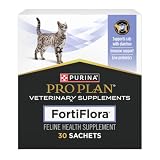
- Number 1 vet-recommended cat probiotic brand to support digestive health (online survey among all US vets who indicated brand as one of 1-3 brands recommended Q4 2025).
- For Cats of All Ages: Purina Pro Plan Sensitive stomach cat food supplement for the dietary management of kittens and adult cats with cat diarrhea.
- Proven Probiotics: Digestive Care Cat Food supplement containing probiotics proven to promote intestinal health and balance.
- Easy-to-Feed: Easy-to-Feed powder supplement includes cat immune system supporting antioxidants.
- Trusted Brand: FortiFlora digestive probiotics for cats are developed in collaboration with Purina nutritionists, researchers and veterinarians.
What can cause diarrhea in cats?
These are useful categories, not a ranking: causes can overlap, and stool appearance alone cannot identify which one is responsible. Some episodes are short-lived, while persistent or recurring diarrhea can point to a condition that needs investigation.
1. An abrupt food or diet change
Changing food suddenly can upset a cat’s digestive system and cause diarrhea for a few days, according to Cornell. Mention any recent changes in food or feeding routine to your veterinarian.
2. Stress or disruption
A stressful event or change in routine may trigger a brief episode. Cornell gives a long car trip or a veterinary stay as examples.
Recommended Free Tools
Rank #2

- Gut & Digestive Health Support: Our pet probiotic prebiotic blend supports healthy digestion, skin health, gut balance and nutrient absorption, helping to reduce sensitive stomachs, irregular stools, low energy and allergy-related discomfort.
- 12 Probiotic Strains, Plus Prebiotics: With powerful probiotics for gut health, this USDA-certified organic probiotic for cats and dogs includes 5 billion CFUs per scoop plus acacia, agave inulin and FOS prebiotics for a balanced microbiome.
- Picky Eater Friendly: Our flavorless cat and dog food topper with prebiotics and probiotics works seamlessly with any diet and is perfect for pet parents looking for a stress-free alternative to probiotic chews, pills or flavored supplements.
- Easy-to-Give Everyday Food Topper: During allergy season and beyond, add to your pet’s food at home or on-the-go, using provided scoop (½ scoop under 15 lbs, 1 scoop 16–60 lbs, 2 scoops 60+ lbs); made in the USA, NASC Certified and GMP-Compliant.
- Vet-Founded & Formulated: Co-founder and veterinarian Dr. Dulake creates formulas for pet parents focused on treating the root cause, not just the symptom; at Fera Pets, we combine Eastern and Western philosophies to deliver long-term wellness for your pets.
3. Parasites
Worms and protozoal parasites can cause diarrhea. A veterinarian may use a fecal test to look for parasites and guide treatment.
4. Infections
Bacterial or viral infections are among the possibilities. Some, including feline panleukopenia, can be serious, so diarrhea accompanied by illness warrants prompt veterinary attention.
5. Food intolerance or allergy
A cat may react to something in its diet. Intolerance and food allergy are different possibilities, and figuring out whether either is involved may require a veterinarian-guided diet trial rather than guesswork or repeated food changes.
Rank #3

- Cat and Dog Probiotics for Digestive Health: Proviable capsules contain multiple strains of beneficial bacteria, providing 5 billion colony-forming units (CFUs) to support your pet's gut health. They also include prebiotics to encourage the growth of probiotics
- A Healthy Gut Supports Overall Health: Probiotics help support intestinal health after imbalances, such as diet changes, food sensitivities, dietary indiscretions, or stress from travel or kenneling
- Clinically Researched: Backed by multiple published studies, Proviable multi-strain probiotic for dogs and cats contains beneficial bacteria to help support gut health
- Easy Administration: Incorporating Proviable probiotics into your pet's daily routine is simple - just open the capsule and sprinkle the powder onto your pet's food at mealtime
- Vet Recommended Probiotic: Proviable comes from Nutramax Laboratories Veterinary Sciences Inc., the #1 Veterinarian Recommended Supplement Company
6. An irritant, toxin, or inappropriate food
Access to spoiled food, poisonous plants, chemicals, or other unsuitable items may matter. Tell the veterinarian what your cat could have reached and when; do not try to identify a toxin from diarrhea alone.
What’s actually slowing this PC down?
Pick the symptom - the matching free tool is one click away.
7. Intestinal inflammation or another digestive disorder
Inflammatory bowel disease and other gastrointestinal disorders can cause diarrhea, particularly when it persists or keeps returning. The pattern and accompanying signs help a veterinarian decide what to investigate.
8. Disease outside the intestines
Diarrhea can also occur with conditions affecting other parts of the body. Possibilities named by Cornell and VCA include kidney or liver disease, hyperthyroidism, neurologic or immune disorders, and cancer. These are among the reasons persistent symptoms deserve veterinary assessment rather than an assumed dietary explanation.
Rank #4

- Multi Care for Cats: Feline supplement powder is easy-to-use and great-tasting, featuring multi-active blends that proactively support digestive and immune health.
- Prebiotic and Probiotic: Cat digestive health supplement contains a prebiotic and probiotic blend to support digestive gut health for cats and immune health.
- Gut Microbiome Support for Cats: Also Includes live cat probiotics to help support gut microbiome health for your cat.
- Digestive and Immune Support for Cats: Gut blend with a prebiotic fiber and probiotics to support digestive and microbiome health while an antioxidant promotes cat immune support.
- Daily Cat Health Supplement Powder: This Purina Pro Plan Veterinary Supplements for Cats Multi Care Feline Supplement is proudly produced in USA facilities.
What information will help the veterinarian?
Before calling or visiting, note when the diarrhea began, how often it occurs, and what the stool looks like. Also share any recent food changes, unusual foods, possible plant or chemical exposures, changes in environment, and other symptoms. The veterinarian may ask about your cat’s age and general health as well.
Ask the clinic whether it wants a fresh stool sample and what container to use. Depending on the history and examination, evaluation may include fecal parasite testing, bloodwork, testing for infections, radiographs, ultrasound, or endoscopy. Which tests are appropriate depends on factors such as symptom severity and duration, examination findings, and response to initial care.
What can you safely do at home?
- Keep fresh water available.
- Record the stool frequency and appearance, along with when symptoms began and any changes or possible exposures.
- Ask the veterinarian what to feed and whether any treatment is appropriate for your cat.
- Do not give human or other over-the-counter medicines unless a veterinarian advises you to; some can harm cats.
- Consult the veterinarian before offering supplements, including probiotics.
For an otherwise healthy adult cat, a veterinarian may recommend a short food hold or small amounts of a veterinary gastrointestinal diet. Depending on the suspected cause, treatment may instead involve medication, deworming, or another plan. These options are not a blanket home-treatment protocol; follow advice tailored to your cat. (VCA Animal Hospitals; Cornell Feline Health Center)
Quick Recap
Product prices and availability are accurate as of the date/time indicated and are subject to change. Any price and availability information displayed on Amazon at the time of purchase will apply.





Leave a Reply