
The Tool Desk
Outbyte PC Repair FREERepair Windows errors before they cause bigger problemsFix Now →Outbyte Driver Updater FREEFix the driver behind crashes, sound loss and screen glitchesFind Drivers →A cat that suddenly meows more, sounds different, or cries in a particular situation should be evaluated for a health problem before you treat the noise as a behavior issue. Meowing is normal communication, but “excessive” has no universal number: it means a noticeable change from that individual cat’s usual pattern. The cause may be a request, mating behavior, stress, pain, or illness. Once a veterinarian has considered medical causes, predictable routines, enrichment, and rewarding quiet behavior can reduce demand vocalizing without frightening the cat.
What counts as excessive meowing?
Cats differ widely in how much they vocalize. Some greet people, announce meals, or hold long conversations; others are usually quiet. Compare the current pattern with your cat’s own baseline rather than with another cat. A gradual increase can matter as much as a dramatic one, especially when it persists for days or is paired with another change.
As an Amazon Associate I earn from qualifying purchases.
Pay attention to more than volume. A new raspy or weak voice, repeated yowling at night, cries while using the litter box, or vocalizing in a place where your cat normally rests all provide context. The sound itself cannot identify the cause. Timing, setting, body language, age, reproductive status, and accompanying physical signs make the change more interpretable.
Do these 3 things before closing this tab:
1Repair Windows errors before they cause bigger problems2Fix the driver behind crashes, sound loss and screen glitches3Clear out junk files and repair common Windows errorsWhy does my cat persistently cry?
Requests that have become a pattern
A cat may meow to ask for food, a door to be opened, access to a favorite room, play, grooming, or contact with a person. If the requested outcome reliably follows the meow, the cat can learn that vocalizing works. That is learned reinforcement, not proof that the cat is being manipulative. First determine what happens immediately before and after each episode; a request pattern usually has a specific target and repeats in a predictable context.
#1 Best Overall

- Complete Calming Solution: This cat calming diffuser kit includes diffusers and refills (48mL per bottle). Each refill delivers a 30-day supply of continuous support to help ease your cat’s anxiety. Ideal for addressing stress triggered by vet visits, traffic noise, fireworks, thunderstorms, or loneliness, this cat pheromone calming diffuser creates a safe and serene environment for felines of all ages and breeds
- Effective Stress & Behavior Support: Our cat pheromone diffuser works to reduce common signs of feline stress such as excessive scratching, urine spraying, hiding, and restlessness. By mimicking natural feline pheromones, this cat calming diffuser provides gentle, drug-free relief, making it a reliable choice for multi-cat households or cats experiencing tension during home changes or new pet introductions
- Long-Lasting & Wide Coverage: Each refill of the cat calming diffuser releases calming pheromones for up to 30 days, with coverage for areas up to 700 square feet. The diffuser features an automatic operation with a simple press of a button, and proper placement (vents facing up) ensures optimal performance and leak prevention, maximizing the effectiveness of your cat diffuser
- Safe & Non-Toxic Formula: The cat pheromone calming diffuser uses an odorless, non-toxic, and chemical-free formula that is safe for both humans and pets. Unlike harsh treatments, this cat calming diffuser does not cause drowsiness and poses no risk to your cat’s health, making it a trusted choice for daily use in any living space
- Easy to Use & Maintain: Setting up the cat calming diffuser is effortless—simply plug it into a standard outlet, keep the bottle upright, and press the button to activate. The heated diffuser and refill system operates quietly and continuously, requiring minimal maintenance; just replace the refill every 30 days to maintain consistent calming support for your feline friend
Mating and territorial communication
An unspayed female in heat may produce prolonged yowls that attract males, and males may answer. Intact cats of either sex can become more vocal when searching for a mate. A cat may also caterwaul after seeing or smelling an unfamiliar animal near a window or doorway. The combination of reproductive status, seasonal or repeated episodes, and a visible outside trigger is more informative than the sound alone. Spaying or neutering decisions should be discussed with your veterinarian.
Stress, fear, or anxiety
Moving house, construction noise, a new pet, changes in household members, altered schedules, or conflict between cats can increase vocalizing. An anxious cat may call while hiding, pace, cling to a person, or react strongly to a particular room or sound. New fear in an adult or senior cat deserves a medical check as well, because pain, sensory loss, or illness can make an ordinary situation frightening.
Pain or injury
Pain can present as more meowing, growling, hissing, or an unusual cry. Some cats vocalize when jumping, being touched, entering a litter box, or changing position; others become quiet and withdrawn instead. Do not wait for a visible limp or wound. A veterinarian must examine the cat to determine whether pain, injury, or another condition is involved.
Illness, including hyperthyroidism
Hyperthyroidism is one illness in which increased vocalizing may occur. Cornell Feline Health Center guidance describes other possible signs such as weight loss despite a good appetite, increased thirst or urination, nervousness or anxiety, and gastrointestinal problems. Kidney disease and high blood pressure are also discussed in veterinary client guidance as possible contributors to caterwauling. These combinations are clues, not a diagnosis; several disorders can look alike and only a veterinary assessment can sort them out.
Rank #2
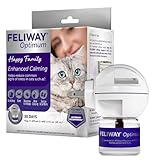
- HELPS REDUCE SIGNS OF STRESS USING A PATENTED PHEROMONE: FELIWAY Optimum is an advanced cat pheromone diffuser that helps reduce signs of stress in cats and helps ease tension between cats.*
- HELPS CATS FEEL CALM IN EVERYDAY SITUATIONS: FELIWAY Optimum is a cat calming diffuser that helps reduce stress‑related behaviors like urine spraying, scratching, hiding, and fearful reactions to change. Cat parents reported noticeable reductions in these behaviors, including a 77% reduction in urine spraying.
- SUPPORTS HARMONY IN MULTI‑CAT HOMES: Helps promote calmer interactions between cats. 72% of cat parents noticed reduced tension between their cats
- SAFE** AND NON-SEDATING: FELIWAY Optimum is not a sedative. It’s safe for use around cats, kittens, people and other pets.
- CONTINUOUS CALMING SUPPORT: This plug‑in cat pheromone diffuser provides 24/7 support when used as directed. To get started, plug into an open outlet with the vents pointed upward, allow at least 4 feet of clearance, and follow the label instructions.
Age-related sensory or cognitive change
Older cats may call more when hearing or vision declines, or when cognitive changes leave them disoriented, especially after dark. They may seem lost in familiar rooms, sleep at unusual times, or need more help locating food and litter. Age is not an explanation to accept automatically. New nighttime yowling still warrants a health assessment because treatable pain, endocrine disease, high blood pressure, or other illness can produce the same behavior.
How can I distinguish a request from a health-related change?
Use these comparison points as a way to organize observations, not as a diagnostic scoring system. A cat can have both a learned request and a medical problem.
| Clue | More consistent with a learned or situational request | More concerning for illness or pain | Useful next step |
|---|---|---|---|
| Onset | Longstanding pattern tied to a familiar event, such as breakfast | Sudden increase or a clearly changed voice | Arrange veterinary advice for a new or persistent change |
| Context | Occurs at a food cupboard, closed door, play area, or window with an outside animal | Occurs while resting, moving, being touched, or using the litter box | Record the location and what was happening |
| Other signs | Cat otherwise eats, grooms, moves, and behaves normally | Weight loss, unusual activity, aggression, poor grooming, thirst changes, vomiting, diarrhea, or apparent pain | Tell the veterinarian about every accompanying change |
| Age and reproductive status | Young cat with a stable communication style, or an intact cat during mating-related episodes | Senior cat with new nighttime calls or any age with a new fear response | Include age, sex, and neuter or spay status in the history |
| Response to routine changes | Vocalizing decreases when a predictable schedule and enrichment are provided after health concerns are addressed | No improvement, worsening, or new physical signs | Stop behavior experiments and seek veterinary guidance |
When should I contact a veterinarian?
Call your veterinary practice about a sudden increase, a persistent change, or a voice that has become raspy, weak, or otherwise unusual. Make the call promptly if your cat frequently roams and cries at night, stands in the litter box vocalizing, or meows while straining, moving, or being handled. Increased meowing can be a pain sign even when the cat still eats.
Also contact the practice when vocalizing occurs with weight loss, increased activity or nervousness, aggression, poor grooming, changes in appetite or thirst, vomiting, diarrhea, altered urination, hiding, or reduced mobility. If your cat appears acutely distressed, cannot urinate, has trouble breathing, collapses, or has another immediately dangerous symptom, contact a veterinarian or emergency clinic directly rather than trying a behavior program at home. The appropriate urgency depends on the individual signs and examination findings.
Rank #3

- HELPS REDUCE COMMON SIGNS OF TENSION BETWEEN CATS: FELIWAY MultiCat, developed by the #1 vet recommended brand, helps reduce common signs of tension between cats such as: conflict, fighting, chasing, and blocking
- ENHANCED CALM AT HOME FOR MULTICAT HOUSEHOLDS: FELIWAY MultiCat plug-in diffuser uses the science of pheromones to send calming messages that mimic a mother cat’s natural pheromones to help reduce tensions & conflicts. 84% of cat owners saw significant improvement in conflict between cats when using FELIWAY MultiCat
- DRUG FREE & SAFE TO USE: FELIWAY diffusers are drug-free, non-sedating, and while cat pheromone analogs may help your cat, they won't affect humans or other pets
- PROVIDES 4 WEEKS OF CALMING SUPPORT: With just one refill, the diffuser offers up to 30 days of continuous calming benefits, helping your cat feel calmer
- COVERS LARGE LIVING SPACES: Each diffuser covers an area up to 700sqft, ensuring widespread calming support throughout your home for cats of all ages. To get started, simply plug your diffuser into an open outlet with 4+ feet of space to diffuse, with the vents pointed upward
What to record before the appointment
A short, objective record helps the veterinarian see a pattern that is difficult to describe from memory. Do not delay care while collecting perfect data.
- Note the timing. Write down when the vocalizing starts, how long episodes last, and whether they are linked to meals, bedtime, litter use, movement, touch, or a person leaving.
- Describe the setting. Record the room, nearby animals, outside activity, lighting, and any recent household change.
- Watch body language. Note posture, pacing, hiding, restlessness, tail position, facial tension, appetite, grooming, and willingness to jump or walk.
- Capture a video if safe. A brief recording of the sound and surrounding behavior can be useful; never restrain or provoke a cat to obtain one.
- List relevant history. Include age, reproductive status, known illnesses, current medicines or supplements, diet, and changes in weight, drinking, urination, stool, or sleep.
The veterinarian will decide which examination or tests are appropriate. Your observations help distinguish a context-linked request from a problem that needs medical treatment, but they do not replace an examination.
Independent reader supportYour contribution helps us test, update, and keep practical guides available for everyone.How can I stop caterwauling after medical causes are considered?
Behavior strategies are appropriate only after a veterinarian has considered pain and illness, or has given you a plan for monitoring a known condition. Change one part of the routine at a time so you can tell what helps.
What’s actually slowing this PC down?
Pick the symptom - the matching free tool is one click away.
Map the trigger and provide the alternative first
Look for the event that reliably precedes the call. If the cat cries at a closed door, offer access at a scheduled time and provide a comfortable resting place nearby. If a window sightline sets off territorial calls, close the blind during the peak period and add an indoor perch elsewhere. If the cat calls when you prepare food, establish a meal signal and deliver the meal on that schedule rather than in response to escalating cries.
Rank #4

- HELPS REDUCE CAT STRESS: FELIWAY Classic is a cat calming diffuser that helps individual cats feel calm and reduce stress behaviors like scratching, urine spraying, and hiding
- CREATES A CALMING HOME ENVIRONMENT: FELIWAY Classic uses calming pheromone messages that cats naturally understand to help them feel comfortable and safe during everyday changes in routine or environment. 9 out of 10 cat parents noticed reduced urine spraying and 8 out of 10 saw reduced scratching
- SAFE* AND NON-SEDATING: FELIWAY Classic is not a sedative. It’s safe for use around cats, kittens, people and other pets.
- CONTINUOUS CALMING SUPPORT FOR SHARED SPACES: Plug‑in cat pheromone diffuser provides 24/7 calming support. To get started, plug into an open outlet with vents pointed upward and allow 4+ ft of clearance, and follow the label instructions.
- #1 VET RECOMMENDED BRAND**: FELIWAY is the #1 vet recommended brand, and is backed by 30 years of feline stress expertise
Build a stimulating daytime routine
Nighttime meowing often improves when the day includes appropriate activity. Schedule several short sessions of interactive play, then allow a calm period afterward. Rotate safe toys, provide opportunities to climb or perch, and let the cat explore different rooms or scent items at its own pace. Food activities, such as a puzzle that makes the cat work for part of its ration, can add occupation. Match difficulty to the cat’s ability so frustration does not become another source of vocalizing.
Plan for the usual nighttime period
Offer play or enrichment before the time your cat normally begins calling, followed by the evening meal if that fits the veterinary feeding plan. A timed feeder can deliver a pre-set portion without requiring you to get up, and a food-manipulation puzzle can occupy a cat that enjoys working for food. These are optional aids for routine, not treatments for pain, hyperthyroidism, kidney disease, or any other medical cause. Keep sleep areas, water, and litter boxes easy to find, particularly for an older cat with reduced vision or hearing.
Reward quiet and desirable behavior
Give attention, a treat, or play when the cat is calm, settled, or using an appropriate alternative such as sitting near you. If you immediately provide the requested outcome during a demand meow, that timing can strengthen the vocal behavior. Occasional exceptions can maintain a behavior even when you respond correctly most of the time, so everyone in the household should follow the same plan. If a cat may be ill, do not withhold food, water, medication, or necessary care as a training technique.
Never use physical punishment
Hitting, shaking, yelling, spraying, or frightening a cat can create fear and anxiety, damage trust, and make vocalizing or aggression worse. Interrupt a problem by changing the environment, redirecting to a safe activity, or seeking veterinary or qualified behavior-professional guidance. Humane management is more reliable than trying to suppress a warning signal.
Troubleshooting common patterns
| Pattern | What to check first | Practical response after health concerns are addressed |
|---|---|---|
| Meowing before every meal | Whether meals are delivered only after vocalizing and whether weight or appetite has changed | Use measured, scheduled meals; reward waiting quietly; consider a timed feeder for a consistent interval |
| Calls at a window or door | Visible animals, outdoor sounds, territorial conflict, or a recent change outside | Reduce the trigger during peak times, add an indoor perch, and provide play away from the window |
| Nighttime roaming and yowling | Senior status, sensory changes, pain signs, and how active the cat is during the day | Obtain veterinary advice; then increase daytime activity and schedule evening enrichment |
| Vocalizing in the litter box | Straining, repeated trips, altered urine or stool, and any sign of distress | Contact a veterinarian rather than attempting training or simply changing litter |
| Meowing after a household change | Hiding, appetite or grooming changes, conflict with another animal, and new noises | Restore predictable routines, create a quiet refuge, introduce changes gradually, and seek help if fear persists |
What a successful plan looks like
Success is not necessarily silence. A healthy cat may continue to greet you, ask for a meal, or answer your voice. The goal is to identify and treat medical causes, meet legitimate needs, prevent accidental reinforcement of demanding calls, and give the cat reliable ways to obtain food, play, access, and reassurance. Reassess whenever the pattern changes; a behavior that once looked like a routine request can become a symptom when its timing, intensity, or accompanying signs change.
Quick Recap
Product prices and availability are accurate as of the date/time indicated and are subject to change. Any price and availability information displayed on Amazon at the time of purchase will apply.





Leave a Reply