Do these 3 things before closing this tab:
1Repair Windows errors before they cause bigger problems2Scan for outdated or missing drivers - takes under a minute3Clear out junk files and repair common Windows errorsIf your cat has suddenly started stumbling, swaying, walking sideways, or falling, contact a veterinarian promptly. A new change in gait or balance is a symptom—not a diagnosis—and can have neurologic, ear-related, spinal, metabolic, or painful causes. If your cat cannot stand, is falling repeatedly, seems weak or disoriented, has had a head injury, or is having trouble breathing, seek emergency veterinary advice now.
What does “walking strangely” look like?
People may describe a cat as “walking like they’re drunk,” wobbly, stumbling, or walking sideways. Those descriptions help convey what you see, but they do not identify the cause. Note whether your cat seems uncoordinated, is avoiding weight on a limb, or cannot support or move one or more limbs.
As an Amazon Associate I earn from qualifying purchases.
Incoordination or ataxia
Ataxia means difficulty coordinating movement. A cat may sway, misplace its paws, stumble, or have trouble controlling its body. The problem can involve pathways in the spinal cord, the balance system, or the cerebellum. VCA’s overview of ataxia in cats describes these possible sources.
Quick wins for a faster PC:
Clear out junk files and repair common Windows errorsFree Scan →Fix the driver behind crashes, sound loss and screen glitchesFind Drivers →Repair Windows errors before they cause bigger problemsFix Now →Balance-system signs
A head tilt, circling or falling to one side, a wide stance, rolling, or rapid involuntary eye movements can accompany vestibular dysfunction. These signs are useful to report, but they do not prove a particular diagnosis: causes can range from temporary to serious, and Cornell advises immediate veterinary consultation for vestibular signs. Cornell’s guide to vestibular syndrome explains the range of possible causes.
#1 Best Overall

- Pet Carrier: 17.5” L x 11” W x 11” H, Recommended max load of 16 lbs cats small dogs. Please do not choose your carrier based on weight--please reference your pet's length and height in selecting a pet carrier size.
- Fits for under-seat dimensions of most airlines. Every airline has a specific set of rules and regulations, please contact with airline before flying with your cats small dogs.
- Mesh windows for ventilation, top and side entry with locking zippers for safety. Carrying handles, adjustable shoulder strap which can also be used as seatbelt, and back strap can fasten the pet carrier to your luggage.
- Pet carrier comes with a removable base insert, which creates a solid surface for your pet to stand on, along with a removable & hand washable cozy fleece pet bed, which offers a cozy sleeping space for your traveling cats small dogs.
- "Toys for pets, of textile materials". Mostly used as a Toy of Fabric Pet Home for pets playing and relaxing.
Lameness or pain
A painful limb or joint can make a cat shorten its stride, walk stiffly, avoid putting weight on a leg, or resist moving. Swelling or an apparent joint problem may also be present. Lameness can look different from incoordination, but the two can overlap; a veterinary examination is needed to distinguish them. See the Merck Veterinary Manual overview of lameness.
Weakness or paralysis
Difficulty supporting or moving one or more limbs is different from simply misplacing the feet, and may indicate a serious nervous-system problem or injury. Treat sudden weakness, paralysis, or inability to stand as urgent and contact a veterinarian or emergency clinic.
Rank #2
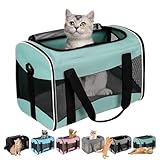
- [PRODUCT DIMENSIONS] Pet travel carrier size : 17x11x11 inches, recommended up to 15 lb pets, it is suitable for large, medium cats and small dogs. Please don't choose your airline cat carrying case based on weight, please refer to your pet's length and height when choosing a pet carrier size.
- [AIRLINE APPROVED] This cat carrier is designed with airline approved, it can fit comfortably under most flight seats, we can take our pets wherever we want. Dog travel carrier offers two attachment loop handles that can be used as a dual harness or as a luggage strap for balanced carry and secure transport.
- [EXCELLENT MATERIAL] Collapsible cat carrier is made of polyester fabric, supported by a steel ring, washable, wear-resistant and durable. The three sides and the top of this pet carrier are nylon mesh, scratch-resistant and not easy to damage, it can not only check your pet in real time, but also ensure enough air circulation.
- [SAFE AND COMFORTABLE] Dog travel bag has metal zippers on the top and side entrances, durable and not easy to deform, it allows your pets to enter and exit easily. The cat carrying case is equipped with an anti-escape safety buckle, which can effectively prevent pets from accidentally falling. It is suitable for car rides and vet rides.
- [PORTABLE AND FOLDABLE] Pet travel carrier comes with a detachable and hand washable wool pet bed, it can provide a comfortable sleeping space for your traveling pet. The cat travel case comes with an adjustable shoulder strap and handle for easy portability. When not in use, you can fold it up for storage.
Why might a cat suddenly become wobbly?
Several conditions can produce similar-looking changes. The way your cat walks alone cannot tell you which one is responsible.
Spinal cord or nerve pathways
Trauma, compression, inflammation or infection, structural disease, tumors, and vascular events can affect coordination or strength. A veterinarian may investigate spinal or nerve function if the examination suggests a problem in those pathways. Merck’s description of neurologic evaluation in cats explains how examination findings help localize a problem.
Rank #3

- High Quality Design:Sturdy steel cage structure and wooden support board maintain good spatial stability and shape. Breathable mesh windows on four sides,which can ensure good air circulation and views,make pets have a comfortable and safe travel.It can also be easy for you to check on your pets.There is a front pocket to store pet toys,treats,etc.
- Dimension and Weight:Made of durable tear-resistant fabric.Four easy entrances for pets. Dimensions: 17 inch x 11 inch x 11 inch (L*W*H), suitable for pets up to 16 lbs.Please don't choose your carrier based on weight only,consider your pet's length and height when choosing a carrier.
- Airline Approved & Safty:Can be placed under the seats of most airplanes(Four non-slip feet on the bottom to prevent movement), and comfortably on the seat next to you in a car or bus.It has a adjustable shoulder strap.Can also be fastened to the car seat with a safety belt or shoulder strap to keep your pet safe.
- Easy to Clean :You can clean the stains and dirt on the surface with a soft cloth.Soft mat inside the pet carrier is removable and washable.You can take it out and wash it easily to solve all stains.
- Easy to Collapsible & Lightweight:When not in use,fold it into a flat,space saving and easy to store.Only 2.2lbs,it's easier to carry around.It can also used as a toy of pet house,allowing pets to play in a safe space to relax and rest.
Vestibular system, ear, or brain
Middle- or inner-ear disease, idiopathic vestibular disease, tumors, trauma, infection or inflammation, and toxicity from certain medications are among the possible causes of vestibular signs. Disorders affecting the cerebellum or other parts of the brain can also disrupt coordination. Similar signs can arise from different conditions, so do not assume that a head tilt or falling to one side is “just an ear problem.” Cornell’s vestibular syndrome guide discusses the range of causes.
Whole-body or metabolic illness
Abnormal glucose, potassium, calcium, or red-cell levels, as well as heart, circulation, or respiratory disease, may be associated with ataxia. That is one reason a clinician may consider tests beyond the nervous system; symptoms alone cannot confirm a metabolic cause. VCA’s ataxia overview describes these potential contributors.
Rank #4
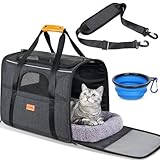
- 【 Spacious & Comfortable Cat Carrier 】The large cat carrier provides ample space for your feline friend to move, turn, and stretch during travel. Measuring 17.3 x 12.2 x 13.4 inches, it is wider and taller than most cat carriers, ensuring your pet feels comfortable and at ease while on the go.
- 【Balanced Mesh Design】Unlike other cat carrier hard, our cat carrier soft strikes the perfect balance with 40% mesh surface area. This ensures your pet can observe the surroundings and breathe easily while feeling safe and secure at the same time. The cat carrier large is suitable for pets in all kinds of situations.
- 【Built-in Dual-Sided Cushion】The detachable pad offers two distinct comforts: a cool side for summer and a super-soft, warm side for winter. You can easily flip it to match the season, providing the perfect temperature for your pet in any weather.
- 【Includes Foldable Bowl】Designed for on-the-go use, our foldable bowl carries 410g of food or 20oz of water. After use, simply collapse it and attach it directly to your pet's collar or leash, perfect for keeping your pet fueled and hydrated anywhere.
- 【Safe & Durable】Safety is our top priority, and the pet carrier for cat is equipped with a secure buckle to prevent your pet from escaping. The cat carrier soft is made of reinforced snow silk fabric and hard mesh material, ensuring durability and preventing any tearing during long-distance travel.
Painful injury or musculoskeletal disease
An injured limb, painful joint, or other musculoskeletal problem can alter a cat’s stride and may be mistaken for a balance problem. Do not try to determine the source by bending or manipulating a painful leg. Merck’s lameness overview covers musculoskeletal causes and the need to distinguish them from neurologic signs.
The Tool Desk
Outbyte PC Repair FREEClear out junk files and repair common Windows errorsFree Scan →Outbyte Driver Updater FREEScan for outdated or missing drivers - takes under a minuteDriver Scan →A rare spinal-cord example
Fibrocartilaginous embolism is a rare spinal-cord disorder. The Merck Veterinary Manual says it typically begins after jumping or running, with a sudden, nonpainful gait change; MRI is used to diagnose it. This is one possible explanation, not a reason to presume what is happening to an individual cat. Merck’s guide to spinal-column and cord disorders in cats provides further information.
Best Value
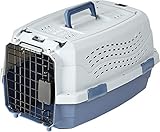
- Hard sided pet carrier with 2 doors for front and top entry; suitable for cat or extra-small dog breeds, such as chihuahuas and toy poodles (up to 11 pounds)
- Durable plastic construction with steel wire front door; screws keep the top and bottom sections securely connected
- Top door can swing open to the left or right for easy access and convenience
- Plenty of ventilation on sides, top, and back of the carrier
- Note: Be sure to measure the size of the pet when choosing carrier size
What should you do right now?
- Call a veterinarian promptly. Describe when the change began, whether it is worsening, and whether there was a fall, jump, possible medication or toxin exposure, or another new symptom. Sudden gait or balance changes warrant veterinary attention.
- Seek emergency advice for severe signs. Call an emergency clinic if your cat cannot stand, collapses, falls repeatedly, has weakness or paralysis, has a seizure, is less responsive than usual, or has breathing distress. A head injury requires immediate veterinary transport; Cornell advises minimizing movement after head trauma. See Cornell’s guidance on neurological disorders.
- Prevent falls while arranging care. Keep your cat in a quiet, confined, safe area and block access to stairs and elevated furniture. Do not make your cat walk to demonstrate the problem. VCA includes environmental safety among supportive measures for ataxia; it is not a substitute for veterinary assessment. VCA’s ataxia guidance.
- Transport carefully. A secure carrier can help limit movement. VCA’s first-aid guidance for limping cats says to leave a cat in its carrier at the hospital until a veterinary technician or veterinarian can assist. VCA: First Aid for Limping Cats.
- Do not manipulate an injured limb or give human medication. Unless a veterinarian directs you, avoid handling a painful limb and do not give human medicines. Manipulating a broken or dislocated limb can cause unnecessary pain or worsen an injury, according to VCA’s first-aid guidance.
What information should you observe and report?
These observations can help the veterinarian understand the problem; they are not a home diagnostic checklist.
- When the change started and whether it came on suddenly or gradually.
- Whether it is getting worse, improving, or staying the same.
- Whether your cat is stumbling or swaying, falling to one side, circling, holding its head tilted, or showing unusual eye movements.
- Whether a limb seems painful or your cat is avoiding putting weight on it, versus seeming weak or unable to move it.
- Any fall, jump, possible exposure to a toxin or medication, or other change in responsiveness, behavior, or breathing.
What might happen at the veterinary visit?
The veterinarian will ask about the onset and history, perform a general and neurologic examination, observe the gait if appropriate, and assess functions involving the head, limbs, posture, and reflexes. The examination helps determine which tests, if any, are useful.
Depending on the findings, tests may include blood work, urinalysis, cerebrospinal-fluid analysis, X-rays, CT, MRI, or electrical evaluation of brain, nerve, and muscle activity. Not every cat needs every test. Treatment also depends on the cause; veterinary-directed supportive care may include pain management, anti-nausea medication, environmental safety, or reassessment. These measures are not a home treatment plan. Merck’s neurologic evaluation guide describes the examination and possible diagnostic tests.
Quick Recap
Product prices and availability are accurate as of the date/time indicated and are subject to change. Any price and availability information displayed on Amazon at the time of purchase will apply.




