Do these 3 things before closing this tab:
1Scan for outdated or missing drivers - takes under a minute2Clear out junk files and repair common Windows errors3Fix the driver behind crashes, sound loss and screen glitchesPet population management is an urban-governance issue because free-roaming companion animals affect public health and safety, animal welfare, the environment, and the cost and operation of municipal services. Effective policy therefore takes more than removing animals from streets: it coordinates public and animal-health agencies with shelters, veterinarians, and communities, and adapts its measures to local conditions.
What pet population management is meant to achieve
The World Organisation for Animal Health (WOAH) defines a dog population management programme as a combination of measures intended to improve dog health and welfare, public health and safety, and the environment sustainably, while accounting for economic benefits and costs. Its standard emphasizes that cities should investigate local dog populations and their dynamics, understand community attitudes, and choose a locally appropriate mix of interventions rather than assume one tool will work everywhere.
These goals are connected. Free-roaming dogs can raise concerns about bites and zoonotic disease; animals may also face injury, disease, hunger, or poor welfare. Their presence can affect wildlife and the use of public space, while animal-control operations and shelter care require public resources. The drivers are often connected to human behavior and ownership, so a city’s response cannot be limited to the animals it encounters outdoors. WOAH identifies owned dogs as a common source of free-roaming dogs.
WOAH’s detailed population-management chapter concerns dogs. Its recommendations should not be mechanically applied to cats or every companion-animal species without accounting for their different ecology and local law.
PC Slower Than It Used to Be?
A free scan shows the junk files, broken settings and background clutter dragging Windows down - then fixes them in one click.Free scan · Windows 10 & 11Outdated Drivers Are Slowing You Down
One free scan finds every outdated or missing driver and matches the right update for your exact hardware.Free scan · exact hardware match#1 Best Overall

- High Quality Materials:SZHLUX Live Animal Cage Trap use low carbon steel wire and medium frequency welding. In this way, the product surface is flat, the welding is firm, and it is not easy to solder off.Weather and rust resistant.
- Convenient Design: Our cat trap is foldable and can be easily loaded into the trunk of the car.It only takes 4 simple steps to set up,from nearly flat to assembled in seconds--no tools needed.
- Humane Live Animal Trap: Our raccoon trap use oblong support frame to secure the cage shape and use fixing clips to fix rear door,smoothed internal edges protect and prevent trapped animal being injured.All you need is some bait to catch and then release them back to the wild.
- User-friendly Design: The top cover guard board of the cage prevents people injured by the trapped animal's mistake.The connecting rod of the pedal mechanism is set inside the cage to prevent animals from touching the mechanism by mistake.A new tool has been designed to extend the safe distance when releasing the animal.
- Dimensions: Product Size: 32inch*10inch*12inch; Package Size: 38.2inch*11.8inch*3.15inch.Excellent choice when attempting to capture smaller animals such as stray cats, raccoons, squirrel, skunk, mole, groundhog, armadillo, rabbit and small dogs.
Why a single intervention is not enough
Population size alone does not control rabies
Mass culling is not a sound rabies-control strategy. WOAH states: “Recognising that mass culling of dogs is ineffective and may be counterproductive, reducing dog population size is not an effective means of reducing rabies prevalence.” Population management can support rabies control through vaccination and by reducing population turnover, but simply lowering the number of dogs does not achieve that outcome.
Public-health planning also needs vaccination and disease surveillance, bite reporting, and coordination with veterinary and human-health services. Reported bite totals can help show the scale of a problem, but they are not population-adjusted risk rates. For example, India’s Government reported 7,277,523 dog-bite cases in 2019, 4,633,493 in 2020, 1,701,133 in 2021, 2,180,185 in 2022, and 3,043,339 in 2023. These are national reported case counts, not a measure of bites per person or dog.
Sterilization addresses reproduction, not every source of animals
Reproductive control is one component of a programme. WOAH describes surgical sterilization, non-surgical fertility-control methods, and confining or separating females in heat. Surgical procedures require veterinary staff with suitable training, handling, technique, asepsis, anesthesia, pain management, monitoring, drugs, and equipment. Products still under research need trials before use.
Rank #2

- HUMANE CAPTURE: This large live animal trap safely captures raccoons, cats, possums, and other small animals with a 1-door design that allows full entry before closing, reducing escape chances for effective pest control
- HEAVY-DUTY CONSTRUCTION: Built with galvanized wire mesh and solid steel door, this raccoon trap resists rust and corrosion while providing long-lasting durability for outdoor use in all weather conditions
- SAFETY FIRST: Features smooth internal edges to prevent animal injuries and protective handle guards for safe handling, making this humane animal trap ideal for both novice and experienced users in wildlife management
- PROFESSIONAL DESIGN: Engineered with a refined trip mechanism specifically calibrated for heavier animals like bobcats and coyotes, this live trap minimizes false triggers while ensuring reliable capture performance
- VERSATILE SOLUTION: Perfect as a feral cat trap, skunk trap, or armadillo trap, this large animal cage trap handles a wide range of pest control situations effectively for comprehensive wildlife management
For unowned free-roaming dogs, catch-neuter-vaccinate-return may be one approach, but WOAH does not present it as a stand-alone solution. It should be combined with measures addressing other sources of free-roaming animals, community involvement, health care including rabies vaccination, adoption assessment, and return near the place of capture when adoption is not feasible.
What’s actually slowing this PC down?
Pick the symptom - the matching free tool is one click away.
What a coordinated city programme can include
WOAH recommends considering all dogs and tailoring measures to local drivers and legal context. A municipal programme may combine:
- Registration and identification: support proof of ownership, reunification, traceability, responsible ownership, and animal-health programmes. Scanners or other devices can be used to read identification when a dog is found.
- Responsible ownership and education: help owners understand care, identification, safe dog-human interaction, and local obligations.
- Reproductive control: provide appropriate sterilization or other lawful fertility-control options alongside measures addressing abandonment, roaming, and other sources of free-roaming animals.
- Veterinary care and vaccination: address animal health and public-health risks, including rabies where relevant.
- Reunification, adoption, and shelter policy: assess whether a found animal can return to its owner or be adopted, and plan for shelter capacity and welfare.
- Rules and environmental measures: consider regulation of commercial breeding and sale, movement controls, and environmental conditions that influence animal access to food or shelter.
Governance needs to match that mix. WOAH calls for coordination among animal-health and welfare, public-health, food-safety, environmental, and other relevant authorities, with a multisector group and clearly assigned roles. Community members, animal-welfare organizations, shelters, and veterinary professionals contribute local knowledge and practical capacity.
Rank #3

- NON-FOLDABLE design, fully assembled, just open and use, 17 x 7 x 7 inches outer dimensions
- Suitable for squirrels, weasels and other similar-sized animals, catch and relocate them easily
- Not suitable for big cats or other large animals because the interior space is not large enough
- Not suitable for mice and little chipmunks, since they are too light to trip the pedal and they may escape through the mesh hole (hole size: 1 x 1 inches)
- Once the pedal is triggered, the powerful door will close instantly and prevent rodents from escaping. Made of sturdy galvanized iron, animals can’t chew through the mesh anymore
How cities can measure whether policy is working
Programmes need measurable objectives, a baseline, and public reporting. WOAH suggests indicators such as owned and free-roaming dog demographics, zoonotic disease, community knowledge and practices, adoption and reunification performance, bites, complaints, and costs. Monitoring should inform evaluation and adaptation rather than serve only as a count of activities.
New York City illustrates why population estimates and outcomes matter. A 2026 review by the New York City Comptroller says reliable totals for the city’s stray and uncared-for dogs and cats are unavailable, and that the Department of Health and Mental Hygiene does not publicly report outcome metrics for its efforts. Without population and outcome data, activity totals alone cannot establish whether the programme is changing the number of animals at large, reducing risk, or improving welfare.
The review reported 14,627 shelter dogs and cats in FY2023 and 15,412 in FY2025, an approximately 5.4% increase across those two fiscal years; it attributed much of the change to stray animals and owner relinquishments. The city reported almost $54 million per year for shelter care and an average of $316,000 in each of the three reviewed fiscal years for its population-control programme. These are New York City expenditures, not comparable unit costs or evidence that any one intervention caused shelter intake to rise or fall.
Rank #4

- Wide Application: As urban and wilderness ecosystems intertwine, animals may disturb your life. Our cat trap is a versatile solution for various animals, including cats, raccoons, rabbits, groundhogs, armadillos, and opossums. It effectively addresses issues such as farmland invasion, release, and harassment.
- Humanized Designs: We prioritize humane care with our raccoon trap. The L-shaped lever ensures the trap won't harm animals when triggered. The dense mesh prevents escapes and protects against external attacks or stolen food. Smooth wire edges prevent animals from panicking or biting the wire, ensuring their safety.
- Sturdy and Durable: Our animal trap is built to last. It is constructed with sturdy, thickened wires that withstand animal bites and impacts without deformation or cracking. The galvanized coating provides excellent corrosion resistance, ensuring stability and durability in all weather conditions.
- Simple and User-friendly: Our live trap is designed for your convenience. It comes pre-assembled, saving you from tedious setup steps. Just unfold the cage, secure the rear door, and connect the trap mechanism to start using it quickly. This saves time and effort, allowing you to engage in capture work promptly.
- Portable and Easy to Store: Our efficient groundhog trap is portable and easy to store. It features a convenient handle for easy mobility, with an extended design that prevents accidental injuries from animals. The collapsible design allows for easy storage, freeing up space when not in use.
What municipal examples show—and what they do not
New York City: service access, shelter demand, and accountability
New York City Administrative Code §17-811 directs the city to establish an animal population-control programme aimed at unwanted stray dogs and cats, using no- or low-cost spay/neuter services for eligible owners; it also permits the city to seek public or private funds. The code database warns that it may not reflect the newest legislation, so readers should verify current legal text.
The Comptroller’s May 8, 2026 review describes a Department of Health and Mental Hygiene contract with the ASPCA covering free or low-cost sterilization services in all five boroughs from November 1, 2022 through October 31, 2028, with a not-to-exceed amount of $3 million. It reports that the programme relied on dog-licensing surcharges, that some contract targets were missed partly because of staffing, and that outreach and impact outcomes were not publicly reported. The review also notes other programmes have additional funding streams and that community-cat trap-neuter-return is an area of policy disagreement in the city.
The same review reports substantial owner relinquishments as well as stray-animal intake. Sterilization services may address unwanted litters, but those figures and the lack of reliable population counts do not establish that sterilization alone will resolve shelter intake.
Free tools Windows power users keep installed
One-click scans. No signup required.
Best Value
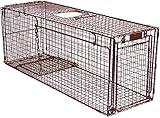
- Works for cats, skunks, rabbits, and other small animals
Quito: an integrated approach with locally specific estimates
Quito’s municipal information office described an integrated strategy aligned with One Health and One Welfare principles and six principles associated with ICAM guidance. It reported 43,601 companion-animal sterilizations, 57,536 responsible-ownership and animal-welfare awareness campaigns, and care for 6,855 rescued vulnerable animals during 2023; the figures were published April 26, 2024.
The city’s 2023 analysis estimated one dog per 19 residents in the Metropolitan District of Quito, reported 67% of dogs in packs and 33% alone, and reported three males per female among street dogs. These are local municipal estimates, not figures that can be generalized to other cities.
India: legal framework and reported bite cases
The Government of India says the Animal Birth Control Rules, 2023 were notified on March 10, 2023 under the Prevention of Cruelty to Animals Act, 1960, replacing the 2001 rules. Its government summary describes stray-dog management through sterilization and immunization. The summary is not a substitute for the rule text when determining legal duties or implementation details.
The same 2024 government release attributes estimates of 59,000 annual global dog-mediated rabies deaths and 20,565 in India—35% of the global figure—to a study conducted in 2004. These are dated, attributed estimates, not current measured annual death counts.
Quick wins for a faster PC:
Fix the driver behind crashes, sound loss and screen glitchesFind Drivers →Clear out junk files and repair common Windows errorsFree Scan →Scan for outdated or missing drivers - takes under a minuteDriver Scan →A practical framework for urban decision-makers
- Define the local problem and target population. Distinguish owned roaming dogs, unowned free-roaming dogs, shelter animals, and other companion animals; establish what is known and what is not.
- Set shared objectives. State the public-health, animal-welfare, environmental, and service outcomes the city intends to improve, and assign accountable agencies and partners.
- Choose a locally suitable intervention mix. Combine measures that address animal identification, ownership practices, reproduction, vaccination and veterinary care, reunification or adoption, and relevant environmental or commercial sources.
- Provide welfare safeguards and practical access. Ensure veterinary procedures meet appropriate standards and that services are accessible to the residents and communities whose actions affect outcomes.
- Publish baselines, indicators, and costs. Track population characteristics, disease and bite indicators, complaints, reunification and adoption, shelter intake, service reach, and expenditure, with clear definitions and dates.
- Evaluate and adapt. Use monitoring to identify gaps, revise responsibilities or service design, and report what changed. Compare cities cautiously: populations, definitions, legal authority, costs, and data quality differ.
The available municipal examples illustrate different tools and reporting approaches; they do not establish a universal best programme or directly comparable cost-effectiveness across cities.
Quick Recap
Sources
- WOAH, Terrestrial Animal Health Code, Chapter 7.7: Dog population management (2024)
- New York City Comptroller, animal shelter and population-control review (May 8, 2026)
- Municipality of Quito / Quito Informa, integrated urban-animal strategy and 2023 activity (April 26, 2024)
- Government of India, Press Information Bureau, dog-bite figures and Animal Birth Control Rules summary (2024)
- New York City Administrative Code §17-811
Product prices and availability are accurate as of the date/time indicated and are subject to change. Any price and availability information displayed on Amazon at the time of purchase will apply.




