
What’s actually slowing this PC down?
Pick the symptom - the matching free tool is one click away.
The endangered camel is the wild Bactrian camel, Camelus ferus—not every two-humped camel. It now survives in a few fragmented desert populations in China and Mongolia, where it must travel across enormous areas to find temporary water and forage. Poaching, habitat degradation, mining, infrastructure, disturbance and interbreeding with domestic camels all threaten that remaining range.
Its exact current population is uncertain. The IUCN record gives an older estimate of 950 mature individuals from its 2008 assessment and notes a later assessment record identifying the species as Endangered; the Convention on Migratory Species (CMS) still labels it Critically Endangered and says reliable current estimates are unavailable. Those qualifications matter: conservation decisions depend on protecting connected landscapes, not on treating a rough number as a census.
As an Amazon Associate I earn from qualifying purchases.
Which camel is endangered?
“Bactrian camel” can mean two different animals. The domestic Bactrian camel is Camelus bactrianus, a livestock species shaped by centuries of human breeding. The endangered animal is Camelus ferus, the wild Bactrian camel. A CMS species page uses a Camelus bactrianus URL and title while discussing the wild camel as Camelus ferus, so the scientific name is the safest way to avoid conflating them. See the CMS species page for that treatment.
Wild camels are not simply domestic camels that have wandered away from herds. They are a distinct wild species with a much smaller, isolated range and a separate conservation problem. Domestic camels can be numerous in some regions; that does not increase the number of genetically wild animals.
#1 Best Overall

- This plush is approx. 3.5" x 8.5" x 4.3" in size
- Made from deluxe materials for a cloud-like softness!
- This light and fluffy Camel plush makes for a great cuddling partner
- Mini Flopsies are designed to lay resting on its belly for easy, fun play
- To ensure stability and quality, this plush contains bean pellets suitable for all ages
What the status labels mean
| Source and date | Status or estimate | How to interpret it |
|---|---|---|
| IUCN Red List record, 2008 assessment | Critically Endangered; 950 mature individuals | An assessment figure, not a newly verified census. The record says the 2008 assessment needs updating and also surfaces a 2025 latest-assessment note identifying the species as Endangered. |
| CMS species page | Critically Endangered; roughly 600 in China and 350 in Mongolia | CMS presents these as rough figures and says reliable population estimates are unavailable. |
The differing labels are a date-and-source issue, not proof that the camel has suddenly recovered or collapsed. The 950 mature-individual figure and the rough China-and-Mongolia figures should not be added together or presented as a current exact count. A rare, mobile animal spread across remote deserts is difficult to survey, and the available figures have different dates and methods.
Where wild Bactrian camels still live
The surviving range is restricted to China and Mongolia. CMS describes three locations in northern China: one in the Taklamakan Desert and two in the Lop Nur Desert. In southern Mongolia, the remaining range includes the Transaltai Gobi. CMS’s migration fact sheet summarizes the situation as four isolated populations in the two countries, stating: “Wild camels used to be found throughout the vast deserts of Central Asia, but today they survive in just four isolated populations in China and Mongolia.” That wording appears in the CMS Fact Sheet on Wild Camel Migration.
“Isolated” describes more than distance on a map. Roads, industrial sites, settlements, fences, mines and other disturbances can make a route unusable even when open desert appears nearby. A population may therefore occupy a large-looking area while losing access to the wells, seasonal forage and escape routes it needs.
How a wild camel uses the desert
CMS describes the species as living in one of the harshest desert environments on Earth and says it “depend[s] on the ability to migrate vast distances to exploit ephemeral water sources and forage.” Water and plant growth are not distributed predictably across these deserts. A camel that can move between scattered resources has a better chance of surviving dry periods than one confined to a small patch.
Rank #2

- Discover the Camel: The Hug'Ems Mini Camel is inspired by the resilient species known for navigating the desert. This plush captures the spirit of these incredible animals, making it a fascinating addition to any collection.
- Exceptional Softness and Quality: Made with the softest materials, this plush camel is designed for endless hugs and cuddles. It's a high-quality, durable companion that promises to bring comfort and joy to anyone who holds it.
- This stuffed animal makes a great gift: perfect for baby showers, birthday gifts, holiday gifts, room decoration, and themed parties. This is also perfect for teaching children about wildlife.
- Toy Safety: Exceed the requirements set by CPSIA (USA) and EN71 (EU) for safety standards and specifications. Our packaging is free of single use plastic, made of post-consumer materials and printed in soy ink
- Wild Republic is the global leader in designing and manufacturing realistic and whimsical plush and toy for kids of all ages since 1979. The company was founded on the principle of fostering the curiosity of wildlife and the wonders of nature.
A limited sample of satellite telemetry and GPS tracking has recorded very large movements and home ranges. Seasonal movement patterns may exist, but researchers still know less than they would like because wild camels are rare and sensitive to human disturbance. The practical implication is clear even when every route is not mapped: a reserve that protects only a frequently used resting area cannot substitute for a connected landscape.
Why permeability matters
- Access to temporary water: animals need to reach water sources that may be available only briefly.
- Access to forage: movement lets them follow changing plant availability rather than exhaust one site.
- Separation from hazards: open routes can help camels avoid roads, industrial activity and concentrated human use.
- Exchange between groups: keeping routes open may reduce the genetic and demographic isolation created when populations are boxed into disconnected patches.
These are landscape requirements, not a case for moving camels into any available desert. Reintroductions or translocations would require evidence about disease, genetics, water, security and local land use that is not established by the sources here.
What threatens the wild Bactrian camel?
CMS lists several documented pressures. The sources do not provide a comparable ranking, so it is more accurate to treat them as interacting risks than to declare one universal “biggest” threat.
PC Slower Than It Used to Be?
A free scan shows the junk files, broken settings and background clutter dragging Windows down - then fixes them in one click.Free scan · Windows 10 & 11Outdated Drivers Are Slowing You Down
One free scan finds every outdated or missing driver and matches the right update for your exact hardware.Free scan · exact hardware matchPoaching
Direct killing removes animals from a population that already has few mature individuals. In a small, fragmented population, the loss of even a limited number of breeding animals can have consequences beyond the immediate deaths. Enforcement is difficult in remote border deserts, making protected-area staffing and cross-border cooperation important parts of the response.
Rank #3

- Lawrence the Camel features a lifelike design crafted with realistic colors and markings. Made with ultra soft plush Kohair material, this little Dromedary Camel stuffed animal begs to be squeezed and cuddled.
- Lawrence's expressive eyes and stitched facial details give him a sweet expression that will charm animal lovers of all ages.
- Designed in Keene, New Hampshire, U.S.A. by Douglas Cuddle Toys, makers of engaging plush toys for over 60 years. Sewn in China by skilled toy-makers.
- Measures 8" (20 cm) tall.
- Safe for all ages over 24 months, machine washable.
Habitat degradation from livestock and settlements
CMS links habitat degradation to livestock expansion and settlements. Domestic herds and people can concentrate around the same water and forage that wild camels need. The issue is not that every domestic camel is harmful; it is that expanding or poorly managed use can reduce access to key sites and increase encounters between wild and domestic animals.
Mining and industrial development
Mining and other industrial projects can remove habitat directly and introduce roads, workers, lighting, noise and traffic. A project may affect a much larger area than its fenced footprint if it blocks a route between water and forage. Impact assessment therefore needs to examine movement corridors and cumulative development, not just the size of a construction site.
Linear infrastructure
Roads, railways, pipelines, power lines and fences can divide a desert that looks continuous from the air. CMS specifically identifies mitigation of linear-infrastructure impacts and landscape permeability as conservation priorities. Effective mitigation depends on the species’ actual crossing needs, so monitoring and adaptive design matter more than assuming that a generic wildlife crossing will work.
Human disturbance
Wild camels are sensitive to disturbance, and CMS notes that sensitivity as one reason movement remains poorly understood. Repeated vehicle traffic, construction, tourism or activity near water can cause animals to abandon otherwise suitable habitat or alter when they use it. Quiet zones and seasonal restrictions may be useful where monitoring shows a particular site is important.
Rank #4

- Adorable 11.8'' realistic camel plushie with lifelike details
- High-quality plush stuffed animal featuring authentic camel design with fluffy brown fur
- Super soft and plushy pillow-like texture makes this realistic camel perfect for hugging, bedtime, or decorative use
- Versatile decorative plushie works as decor, party favors, or cozy couch pillow
- Premium xmas gifts or everyday present for adults who love kawaii animals
Hybridization with domestic camels
Interbreeding with domestic camels threatens the distinct genetic identity of Camelus ferus. This is different from ordinary competition for forage: even if habitat remains, repeated mixing can make it harder to retain a genuinely wild population. Managing contact requires cooperation with herders and careful identification of animals, not blanket claims that domestic camel keeping is incompatible with conservation.
Wild and domestic Bactrian camels are not interchangeable
| Question | Wild Bactrian camel (Camelus ferus) | Domestic Bactrian camel (Camelus bactrianus) |
|---|---|---|
| Conservation context | Endangered or Critically Endangered depending on the source and assessment date; remaining groups are isolated in China and Mongolia. | Livestock managed by people; domestic abundance does not measure wild-camel recovery. |
| Habitat relationship | Needs broad, connected desert landscapes and long-distance access to temporary water and forage. | Uses managed or semi-managed grazing areas and depends on herders for breeding, transport and care. |
| Human use | Not a source of ordinary camel milk, wool or meat markets. | Supports food, transport, fiber and household economies in places where camels are kept. |
| Main conservation concern in this comparison | Poaching, habitat loss and degradation, infrastructure, disturbance and hybridization. | Maintaining viable livestock systems while preventing harmful pressure or genetic mixing with wild camels. |
Do not assume that buying a domestic camel product funds protection of wild camels. The available evidence does not establish such a link. Domestic and wild animals can both matter, but they require different management and should be named accurately.
Independent reader supportYour contribution helps us test, update, and keep practical guides available for everyone.Why the species matters beyond its rarity
A test of whether desert landscapes still function
The wild camel’s survival depends on movement across a difficult, variable environment. Protecting its routes can preserve a wider network of water points, forage areas and low-disturbance spaces used by other desert wildlife. The camel is therefore a practical indicator of whether conservation boundaries match ecological reality: a reserve that leaves essential routes outside its borders may protect a species on paper without protecting its way of life.
Free tools Windows power users keep installed
One-click scans. No signup required.
A cultural and livelihood context—mostly about camelids broadly
The Food and Agriculture Organization says camelids support the livelihoods of millions of households in more than 90 countries and contribute to food security, nutrition, economic growth and cultural life. That statement concerns camelids broadly, not a measured economic contribution from wild Camelus ferus. It explains why conservation policy must distinguish wild-camel protection from the legitimate needs of communities that keep domestic camels.
Best Value
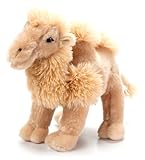
- Crafted with two signature humps, a fuzzy mane and perky ears, this Bactrian camel plush toy showcases the best of the wild.
- Camels can walk up to 30 miles a day, so this Bactrian camel animal plush is ready to bring adventures to all-day play.
- Admire the look and feel of this realistic stuffed animal camel Bactrian with a big smile, a long shaggy tail and a furry back.
- The soft and cuddly texture of this Bactrian camel animal plush is perfect as birthday gifts for boys and girls.
- Combining play with Earth-sustaining practices, The Petting Zoo is committed to providing little ones with cute and cuddly plush toys that are made from recycled water bottles.
The Gobi’s domestic-camel relationship with saxaul
A 2010 FAO DAD-IS account describes domestic Bactrian camels browsing saxaul and spreading its seeds in manure. Saxaul helps reduce wind erosion and retain moisture, so the story illustrates how domestic livestock can interact with Gobi vegetation. It is not evidence that a quantified ecosystem service has been measured for endangered wild camels, and it should not be used to claim that camel products automatically support wild-camel conservation. The historical account also reports more than 900,000 domestic camels in Mongolia in 1950 and 250,000 by 2002—figures about domestic herds at those dates, not wild populations or a current total. Read the account at FAO’s DAD-IS story.
What conservation is doing—and what still needs to happen
International protection
The wild camel has been listed in CMS Appendix I since 2002, and CMS identifies concerted conservation actions through its Central Asian Mammals Initiative. International listing can coordinate countries that share migratory species, but it does not by itself stop poaching or redesign a road. Implementation on the ground remains decisive.
Protected areas
CMS names the Lop Nur reserve in China and Great Gobi Section A in Mongolia as protected areas covering parts of the species’ range. “Parts” is important: protected areas may safeguard core habitat while leaving connecting routes exposed to roads, mining, livestock expansion or other disturbance. Planning should therefore link reserves and address the spaces between them.
Keeping corridors open
Conservation planners can use telemetry, GPS tracking, patrol records and local knowledge to identify movement routes, water points and conflict locations. Measures may include rerouting infrastructure, building appropriately designed crossings, controlling access near sensitive sites, managing fences and retaining quiet areas. Because the tracking sample is limited, monitoring should test whether a measure actually changes camel movement rather than assuming success from construction alone.
Reducing contact and direct mortality
Anti-poaching work, responsible livestock management and cooperation with herders can address immediate losses while reducing opportunities for hybridization. Measures need to be practical for communities living in or near the range; a rule that cannot be enforced or that removes essential local water access is unlikely to protect camels for long.
How to discuss or support wild-camel conservation responsibly
- Use the name Camelus ferus when you mean the endangered wild species, and label domestic animals as Camelus bactrianus.
- Treat population numbers as dated estimates with stated caveats, not as a live counter.
- Ask whether a proposed road, mine, fence or tourism project has assessed movement corridors and cumulative effects.
- Look for conservation programs that publish monitoring methods, local partners, enforcement results and treatment of domestic-camel contact.
- Do not imply that purchasing domestic camel milk, wool or other products directly finances wild-camel protection unless a program documents that connection.
- Share official information from CMS, IUCN and FAO accurately, preserving the distinction between camelid-wide livelihood statistics and wild-camel evidence.
The most useful public pressure is specific: protect connected habitat, reduce avoidable disturbance, enforce anti-poaching rules and involve the people who share the desert. Those actions address the conditions the wild camel actually needs rather than relying on its name or rarity as a slogan.
The bottom line
Wild Bactrian camels survive in only four isolated populations across China and Mongolia, and their future depends on more than counting animals inside reserves. Camelus ferus must be able to move between temporary water and forage, while conservation reduces poaching, habitat degradation, infrastructure barriers, disturbance and hybridization. Protecting that connected desert system is the central reason the species’ survival matters.
Quick Recap
Product prices and availability are accurate as of the date/time indicated and are subject to change. Any price and availability information displayed on Amazon at the time of purchase will apply.





Leave a Reply