
Some links on this page are affiliate links: if you buy through them we may earn a commission, at no extra cost to you.
Yes—most cats should have heartworm prevention throughout the year unless their veterinarian deliberately chooses a locally timed seasonal plan. The American Heartworm Society (AHS) recommends year-round prevention for cats because a missed dose can leave a gap in protection, indoor living does not eliminate mosquito exposure, and winter transmission can persist in some environments.
Heartworm risk is not identical in every location or month. Your veterinarian should weigh local mosquito activity, the product’s labeled dosing interval, your cat’s age and medical history, and any testing that is appropriate before deciding whether a seasonal schedule is reasonable.
As an Amazon Associate I earn from qualifying purchases.
Why year-round prevention is the default answer
Heartworms are spread by infected mosquitoes. A mosquito can enter a house, bite an indoor cat, and transmit the parasite; a cat does not need outdoor access for exposure. AHS educational material therefore treats indoor status as a risk-reduction measure, not proof that prevention is unnecessary.
The society’s prevention guidance identifies consistent, year-round dosing as the most dependable way to avoid a preventable lapse. Its 2018 update described year-round prevention as “the single most important step owners can take to reduce the risk of heartworms to their pets.” The AHS Think 12 Resource Center similarly presents year-round prevention as a foundation of its guidance.
Popular on Amazon
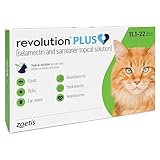
- 7-in-One Protection: Revolution Plus is a monthly topical that protects your cat against fleas, ticks, ear mites, roundworms, hookworms, and heartworm disease. Prevents tapeworms by killing fleas. Approved for cats and kittens eight weeks and older, weighing 2.8 lbs or more. It’s available with a prescription from your veterinarian.
- Vets #1 Choice for Cats¹: Revolution Plus is the most prescribed medicine for feline parasite protection with over 25 years of proven protection*.
- Protection Indoor & Outdoor Cats Need: Parasites are not “outdoor-only.” Any cat or kitten can regularly come in contact with harmful pests. Regardless of your cat’s lifestyle (indoor only, indoor/outdoor, outdoor only), Revolution Plus protects your cat from parasites that follow you home.
- Once a Month Treatment: One application a month protects your cat from the most common parasites.
- Easy-to-Apply: Applying Revolution Plus doesn’t require gloves. It's quick-drying, small-volume and applied topically on the back of your cat’s neck.
That recommendation does not mean mosquito activity is equal in every region all year. It means the consequences of guessing an “off-season,” forgetting a restart date, or overlooking an unusually warm period can outweigh the convenience of stopping medication. AHS has reported heartworms in all 50 U.S. states, although that geographic fact does not mean every state, city, or household has the same level of risk.
Can a cat ever use a seasonal schedule?
AHS feline guidance has described seasonal chemoprophylaxis as an option when it is timed to the estimated local start and end of transmission. This is a veterinarian-directed alternative, not a universal winter rule. The veterinarian must identify when mosquitoes are active locally and follow the exact timing required by the selected feline product.
What’s actually slowing this PC down?
Pick the symptom - the matching free tool is one click away.
The older feline guideline summary lists practical reasons many veterinarians prefer year-round use:
- It reduces the chance that an owner will forget the spring restart or the final fall dose.
- It maintains a consistent routine, which supports adherence.
- Some products provide activity against additional parasites, depending on their feline label.
- It avoids relying on a precise estimate of when local transmission begins and ends.
Guidelines change. The AHS has said its posted heartworm guidelines are living documents, and it announced updated feline guidelines in December 2024. The strongest general message remains year-round prevention; a seasonal plan should be an individualized decision made with a veterinarian who knows your area and your cat.
Year-round versus veterinarian-timed seasonal prevention
| Consideration | Year-round plan | Seasonal plan |
|---|---|---|
| Basic idea | Give the feline preventive on its labeled schedule in every month. | Give it only during the locally estimated transmission period. |
| Main advantage | Simple routine with fewer opportunities for a missed start, stop, or restart. | May be appropriate where a veterinarian can reliably define a limited transmission season. |
| Primary risk | Requires ongoing dosing and veterinary review when the cat’s health or product changes. | A late restart or an unexpectedly warm mosquito season can create an unprotected interval. |
| Who sets the dates | The veterinarian and product label still determine the interval. | The veterinarian sets dates using local mosquito patterns and the product label. |
| Indoor cats | Indoor living does not by itself remove the reason for prevention. | Indoor status alone is not enough to justify stopping medication. |
Why winter is not a guaranteed safe period
Heartworm transmission generally decreases during winter, but the AHS 2020 feline guideline text cautioned that risk may not reach zero. Urban heat-island microenvironments can remain warmer than surrounding areas, and some mosquitoes may overwinter. Those observations explain why “stop when it gets cold” is not a safe rule for every location.
The amount of residual winter risk depends on local conditions. A veterinarian may decide that a seasonal schedule is sensible in a particular area, but that decision requires a defined start and end point rather than a broad assumption that all mosquitoes disappear. If your household moves, the plan may need to change because transmission patterns differ by region.
What prevention medicine can and cannot do
AHS feline materials name monthly preventive options, including topical selamectin. The relevant category is a feline-labeled heartworm preventive, often from the macrocyclic-lactone class. The specific active ingredient, formulation, frequency, minimum age or weight, parasite coverage, and prescription requirements depend on the current feline label.
Also popular on Amazon

- Fast-acting, safe and easy treatment
- BRAVECTO Plus lasts nearly 2X longer than other monthly treatments
- Up to 2 months of flea & tick protection with just 1 dose!
- Easy to use non-spill, Twist’n’Use applicator. Do not give orally.
- Did you know.. indoor cats can get fleas and ticks too?!
Do not select a product solely because it is sold for dogs, because a friend uses it, or because a listing claims broad parasite protection. Some canine products contain ingredients that are unsafe for cats. A veterinarian or veterinary pharmacy should confirm that the formulation is approved for cats and fits your cat’s age, weight, health history, and other medicines.
Questions to ask before choosing a product
- Is the product labeled for cats, and what age and weight limits apply?
- What is the exact dosing interval, and what should you do after a late or missed dose?
- Which parasites does this formulation cover, and which does it not cover?
- Is a topical application suitable for this cat, or is another feline formulation preferable?
- Does the cat have a medical condition, medication, pregnancy status, or prior reaction that changes the choice?
- Does the veterinarian recommend baseline or follow-up testing before starting or continuing prevention?
Never start, stop, double, or substitute a preventive without veterinary instructions. If a dose is late, contact the prescribing practice for product-specific advice rather than improvising.
Do indoor cats need heartworm protection?
Indoor cats can still be bitten by mosquitoes that enter through doors, windows, garages, or screens. Because a single bite can be enough to transmit infection, “strictly indoors” lowers exposure but does not establish zero risk. AHS feline guidance specifically includes indoor cats in its risk discussion.
Risk is also affected by the building and neighborhood. Open windows without intact screens, balcony access, nearby standing water, and warm urban pockets can increase mosquito encounters. These factors are useful when discussing a schedule, but they do not replace the medication decision made with your veterinarian.
How to reduce mosquito exposure at home
Environmental measures are useful additions to preventive medication. AHS recommends keeping pets indoors during peak mosquito activity and eliminating standing water where mosquitoes breed. Empty or refresh water in plant saucers, buckets, toys, gutters, and other containers that collect rain.
These steps reduce the number of bites; they do not make medication unnecessary. AHS explicitly warns, “Don’t rely on repellents alone to prevent heartworm disease.” Do not apply human mosquito repellent to a cat, and do not use an insecticide or ectoparasiticide unless its feline safety and label directions have been verified. In higher-risk settings, a veterinarian may consider an additional mosquito-repellent or ectoparasite measure seasonally or year-round, but it remains supplementary.
What testing is useful for cats?
Testing is not a substitute for prevention, and there is no single testing schedule that fits every cat and every clinical situation. The AHS December 2024 feline update lists four reasons a veterinarian may screen a cat:
Quick wins for a faster PC:
Clear out junk files and repair common Windows errorsFree Scan →Scan for outdated or missing drivers - takes under a minuteDriver Scan →Also popular on Amazon

- Advantage Multi for Cats delivers 5-in-1 protection from fleas, ear mites, intestinal worms & heartworm disease
- Veterinarian-trusted formula delivers 30 days of protection in each dose
- Kills fleas through contact; pests don’t have to bite your cat to die
- Treats ear mite infestations
- Easy-to-apply topical treatment, no hard-to-swallow pills
- Diagnosing a symptomatic cat. Respiratory or other signs may prompt testing as part of a broader diagnostic work-up.
- Monitoring a heartworm-positive case. Testing can help the veterinarian follow a cat already believed to be infected.
- Establishing a baseline before preventive treatment. A pre-treatment result can provide useful context for later decisions.
- Assessing risk in a specific area. Local conditions may justify testing even when the cat’s routine is unchanged.
AHS Think 12 materials describe annual testing and year-round prevention as foundations of its public guidance. That broad educational message should not be turned into an unconditional testing rule for every feline patient. The appropriate test type, timing, and repeat interval depend on symptoms, prior prevention, exposure history, and the veterinarian’s current feline guideline.
When to call promptly
Contact a veterinarian promptly if a cat on prevention develops breathing difficulty, persistent cough, fainting, marked lethargy, repeated vomiting, or sudden weakness. These signs can have many causes, and they do not prove heartworm disease, but they warrant professional assessment rather than waiting for the next routine visit.
A practical decision process for your cat
- Confirm the cat’s exposure picture. Tell the veterinarian whether the cat is indoor-only, uses a screened porch, travels, or has recently moved.
- Identify the local transmission pattern. Ask when mosquitoes are typically active in your area and whether warm urban conditions extend that period.
- Review the cat’s health history. Include age, weight, chronic disease, pregnancy status, previous reactions, and every current medicine or supplement.
- Choose a feline-labeled preventive. Verify the active ingredient, formulation, dosing interval, parasite coverage, and instructions for a missed dose.
- Decide whether testing is indicated. Use the veterinarian’s patient-specific recommendation rather than applying a one-size-fits-all protocol.
- Build an adherence system. Put the dose on a calendar, use a reminder, and record the date and product so a move or change in clinic does not create confusion.
- Reassess after changes. A new home, new medication, illness, or product label update is a reason to review the plan.
Common mistakes and how to correct them
Stopping when temperatures fall
Why it fails: winter transmission decreases but may not reach zero, and the timing of mosquito activity varies.
Correction: ask the veterinarian for explicit stop and restart dates if a seasonal plan is being considered; otherwise continue the year-round schedule.
Assuming indoor means risk-free
Why it fails: mosquitoes can enter homes.
Correction: combine screens, reduced exposure during peak activity, removal of standing water, and the preventive plan recommended for the cat.
Using a dog product or a household insecticide
Why it fails: feline metabolism and approved labels differ, and some ingredients are dangerous to cats.
Correction: use only a product confirmed as feline-labeled by a veterinarian or pharmacist.
Also popular on Amazon

- 7-in-One Protection: Revolution Plus is a monthly topical that protects your cat against fleas, ticks, ear mites, roundworms, hookworms, and heartworm disease. Prevents tapeworms by killing fleas. Approved for cats and kittens eight weeks and older, weighing 2.8 lbs or more. It’s available with a prescription from your veterinarian.
- Vets #1 Choice for Cats¹: Revolution Plus is the most prescribed medicine for feline parasite protection with over 25 years of proven protection*.
- Protection Indoor & Outdoor Cats Need: Parasites are not “outdoor-only.” Any cat or kitten can regularly come in contact with harmful pests. Regardless of your cat’s lifestyle (indoor only, indoor/outdoor, outdoor only), Revolution Plus protects your cat from parasites that follow you home.
- Once a Month Treatment: One application a month protects your cat from the most common parasites.
- Easy-to-Apply: Applying Revolution Plus doesn’t require gloves. It's quick-drying, small-volume and applied topically on the back of your cat’s neck.
Relying on repellents alone
Why it fails: repellents may reduce bites but do not replace heartworm prevention.
The Tool Desk
Outbyte PC Repair FREERepair Windows errors before they cause bigger problemsFix Now →Outbyte Driver Updater FREEScan for outdated or missing drivers - takes under a minuteDriver Scan →Correction: treat mosquito control as an added layer, not the primary preventive measure.
Inventing a testing routine
Why it fails: symptoms, previous doses, regional risk, and test limitations affect the clinical decision.
Correction: ask what testing is useful for this cat now and when reassessment would change management.
What to take to the veterinary appointment
- The date and name of the last preventive dose, including any missed or late doses.
- A list of all medicines, supplements, flea or tick products, and household insecticides the cat may encounter.
- Recent travel or relocation dates and whether the cat has outdoor or screened-porch access.
- Any coughing, breathing changes, vomiting, fainting, appetite loss, or unusual tiredness.
- The cat’s current weight and any history of drug reactions or chronic illness.
With those details, the veterinarian can decide whether year-round prevention is appropriate as the default, whether a tightly defined seasonal plan is defensible, and whether testing or a different feline formulation is needed.
Do these 3 things before closing this tab:
1Scan for outdated or missing drivers - takes under a minute2Repair Windows errors before they cause bigger problems3Fix the driver behind crashes, sound loss and screen glitchesThe bottom line for cat owners
For most cats, year-round heartworm prevention is the safest and simplest approach endorsed by the AHS. Indoor living and winter weather can reduce exposure without eliminating it. Seasonal prevention can be considered only with a veterinarian who accounts for local transmission timing, the current feline product label, and the individual cat’s health and adherence needs. Medication remains the central protection; mosquito-control measures and testing support that plan but do not replace it.





Leave a Reply