
Zebra mussels are tiny, but their effects are not. These invasive freshwater bivalves can attach to native mussels and boats, clog water infrastructure, alter aquatic food webs, and spread invisibly in water left inside livewells, bilges, motors, aquariums, and other equipment. The practical defense is Clean, Drain, Dry—plus prompt reporting when a mussel is suspected.
Zebra mussels are tiny invasive freshwater mussels that can damage native wildlife, clog water infrastructure, foul boats, and spread between lakes and rivers in retained water. They are also an aquarium and water-garden concern: contaminated plants, decorations, moss balls, equipment, or water must never be released into another aquarium, pond, storm drain, or natural waterway.
As an Amazon Associate I earn from qualifying purchases.
The most important prevention rule is Clean, Drain, Dry. Remove visible organisms and debris, empty every compartment that can hold water, and dry equipment completely before it reaches another waterbody. If you find a suspected zebra mussel, do not move it. Photograph it, record where and when you found it, and contact your state natural-resources or invasive-species authority.
Do these 3 things before closing this tab:
1Scan for outdated or missing drivers - takes under a minute2Clear out junk files and repair common Windows errors3Fix the driver behind crashes, sound loss and screen glitchesWhat are zebra mussels?
The zebra mussel is Dreissena polymorpha, a small freshwater bivalve native to Eurasia. Adults commonly have dark and light bands, but shell color and pattern vary. They attach themselves to hard surfaces and to other mussels with strong byssal threads.
#1 Best Overall

- TRUSTED WATER PURIFICATION TABLETS - Aquatabs are the world's leading water purification tablets for drinking; the ultimate choice for portable water treatment & emergency drinking water; Removes 99.9999% Bacteria, 99.99% Viruses, & 99.9% Cysts (Giardia).
- FEEL SAFE OUT THERE - Experience rapid water purification with our 397mg tabs; purifies 4 gal in 30 mins; an essential emergency water filter & water purifier for camping; the top choice for water filtration camping gear.
- BE BETTER PREPARED - These lightweight water filter survival tablets are a must for your bugout bag; a key part of portable water filters survival kits; perfect for emergency preparedness & RV water treatment for drinking water.
- ENJOY GREAT TASTING WATER - Our water cleaning tablets have no bad taste, color, or odor, unlike iodine tablets. Get clean hydration without the awful iodine taste; pair with a water filter bag or water filter straw survival for sediment.
- HIKING WATER PURIFIER - Trust these emergency water purification tablets as your main hiking water filter; a vital water filter backpacking & water purifier backpacking tool; safer than untreated water. Expiration Date: February 2029
They are small, but colonies can become extremely dense. A single attached mussel may not look significant; thousands attached to a pipe, dock, boat component, or native mussel can create a serious problem.
How to identify one—and why identification can be difficult
A suspected zebra mussel may have:
- a small, roughly triangular or wedge-shaped shell;
- alternating dark and light bands or zigzag markings;
- a relatively firm, ridged shell; and
- threads that allow it to attach to rocks, docks, boats, equipment, or other mussels.
Do not assume every striped shell is a zebra mussel. Quagga mussels and some native mussels can look similar, and appearance can change with age and location. If a correct identification matters, take clear photographs from several angles, note the waterbody and date, and send the information to the relevant state agency or an established invasive-species reporting portal. Do not transport the specimen or move the equipment on which it was found.
Where did zebra mussels come from?
Zebra mussels are native to Eurasia. Federal and scientific sources identify the late-1980s introduction into the Great Lakes as most likely associated with ballast water discharged by an ocean-going vessel.
Outdated Drivers Are Slowing You Down
One free scan finds every outdated or missing driver and matches the right update for your exact hardware.Free scan · exact hardware matchPC Slower Than It Used to Be?
A free scan shows the junk files, broken settings and background clutter dragging Windows down - then fixes them in one click.Free scan · Windows 10 & 11That historical introduction is different from the pathways responsible for later spread. Once established, zebra mussels can move to new waters through human activity, including:
- Retained water. Microscopic, free-floating larvae called veligers can remain in bilges, livewells, bait containers, motors, ballast tanks, aquariums, and other water-holding devices.
- Attached adults. Adult mussels can hitchhike on boat hulls, trailers, anchors, docks, ropes, fishing gear, waders, and other hard surfaces.
- Aquaculture and hatchery operations. Contaminated water, fish shipments, boats, and equipment can redistribute mussels.
- Aquariums and water gardens. Live mussels or contaminated plants, decorations, moss balls, and accessories can be moved into household or outdoor water systems.
- Bait and fishing activity. Unwanted bait and bait water can carry organisms to another waterbody. Never release either into a different lake, river, pond, or stream.
This is why a boat that appears clean can still spread zebra mussels: visible adults are only one part of the risk. Invisible veligers may be transported in a compartment that was not drained.
Why are zebra mussels harmful?
They can damage boats and water infrastructure
Zebra mussels are powerful biofoulers. Dense colonies can narrow or block water-supply pipes and interfere with heat exchangers, condensers, cooling systems, firefighting equipment, and municipal or industrial water intakes. Maintenance may require inspections, cleaning, repairs, equipment downtime, and ongoing control measures.
On boats, attached mussels can increase drag and foul hulls, anchors, lines, and other equipment. Small mussels or shells can also enter water-intake and engine-cooling systems, contributing to restricted flow or overheating. The exact risk depends on the boat, motor, equipment design, and infestation.
Quick wins for a faster PC:
Repair Windows errors before they cause bigger problemsFix Now →Scan for outdated or missing drivers - takes under a minuteDriver Scan →Clear out junk files and repair common Windows errorsFree Scan →Rank #2

- One bottle of 50 Potable Aqua Water Purification Tablets and one bottle of 50 Potable Aqua PA Plus tables
- Water purification tablets make questionable water bacteriologically suitable to drink in emergency water situations
- These water purification tablets for drinking water leaves no iodine taste or color in your emergency water, when used correctly.
- Portable water treatment tablets are effective against bacteria and Giardia lamblia, for trusted emergency water purification
- Water treatment tablets offer emergency water purification for hiking, travel, and natural disasters, and ideal to keep with camping accessories
They can harm native mussels
Native unionid mussels are especially vulnerable. Zebra mussels may attach directly to their shells, sometimes in large numbers. This can restrict a native mussel’s ability to open its valves, interfere with feeding and respiration, compete for food, and bury the animal under waste and additional mussel growth.
They alter aquatic food webs
Zebra mussels filter suspended material from the water. Their feeding can change phytoplankton abundance, water clarity, nutrient movement, and the way energy is distributed through an aquatic food web. These effects are not identical in every lake or river; depth, food supply, habitat, native species, and community structure all matter.
It is therefore too broad to say that zebra mussels automatically cause every fish population to collapse. Some food-web predictions are complex and not uniformly conclusive. The better-supported point is that zebra mussels can substantially change ecological conditions, with consequences that vary among waterbodies.
They create local economic and recreational costs
Costs can include prevention programs, watercraft inspections, cleaning and decontamination, infrastructure maintenance, marina and facility downtime, and damage to recreation or tourism. The burden is highly local: a municipal intake, power facility, marina, lake association, aquarium owner, and individual boater face different risks and expenses.
The Tool Desk
Outbyte Driver Updater FREEFix the driver behind crashes, sound loss and screen glitchesFind Drivers →Outbyte PC Repair FREERepair Windows errors before they cause bigger problemsFix Now →Clean, Drain, Dry: the practical prevention checklist
Use this checklist whenever a boat, trailer, fishing setup, aquarium item, or other water-related equipment moves between waterbodies. Follow the stricter requirement if a state, lake, marina, or inspection station has additional rules.
1. Clean
Before leaving the access point:
- Inspect the hull, trailer, motor, propeller, anchor, ropes, dock lines, fishing gear, waders, and other equipment.
- Remove visible plants, animals, mud, and debris.
- Check crevices, bunks, rollers, transom areas, livewell fittings, and other places where organisms can remain hidden.
- Rinse equipment when practical, using high pressure or hot water only in a manner allowed by local guidance and safe for the equipment.
- Clean aquarium nets, filters, decorations, plants, transport containers, and other items before they are used with another aquarium or water feature.
Cleaning removes organisms and debris; it does not necessarily kill every organism. A quick cold-water rinse should not be treated as a reliable kill step.
2. Drain
Empty all water before leaving the waterbody:
- bilges;
- livewells and bait containers;
- boat motors and cooling systems, as directed by the manufacturer;
- ballast tanks;
- hoses, pumps, and other water-containing equipment; and
- aquarium or transport containers.
Drain water at the access point or another location permitted by local rules—not onto the ground near a different stream, lake, or storm drain. Do not transport live bait or bait water unless the applicable rules expressly allow it.
Rank #3

- DRINKING WATER, ANYTIME, ANYWHERE - Aquatabs are the world's most popular tablet and the ultimate choice for portable water treatment tablets. Removes 99.9999% of Bacteria, 99.99% of Viruses, and 99.9% of Cysts (Giardia).
- FEEL SAFE OUT THERE - Aquatabs are an excellent solution for purifying water while backpacking, camping, hiking, traveling, or in emergency survival situations. Simply add one 49mg Aquatabs tablet into .75-2 liters of water and wait 30 minutes.
- BE BETTER PREPARED - These drinking water purification tablets are small and lightweight making them easy to store in a disaster kit or bugout bag. They are individually sealed in foil strips designed to ensure longevity.
- ENJOY GREAT TASTING WATER EVERY TIME - Aquatabs-treated water has no unpleasant taste, color, or odor unlike iodine-based products. Pair Aquatabs water purifying tablets with a water filtration system to treat water from sediment heavy sources.
- TAKE ON THE WILDERNESS - Backpackers and campers who drink untreated backcountry water are at a higher risk of ingesting parasites and bacteria. When hiking outdoors, it's best to come prepared. Trust in Aquatabs for all of your safe water needs! Expiration Date: March 2027
3. Dry
Dry equipment completely before using it in another waterbody. U.S. Fish and Wildlife Service guidance has advised drying for at least five days, or wiping equipment with a towel before reuse; the appropriate interval can vary with local agency rules, weather, temperature, humidity, and the equipment itself.
Recommended Free Tools
When a state or inspection station specifies a longer drying period or a particular decontamination method, follow that requirement. If equipment cannot be thoroughly dried, obtain local guidance or use an authorized decontamination station.
Does hot water kill zebra mussels?
Hot-water decontamination can be effective, but it is not a simple do-it-yourself instruction for every boat or component. Minnesota Department of Natural Resources guidance gives examples of 140°F water contacting each spot for 10 seconds or 120°F water for two minutes to kill attached zebra mussels. These are operational examples, not universal permission to apply those temperatures to every item.
Before using hot water:
- Use an authorized decontamination station when one is available.
- Follow the local agency’s required temperature, pressure, and contact time.
- Check the boat and equipment manufacturer’s temperature limits.
- Protect skin from burns and keep hot water away from unsafe electrical connections.
- Consider whether steam, pressure, or heat could damage seals, electronics, paint, plumbing, or other components.
Do not improvise with a household pressure washer, and do not assume that briefly spraying one visible mussel solves the problem. Water must reach the relevant surfaces for the required contact time.
Why bleach, vinegar, and other chemicals are not a general solution
Do not pour bleach, vinegar, pesticides, or other chemicals into a lake, river, pond, storm drain, aquarium, or water system to control zebra mussels. Chemical treatments can harm fish, native mussels, aquatic plants, people, pets, and infrastructure. They may also be illegal or ineffective in the particular situation.
What’s actually slowing this PC down?
Pick the symptom - the matching free tool is one click away.
For a boat, aquarium item, or facility, use a chemical treatment only if an authoritative agency or qualified professional specifically approves it for that exact item and circumstance. “Natural” does not automatically mean safe, and a treatment that is acceptable for one material may damage another.
What to do if you find a suspected zebra mussel
- Stop the movement. Do not carry the mussel, water, plant, aquarium material, boat, or gear to another waterbody.
- Photograph it. Take close images and include an object for scale if possible. Photograph the attachment site and surrounding material without spreading it.
- Record details. Note the waterbody, access point or approximate location, date, and the equipment or animal on which it was found.
- Contain the item. Keep potentially contaminated equipment isolated from other aquariums, ponds, boats, and waterways while seeking instructions.
- Contact the appropriate authority. Report the suspected finding to your state natural-resources agency or established invasive-species reporting channel. Ask for current cleaning, disposal, and decontamination instructions.
- Follow local rules. Do not release the specimen or contaminated water, and do not discard it in a way that could return it to a waterway.
Aquariums, moss balls, and water gardens
The moss-ball incidents demonstrated that zebra mussel prevention is not only a boating issue. Aquarium owners can unintentionally move organisms through live plants, moss balls, gravel, decorations, filters, nets, buckets, and water.
Rank #4
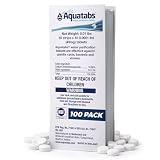
- DRINKING WATER, ANYTIME, ANYWHERE - Aquatabs are the world's most popular tablet and the ultimate choice for portable water treatment tablets. Removes 99.9999% of Bacteria, 99.99% of Viruses, and 99.9% of Cysts (Giardia).
- FEEL SAFE OUT THERE - Aquatabs are an excellent solution for purifying water while backpacking, camping, hiking, traveling, or in emergency survival situations. Simply add one 49mg Aquatabs tablet into .75-2 liters of water and wait 30 minutes.
- BE BETTER PREPARED - These drinking water purification tablets are small and lightweight making them easy to store in a disaster kit or bugout bag. They are individually sealed in foil strips designed to ensure longevity.
- ENJOY GREAT TASTING WATER EVERY TIME - Aquatabs-treated water has no unpleasant taste, color, or odor unlike iodine-based products. Pair Aquatabs water purifying tablets with a water filtration system to treat water from sediment heavy sources.
- TAKE ON THE WILDERNESS - Backpackers and campers who drink untreated backcountry water are at a higher risk of ingesting parasites and bacteria. When hiking outdoors, it's best to come prepared. Trust in Aquatabs for all of your safe water needs! Expiration Date: April 2027
If you suspect that a moss ball or aquarium material contains live mussels:
- do not put it in another aquarium, pond, water garden, or outdoor container;
- do not pour aquarium water into a storm drain or natural waterbody;
- keep the material contained and separate from other aquatic equipment;
- contact the relevant state invasive-species authority for current disposal instructions; and
- follow the agency’s directions for the specific material, including any approved destroy, dispose, drain, freezing, boiling, or chemical procedure.
Disposal guidance can change by jurisdiction and by item. Do not treat one procedure as universally safe for every aquarium, plant, moss ball, filter, or household plumbing system.
Free tools Windows power users keep installed
One-click scans. No signup required.
Are zebra mussels illegal to transport?
In the United States, zebra mussels are listed as injurious wildlife under the federal Lacey Act. Federal rules regulate importation and specified forms of transport, with permits limited to authorized purposes. States may impose additional requirements involving watercraft inspections, drain plugs, water transport, possession, reporting, bait, or decontamination.
There is no single state rule that applies everywhere. Before traveling with a boat, aquarium material, bait, or aquatic equipment, check the rules for both the state you are leaving and the state you are entering. A local inspection station or natural-resources agency is the best source for current requirements.
Independent reader supportYour contribution helps us test, update, and keep practical guides available for everyone.Common zebra-mussel misconceptions
- “They are harmless because they are small.”
- Small mussels can form dense colonies that foul pipes, cooling systems, boats, docks, and native mussels.
- “I inspected the boat, so it is safe.”
- A visible inspection may miss veligers and water retained in bilges, livewells, motors, bait containers, and ballast systems.
- “A short rinse kills everything.”
- Cleaning removes organisms. Killing depends on factors such as temperature, contact time, pressure, and the item being treated.
- “Every striped mussel is a zebra mussel.”
- Quagga mussels and native species can look similar. Photograph and report a suspected specimen rather than moving it.
- “Prevention is pointless once a lake is infested.”
- Prevention can still reduce spread to uninfested waters and limit movement between access points, facilities, and connected equipment.
- “A chemical treatment is an easy home remedy.”
- Unapproved chemicals can harm aquatic life, pets, people, and equipment. Site-specific authorization and technical guidance are essential.
For readers who want technical depth
Most recreational boaters do not need a specialist book to follow Clean, Drain, Dry. For educators, researchers, water-resource managers, advanced boaters, and readers who want deeper coverage of biology, distribution, ecological effects, policy, management, and mitigation, Quagga and Zebra Mussel Biology, Impacts, and Control, Second Edition is a relevant technical reference. It is an optional reference—not required prevention equipment.
Availability and retailer listings can change, so verify the current edition and seller before purchasing.
Sources and further reading
This article is based on guidance and species information from the U.S. Fish and Wildlife Service, U.S. Geological Survey, National Invasive Species Information Center, and Minnesota Department of Natural Resources, including material on Clean, Drain, Dry, zebra- and quagga-mussel distribution, ecological and infrastructure impacts, aquaculture pathways, aquarium and moss-ball incidents, federal injurious-wildlife rules, and hot-water decontamination.
Best Value

- TWO BOTTLES INCLUDED: Includes two bottles, each with 50 Potable Aqua Water Purification Tablets, offering an effective solution for emergency water treatment in camping, hiking, and natural disasters.
- EFFECTIVE WATER PURIFICATION: These water purifier tablets are perfect for camping, hiking, travel, and emergency preparedness; they offer a reliable way to purify water, ensuring safe hydration in any circumstance
- MAKES SOURCES SAFE TO DRINK: Water treatment tablets make water bacteriologically suitable to drink, even in challenging or emergency water situations, ensuring safe hydration when you need it most
- PROTECTION AGAINST HARMFUL ORGANISMS: Our water treatment tablets are effective against Giardia lamblia, providing trusted water purification when used as directed; offers essential protection against harmful pathogens
- VERSATILE EMERGENCY USE: Ideal for hiking, camping, international travel, and disaster preparedness, these portable water treatment tablets provide emergency water purification for any situation
Frequently Asked Questions
What are zebra mussels?
Zebra mussels are small invasive freshwater bivalves. They can attach to boats, docks, equipment, pipes, and native mussels, while microscopic larvae can travel in retained water.
Can I identify a zebra mussel by its stripes alone?
No. Striped shells can also belong to quagga mussels or native species. Photograph the specimen, record the location and date, and contact the relevant state natural-resources or invasive-species authority.
How do you prevent zebra-mussel spread?
Clean visible plants, animals, mud, and debris; drain bilges, livewells, motors, bait containers, ballast tanks, and other water-holding equipment; then dry everything completely before using it elsewhere. Follow stricter local requirements when applicable.
What should I do if I find a suspected zebra mussel in an aquarium or on a boat?
Do not release it or its water. Keep it contained, photograph it, note where and when it was found, and contact your state invasive-species or natural-resources agency for current disposal and decontamination instructions.
Can I kill zebra mussels with bleach or vinegar?
Do not use bleach, vinegar, or another chemical in natural water or an aquarium unless an authoritative agency specifically approves that treatment for the exact item and situation. Improper chemicals can harm aquatic life, people, pets, and equipment.
The Bottom Line
Preventing zebra-mussel spread is straightforward but requires more than looking for visible shells: clean every surface, drain every water-holding compartment, dry equipment completely, and follow local inspection and decontamination rules. If you find a suspected mussel, contain it, photograph it, and report it without moving it to another waterbody.
Quick Recap
Product prices and availability are accurate as of the date/time indicated and are subject to change. Any price and availability information displayed on Amazon at the time of purchase will apply.





Leave a Reply