Free tools Windows power users keep installed
One-click scans. No signup required.
USDA confirmed H5N1 highly pathogenic avian influenza in four alpacas at a backyard farm in Jerome County, Idaho, in May 2024—the first confirmed HPAI detection in alpacas. The alpacas had close contact with infected poultry. Sequencing linked the virus to the B3.13 genotype found in the farm’s poultry and U.S. dairy cattle, but the finding did not establish alpaca-to-alpaca transmission or a new risk to the general public.
USDA confirmed H5N1 highly pathogenic avian influenza (HPAI) in four alpacas at a backyard farm in Jerome County, Idaho, in May 2024. It was the first confirmed HPAI detection in alpacas. The animals had been kept in close contact with poultry that were infected with H5N1, making spillover from birds or a contaminated farm environment the leading explanation—not evidence that alpacas had begun spreading the virus among themselves.
As an Amazon Associate I earn from qualifying purchases.
The finding expanded the list of mammalian species known to have been infected during the ongoing H5N1 outbreak. But it did not, by itself, show alpaca-to-alpaca transmission, spread from the farm, transmission to people, or a change in the general public’s risk.
The Tool Desk
Outbyte Driver Updater FREEFix the driver behind crashes, sound loss and screen glitchesFind Drivers →Outbyte PC Repair FREEClear out junk files and repair common Windows errorsFree Scan →What happened at the Idaho farm?
The affected site was a mixed-species backyard farm in Jerome County. HPAI-infected poultry at the premises were depopulated in May 2024. Four of the farm’s 18 alpacas subsequently tested positive for H5N1, according to USDA’s Animal and Plant Health Inspection Service (APHIS).
#1 Best Overall

- For All Farm & Show Animals: Hoof and Coat non-caustic dry powder draws, absorbs, and eliminates the breeding grounds of foot rot, helps to heal and prevent topical skin and coat problems, and acts as an all-natural powered "band-aid" for wounds.
- Easy to Use: Simply dust on affected area 1-2 times daily. For foot rot and skin/coat issues the powder draws, absorbs, and eliminates breeding grounds. For wound care, it instantly absorbs wound discharge and creates a breathable and protective scab.
- Natural & Non-Toxic: Made from all-natural ingredients, including high purity air-floated kaolin clay. Goat Hoof & Coat Powder does not contain harsh additives and is non-caustic, has no smell, and will not stain clothes or barn facilities.
- Maintenance Use: Regular weekly dustings will aid in prevention of foot rot by keeping the cause at bay and will help to stop reccurent topical skin and coat problems. Recommended for preventative care and is safe for all barn and show animals.
- Made in the USA: Trusted in hundreds of stores across the country, all Four Oaks Farm Products are made in Simi Valley, CA. We stand firmly behind our products, and our customer service team is ready to exceed your expectations.
USDA’s National Veterinary Services Laboratories (NVSL) completed PCR confirmation on May 16, 2024. The finding became public on May 28–29, when APHIS and contemporaneous reporting described it as the first known HPAI detection in alpacas.
No alpaca deaths were reported in the contemporaneous summaries. However, the public reports do not provide enough clinical information to say whether the four alpacas had no symptoms, mild illness, severe illness, or different outcomes. A positive test alone cannot establish how sick an animal was or how infectious it may have been.
Why did the alpacas test positive?
The most important detail is the setting: the alpacas had close contact with infected poultry. APHIS said the detection was not unexpected given the high amount of virus in the environment and the intermingling of livestock species.
Outdated Drivers Are Slowing You Down
One free scan finds every outdated or missing driver and matches the right update for your exact hardware.Free scan · exact hardware matchPC Slower Than It Used to Be?
A free scan shows the junk files, broken settings and background clutter dragging Windows down - then fixes them in one click.Free scan · Windows 10 & 11Animals can encounter H5N1 through infected birds, other infected animals, contaminated surfaces, fluids, feed, equipment, or areas where infected animals have been housed. In this case, the available evidence supports an environmental or interspecies spillover explanation.
That is different from proving that alpacas were efficiently transmitting the virus to one another. The available public information does not establish alpaca-to-alpaca transmission, spread beyond the premises, or a role for alpacas in maintaining the wider outbreak.
What did sequencing show?
APHIS later reported that additional gene sequencing identified the viral genome in the alpacas as the B3.13 genotype. That sequence was the same broad genotype circulating in U.S. dairy cattle and was consistent with the sequence found in poultry on the Idaho premises.
Rank #2

- Humanized Design: This goat syringe adopts a push handle design with comfortable grip and adjustable switch that allows you to use it with one hand easily and effortlessly without slipping, and the connection between the rod and the handle will not easy to break; the syringe body also has accurate scale design to control the amount of milk and liquid medicine and food; the mouthpiece is in the shape of ball with round head that won't scratch animals
- Reliable, Robust and Reusable: This syringe is made of strong plastic with simple structure which ensures a long service life, the nozzles are made of high quality metal material which is corrosion-resistant, rust-resistant and reusable
- Multiple Uses: This reusable animal syringe is suitable for most animals such as sheep, dogs, cats, cows, goats and other pets, one of the necessary tools for farms or ranches, zoos
- Easy to Clean: Syringes and nozzles can be easily disassembled for cleaning or maintenance
- Package Included: You will get 2 x 20ml syringes with o-ring and 4 matching removable drenching nozzles, the capacity can be set according to your needs, convenient for your application
This genetic link strengthens the conclusion that the alpacas encountered the H5N1 virus circulating among animals at the farm and in the wider 2024 poultry and dairy-cattle outbreaks. It does not demonstrate that alpacas independently acquired or sustained a separate chain of transmission.
Why is this called a “world first”?
APHIS described the event as the first confirmed HPAI detection in alpacas. Alpacas are camelids, so the finding documented infection in another domesticated mammalian species during an outbreak that had already affected many types of birds and mammals.
The careful wording matters. “First confirmed HPAI detection in alpacas” is more accurate than saying it was the first influenza infection ever observed in an alpaca. The official finding concerns highly pathogenic avian influenza, specifically the H5N1 virus detected at the Idaho premises.
Does “highly pathogenic” mean the alpacas became severely ill?
No. HPAI is a veterinary and regulatory designation describing the virus’s potential to cause severe disease in poultry. It does not mean that every infected mammal will develop severe disease.
Clinical signs and pathology in alpacas infected with currently circulating HPAI viruses are not well documented in the public scientific literature. It would therefore be misleading to characterize all four Idaho alpacas as asymptomatic, mildly ill, severely ill, or recovered without a primary veterinary record supporting that description.
Recommended Free Tools
How does this fit into the larger H5N1 outbreak?
By 2024, H5N1 had been detected in a broad range of wild and domesticated mammals, including foxes, bears, seals, cats, dogs, mink, goats, and dairy cattle. Mammals may become infected after eating infected birds or other animals or after exposure to a contaminated environment.
Rank #3
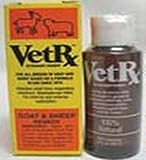
- 034922 Vetrx Goat & Sheep Remedy, 2 oz
- For all breeds of goat and sheep
- Made in the USA
- Item Package Weight: 0.16
The alpaca detection is therefore best understood as another spillover event in a multispecies, or One Health, outbreak. It shows that the circulating virus can infect an additional mammalian host under conditions of substantial exposure. It does not show that alpacas are a major reservoir or that they have become a new driver of the outbreak.
What does this mean for people?
CDC’s current assessment, dated March 6, 2026, remains that the risk to the general U.S. population is low while H5N1 continues circulating in wild birds and causing outbreaks in poultry and U.S. dairy cattle.
The Idaho alpaca finding did not, by itself, change that assessment. It also was not evidence of sustained human-to-human transmission.
The risk is higher for people who have close or prolonged, unprotected contact with infected animals, animal byproducts, contaminated surfaces, or contaminated fluids. People in those situations can develop illness ranging from conjunctivitis and upper-respiratory symptoms to severe disease, including pneumonia and multi-organ failure.
For pet owners, the main lesson is not that alpacas—or ordinary household pets—have suddenly become a general public threat. It is that contact with infected animals and contaminated environments is the key exposure pathway. Farm workers, veterinarians, animal-care personnel, and others handling potentially infected livestock or poultry should follow public-health and veterinary biosecurity guidance rather than relying on the animal species alone to judge risk.
What remains unknown?
- The public summaries do not establish whether transmission occurred between the alpacas.
- They do not show that the alpacas spread H5N1 to people, pets, wildlife, or other livestock.
- They do not establish the alpacas’ individual symptoms, viral loads, infectious periods, or long-term outcomes.
- They do not establish that alpacas played a meaningful role in the broader U.S. outbreak.
- They do not confirm that the alpacas were culled. The available reports specifically describe depopulation of the infected poultry, not the outcome for the alpacas.
Those limits are important because detecting viral material in a new species is not the same as demonstrating sustained transmission in that species.
Rank #4

- These salt blocks are 100% natural and were mined in the Himalayan Mountains
- This rose colored rock salt is renowned for its high mineral content of iron, potassium and magnesium which are vital for equine health
- The high density of these pure Himalayan salt licks resist breakage and biting and last longer in weather elements
- The purest form of salt available and is safe to be left out for horses to access as desired. Rope (included) can be adjusted to the right height for your horse
- Salt blocks help reduce boredom while giving your horse a nourishing electrolyte replenishment
Timeline of the Idaho alpaca detection
| Date | What happened |
|---|---|
| May 2024 | HPAI-affected poultry at the Jerome County premises were depopulated. |
| May 16, 2024 | USDA’s National Veterinary Services Laboratories completed PCR confirmation of H5N1 in alpaca samples. |
| May 28–29, 2024 | The finding was reported publicly as the first known HPAI detection in alpacas. |
| July 30, 2025 | APHIS’s reference page reiterated the world-first finding and noted that additional gene sequencing was performed under its policy for detections in new species. |
Key terms
- H5N1
- A subtype of influenza A virus commonly called bird flu in this context.
- HPAI
- Highly pathogenic avian influenza, a veterinary designation associated with severe disease potential in poultry. The label does not predict the severity of illness in every infected mammal.
- NVSL
- USDA’s National Veterinary Services Laboratories, which confirmed the alpaca samples.
- B3.13
- A genotype associated with the H5N1 virus circulating in U.S. dairy cattle during the 2024 outbreak and identified in the Idaho alpacas and poultry on the premises.
- Spillover
- Infection of a species that is not usually considered the virus’s primary host.
The defensible bottom line is straightforward: USDA confirmed H5N1 in four of 18 alpacas at a mixed-species Idaho farm in May 2024, making it the first confirmed HPAI detection in alpacas. Sequencing linked the virus to B3.13 H5N1 found in the farm’s poultry and in U.S. dairy cattle. The event documented an important mammalian spillover, but it did not by itself prove sustained alpaca transmission or raise the general public’s risk above CDC’s low assessment.
Quick wins for a faster PC:
Scan for outdated or missing drivers - takes under a minuteDriver Scan →Repair Windows errors before they cause bigger problemsFix Now →Frequently Asked Questions
How many alpacas in Idaho tested positive for H5N1?
USDA confirmed H5N1 in four of 18 alpacas at a backyard farm in Jerome County, Idaho, in May 2024. The alpacas had close contact with infected poultry, and the virus was linked by sequencing to the B3.13 genotype circulating in poultry and U.S. dairy cattle.
Did the Idaho alpacas spread H5N1 to one another?
No. The detection showed that alpacas can become infected under conditions of close contact with infected poultry or a contaminated environment. It did not establish efficient alpaca-to-alpaca transmission or show that alpacas are maintaining the wider outbreak.
Does the alpaca finding change the risk to people?
CDC’s assessment remains that the risk to the general U.S. population is low. People who have close or prolonged, unprotected contact with infected animals, contaminated surfaces, fluids, or animal byproducts face higher risk.
The Bottom Line
Bottom line: Four alpacas at a Jerome County, Idaho, farm tested positive for H5N1 in May 2024 after close contact with infected poultry. USDA called it the first confirmed HPAI detection in alpacas. The virus matched the B3.13 genotype found in the farm’s poultry and U.S. dairy cattle, but the finding did not show alpaca-to-alpaca spread or change CDC’s low risk assessment for the general public.
Do these 3 things before closing this tab:
1Fix the driver behind crashes, sound loss and screen glitches2Clear out junk files and repair common Windows errors3Scan for outdated or missing drivers - takes under a minuteQuick Recap
Product prices and availability are accurate as of the date/time indicated and are subject to change. Any price and availability information displayed on Amazon at the time of purchase will apply.




