Yes—but only some exceptional dogs, and only in a limited sense. A Science study published on January 8, 2026 found that seven of ten Gifted Word Learner dogs learned the names of unfamiliar toys after watching their people discuss the toys with someone else. They were not directly addressed during the labeling conversation.
The finding is best understood as evidence that some rare dogs can form word-object associations from overheard social interaction—not as proof that dogs generally understand human language.
As an Amazon Associate I earn from qualifying purchases.
What the study found
Some dogs can learn the names of unfamiliar toys without being directly addressed. In a study published in Science on January 8, 2026, seven of ten unusually gifted dogs learned new toy-name associations after watching their people talk about the toys with someone else.
Recommended Free Tools
The result is impressive, but it is also narrow. These were not ordinary pet dogs selected at random. They belonged to a rare group known as Gifted Word Learner dogs, or GWL dogs—animals that spontaneously learn unusually large numbers of object names, usually during play. The experiment does not show that dogs generally understand human language, follow arbitrary conversations, or learn words as human children do.
#1 Best Overall

- Supports Positive Reinforcement: This dog training clicker makes click-and-reward training easy and punishment-free - perfect for shaping good behavior in dogs, puppies, and even cats
- Consistent Clicks Every Time: The reliable single-button dog clicker delivers a clear, distinct noise pets recognize -ideal for obedience training, puppy training, and everyday communication
- Durable and Portable: Made from durable plastic, each of our dog training and behavior aids also comes with a coil bracelet that wraps around your wrist for on-the-go training fun
- Add Style to Training: Fun, colorful designs let you show personality while using your dog training clicker - introducing excitement and enrichment to your pet training sessions
- 5 Eye-Catching Designs: Show off your personality with 5 fun clicker trainer designs: choose from the blue Doggy, the green Bone, the tasty Hot Dog, the game-ready Gamepad, or a gridiron Football!
The most accurate takeaway is this: some exceptional dogs can use an overheard social interaction to connect a spoken label with a particular object.
How the dogs learned the names
The researchers tested ten GWL dogs with two unfamiliar toys. Each toy received only eight minutes of total label exposure, spread across short sessions on four nonconsecutive days.
The sessions combined several elements:
- A short period in which people used the toy’s name in sentences.
- About three minutes of play without repeatedly saying the label.
- Up to 20 minutes of free exploration.
The dogs experienced the toys under two different conditions.
Outdated Drivers Are Slowing You Down
One free scan finds every outdated or missing driver and matches the right update for your exact hardware.Free scan · exact hardware matchPC Slower Than It Used to Be?
A free scan shows the junk files, broken settings and background clutter dragging Windows down - then fixes them in one click.Free scan · Windows 10 & 11| Condition | What the dog saw |
|---|---|
| Directly addressed | The owner interacted with the dog and named the toys while engaging with it. |
| Overheard | The dog watched its primary caretaker talk with another family member about the toys. The people passed the toys, used their names in sentences, and shifted their gaze between the toy and each other—but did not look at or communicate with the dog during the labeling phase. |
On day 12, the dogs were asked to retrieve each named toy from a group containing the two unfamiliar toys and nine familiar ones. This setup allowed the researchers to test whether the dogs had formed the associations earlier rather than simply copying a person’s gesture or learning through repeated attempts during the test.
Seven dogs learned in both situations
At the individual level, seven of the ten GWL dogs performed significantly above chance in both the directly addressed and overheard conditions. As a group, the dogs performed above the study’s conservative 50% chance level in both conditions, and there was no significant difference between being directly addressed and merely overhearing the conversation.
The first retrieval trial is especially important. Before a dog has had repeated opportunities to guess, its first choice gives a cleaner indication of what it learned before testing. First-trial accuracy was reported as:
- 80% in the directly addressed condition
- 100% in the overheard condition
Those results support the conclusion that the dogs had already formed the word-object mappings before entering the retrieval test. They were not simply improving because the experimenter kept presenting the same choices.
The overheard condition was not a test of a dog listening to a conversation with no useful context. The toys were visible, people handled them, the labels were repeated in simple sentences, and the people directed their attention toward the objects and one another. The dogs had access to several social and attentional clues, even though nobody was speaking to them directly.
Ordinary Border Collies did not show the same ability
The comparison group is crucial. The researchers also tested ten typical Border Collies that did not have a pre-existing vocabulary of object labels under the overhearing procedure.
Rank #2

- New communication tool about you and your puppy.
- Pet Dog Training Clickers for Puppy, Cat, Potty, Bird, Horse, Pet, Trainer Training Tools, Behavior Aids
- Just press to mark desired behavior, then reward for faster learning.
- The spring wrist length : 16cm/6.3inches and can strength to 25cm/9.84inches.
- Package include : Black + Blue,each color 1 pcs.
Six of those dogs appeared to choose the new toys more often than a very low 9% chance level when all eleven toys were considered. That number might sound like evidence that they had learned the names. However, their errors revealed a major problem: they overwhelmingly chose the other unfamiliar toy.
When the analysis used the more meaningful 50% comparison between the two novel toys, none of the six dogs remained above chance. The likely explanation is a novelty preference. The dogs noticed that the new toys were interesting, but they did not reliably connect each spoken label with the correct individual toy.
This is why the result should not be reported as proof that Border Collies—or dogs generally—learn toy names by listening to household conversations. The finding concerns a rare GWL phenotype, not the average companion dog.
What is a Gifted Word Learner dog?
GWL dogs are unusual animals that acquire many object labels quickly and often without an owner deliberately setting out to teach them. Their learning commonly becomes apparent during natural play: a dog repeatedly hears a toy name and begins retrieving the correct object from among several alternatives.
Earlier research found exceptional object-label learning in individual dogs, including Border Collies capable of retrieving toys by name and showing evidence of fast mapping—forming a new word-object association after limited exposure. A 2023 citizen-science study involving 41 GWL dogs identified recurring characteristics such as:
- Rapid acquisition of new object names
- Large receptive vocabularies for toys
- Spontaneous learning during play rather than only after deliberate training
That pattern suggests GWL dogs are not simply typical dogs whose owners happen to train more intensively. They appear to have an unusual combination of attention, motivation, memory, and object-label learning ability. Researchers still do not know whether this reflects inherited traits, early experience, individual differences, or some combination of factors.
Free tools Windows power users keep installed
One-click scans. No signup required.
Dogs can also learn when the word and object are separated
A follow-up experiment examined whether GWL dogs needed to see a toy at the exact moment they heard its name. Eight GWL dogs first saw and interacted with a new toy. The owner then placed it inside a bucket. Once the toy was hidden, the owner used the toy’s label in sentences while alternating gaze between the bucket and the dog.
The researchers used false-bottom buckets to reduce the possibility that the dogs were locating the toy through odor. The animals later had to retrieve the named objects.
Five of the eight dogs performed significantly above chance. Their first-trial accuracy was 81%, again suggesting that the associations were established before the retrieval test rather than learned through repeated guessing.
Rank #3

- EFFECTIVE TRAINING TOOL: Dog clicker produces a clear, consistent clicking sound that helps reinforce positive behaviors and commands during training sessions
- EASY BUTTON OPERATION: Simple press-button design allows for quick, one-handed operation making it convenient for trainers of all experience levels
- DURABLE CONSTRUCTION: Strong and long-lasting build ensures reliable performance through countless training sessions and daily use
- COMPLETE SET: Includes 2 pink dog clickers so you can keep one as a backup or use multiple clickers for training different pets simultaneously
- LIGHTWEIGHT AND PORTABLE: these compact clickers easily fit in your pocket or attach to a keychain for training on-the-go
When the dogs were tested again two weeks later, their performance did not significantly decline. That result suggests that at least some of the new word-object mappings were retained over that interval. It does not establish how long every association would last, or whether the dogs would remember the names without later exposure.
What’s actually slowing this PC down?
Pick the symptom - the matching free tool is one click away.
The study does not identify one definitive explanation for this delayed learning. Several factors may have contributed:
- Joint attention: the dog could track the person’s attention toward the bucket and object.
- Owner gaze: the person’s eye movements may have helped indicate which object was relevant.
- Object salience: the toy itself may have been especially interesting or distinctive.
- Motivation: GWL dogs are unusually motivated by object retrieval.
- Previous experience: these dogs already had substantial experience connecting spoken labels with objects.
The result extends the original finding beyond simple simultaneous pairing, but it still comes from a very small group of exceptional learners.
How this compares with toddlers
Children as young as approximately 18 months have been shown to learn new words by overhearing adults interact with one another. The similar functional result in GWL dogs—learning a label without being the direct conversational partner—is why the researchers compare the dogs with young children.
That comparison needs careful boundaries. The study does not show that dogs:
- Have human language
- Understand the full meaning of the surrounding sentences
- Use the same neural systems as toddlers
- Have identical perspective-taking abilities
- Learn words through the same mental process as children
Instead, the findings suggest that some social-cognitive abilities involved in learning from other people may be older and more general than human language itself. Human language may later refine and specialize those abilities. Whether the GWL dogs’ skill is an evolutionary adaptation, a result of unusual individual development, or an idiosyncratic trait remains unknown.
Related evidence about long-term memory
The overheard-speech experiment fits into a wider research program on GWL dogs, but related findings should not be confused with this particular study.
In a 2024 Biology Letters study, five GWL dogs were able to retrieve between three and nine of twelve labeled objects two years after the original object-label associations had been acquired. That suggests that some labels can persist for very long periods. However, the sample was small, and the study did not establish how often the dogs encountered those toys during the intervening two years.
Other research reported in 2026 has examined whether GWL dogs extend labels according to an object’s shared function rather than only its visual appearance, as well as how their toy exploration and social interactions differ from those of typical dogs. Those studies provide useful context, but they are separate from the experiment on overheard speech.
Quick wins for a faster PC:
Fix the driver behind crashes, sound loss and screen glitchesFind Drivers →Clear out junk files and repair common Windows errorsFree Scan →Rank #4
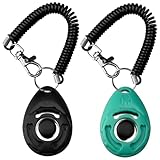
- Instant Attention & Clear Sound: This dog clicker for training produces a sharp, consistent sound that’s perfect for clicker training dogs, puppies, cats, and even birds or horses. Works great as a dog clicker to stop barking and reinforce positive behaviors quickly.
- Lightweight, Durable & Easy to Carry: Made from sturdy, lightweight materials, this pet training clicker is built to last. Comes with a convenient wrist strap so your dog training tools are always within reach during walks, obedience classes, or home sessions.
- Simple One-Button Operation: Whether you’re a new dog trainer or a pro, the large button makes this puppy training clicker and cat training clicker easy to use—just press to mark desired behavior, then reward for faster learning.
- Versatile for Multiple Pets & Purposes: More than just a dog training clicker—this tool is perfect as a cat clicker trainer, training clicker for puppies, or even a clicker cat trainer. Works for potty training, obedience, tricks, and behavior correction.
- Positive Reinforcement Training Made Easy: Trusted by professionals, this dog training & behavior aids device supports humane, reward-based training. Ideal as puppy training tools, dog training aids, or dog training clickers to create a strong bond with your pet.
Can you teach your dog toy names by letting it listen?
Possibly—but this study does not provide a validated program for teaching an ordinary dog hundreds of words. It also does not show that spelling, whispering, or hiding objects will reliably stop a typical dog from associating a sound with a routine or event.
You can try a simple, low-pressure toy-name game as an observation exercise:
- Choose two clearly different toys. Shape, texture, color, and size should make them easy to distinguish.
- Give each toy one consistent name. Avoid switching between several nicknames while you are testing the association.
- Use the names naturally during short play sessions. Keep the sessions brief and enjoyable rather than drilling the dog.
- Test before repeated guessing. Ask for one toy from a small group and note the first choice, rather than repeating the request until the dog succeeds.
- Vary where the toys are placed. A dog that always finds a toy in the same position may be following location cues instead of the label.
- Avoid pointing or staring at the correct object. Unintentional gestures can make a retrieval task appear to be a word-learning task.
- Stop if the dog loses interest. This should be enrichment, not a test the dog has to pass.
Anecdotal success is not the same as a stable word-object mapping. Dogs can use your pointing, gaze, body position, the toy’s location, smell, familiarity, or novelty to make a correct choice. The researchers’ comparison with typical dogs shows how easily novelty can be mistaken for language learning.
What the evidence does—and does not—say
| Supported by the research | Not established by the research |
|---|---|
| Some GWL dogs learned unfamiliar toy names from overheard interactions. | All dogs can learn words by eavesdropping. |
| Directly addressed and overheard GWL dogs performed similarly in this experiment. | Dogs understand human conversations in the human sense. |
| Some GWL dogs formed associations when the toy was hidden before its label was spoken. | Hiding a toy reliably improves word learning in typical dogs. |
| GWL dogs differ from typical dogs in object-label learning. | Any dog that retrieves a named toy has a large vocabulary. |
| Some associations remained detectable after two weeks, and related work found very long retention in a small sample. | Every learned toy name will be remembered for years. |
The safest interpretation is also the most interesting one: a small group of dogs appears capable of learning about objects through social interactions that were not directed at them. That gives researchers a new way to study the roots of word learning, while leaving open how widespread the ability is and how closely it resembles learning in young children.
Frequently Asked Questions
Can all dogs learn words by overhearing people?
No. The experiment involved ten Gifted Word Learner dogs, a rare group known for unusually large object-name vocabularies. Typical Border Collies tested under the overhearing procedure did not reliably match each new label to the correct new toy. The finding should not be generalized to dogs as a species.
What is a Gifted Word Learner dog?
Gifted Word Learner, or GWL, dogs are unusually capable object-label learners. They often acquire many toy names quickly and spontaneously during play, without formal instruction. Researchers do not yet know whether their ability is mainly genetic, learned through early experience, or caused by a combination of factors.
Did the dogs understand the conversation?
Not in the human sense. The dogs heard labels in a rich context that included visible objects, handling, gaze shifts, simple sentences, and social interaction. The study shows functional word-object learning, not comprehension of arbitrary conversation, grammar, or human-like language.
The Tool Desk
Outbyte PC Repair FREEClear out junk files and repair common Windows errorsFree Scan →Outbyte Driver Updater FREEFix the driver behind crashes, sound loss and screen glitchesFind Drivers →How can I try a toy-name game with my dog?
You can try naming two distinct toys during short, enjoyable play sessions and then ask your dog to choose between them. Keep the test informal, vary toy positions, avoid pointing, and do not treat one correct choice as proof of a stable vocabulary. The study does not establish a training method for ordinary dogs.
The Bottom Line
Bottom line: Some Gifted Word Learner dogs can learn new toy names by overhearing people talk about the toys, and they can sometimes retain those associations across a delay. The finding is not evidence that dogs generally understand language or that ordinary pets will learn words in the same way.
Quick Recap
Product prices and availability are accurate as of the date/time indicated and are subject to change. Any price and availability information displayed on Amazon at the time of purchase will apply.




