Windows Errors? Fix Them Before They Spread
Repair common Windows errors and clear accumulated junk for a smoother, more stable PC - no reinstall needed.Free scan · no reinstallOutdated Drivers Are Slowing You Down
One free scan finds every outdated or missing driver and matches the right update for your exact hardware.Free scan · exact hardware matchThe American Dingo is the Carolina Dog, a domestic dog—not a wild species. Its upright ears, pointed muzzle, lean body, reddish-yellow coat, fish-hook tail, pack-oriented behavior, and southeastern free-ranging history explain the nickname. The stronger claim that it is “America’s only native wild dog” remains debated: the breed may have an ancient Indigenous American connection, but available genetic research does not prove that it is an unchanged survivor of pre-contact dogs.
The Carolina Dog is the “American Dingo”—but not a wild species
The American Dingo is the Carolina Dog, a domestic dog classified as Canis familiaris. Its upright ears, pointed muzzle, lean body, reddish-yellow coat, fish-hook tail, pack-oriented behavior, and history of living free-ranging in remote parts of the southeastern United States explain the nickname. They do not make it an Australian dingo, a wolf-coyote hybrid, or a separate wild canid species.
As an Amazon Associate I earn from qualifying purchases.
The phrase “America’s only native wild dog” is best treated as a popular description, not settled scientific taxonomy. Carolina Dogs may preserve an ancient or Indigenous American connection, and some genetic findings support that possibility. Other ancient-genome research shows that pre-contact American dog lineages were almost entirely replaced after European contact, making any claim of an unchanged modern survivor too strong.
Recommended Free Tools
A more accurate description is this: the Carolina Dog is a distinctive American free-ranging dog population with a plausible but unresolved ancient Indigenous connection.
#1 Best Overall
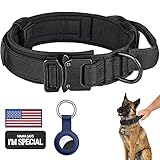
- 【Premium Material】Tactical dog collars is made of 1000D high-quality nylon fabric,very durable,wear-resisting. Soft and comfortable padded inner won’t hurt dog’s fur and can protect dog’s neck well.
- 【Double Security】Buckle training dog collar adopt integrated collar,magic sticker and quick release metal clasp dual design.Adjustable dog collar easy to put on and take off,the metal clasp can be released quickly in case of emergency.
- 【Control Handle】Military Training Nylon Dog Collar has special control handle,can efficiently control your dog when training, patrol,hiking, jogging, hunting, camping, working, running, jumping, traveling, camping.fits lots of medium and large dogs like German Shepherd, Border Collie, Rottweiler, Great Dane, Doberman, Golden Retriever, Husky, Labrador, Alaskan Malamute,etc.
- 【Airtags case and Patches】DAGANXI tactical dog collar comes with 1*Airtag protective case and 2*patches. Airtags Case Cover can protects your Airtags from scratches and damage, when Airtags used to track your dog, this enables your dog to find its way home. tactical dog collar comes with two patches, On the back of collar, you can also put a name tag, ID badge, or any Velcro accessory to make your dog unique.
- 【Warm prompt】Please follow the size chart to measure your dog's neck carefully before you place the order to ensure the collar is fit well to your dog.There should be left 2 fingers gap between the collar and the dogs neck.
What is a Carolina Dog?
The Carolina Dog is a medium-sized, athletic dog associated historically with rural and remote areas of the American Southeast. It is also known by several informal names, including American Dingo, Dixie Dingo, yellow dog, and yaller dog.
Its appearance reflects the kind of body that can function in difficult terrain rather than the exaggerated features selected for some modern show-ring breeds. The United Kennel Club standard describes a light- to medium-boned dog with a rectangular outline, deep brisket, tucked-up loin, upright ears, pointed muzzle, and a characteristic fish-hook or “pump-handle” tail.
| Characteristic | Published breed-profile information |
|---|---|
| Approximate height | 17.75–19.5 inches |
| Approximate weight | 30–55 pounds |
| Typical life expectancy | 12–15 years |
| Common description | Lean, athletic, independent, pack-oriented, and reserved with unfamiliar people |
The height, weight, and lifespan figures come from the American Kennel Club’s breed profile and are ranges, not guarantees. Individual dogs can fall outside them because of sex, breeding, nutrition, age, health, and mixed ancestry.
Why does it look like a dingo?
The resemblance is largely a matter of shared functional features and overall body type. Carolina Dogs and Australian dingoes can both have upright ears, a wedge-shaped head, a lean frame, and a curved tail. Those similarities make “American Dingo” an understandable nickname, but they do not establish that the two populations share a recent common origin.
The Australian dingo has its own evolutionary history as a free-ranging Australian canid population. The Carolina Dog remains a domestic dog, even though some Carolina Dogs lived—or continue to live—in free-ranging conditions. Similar appearance is not proof of identity, close relationship, or hybridization.
How the modern Carolina Dog story began
In the 1970s, University of Georgia Savannah River Ecology Laboratory researcher I. Lehr Brisbin noticed and trapped free-ranging dogs in southeastern habitats. He called them Carolina Dogs, beginning the modern effort to document and preserve the population.
That story is sometimes shortened to say that scientists discovered an untouched ancient breed in the wilderness. The historical record is more complicated. A 1974 study at Fort Jackson described feral dogs living in packs of roughly four to seven animals, but it also found that some dogs had originally been under human control. Some were probably lost hunting dogs rather than animals born and raised in the wild.
The Tool Desk
Outbyte Driver Updater FREEFix the driver behind crashes, sound loss and screen glitchesFind Drivers →Outbyte PC Repair FREERepair Windows errors before they cause bigger problemsFix Now →This distinction matters:
- Free-ranging describes a dog living without close day-to-day human control. It does not automatically describe ancestry.
- Feral generally refers to a domestic animal living independently of people, although individual histories can be difficult to establish.
- Stray or lost dogs may survive outdoors temporarily or join a group without representing a self-sustaining ancient population.
- Deliberately bred Carolina Dogs are household dogs maintained through organized breeding and registration.
The Fort Jackson observations therefore document real free-ranging dog populations and provide useful ecological history. They do not, by themselves, prove uninterrupted descent from pre-Columbian dogs.
Is the Carolina Dog really Native American?
Possibly—but the evidence does not support an absolute answer. The ancestry question has two important sides.
Rank #2
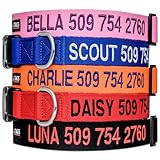
- Personalization that WOWs: Give your four legged companion the VIP treatment they deserve with our exclusive custom dog collar. With endless possibilities for personalization, you can create a one-of-a-kind collar that reflects their unique personality
- Peace of Mind: Don't let your furry friend's identity go unnoticed. Our custom embroidered dog collar is a surefire way to keep them safe and stylish. No more fumbling with noisy tags or worrying about them going missing. It's time to upgrade to a collar that screams "I am loved and protected"
- Click Customize Now: With a variety of vibrant collar colors and thread options, get ready to steal the spotlight and become the envy of dog owners everywhere
- Unmatched Comfort: Our adjustable, user-friendly dog collar fits all breeds of all sizes. Available in 4 sizes: X-Small (3/8 in. x 8-12 in. length); Small (5/8 in. x 11-16 in. length); Medium (3/4 in. x 14-20 in. length); and Large (1 in. x 18-26 in. length)
- Lifetime Durability: Crafted from premium-grade nylon ensuring durability and longevity. No more worries about fraying or wear and tear as our collar is designed to withstand even the most active adventures
Evidence for an ancient connection
A 2013 mitochondrial-DNA study found that some sampled Carolina Dogs carried lineages associated with East Asian dogs. The researchers also reported a frequently observed haplotype described as unique to their Carolina Dog sample. They interpreted the findings as potentially consistent with an Indigenous American origin rather than a population made up solely of escaped or abandoned European dogs.
There is also an archaeological foundation for discussing ancient American dogs. Dogs accompanied people into North America, and Indigenous American relationships with dogs are documented through dog remains, images, mummified specimens, and ceremonial burials dating to before European arrival. That evidence proves that pre-contact American dogs existed and were culturally important.
Quick wins for a faster PC:
Repair Windows errors before they cause bigger problemsFix Now →Fix the driver behind crashes, sound loss and screen glitchesFind Drivers →Clear out junk files and repair common Windows errorsFree Scan →It does not, on its own, prove that today’s Carolina Dogs descend directly from those particular populations. Ancient dogs existed in North America; the separate question is whether a continuous genetic line survived into the modern Carolina Dog.
Why later research requires caution
A 2018 ancient-genomics review concluded that Indigenous American dog lineages were nearly eliminated after European contact. Most modern American dogs—including populations sometimes described as native—showed no detectable pre-contact dog ancestry in that analysis. The closest detectable modern relatives of pre-contact American dogs were reported to be Arctic dog breeds, not the Carolina Dog specifically.
That does not make the 2013 Carolina Dog mitochondrial findings meaningless. It does mean they should not be treated as final proof. A result from a particular genetic marker or sample can suggest an ancient connection without demonstrating that the entire modern breed is an unchanged remnant of the first dogs in North America.
The Carolina Dog Fanciers of America has also acknowledged that additional ancestry and genetic studies are needed before the breed’s history can be considered fully settled. The most responsible conclusion is that the breed’s ancestry remains an active historical and genetic question.
What’s actually slowing this PC down?
Pick the symptom - the matching free tool is one click away.
If someone is investigating a suspected Carolina Dog mix, a dog ancestry DNA test may provide information about modern breed signals, but it cannot by itself prove an unbroken pre-contact lineage. Visual resemblance, behavior, registration records, geographic history, and genetic results answer different questions and should not be presented as interchangeable.
Where did free-ranging Carolina Dogs live?
Historical and breed descriptions associate Carolina Dogs with remote portions of the Southeast, especially grasslands, bottomland swamps, forests, and areas around the Georgia–South Carolina border. The American Kennel Club has also reported sightings farther north and west, including Ohio, Pennsylvania, and Arizona.
Those sightings should be interpreted carefully. The available source does not establish that every free-ranging dog seen in those states is a genetically documented Carolina Dog. Nor does a dog’s curled tail, yellow coat, or upright ears prove its identity. Many unrelated dogs and mixes can share those features.
Rank #3

- DURABLE SERVICE DOG ID TAG: Deep soft-enamel service dog id tag resists fading and scratching; solid metal construction outlasts printed service animal tags; polished edges help keep it comfortable for daily wear
- CLEAR SERVICE DOG IDENTIFICATION: Bold double sided dog tag clearly displays service dog status; red medical alert symbol and easy-read text help identify working dogs in public spaces
- COMPACT 0.99 INCH DOG TAG: Smaller service dog tag is designed for small dogs, puppies, and handlers who want clear identification without a bulky tag; works as a simple everyday dog collar ID tag
- SECURE SPLIT RING ATTACHMENT: Durable metal split ring attaches firmly to a dog collar D-ring, vest loop or compatible gear loop; designed to stay in place through daily walks, travel, training, and active use
- VETERAN OWNED BUSINESS QUALITY: US Veteran and family owned company; durable service dog accessory made with careful attention to detail for handlers who need clear, professional identification
The Fort Jackson study offers a narrow historical snapshot rather than a current range-wide census. It recorded two pack home ranges of approximately 2,076.85 hectares and 183.13 hectares, with no overlap reported between the packs. Fecal samples contained remains or hair associated with white-tailed deer, moles, raccoons, cottontail rabbits, and humans.
Free tools Windows power users keep installed
One-click scans. No signup required.
Those findings suggest opportunistic foraging in a rural landscape, but they should not be generalized into a complete modern ecological profile for every Carolina Dog. There is no reliable current population estimate in the available research, and no verified census showing exactly how many Carolina Dogs live free-ranging today.
The “snout pit” behavior
One unusual behavior associated with the breed is called snout pits: small, conical depressions dug in soil with the muzzle. The American Kennel Club notes that this behavior is most often reported in females between September and January. It is an interesting breed-associated observation, not a diagnostic test. A dog that digs small holes is not automatically a Carolina Dog.
What does a Carolina Dog look like?
The breed’s functional outline is more informative than any single feature. A typical Carolina Dog is light to medium in bone, slightly rectangular rather than square, deep through the chest, and tucked up behind the rib cage. The ears are upright, the muzzle pointed, and the tail commonly forms a fish-hook or pump-handle curve.
The breed standard emphasizes sound movement, athleticism, and the ability to function under natural conditions. That helps explain why the American Dingo nickname persists: the dog looks capable of traveling, hunting, and maneuvering through varied terrain rather than heavily specialized for one exaggerated physical trait.
Standards are written for registry and conformation purposes, however. They are not scientific proof of ancestry, nor are they a complete health assessment. The UKC standard addresses or penalizes traits including solid white, albinism, blue eyes, certain folded ears, merle or diluted coat patterns, and extreme shyness or viciousness. A pet dog that does not meet every standard is not thereby unhealthy, and a dog that does meet the standard is not thereby proven to have ancient ancestry.
Are Carolina Dogs wild or domesticated?
They are domesticated dogs, not wild animals in the taxonomic sense. Carolina Dogs live as household companions, can participate in dog sports, and are registered through established breed organizations. Some individuals may be independent or cautious because of the population’s free-ranging history, but that is different from being untameable.
The most useful distinction is between domestic status and lifestyle. A domestic dog can live loose, hunt, reproduce, and organize socially with other dogs. Conversely, a domestic dog raised in a home can still retain strong instincts for scent, movement, territory, and social grouping.
Carolina Dog temperament and training
The American Kennel Club characterizes Carolina Dogs as reserved or suspicious with strangers, loyal to accepted household members, independent, and strongly pack-oriented. It also describes them as trainable and capable in competitive activities and small-game hunting. Individual responses to treat-based training can vary.
Rank #4

- CUSTOMIZED DOG COLLAR: Our personalized comfort neoprene padded dog collar features your pup’s name and phone number, ensuring both safety and style. Say goodbye to jangling tags and worries about them getting lost.
- CUSHIONED NEOPRENE: Crafted with your dog’s comfort in mind, our padded dog collar features cushioned neoprene lining that’s thick, wide, and gentle on your dog’s neck. This material protects their skin from irritation, especially during active moments or when pulling on a leash.
- HEAVY DUTY BUT LIGHTWEIGHT - Built to accommodate all breeds, the Comfort Collar combines a lightweight design with heavy-duty hardware that is tough enough to resist forces from even the most spirited dogs.
- Uniqueness: The main image only shows the pink color, but we offer a wide range of colors including Pink, Red, Orange, Purple, Blue, Black, Green, Grey, Beige and Turquoise. Please click ‘Customize Now’ to preview and select your preferred color.
- SIZE ATTENTION - Make sure to measure your dog’s neck before placing an order. Then refer to the sizing chart: Small 11" – 14.5" | Medium 14.5" - 19" | Large 19" - 23" | X-Large 23" - 27" |. This dog collar fits many kinds of dogs, like Poodles, Pugs, Dachshunds, Terriers, Beagles, Pitbulls, Labradors, Bulldogs and so on.
For an owner, that combination can be rewarding but demanding. A Carolina Dog may be intelligent without being eager to repeat an exercise simply because a person asks. It may form a close bond with its household while remaining wary of unfamiliar visitors. Its independence can be mistaken for stubbornness, and its hunting or chasing motivation can make unreliable off-leash freedom dangerous.
In practical terms, a prospective owner should plan for:
- Early, controlled socialization: introduce people, dogs, surfaces, handling, transport, and new environments gradually and positively.
- Recall training: build the behavior in secure areas before considering greater freedom. Do not assume that a strong relationship guarantees recall around wildlife.
- Secure containment: inspect fencing, gates, latches, and escape points. A dog with athletic ability and independent instincts should not be trusted to remain in an unsecured yard.
- Daily exercise: combine physical activity with opportunities to explore safely.
- Mental enrichment: use scent work, training games, food puzzles, and other activities that give the dog an appropriate outlet for investigation.
- Respect for stranger reserve: do not force an anxious or suspicious dog to greet visitors. Give it distance and a predictable retreat.
These recommendations are practical inferences from the breed’s documented independence, pack orientation, trainability, and hunting-related abilities—not a substitute for advice from a qualified trainer, veterinary behaviorist, or veterinarian who knows the individual dog.
For owners working on recall, a long line for recall training can provide a larger safety margin than practicing off-leash in an open area. It is a training aid, not a guarantee of control; choose equipment appropriate to the dog’s size and strength, supervise use, and combine it with secure fencing and sound handling technique.
Do these 3 things before closing this tab:
1Clear out junk files and repair common Windows errors2Scan for outdated or missing drivers - takes under a minute3Repair Windows errors before they cause bigger problemsCan a Carolina Dog make a good pet?
Yes, but it is better framed as a dog for an informed, engaged owner than as an automatically easy family pet. The breed is not “wild” in a way that prevents companionship. The challenge is that independence, sensitivity around strangers, energy, and movement or scent motivation may require more planning than a first-time owner expects.
Households should consider whether they can provide secure containment, consistent training, enrichment, and careful introductions. Families with young children should supervise all interactions and teach children not to corner, chase, hug, or disturb a dog that is resting or retreating. That is sensible practice for any dog and especially important when an individual is reserved with unfamiliar people.
People researching ownership may also benefit from a breed-specific Carolina Dog guide covering the breed’s history, training considerations, and day-to-day care. A book can provide useful background, but it cannot determine whether an individual dog is a Carolina Dog, replace a veterinary examination, or predict every dog’s temperament.
Health, diet, and routine care
The available research does not provide a robust breed-specific, peer-reviewed health-surveillance dataset that would allow reliable ranking of Carolina Dogs against other breeds for inherited disease risk. It would therefore be inaccurate to call the breed universally disease-free, unusually immune, or medically “hardy.” A history of surviving in free-ranging conditions is not the same thing as a documented absence of health problems.
Routine preventive care still matters. The American Kennel Club recommends a high-quality diet appropriate to the dog’s age and veterinary supervision when food is home-prepared. It also advises monitoring calorie intake because some individuals can become overweight. Fresh, clean water and regular veterinary care remain basic requirements.
Best Value

- 【SOFT MATERIALS】Nylon fabric with high density webbing to add durability; Our collar is as smooth and soft as grosgrain,no irritation to pet skin.
- 【SAFETY REFLECTIVE】Highly reflective threads keep high visibility at night for safety. It will ensurethat your dog will be seen at night and in low light situations.
- 【CONVENIENT & DURABLE】Quick release premium ABS made buckles, easy to put it on/off. The plastic buckle is curved for your dog’s comfort. The metal D ring is chrome coated to add durability.
- 【CLASSIC COLLAR】This nylon dog collar is a classic yet stylish collar that comes in 12 colors and 6 sizes so you can find just the right one for your dog. A separate loop on the collar makes it easy to add dog tags and leashs onto the collar.
- 【ADJUSTABLE LENGTH】Non-slip adjustable loop can easily adjust the size, Please take measurement of your dog's neck circumference before order placed. XXS - 3/8"x(8-12"); XS - 5/8"x(8-12"); S - 5/8"x(10-14"); M - 3/4"x(12-18") ; L - 1.0"x(14-22"); XL - 1.0"x(16-26"). Ideal personalized dog collars for small medium large boys & girls.
As with any dog, an owner should discuss vaccinations, parasite prevention, dental care, weight, exercise, reproductive decisions, and age-related screening with a veterinarian. The right care plan depends on the individual dog’s age, medical history, activity level, and environment.
How is the Carolina Dog recognized?
The United Kennel Club recognized the Carolina Dog on January 1, 1995. Its current published breed standard was revised on January 1, 2023. The UKC places the breed in its Sighthound & Pariah Dog Group.
The American Kennel Club currently lists the Carolina Dog in its Foundation Stock Service, rather than among its fully recognized breeds. The AKC records the breed in FSS from July 2017 and identifies the Carolina Dog Fanciers of America as its parent club.
Registry status tells readers how an organization manages breed records and standards. It does not settle the scientific ancestry debate. A formal standard can describe the desired shape, movement, and temperament while genetic researchers continue to investigate where the population came from.
What the “only native wild dog” claim gets right—and wrong
The slogan captures several real features:
- Carolina Dogs have a distinctive appearance that can resemble a dingo.
- Free-ranging populations were documented in remote southeastern habitats.
- Their history includes pack living, opportunistic foraging, and limited human control.
- Some mitochondrial-DNA findings are compatible with an ancient East Asian-associated or Indigenous American connection.
- The breed’s physical standard emphasizes athletic function and adaptation to demanding environments.
But the slogan overstates other points:
- The Carolina Dog is a domestic dog, not a separate wild species.
- “American Dingo” is a nickname, not evidence that it is related to the Australian dingo in the way the name may suggest.
- Free-ranging dogs can include lost, stray, feral, and deliberately released animals; living in the wild does not prove ancient ancestry.
- Later ancient-genome research found extensive replacement of pre-contact American dog lineages.
- No reliable current census establishes how many Carolina Dogs remain free-ranging, and the available research does not establish a formal endangered status.
The careful wording is less dramatic than the headline, but more informative: the Carolina Dog is an unusual American dog population whose free-ranging history and possible ancient connection deserve attention without turning an unresolved hypothesis into a proven origin story.
Frequently Asked Questions
Is the Carolina Dog the same as an Australian dingo?
No. The Carolina Dog is classified as a domestic dog, Canis familiaris. “American Dingo” is a nickname based on appearance and free-ranging behavior, not proof that it is an Australian dingo, wolf, coyote hybrid, or separate wild species.
Can a Carolina Dog be a family pet?
Yes. Carolina Dogs are kept as household companions and can be trained for sports and other activities. However, their independence, stranger reserve, pack orientation, exercise needs, and hunting motivation can make them a better fit for experienced, engaged owners.
Recommended Free Tools
How many Carolina Dogs are left in the wild?
There is no reliable current census in the available research showing how many Carolina Dogs live free-ranging, and the research pass did not establish a formal endangered status. It is best not to claim that the breed is either abundant or endangered without a current population study.
Can a DNA test prove that a dog is an ancient Native American Carolina Dog?
Not by itself. A DNA test may provide information about modern breed signals, but it cannot prove an unbroken pre-contact lineage. Genetic results should be considered alongside registration records, documented history, physical traits, and geography.
The Bottom Line
Bottom line: The Carolina Dog is the domestic breed popularly called the American Dingo. Its appearance and free-ranging southeastern history are genuine, and an ancient Indigenous American connection is possible, but current evidence does not prove that it is America’s only unchanged native dog—or that every similar-looking free-ranging dog belongs to the breed.
Quick Recap
Product prices and availability are accurate as of the date/time indicated and are subject to change. Any price and availability information displayed on Amazon at the time of purchase will apply.




