
Some links on this page are affiliate links: if you buy through them we may earn a commission, at no extra cost to you.
The best supplies depend on the obstacle your dog actually faces. Non-slip runners help a dog keep its footing on slick floors; a ramp addresses a specific step up or down; an orthopedic bed provides an easier place to rest; and a fitted padded harness or foot-stability aid can help with supported movement. No accessory treats arthritis, and a new or worsening mobility problem needs veterinary assessment before you assume arthritis is the cause.
Cornell University College of Veterinary Medicine says diagnosis follows a physical examination that considers gait, posture, joints, and pain. Use home equipment as one part of an individualized plan that may also include weight control, low-impact activity, rehabilitation, and veterinary-directed pain management.
As an Amazon Associate I earn from qualifying purchases.
Match the supply to the mobility barrier
Older dogs may struggle for different reasons: paws slide on polished flooring, a jump onto furniture is too high, standing up from a hard surface is difficult, or the dog needs temporary support while walking. Start by observing the exact task that fails rather than buying a general “senior” accessory.
| Barrier | Possible supply | What it is intended to support | Fit and safety checks |
|---|---|---|---|
| Slick route or turning area | Non-slip dog floor runners, rugs, or yoga mats | More secure paw placement while walking | Stable, flat, easy to clean, and sized to cover the route the dog uses |
| Step into a car, onto a couch, or onto a bed | Dog mobility ramp | A gradual path over a particular elevation change | Correct length and space, secure placement, suitable traction, and a dog willing to use it |
| Hard-to-reach or uncomfortable sleeping area | Orthopedic dog bed | An accessible, supportive place to rest | Low-effort entry, adequate size, washable surfaces, and placement away from difficult jumps or stairs |
| Need for caregiver-assisted movement | Padded dog lifting harness | Controlled support when a dog must be steadied or lifted | Correct fit and instructions from a veterinarian or rehabilitation professional |
| Paws slipping despite environmental changes | Dog toe grips, boots, or socks | Additional foot stability for some dogs | Individual tolerance, secure fit, and frequent checks for rubbing or retained moisture |
These categories come from senior-care and osteoarthritis guidance from the American Animal Hospital Association (AAHA), Cornell, the American Veterinary Medical Association (AVMA), VCA Animal Hospitals, Canine Arthritis Resources and Education, and Banfield Pet Hospital. They are possible accommodations, not proof that a particular product will relieve pain.
Popular on Amazon

- NON-SLIP & PAW TRACTION:Designed to stop pets from sliding on slippery hardwood floors, creating a safe runway for dogs. On top, the tightly woven loop pile provides essential paw traction without snagging nails. Underneath, a premium silicone grip backing securely anchors the kitchen runner rugs non skid washable in place with no extra pad needed.
- Waterproof & Washable:Built to handle everyday pet messes like potty accidents, water spills, and shedding. The waterproof surface stops liquids from seeping through, protecting your hardwood floors.Shedding hair and daily dirt stay on top of the tight loops for quick vacuuming, and the hallway runner rug is fully machine washable for an easy deep clean.
- 0.32" LOW PROFILE:This 2x10 ft (24x120 inch) durable polyester rug runners for hallways non slip features an 8mm (0.32") thickness that easily clears doors. The flat, non-curling edges let vacuums glide over smoothly, while the dense loops maintain excellent rebound and cushioning for feet and paws.
- MINIMALIST AESTHETIC & DIRT-RESISTANT: Featuring a textured black-and-grey melange design, this runner rug non slip provides a sleek, solid look from afar while cleverly hiding everyday dirt and pet hair up close. This rug runner for dogs effortlessly complements contemporary or industrial decor, making it a highly practical and stylish addition to your busiest spaces like mudrooms, entryways indoor, or kitchens.
- PET-LOVING & TIPS:This carpet runners for hallway delivers a dog-friendly lifestyle by giving your loyal companion a safe runway to walk and run with confidence. (Note: Shipped folded. Temporary creases are normal and will naturally flatten in a few days. For a quick fix, reverse-roll or tumble dry on low heat).
Get a mobility change assessed before choosing equipment
Age alone does not diagnose arthritis. Reluctance to jump can reflect joint disease, muscle weakness, a paw problem, spinal disease, neurologic changes, an injury, or another condition. Cornell’s description of diagnosis begins with a veterinary examination rather than an assumption based on age or one behavior.
Arrange an appointment when your dog develops a new limp, stiffness, difficulty rising, repeated slipping, reduced willingness to walk, or a change in posture or gait. Seek prompt veterinary advice for sudden inability to stand or walk, severe pain, collapse, or a rapidly worsening change. Record when the problem occurs, which surfaces or heights trigger it, and whether it affects one limb or the whole body. A short video of the dog walking at home can help your veterinarian compare the reported problem with the examination.
Free tools Windows power users keep installed
One-click scans. No signup required.
Ask what level of activity is appropriate, whether rehabilitation could help, and how any harness, grips, boots, or socks should be used. Pain medication, supplements, exercise limits, and rehabilitation exercises are individualized decisions; a supply should not substitute for that assessment.
Traction supplies for slippery floors
Where runners and mats help
AAHA lists rugs or yoga mats as ways to provide better footing, and Cornell recommends non-slip rugs as part of home management for canine osteoarthritis. VCA and Banfield also describe nonskid surfaces as practical changes for older dogs. The goal is to reduce sliding while the dog walks, turns, stands, or approaches a bed and food area.
Walk through the home at your dog’s pace and mark the routes used most often: the path from the sleeping area to the door, the approach to food and water, and any tight turn where the paws skid. Cover those routes first rather than scattering small pieces that create their own edges. If the dog avoids one room, note whether a change in flooring explains the avoidance.
Also popular on Amazon
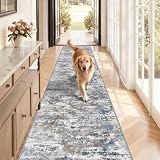
- 【No-Pile and Lightweight】The size of rug runners is 2.6x12feet which is 31.2x144inch, perfect size for entryway and kitchen. The no-pile construction of runner rugs prevent dirt accumulation, making it easy to clean and it won’t shed lints at all. The runners for hallways are lightweight and easy to move and store. The yarns made of polyester are tightly interwoven, creating a spherical arrangement that offers a retro handmade weaving feel.
- 【Ultra Non-Slip for Safety】Our Anti-Fatigue extra long runner rugs for hallways is designed with an elastic support layer to provide a stable support force, which can effectively relieve the pressure on your feet when you stand for a long time to cook or wash dishes.We updated version slip-resistant TPR backing to Ultra Non-Slip Silicone Rubber backing, keeps runner rug non slip long lasting and more durable, while still strongly hold mats firmly in place for safety.
- 【Easy-Clean And Maintain】Address liquids stains by spot cleaning them immediately with a clean sponge. For daily maintenance, vacuum it, or you can use a robot vacuum, broom, or just wipe it clean. When a deeper clean is needed, simply toss long hallway runner rug into a washing machine using cold water, and either hang dry or air dry. Thanks to non slip floor runners for dogs durable reinforced lock edge, the runner rug remains resilient and is not easily decomposed even after washing.
- 【Modern-Style Area Rug】This non slip floor runners for dogs has a modern style, making it an ideal choice to match modern furniture. This exquisite carpet runners for hallway 12ft is suitable for a variety of scenes such as modern kitchens, hallways, entryway and laundry room, and blends perfectly with your home decoration. Our runner rug is also ideal as a gift for your friends, parents, kids and family.
- 【Tips for Removing Creases】Our runner rugs non slip are foldable for easy carrying and compact storage. If temporary creases appear upon arrival, simply smooth them out, lay beige runner rug flat on the floor, flip it over and reverse roll it. The creases will naturally disappear within a few days. For more pronounced creases, gently iron the back with a steam iron for quicker recovery.
What to check before placing a mat
- Choose a backing or surface that remains still when the dog accelerates, turns, or gets up.
- Keep the mat flat. Folded corners, curled edges, and gaps between sections can become tripping points.
- Use dimensions that let the dog take several normal steps, including a turn, instead of forcing a jump from one small patch to another.
- Place mats where they can be cleaned regularly and dried completely.
- Recheck them after moving furniture or washing them; a formerly stable mat can slide when its backing is worn or damp.
When traction is not the whole answer
A runner cannot make a tall step accessible and cannot correct weakness that prevents a dog from lifting a paw. If the dog reaches the edge of a mat and still cannot step up, pair the flooring change with an evaluation of the height barrier. If slipping continues on a stable, clean surface, ask your veterinarian whether a foot-stability aid or rehabilitation assessment is appropriate.
Ramps for a specific elevation problem
Identify the height that causes trouble
Cornell identifies ramps for access to beds, couches, or cars, and AAHA includes ramps among senior-pet home modifications. A ramp is most useful when the problem is clearly defined: entering a vehicle, reaching one piece of furniture, or crossing a raised threshold. It is not automatically better than every other option, and some dogs will not accept the slope or the movement under their feet.
Check the ramp against the location
- Measure the available length and width where the ramp will rest, including the space needed for the dog to approach and turn.
- Confirm that the ramp’s stated weight capacity exceeds your dog’s weight and allows controlled movement, not just a stationary load.
- Inspect the walking surface for traction and make sure the upper and lower ends cannot shift.
- For a vehicle, check that the ramp reaches the ground without an unstable gap and that the car door or hatch can remain safely positioned.
- For furniture, verify that the top contact point is firm and that the ramp does not press against a fragile edge.
Introduce it without forcing the dog
- Place the ramp flat on the floor and let the dog investigate it.
- Reward calm standing or walking across it before adding any height.
- Raise it gradually and stop if the dog freezes, scrambles, backs away, or shows pain.
- Use a secure harness for guidance only if your veterinarian or rehabilitation professional has shown you how; do not drag the dog up the ramp.
- Continue supervising until the dog can use the ramp consistently and the setup remains stable.
If the dog refuses the ramp after patient, low-pressure practice, change the access plan rather than treating refusal as disobedience. A different resting location, a vehicle-height adjustment, or professional guidance may be safer.
Orthopedic beds and easier resting
Choose access before material
AAHA names appropriate beds as a possible senior-dog accessory. The AVMA’s senior-pet guidance includes orthopedic pet beds, and VCA describes orthopedic or memory-foam beds as comfortable sleeping-area options. These references support a resting choice, not a promise of pain reduction or a treatment for joint disease.
The most important feature is often access. Put the bed where the dog already wants to rest, but avoid a location that requires stairs, a jump, or a long slippery approach. A low entry can be easier than a tall-sided bed, provided the dog can lie down without getting a limb caught. Size the bed so the dog can change position and fully stretch without hanging over the edge.
What’s actually slowing this PC down?
Pick the symptom - the matching free tool is one click away.
Also popular on Amazon

- Soft and Comfortable: Treat yourself and your furry friends to unparalleled comfort with the Tindbea polypropylene Dog Door Mat. The premium plush offers a soft, cozy feel under your feet and provides extra warmth for your pets on chilly floors. Expertly crafted for enduring quality, this mat effortlessly blends opulence with durability.
- Absorb Moisture and Dirt:Tindbea indoor dog mat for mud paws is crafted to efficiently remove dirt and swiftly absorb moisture. With our doormat, your shoes will be instantly free of any water, dust, grit, muck, sand, sleet, grass, slush, rain, or snow upon entering the house. It's an excellent choice for use as an entryway door mat, a delicate door mat, or a dirt-trapping mat.
- Anti-Slip Textured TPR Base:Tindbea's mud mat for dog paws are made with a unique patented natural TPR backing,and we use very safe and comfortable materials so that you can play with your furry friends on the carpet together.Therefore, our mud mats not only have a durable and non-slip effect, but also add to the atmosphere of your home, keeping you in a good mood at all times.
- Low Profile and Easy Care:Tindbea's polypropylene dog door mat boasts a slim 0.8-inch profile, offering a sleek and streamlined appearance.The thoughtful design ensures your doors won't get stuck, and the mat stays securely in place. Cleaning is a breeze – simply shake off any dirt or debris or toss it in the washing machine for a deeper clean. It dries quickly,so you can be sure it's ready to use again in no time.
- Versatile Functionality:Embrace the joy of your furry companion without the worry of mess. Tindbea mats are perfect for use indoors, entrance, porch, patio. They're ideal under food and water bowls, after baths and for various other purposes. Whether you're at home or on the go, we've got you covered!
Make the bed practical to live with
- Use a removable, washable cover or another cleaning arrangement that fits your household.
- Keep the bed dry and inspect seams, zippers, and padding for damage.
- Place it away from drafts, but leave enough surrounding space for the dog to stand and turn.
- Offer the bed as an option; do not confine the dog to it if another safe surface is preferred.
If the dog repeatedly gets up, cannot settle, cries, or changes position throughout the night, treat that behavior as useful information for the veterinarian rather than simply buying a thicker bed.
Harnesses for supported movement
When a padded harness may help
AAHA includes fitted, padded harnesses for lifting larger pets. A harness may give a caregiver controlled assistance when a dog rises, negotiates a difficult doorway, or needs help getting into a vehicle. The correct use depends on the dog’s body shape, strength, pain, and the task. A support intended for brief assistance is not automatically suitable for carrying a dog for a long distance.
Fit and handling matter
- Ask your veterinarian or a canine rehabilitation professional to demonstrate where the harness should sit and how much weight you should take.
- Check that straps do not press on the throat, armpits, spine, or painful joints.
- Use a calm, coordinated lift; avoid sudden pulling or twisting.
- Inspect the skin after each early use for redness, hair loss, or pressure marks.
- Keep the dog’s feet as supported as possible unless a professional has instructed you otherwise.
Do not use a loose collar, a makeshift strap, or a poorly fitted garment as a lifting device. If the dog cries, panics, collapses, or cannot bear weight, stop and contact a veterinary professional.
Independent reader supportYour contribution helps us test, update, and keep practical guides available for everyone.Toe grips, boots, and socks for foot stability
AAHA mentions toe grips, boots, and socks as foot-stability options, and Banfield discusses toe grips for slick floors. These aids can be considered when environmental traction is not enough, but they are highly individual. Some dogs tolerate an item after gradual introduction; others chew it, walk abnormally, or become more unstable.
Do these 3 things before closing this tab:
1Clear out junk files and repair common Windows errors2Fix the driver behind crashes, sound loss and screen glitches3Repair Windows errors before they cause bigger problemsIntroduce one aid at a time
- Have the fit checked by your veterinarian or rehabilitation professional, especially if the dog has altered sensation, weak limbs, or fragile skin.
- Let the dog sniff the item and touch it briefly without fastening it.
- Apply it for a short, supervised period on a safe, non-slip surface.
- Watch for shortened steps, repeated licking, chewing, limping, or a change in posture.
- Remove it and inspect every toe, pad, and the spaces between toes after use.
Boots and socks must stay secure without constricting circulation, and moisture trapped against the skin can create irritation. Toe grips require an accurate size and regular checks because a loose or damaged grip can become a foreign object or alter the dog’s gait. Stop using any aid that causes rubbing, distress, or worse movement.
Also popular on Amazon

- 【Low-Pile Thin Design】 The 0.24" low pile is thin and door-friendly. Won't catch on doors or furniture
- 【Washable Easy Clean】 Machine washable for deep cleaning. Cold wash (<30℃/87℉) with mild detergent. Air dry only
- 【Non-Slip Backing】 Stays put with TPR backing that grips floors and prevents slipping
- 【Pile-Shift Design】 Two-tone colors shift with light and direction. Adds depth and visual interest to any room
- 【Care Instructions】 Due to vacuum packing, your rug may have creases or a light smell from packing. Simply lay flat for 2-4 days to fluff up and freshen
Raised feeding platforms and pet stairs
The AVMA’s senior-pet brochure lists raised feeding platforms, pet stairs, and ramps among possible accommodations. These options address access, not the underlying cause of mobility loss. A raised bowl may reduce the need to bend for some dogs, but the appropriate height depends on the individual dog and any neck, shoulder, or swallowing concerns. Ask your veterinarian before making a substantial change.
Pet stairs can provide access where a ramp will not fit, yet they require repeated lifting of the paws and confident balance. Consider the dog’s ability and willingness to use them, the stair height and width, the surface traction, and whether a caregiver must supervise. Never assume that a dog who can climb stairs indoors can safely use them beside a vehicle or on a slippery floor.
Combine home supplies with a broader care plan
Cornell describes a multimodal approach that can include weight control, low-impact activity, non-slip rugs, and ramps. AAHA identifies rehabilitation as an option for pain management and mobility. Canine Arthritis Resources and Education likewise discusses activity and home modifications, including assistive devices.
The Tool Desk
Outbyte Driver Updater FREEFix the driver behind crashes, sound loss and screen glitchesFind Drivers →Outbyte PC Repair FREEClear out junk files and repair common Windows errorsFree Scan →Weight and activity
Ask your veterinarian for a body-condition and feeding plan rather than cutting food abruptly. Weight control can be part of joint management, while the right amount and type of activity depends on pain, strength, and other diagnoses. Low-impact movement may be recommended, but an exercise plan should be individualized; a sudden increase because the dog appears better on a new mat can cause setbacks.
Rehabilitation and monitoring
A rehabilitation professional can assess gait, muscle use, balance, and the safest way to use support equipment. Keep a simple log of walking tolerance, slipping episodes, rising from bed, ramp use, and restlessness. Patterns help your veterinary team decide whether the home setup is working or whether the plan needs adjustment.
A practical setup and review checklist
- Describe the mobility change to your veterinarian and ask whether arthritis is confirmed or whether another cause needs investigation.
- Identify the failed task: slipping, stepping up, resting, rising, or supported lifting.
- Measure the route, doorway, vehicle opening, furniture height, and storage area before buying equipment.
- Choose one accommodation that directly addresses that task.
- Install it securely and test it while supervising the dog.
- Inspect paws, skin, straps, backing, seams, and fasteners after initial uses.
- Record whether the dog moves more confidently, remains reluctant, or shows new discomfort.
- Recheck the plan with your veterinarian if function worsens, the dog cannot tolerate the aid, or the original barrier changes.
Supplies work best when they remove a clearly identified obstacle without adding another one. A stable path may be more useful than a fashionable accessory, and professional fitting is more important than a product label.





Leave a Reply