
What’s actually slowing this PC down?
Pick the symptom - the matching free tool is one click away.
Betta splendens is a warm-water, air-breathing freshwater fish that usually does best as a single fish in a heated, gently filtered aquarium of 5 gallons or larger. A secure lid, conditioned water, stable temperature, low current, hiding places, and regular testing matter far more than a decorative bowl or a tiny retail cup.
Male bettas are strongly territorial, while females and community combinations require careful planning rather than assumptions about compatibility. The care below applies primarily to domesticated aquarium forms of Betta splendens, not every wild betta species or hybrid sold under the general trade name betta.
As an Amazon Associate I earn from qualifying purchases.
Betta fish at a glance
| Category | Information |
|---|---|
| Scientific name | Betta splendens Regan, 1910 |
| Common names | Betta, Siamese fighting fish |
| Family and order | Osphronemidae; Anabantiformes |
| Adult size | Often about 2.5–3 inches in domestic aquarium fish; a reported maximum is approximately 6.5 cm total length, depending on strain and measurement method |
| Water type | Tropical freshwater |
| Practical temperature target | The upper 70s °F, commonly around 76–81°F; stability is more important than chasing one exact number |
| Reported pH range | Approximately 6.0–8.0, with stable, clean water preferred |
| Diet | Primarily animal prey; use a quality high-protein betta food |
| Social needs | One betta can live alone; male-male housing is unsafe, and all community combinations are temperament-dependent |
| Breeding behavior | The male builds and guards a bubble nest |
What kind of fish is a betta?
The aquarium betta is generally Betta splendens, a small freshwater anabantoid in the family Osphronemidae. The name betta is also used loosely in the aquarium trade for related wild species, hybrids, and fish whose exact ancestry is not always clear. The familiar pet-store fish—with elaborate flowing fins and colors such as blue, red, white, black, or multicolor patterns—is the result of domestication and selective breeding.
Quick wins for a faster PC:
Fix the driver behind crashes, sound loss and screen glitchesFind Drivers →Clear out junk files and repair common Windows errorsFree Scan →Wild Siamese fighting fish are typically less vivid and shorter-finned than ornamental domestic varieties. Selective breeding has produced many fin and color forms, but those cosmetic differences do not remove the species’ basic needs: warm water, access to atmospheric air, clean conditions, gentle flow, and appropriate cover.
#1 Best Overall

- QUIET AQUARIUM FILTER: The Tetra Whisper IQ Power Filter with Stay Clean technology contains a sound shield for quiet filtration less than 40 dB.
- SELF PRIMING: Submerged motor starts up with no priming required.
- CAPACITY: The Tetra Whisper IQ 20 Power Filter works in filters up to 20 gallons (130 GPH).
- STAY CLEAN TECHNOLOGY: By maintaining healthy pH levels, creates easier maintenance for healthier fish.
- CARTRIDGE REFILLS: Change cartridges monthly; uses large-sized Tetra Whisper Bio-Bag Filter Cartridges (refills sold separately).
FishBase reports a maximum length of about 6.5 cm total length. Domestic-care references often describe an adult body length of roughly 2.5–3 inches. These figures are not necessarily contradictory: individual strains vary, and long fins can make a fish look substantially larger than its body. Measure body size and fin size separately when assessing growth or condition.
Native range and natural habitat
Betta splendens is associated with the Mekong basin in tropical Southeast Asia. In nature, it occurs in shallow, slow-moving or still freshwater habitats such as small streams, roadside ditches, shallow pools, rice paddies, and vegetated margins. Wild fish may live among dense emergent plants and shaded vegetation rather than in open, rapidly flowing water.
This habitat helps explain several care requirements:
Recommended Free Tools
- Warm water: the species is tropical and is not suited to prolonged cool conditions.
- Surface access: it regularly rises to the surface to take atmospheric air.
- Calm water: strong currents can be tiring, especially for long-finned domestic fish.
- Cover and structure: plants and other smooth, secure objects provide shelter and reduce the stress of an exposed environment.
- Clean water still matters: surviving in naturally oxygen-poor water does not mean tolerating accumulated waste, ammonia, nitrite, or neglected maintenance.
The labyrinth organ: why bettas breathe air
Bettas are facultative air-breathing fish. Their labyrinth apparatus allows them to take oxygen from the air at the water’s surface, an adaptation that helps them persist in warm habitats where dissolved oxygen may be limited.
This ability is frequently misunderstood. A betta still needs a properly maintained aquarium; the labyrinth organ is not a substitute for filtration, water changes, or a suitable tank. Keep the water surface open enough for normal air access, avoid a sealed container, and use a secure lid because bettas can jump. The lid should prevent escapes without blocking the fish from reaching the air-water interface.
Behavior and social structure
Why male bettas are kept separately
Male B. splendens are strongly territorial. A male may flare his fins and gill covers, display at a rival, chase another fish, or fight. Two males should not share an aquarium. Males and females should also be kept separate except during a carefully managed breeding attempt.
A single male betta does not need a fish companion to be healthy. For this territorial species, living alone is not automatically a welfare problem. A well-furnished aquarium can provide opportunities to explore, rest, forage, and respond to its surroundings without exposing the fish to constant conflict.
The Tool Desk
Outbyte Driver Updater FREEScan for outdated or missing drivers - takes under a minuteDriver Scan →Outbyte PC Repair FREEClear out junk files and repair common Windows errorsFree Scan →Can a betta live in a community aquarium?
Sometimes, but compatibility is individual and never guaranteed. Community housing is most defensible in a suitably sized, mature aquarium with peaceful tank mates that do not nip fins, compete aggressively for food, or require incompatible conditions. A betta that ignores other fish in one aquarium may attack them in another.
Rank #2

- QUIET AQUARIUM FILTER: The Tetra Whisper IQ Power Filter with Stay Clean technology contains a sound shield for quiet filtration less than 40 dB.
- SELF PRIMING: Submerged motor starts up with no priming required.
- CAPACITY: The Tetra Whisper IQ 45 Power Filter works in tanks up to 45 gallons (215 GPH).
- STAY CLEAN TECHNOLOGY: By maintaining healthy pH levels, creates easier maintenance for healthier fish.
- CARTRIDGE REFILLS: Change cartridges monthly; uses large-sized Tetra Whisper Bio-Bag Filter Cartridges (refills sold separately).
Potential tank mates sometimes considered include selected corydoras, small peaceful tetras or rasboras, mystery snails, and ghost shrimp. These are possibilities, not a universal approved list. Before adding any tank mate, consider aquarium volume, water parameters, hiding space, feeding competition, the possibility of predation, and the betta’s actual behavior. Have a separate, ready-to-use aquarium or divider available so an incompatible fish can be removed immediately.
Are female betta sororities safe?
Female groups, often called sororities, are not automatically peaceful. They require substantially more space, numerous visual barriers and hiding places, careful selection, close observation, and a backup plan. Aggression can appear after an initially calm introduction, and a stressed or injured fish may not have an adequate escape route.
Female-group housing is best treated as an advanced, risk-bearing setup—not as the normal beginner arrangement. A single female can also be kept alone.
How to set up a betta aquarium
Tank size: why 5 gallons is a strong practical target
There is no single volume that every care source labels as the absolute minimum. Some veterinary care guidance describes 2.5 gallons as a minimum and 5–10 gallons as preferable. Other current aquarium guidance presents a larger aquarium as better and uses 5 gallons as a practical target for one betta.
For most owners, 5 gallons or larger for one betta is the clearest practical recommendation. More water provides room for swimming and enrichment and makes temperature and water chemistry less prone to rapid swings. Properly maintained smaller systems can exist, but they demand tighter monitoring, more careful feeding, and more frequent or larger water changes. A small bowl may be survivable; that does not make it an ideal permanent habitat.
Equipment checklist
- Aquarium: choose a stable tank with enough horizontal swimming space and a secure lid.
- Heater: use an adjustable or appropriately sized aquarium heater intended for the tank volume.
- Independent thermometer: confirm the actual water temperature rather than trusting the heater setting.
- Gentle-flow filter: biological filtration improves stability, but the output must not create a strong current.
- Water conditioner: treat tap water for chlorine and chloramine and, where applicable, heavy metals.
- Water test kit: test ammonia, nitrite, nitrate, and pH.
- Gravel vacuum or siphon: remove waste during partial water changes.
- Smooth substrate and decor: avoid sharp edges and rough artificial plants that can tear fins.
- Live plants or soft artificial cover: provide shelter and visual structure without covering the entire surface.
For readers buying several pieces at once, a betta fish tank kit with heater and filter can simplify shopping, but treat it as a starting point rather than a guarantee. Verify the actual tank volume, heater suitability, filter flow, lid, and kit contents before purchase; many kits do not include a test kit, water conditioner, or equipment that is ideal for a long-finned betta.
Temperature, flow, and surface access
Bettas are tropical fish. A practical target is the upper 70s Fahrenheit, with 76–81°F commonly used for routine care. Broader species-care references give approximately 76–85°F, while field data place the species in tropical water around 24–30°C. The useful lesson is not to chase a single perfect reading: avoid cold conditions and, above all, avoid rapid fluctuations.
PC Slower Than It Used to Be?
A free scan shows the junk files, broken settings and background clutter dragging Windows down - then fixes them in one click.Free scan · Windows 10 & 11Outdated Drivers Are Slowing You Down
One free scan finds every outdated or missing driver and matches the right update for your exact hardware.Free scan · exact hardware matchA heater is worthwhile even when the room feels warm because household temperatures can drop overnight or change with seasons. Put a separate thermometer where it can be read easily and check that the heater is actually maintaining the intended range.
Rank #3
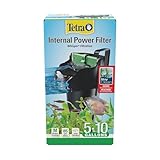
- INTERNAL POWER FILTER: Tetra Whisper Internal Power Filter for 5- to 10-gallon aquariums uses medium Whisper BioBag filter cartridges that are easy to change.
- QUIET 85 GPH MOTOR: The internal pump efficiently filters up to 85 gallons per hour.
- POWERFUL FILTRATION: Water flows through the cartridge floss, trapping debris and fish waste, while Ultra-activated carbon helps remove odor and discoloration.
- SPACE-SAVING DESIGN: Your aquarium can be 1” from the wall with the internal filter designed to clip directly on your aquarium wall and be hidden by décor.
- EASILY ADJUSTABLE: Adjustable clip allows for a variety of setups to easily adjust to high or low water levels.
Use a low-flow filter. If the fish struggles to swim, constantly hides from the current, or is pushed around the aquarium, reduce the flow, baffle the return, or redirect the outlet. Filtration should support water quality without turning the aquarium into a fast-moving stream. Preserve an easy route to the surface for air breathing.
Plants, hiding places, and enrichment
Plants and smooth shelters make an aquarium more structurally complex and give a betta places to retreat. Arrange decor so that it cannot trap the fish, scrape the body, or snag long fins. Leave open swimming space as well as cover.
A mirror is not required. Brief, supervised exposure may elicit natural flaring, but a permanent mirror can provoke repeated territorial displays and chronic stress. Remove it if the fish remains agitated or repeatedly confronts its reflection.
Free tools Windows power users keep installed
One-click scans. No signup required.
Water quality, cycling, and maintenance
Condition tap water
Always condition new tap water before it enters the aquarium. Chlorine and chloramine are toxic to fish and can also damage the beneficial nitrifying bacteria that process waste. Use a conditioner whose label covers the disinfectants present in your water and follow the product’s current dosage directions.
Establish the biological filter
Whenever possible, biologically establish a new aquarium before adding the betta. Nitrifying bacteria are needed to process fish waste, and a newly assembled tank may not yet have enough of them. During establishment, test the water regularly and do not assume that clear water is chemically safe.
After the fish is added, continue testing routinely—weekly is a useful baseline, and testing should be more frequent during initial establishment, after equipment changes, or whenever the fish behaves abnormally. Ammonia and nitrite should not be treated as normal readings. A detectable result is a prompt to check the filter and feeding, perform an appropriate partial water change with conditioned, temperature-matched water, and increase monitoring.
Partial water changes
For a filtered aquarium, common schedules include approximately 15–25% weekly or around 10% weekly to 25% every two weeks, adjusted according to test results, aquarium size, feeding, filter maturity, and stocking. Small unfiltered containers require more frequent and larger changes because waste accumulates faster.
- Test the aquarium and prepare replacement water.
- Condition the replacement water and bring it close to the aquarium’s temperature.
- Use a siphon or gravel vacuum to remove a partial volume and collect debris.
- Add the prepared water slowly to avoid disturbing the fish or substrate.
- Check that the heater, filter, lid, and surface access are functioning normally.
Do not use soap or household cleaners in the aquarium. Avoid repeatedly stripping the entire tank, which can destabilize the biological system. When filter media needs cleaning, rinse it gently in removed aquarium water rather than chlorinated tap water, and do not replace all biological media at once unless there is a specific reason and a plan to preserve filtration capacity.
Rank #4

- Powerful Pump: 300 GPH water pump effectively filters 55-150 gallons; ideal for large aquariums, turtle tanks, and ponds.
- Enhanced Aeration: Equipped with an adjustable valve to increase oxygen levels, promoting healthier, more active fish and turtles.
- Double Deep Filtration: Dual-stage black biochemical sponge removes odors and impurities; keeps water clear and fresh.
- Dynamic Water Flow: Boosts wave size and surface movement; improves circulation for a healthier aquatic environment.
- Adjustable Body: The aquarium filter features a detachable design. For tanks under 15 inches tall, you can lay the filter flat or remove the lower half of the filter sponge for a better fit.
A full teardown is generally not a routine maintenance goal. Preserve the established biological community while using measured water changes and debris removal to keep conditions stable.
What do betta fish eat?
Wild bettas feed mainly on animal prey, including insects, mosquito larvae, zooplankton, and other small invertebrates. In an aquarium, choose a quality betta pellet or other formulated food with a high-protein, animal-based profile. Appropriate frozen or freeze-dried supplements can include bloodworms, daphnia, or brine shrimp.
Feed small portions that the fish consumes promptly. There is no scientifically reliable universal pellet count because pellet size, fish size, age, water temperature, food type, and body condition differ. A portion that is reasonable for one betta may be excessive for another. Remove uneaten food rather than allowing it to decompose.
Overfeeding is one of the most common practical problems in small aquariums. Excess food contributes to waste and deteriorating water quality and can also lead to an overweight fish. Adjust the amount by observing body condition, appetite, and test results rather than treating a printed feeding number as a fixed rule.
Breeding and bubble nests
Betta splendens is a bubble-nesting species. The male creates a floating nest from bubbles and guards it. During spawning, eggs are placed in the nest, and the male provides nest care. The nest’s mucus-rich structure helps hold the bubbles together.
A male may build a bubble nest even when no female is present. Therefore, a bubble nest is evidence of reproductive behavior—not a dependable test of happiness, health, or water quality. Conversely, a male that does not build a nest is not automatically sick.
Do not attempt breeding casually. A responsible breeding setup requires separate housing, careful introduction and observation, a plan for removing the adults when appropriate, suitable fry-rearing equipment, live or appropriately sized foods for young fish, and a plan for separating growing juveniles. Since males become territorial, keeping the offspring may eventually require multiple separate aquariums.
Health: signs of trouble and what to check first
A healthy betta is generally alert, interested in its surroundings, willing to eat, capable of normal swimming, and free of progressive fin damage or unexplained changes in appearance. A single quiet period is not enough to diagnose illness, but persistent or worsening changes deserve attention.
Best Value

- WITH ROTATING BIO-WHEEL: Patented Bio-Wheel technology provides excellent wet/dry biological filtration.
- MULTI-STAGE FILTRATION: Delivers mechanical, chemical and biological aquarium filtration to maintain a clean aquatic environment.
- MARINELAND FILTRATION PRODUCTS: Count on Marineland brand for the most reliable, technically advanced aquariums and accessories on the market.
- COMPATIBILITY: Use with Marineland Rite-Size Filter Cartridges (see individual filter for sizing recommendations).
- FIVE SIZES: Available in 75 GPH, 100 GPH, 150 GPH, 200 GPH and 350 GPH sizes.
| Sign | First checks and response |
|---|---|
| Not eating or marked loss of appetite | Check temperature and water quality, remove uneaten food, review recent changes, and seek qualified aquatic or veterinary advice if it persists. |
| Lethargy or abnormal swimming | Test ammonia, nitrite, nitrate, and pH; verify the temperature with an independent thermometer; check whether current is too strong. |
| Worsening fin damage | Inspect sharp decor and tank mates, test the water, improve maintenance, and obtain expert help rather than assuming a particular disease. |
| Spots, growths, or unusual appearance | Document the change, check water quality, and consult a veterinarian or qualified aquatic-health professional before medicating. |
| Repeated hiding or visible agitation | Look for aggression, excessive current, temperature instability, insufficient cover, or poor water quality. |
Water quality and temperature are sensible first checks because unstable conditions, ammonia or nitrite exposure, overfeeding, poor sanitation, incompatible tank mates, and chronic stress can initiate or worsen many problems. These checks do not replace diagnosis. Avoid choosing medication from a photograph or using an unverified disease cure without identifying the likely problem and considering professional advice.
Quarantine new fish before introducing them to an established aquarium when possible. Quarantine is also useful for observing a fish that may be ill and reducing the chance of introducing disease to other animals.
Common betta myths
- Myth: A betta can live permanently in a vase or bowl because it breathes air.
- Air breathing helps the fish survive low-oxygen conditions; it does not make dirty, unstable water acceptable. A heated, filtered aquarium is easier to keep stable and provides room for movement and enrichment.
- Myth: A bubble nest proves the fish is happy.
- A bubble nest indicates reproductive behavior. Males may build nests without a female, and a healthy male may not build one.
- Myth: Every male betta can join a community tank.
- Some individuals tolerate selected peaceful tank mates, but male-male housing is unsafe and every community combination carries compatibility risks.
- Myth: A mirror should stay in the aquarium for exercise.
- Permanent exposure can cause repeated territorial stress. If used at all, a mirror should be brief and supervised.
- Myth: The small cup used in a shop is the correct permanent home.
- Retail display housing is not a husbandry recommendation. Larger, stable aquariums are easier to maintain and better support normal behavior.
A practical first-week setup plan
- Choose the aquarium and equipment. Aim for 5 gallons or larger for one betta, with a lid, heater, thermometer, gentle filter, conditioner, test kit, siphon, and smooth cover.
- Arrange the habitat. Install the substrate, plants, and decor, leaving both shelter and an unobstructed route to the surface.
- Condition the water. Treat tap water for chlorine and chloramine before filling or adding replacement water.
- Run and establish the system. Operate the heater and filter, verify the temperature, and establish biological filtration before adding the fish whenever possible.
- Acclimate carefully. Avoid sudden temperature or water-chemistry changes when moving the betta into the aquarium.
- Feed sparingly. Offer a small portion of high-protein food and remove leftovers.
- Observe behavior. Watch for appetite, normal swimming, excessive current, fin damage, aggression, or persistent hiding.
- Test and maintain. Test regularly, perform partial water changes, and never clean aquarium equipment with soap.
Frequently Asked Questions
Can a betta fish live in a 1-gallon tank?
A properly maintained smaller system can exist, but 1 gallon is not an ideal target. It is harder to keep a very small volume warm and chemically stable. For one betta, 5 gallons or larger is a stronger practical recommendation; smaller aquariums require tighter monitoring and more demanding maintenance.
Do these 3 things before closing this tab:
1Fix the driver behind crashes, sound loss and screen glitches2Clear out junk files and repair common Windows errors3Scan for outdated or missing drivers - takes under a minuteDo betta fish need a tank mate?
No. A single betta can live alone, and solitude is not inherently a welfare problem for this territorial species. Community housing is optional, temperament-dependent, and requires peaceful compatible tank mates plus a backup plan.
How many pellets should a betta eat?
There is no universal pellet number because pellet size, fish size, age, temperature, food type, and body condition vary. Feed a small portion that is consumed promptly, remove leftovers, and adjust the amount based on the fish’s condition and water-quality results.
What does it mean when a betta makes a bubble nest?
It means the male is displaying reproductive behavior. A male may build a nest without a female, so the nest does not prove that he is happy or that the water quality is good. A healthy male may also fail to build one.
Can female bettas live together?
Female groups, or sororities, are possible but risky and advanced. They need substantially more space, many hiding places, close observation, and a separate plan for removing an aggressive or injured fish. They are not a default beginner setup.
The Bottom Line
Bottom line: Keep one betta in a stable, heated aquarium—5 gallons or larger is a strong practical target—with gentle filtration, conditioned water, surface access, smooth cover, and regular testing. Feed a high-protein diet in restrained portions, treat aggression and water-quality changes as real problems, and regard bubble nests, tiny bowls, and temporary retail housing as poor substitutes for proper husbandry.
Quick Recap
Product prices and availability are accurate as of the date/time indicated and are subject to change. Any price and availability information displayed on Amazon at the time of purchase will apply.





Leave a Reply