
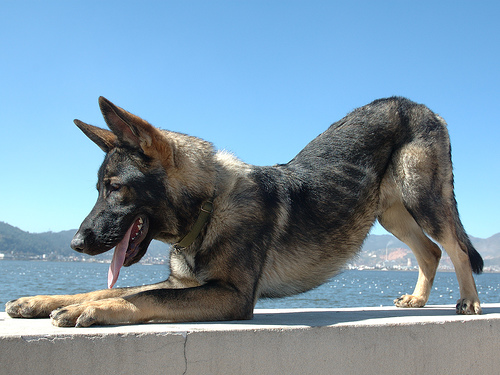
 Photo: Bigsteeve · CC BY-SA 3.0
dog breed · 927 on Animalso
Kunming Wolfdog
- Animal
- Dog
- Origin
- People's Republic of China
The Kunming wolfdog is a working dog breed from Kunming, China. It developed in the 1950s from Alsatians crossed with local dogs, including wolf–dog hybrids. Police and military units in China use it for several duties, such as detecting narcotics and explosives, locating human remains, and rescuing people. The breed received recognition in 2007.
What it does
The Kunming wolfdog is a working dog developed in Kunming, China. Police and military organizations in its country of origin use it for practical service duties.
Recorded tasks include detecting odors from narcotics and explosives, finding human remains, and saving people.
Origins and development
The breed was developed during the 1950s from Alsatians crossed with local dogs, including wolf–dog hybrids. It was recognized as a breed in 2007.
Documented working roles
Its recorded work includes scent detection, human-remains recovery, and rescue. It is also frequently used by Chinese police and military units.
What to keep in mind
The Kunming wolfdog is described as a working breed with a hybrid development history. The supplied record focuses on service duties rather than companion characteristics.
Pricing
No purchase price is provided for this breed.
Who should look elsewhere
If you are comparing breeds from China, browse dog breeds from the People's Republic of China or the wider dog breeds list.
Verdict
Choose the Kunming wolfdog when its documented service background matches your purpose. Its history is tied to Kunming and to working roles in law enforcement, military work, detection, recovery, and rescue. It has also been exported to other countries and holds international recognition as a Chinese working breed.
What stands out
- Used by police and military organizations in China.
- Documented for narcotics and explosives detection.
- Used to locate human remains.
- Used in rescue work.
- Recognized as a breed in 2007.
Worth knowing
- Its development involved Alsatians crossed with local dogs.
- Wolf–dog hybrids are part of its stated development history.
- The supplied record gives no height or weight figures.
- The supplied record gives no lifespan figure.
Suits
- Readers researching Chinese working dog breeds
- People interested in police, military, detection, or rescue roles
Think twice if
- You need a breed profile with recorded size and lifespan figures.
- You are looking only for companion-breed background.
In short
The Kunming wolfdog comes from Kunming, China, where it was developed in the 1950s for work. Its background combines Alsatians, local dogs, and wolf–dog hybrids. The available record places it in police and military service and names detection, remains recovery, and rescue among its duties. It was recognized as a breed in 2007 and has been exported abroad. This profile suits readers researching a Chinese working breed with a documented service history, while people seeking detailed size, lifespan, or companion guidance should consult additional breed information before deciding.
Questions
Where does the Kunming wolfdog come from?
It was developed in Kunming, in the People's Republic of China.
When was the Kunming wolfdog developed?
Its development dates to the 1950s.
What breeds or dogs helped form it?
It came from Alsatians hybridized with local dogs, including wolf–dog hybrids.
What was the Kunming wolfdog bred to do?
It is a working breed used for duties such as scent detection, finding human remains, and rescue.
Who uses the Kunming wolfdog?
Police and military organizations in China frequently use it.
When was it recognized as a breed?
It was recognized as a breed in 2007.
Is the Kunming wolfdog found outside China?
It has been exported to various other countries.
More dog breeds from People's Republic of China
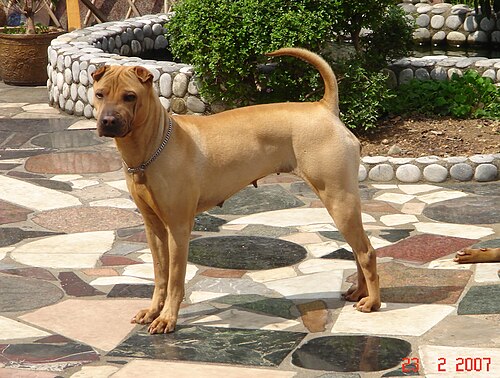
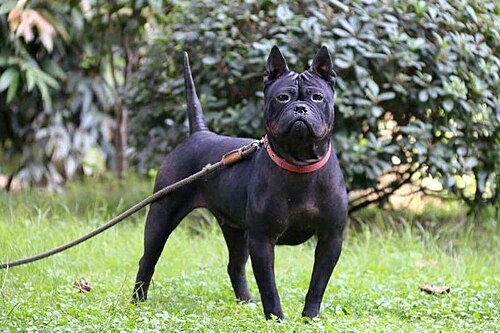
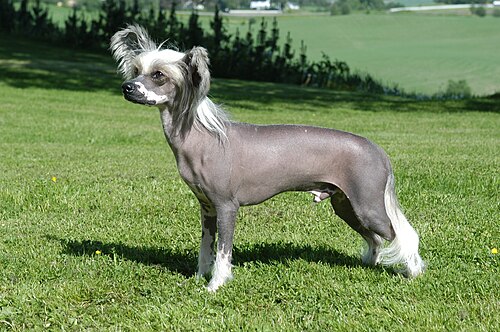
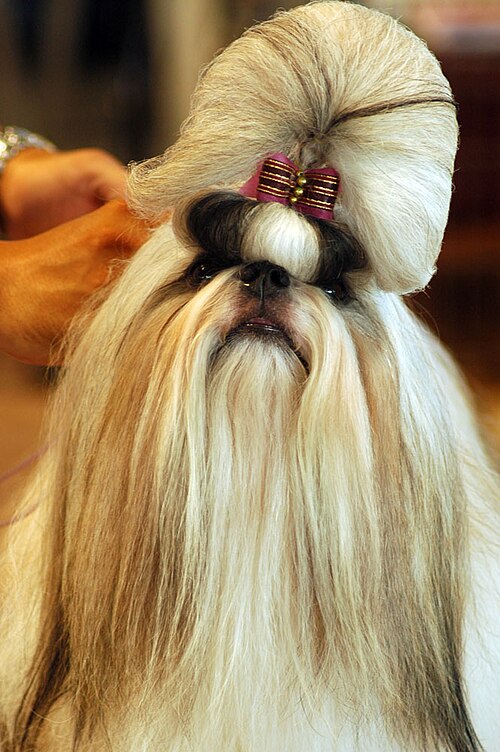
Photo credits9 photographs on this page
- Kunming wolfdog — Bigsteeve · CC BY-SA 3.0 · file page
- Bone-mouth — Inuyasya1106 · Public domain · file page
- Chinese Chongqing Dog — Markus Monroe · CC BY-SA 4.0 · file page
- Chinese Crested Dog — Tommy Gildseth · CC BY 3.0 · file page
- Chow Chow — Prayitno · CC BY 2.0 · file page
- Miniature Shar Pei — Eganfi · CC BY-SA 3.0 · file page
- Pekingese — SheltieBoy · CC BY 2.0 · file page
- Shar Pei — UpdOWN · CC BY-SA 3.0 · file page
- Shih Tzu — danny O · CC BY 2.0 · file page
Photographs come from Wikimedia Commons under the licence each one names. How Animalso credits photographs.