Recommended Free Tools
Yes—fish from different schools can sometimes share a peaceful aquarium, but a schooling label does not make two species compatible. Check each species’ adult size, temperament, water and habitat needs, social group size, and space requirements before buying. Plan to observe the fish after introduction and have a way to separate them if aggression or persistent stress appears.
How to judge whether two schooling species can live together
Compatibility is a decision about the particular pair in the particular aquarium—not a guarantee attached to words like “schooling” or “community fish.” Compare both species as adults and consider how the tank is laid out and stocked.


As an Amazon Associate I earn from qualifying purchases.
- Adult size and predation: Could one fish swallow, chase, or injure the other? Small tetras and pencilfish should not be housed with fish large enough to eat them, according to the OATA choosing-fish guidance.
- Temperament and activity: Avoid combinations where a boisterous or fin-nipping fish is likely to harass timid fish or fish with long fins. Similar size and temperament are generally a better starting point.
- Water and habitat: Check that the species’ environmental needs overlap and that the aquarium can provide suitable conditions for both. A shared freshwater label is not enough to establish that requirements match.
- Swimming room: Consider the aquarium’s footprint and how much open space each school needs. Aqueon recommends long, wide aquariums for schooling fish.
- Social needs: Make sure the aquarium can support an appropriate group of each species instead of spreading the available space and capacity across too many small groups.
- Territory and introduction: Age, sex, breeding behavior, and established territories can affect the risk of conflict.
Keep an adequate group of each species
Many schooling fish do better in groups rather than as a few scattered individuals. Aqueon’s broad guidance is: “Always buy schooling fish in groups of 6 or more,” as stated in its Fish Compatibility guide. Its separate Schooling Fish article likewise recommends at least six, with more where the aquarium permits. Treat six as general guidance, not a universal prescription: a species-specific recommendation may differ, and the aquarium must have room for the fish to thrive.
For example, the Seriously Fish Panther danio profile recommends keeping at least 8–10 specimens and describes the species as a peaceful community candidate when its adult size is taken into account. Do not turn that species-specific figure into a rule for every schooling fish.
#1 Best Overall
Use cover and layout to support a calm community
Plants, rocks, caves, and driftwood can provide shelter and help create visual boundaries or separate areas of a tank, according to Aqueon’s compatibility guidance. Use layout to give fish places to retreat and to structure the aquarium, while recognizing that décor cannot make a predator safe for small tankmates or resolve aggression and mismatched water needs.
Independent reader supportYour contribution helps us test, update, and keep practical guides available for everyone.“Community fish” still need species-level checks
Aqueon lists guppies, danios, mollies, tetras, platies, swordtails, barbs, rasboras, otocinclus, and keyhole cichlids among community-fish examples. The same guidance warns against mixing community fish with aggressive species. These categories are starting points, not proof that every pair from the lists will work; check adult size, behavior, and care needs for the exact species.
Why bettas are a useful caution
Aqueon’s November 2019 betta care sheet says bettas can be kept with other fish in a peaceful community aquarium of 15 gallons or larger, and gives examples of suitable tankmates. It also advises against male gouramis, fin-nippers such as tiger barbs, and active fish such as giant danios. This is guidance from that dated care sheet, not a guarantee for every betta or aquarium; assess the individual fish and proposed combination before adding tankmates.
Quick Recap
Rank #4
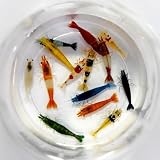
- 🦐 1. Vibrant Candy Skittle Color Mix Receive 10 adult mixed-color Neocaridina shrimp plus 1 extra free. Every pack includes a beautiful assortment of vibrant colors such as Fire Red, Blue Dream, Orange, Yellow, Green Jade, Chocolate, Carbon Rili, Orange Rili and more. Every shipment is unique.
- 🌿 2. Perfect Cleanup Crew for Freshwater Aquariums These active freshwater shrimp naturally graze on algae, biofilm, leftover food and organic waste, helping maintain a cleaner and healthier aquarium while adding constant movement and brilliant color.
- 💪 3. Hardy Beginner-Friendly Shrimp Adult Neocaridina shrimp are among the easiest freshwater shrimp to keep. They adapt well to a wide range of water parameters, making them ideal for beginners, planted tanks, nano aquariums and community tanks.
- 📦 4. Professionally Packed with Live Arrival Guarantee Every order is carefully packed using insulated packaging, breather bags and temperature protection when required to maximize survival during transit. If a verified DOA occurs, our support team will quickly help with a replacement or solution.
Rank #3

- COMMUNITY FORMULATION: Complete diet fish food for all feeder levels that provides healthy variety and feeding fun for your entire aquarium community.
- 3 FOODS IN 1: Includes Tetra TetraMin Tropical Flakes, TetraMin Granules plus mini wafers, all in one can.
- COMPLETE DIET: Fortified with Vitamin C and easily digested.
- FOR DAILY FEEDING: Advanced nutrition for the discerning fish-keeper.
- EASY-TO-USE DISPENSER: Canister top allows you to dial in the food you want.
Before buying, confirm the exact combination
- Identify each species, not just its common group. Write down the exact fish you plan to keep so you can check species-specific adult size, behavior, and social needs.
- Compare adult requirements. Confirm that both species’ water conditions, habitat, and swimming-space needs can be met in the same aquarium.
- Plan groups and capacity together. Work out whether the tank can hold an appropriate group of each species while leaving enough room for their normal movement.
- Ask about the pairing before purchase. General compatibility guides cannot guarantee every combination. Aqueon recommends seeking retailer input when planning a community, and OATA also advises consulting a retailer for compatibility decisions.
- Observe after introduction. Watch for chasing, fin-nipping, hiding, or other signs that one fish is persistently harassing another. If conflict appears, use your separation plan rather than assuming it will resolve on its own.
Product prices and availability are accurate as of the date/time indicated and are subject to change. Any price and availability information displayed on Amazon at the time of purchase will apply.




