
Quick wins for a faster PC:
Repair Windows errors before they cause bigger problemsFix Now →Scan for outdated or missing drivers - takes under a minuteDriver Scan →Clear out junk files and repair common Windows errorsFree Scan →Some links on this page are affiliate links: if you buy through them we may earn a commission, at no extra cost to you.
Yes—but only for a period your puppy can handle comfortably. Studying at home can become a useful, low-pressure way to teach short separations: your puppy settles in a safe area, you move briefly out of sight, and you return before the puppy becomes distressed. Increase the challenge in small steps, while planning around toilet needs, age, health, energy and the individual puppy’s behavior.
Being in the same house does not automatically make a long study session safe. If your puppy cannot yet remain relaxed for the length of your planned block, arrange a trusted sitter, helper or suitable walker visit instead of extending the absence abruptly. The objective is confident, calm independence—not simply enduring a long absence.
As an Amazon Associate I earn from qualifying purchases.
What “alone while you study” really means
A puppy can be physically alone even when you are working in the next room. Your puppy still has to cope with a closed door, reduced access to you, a quiet period without interaction and the possibility that you will not respond immediately. That makes a study session useful practice only when the puppy’s needs have been met and the separation is within the puppy’s current comfort level.
There are two goals to keep separate:
- Practical management: keeping the puppy safe, toileted, rested and occupied while you read or attend class.
- Independence training: teaching the puppy, gradually, that being in a safe area and briefly apart from you predicts calm, ordinary experiences.
A puppy that sleeps through one quiet period has not necessarily learned to cope with every future absence. Conversely, a puppy that vocalizes during one difficult attempt has not “failed.” The response tells you that the setup, duration or step was too hard at that moment.
Popular on Amazon

- Extra-Small 24-inch exercise play pen (single door) for dogs up to 16 inches tall or for other small pets
- 8 connected panels with thumb clips for connecting the ends together; 2 locking slide-bolt door latches; 8 ground anchors for secure placement outdoors; made of durable iron wire with a rustproof finish
- Can be easily configured into multiple stand-alone shapes (round, square, rectangle) for playtime or be used to block off a room
- Sets up in seconds; simply unfold, shape, and connect (no tools needed); folds flat for easy transport and storage
- Note: Do not leave pets unattended outdoors
Prepare before your first study session
Meet basic needs first
Take the puppy out for a toilet opportunity and provide age-appropriate food, water and movement before asking for separation. A short play or training session can help, but avoid deliberately exhausting a puppy or creating frantic excitement immediately before confinement. Young puppies may need to toilet again sooner than you expect, especially after eating, drinking, waking or active play.
Check health and comfort as well. Pain, diarrhea, illness, overheating, hunger or an uncomfortable sleeping area can look like an inability to be alone. If the behavior changes suddenly, address the possible medical problem rather than increasing training difficulty.
The Tool Desk
Outbyte PC Repair FREERepair Windows errors before they cause bigger problemsFix Now →Outbyte Driver Updater FREEFix the driver behind crashes, sound loss and screen glitchesFind Drivers →Choose a safe area
Use a crate, exercise pen or puppy-proofed room. Remove electrical cords, toxic plants, medications, cleaning products, small objects, loose fabric and anything the puppy could chew, swallow or pull down. Secure doors and gates, and check that the puppy cannot climb, squeeze through or tip the barrier.
The area should include a comfortable resting surface and access to water when appropriate for the setup. Keep the environment predictable. A quiet corner away from household traffic may help one puppy, while another settles better where normal household sounds continue. Observe rather than assume.
Introduce the area while you are present
Do not make the first crate or pen experience coincide with your longest study block. Leave the door open at first and allow the puppy to investigate voluntarily. Drop treats or feed part of a meal in the area, then let the puppy leave. Repeat until entering the area is ordinary rather than a signal that you are about to disappear.
A crate should be large enough for the puppy to stand, turn around and lie down comfortably. A divider can make an adult-sized crate usable as the puppy grows, provided the available section is not so large that the puppy can toilet at one end and sleep at the other. Never use the crate as punishment.
Crate, pen or puppy-proofed room?
A crate is optional. Cornell University’s veterinary guidance notes that an exercise pen or gated area can be a better choice for a dog that becomes stressed by crating. The right option is the one that gives this puppy a safe, manageable space and produces relaxed behavior during introduction and practice.
Also popular on Amazon
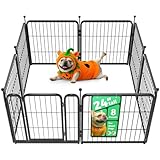
- A win-win solution: The FXW Dog Playpen is designed to bring a win-win solution to you and your lovely dog. Different from a narrow enclosure cage or kennel, the FXW dog pen provides a spacious semi-open activity area specifically for your dog. Your dog will have fun in its safe and sturdy kingdom. Meanwhile, you can take a real break and be truly relaxed without worrying about your beloved pet. Fun, Relaxation and Well-being is the orientation of the FXW team.
- Unlock your freedom, savor the moment: The stakes are designed with rounded ball tops to protect the dog's claws from injury. The rods are easily inserted into the ground for greater stability and rigidity, which won't collapse when the dog leans against them. Also, the automatic gravity-actioned locking mechanism will ensure you can open and close the door smoothly and reduces the chance of dogs unlocking by themselves. All of this is designed for absolute safety, so you can really relax.
- Super easy to assemble: It won’t take you more than 5 minutes to assemble these portable dog fences as well as pack them away due to the rod-connected design. Meanwhile, panels can be added or removed freely to give you a fully flexible area and arrange the dog pen in any shape you need.
- Multi-scenario use: The FXW dog playpen features a powder coating that will help protect against rust and extend its life, which makes it ideal for RV camping, traveling, or for use in the yard. When used indoors, we recommend placing it on a dog pad or carpet to prevent the rods from scratching the floor, or please try our new floor protectors or dog pee pad for the same purpose.
| Option | Strengths | Limitations and checks |
|---|---|---|
| Wire crate | Allows airflow and visibility; many models fold for storage and accept a divider as the puppy grows. | Some puppies become more frustrated by the exposed sides or by being physically restricted. Covering part of the crate may help some puppies, but observe the response. |
| Plastic crate | Solid sides can feel sheltered and reduce visual stimulation. | Often bulkier to store. Ensure ventilation, correct sizing and a secure door. |
| Fabric crate | Lightweight and convenient for some calm, mature dogs. | Usually less durable and may be unsuitable for puppies or chewers that can tear fabric or ingest pieces. |
| Exercise pen | Provides more room to stand, turn, move and use a safe activity; can be combined with a bed and carefully selected toilet arrangement when appropriate. | Needs secure panels and a puppy-proof floor and perimeter. A larger area is not automatically safer if the puppy can reach hazards. |
| Puppy-proofed room or gated area | Offers natural movement and avoids crate confinement for puppies that find it upsetting. | Requires thorough hazard control and a reliable barrier. Check that the puppy cannot access furniture, stairs or doors leading to unsafe spaces. |
Introduce whichever arrangement you choose while you can supervise. If a puppy shows escalating panic in a crate, switching to a pen or gated area may be more humane than insisting on the crate. Crating is a management tool, not a treatment for separation anxiety.
A gradual plan for building alone-time comfort
The following sequence follows the approach recommended by the American Kennel Club, UC Davis School of Veterinary Medicine and humane-society training guidance. The stages are not a calendar. Some puppies move through them quickly; others need many easy repetitions. Advance only when the puppy remains comfortable.
Stage 1: Settle in the safe area with you nearby
- Place the puppy in the open crate, pen or gated area with a calm activity.
- Sit close enough that the puppy can see you. Read, type or study without constantly interacting.
- Reward relaxed behavior—lying down, chewing appropriately or looking away from you—by quietly placing a treat or part of a meal in the area.
- End the repetition while the puppy is still comfortable. Open the gate or invite the puppy out without making the release exciting.
If the puppy immediately scratches, circles, pants or cries, make the area easier: shorten the repetition, move closer, open the door or return to an open-door introduction.
Free tools Windows power users keep installed
One-click scans. No signup required.
Stage 2: Add small amounts of distance
When the puppy can settle with you beside the area, stand up, sit farther away and move around the room. Keep the duration short while you increase distance. AKC crate-training guidance specifically recommends increasing distance while reducing duration, then rebuilding duration after the dog handles the greater distance comfortably.
Use easy repetitions between harder ones. For example, one brief step away can follow a longer calm settle beside you. Making every repetition more difficult can push a puppy over its threshold.
Stage 3: Step out of sight
Walk behind a visual barrier or through an open doorway, then return promptly while the puppy is still calm. Vary whether you disappear to the side, behind a door or for a different household task. The lesson is that your movement is ordinary and your return is predictable, not that the puppy must wait through an increasingly long test every time.
Progress from an open doorway to a briefly closed interior door only when the puppy remains relaxed. UC Davis advises building closed-door and out-of-room periods slowly because learning time varies from puppy to puppy.
Recommended Free Tools
Also popular on Amazon

- 【Durable 600D Oxford Fabric】The bottom pad was made of 600D thick oxford, which is durable and with high strength.
- 【Safe & Foldable Pet Playpen】Exercise dog pen has 8 connected panels (each panel 24H and 24W Inches) easy to set up puppy pet folding playpen and take it down,folds flat for easy storage and transport. No need tools for installing.
- 【Happy Floor Time】 Stressing out when your pet knocks over the food bowl or little piggies relieve themselves everywhere? The floor mat saves your day—Oxford fabric with a water-resistant coating is easy to wipe clean while protecting your piggy’s sensitive feet or your floor.
- 【Great for Small Animals】8 panels exercise pen works great as a dog fence or as an exercise area for non-climbing small to medium animals including rabbits, ducks, turtles & guinea pigs and some other small animals.
- 【Perfect for Indoor & Outdoor Use】The rust-preventive and water-proof,protects the dog playpen from the elements & included ground stakes fix to ground not to move,allow to configure into multiple shapes, great for indoor or outdoor use.
Stage 4: Practice brief departures from home
Once the puppy can settle and tolerate short out-of-sight periods, practice leaving the home for a brief, manageable absence. Prepare the safe area first, leave without a dramatic goodbye and return calmly. Do not jump from successful room practice to the length of a lecture or a multi-hour study block.
Change one difficulty at a time. A departure after a busy morning, a new location, a different chew or a longer duration may each be harder than expected. If the puppy struggles, return to the last easy version rather than repeating the difficult absence.
Stage 5: Build useful duration, not a maximum record
Increase time only when the puppy repeatedly stays relaxed, uses the area safely and can settle after you leave. There is no prize for reaching the longest possible absence. The useful endpoint is the duration that fits your real study needs without distress, with toilet and care breaks built in.
Stage 6: Keep practice varied and ordinary
Continue occasional easy repetitions even after the puppy manages longer ones. Practice when you are working, cooking or taking a short shower, not only when you plan to leave for a long time. Matter-of-fact departures and returns reduce the contrast between training and normal life.
How long can my puppy be alone?
No single number is safe for every puppy. Toilet capacity, age, size, health, sleep pattern, previous experience, activity level, environment and emotional response all matter. The puppy’s observed comfort is more informative than a generic chart.
Seattle Humane describes a maximum of one hour per month of age in a housetraining context. That is a rough crate and toilet-training heuristic, not proof that a puppy is emotionally comfortable alone for that long. Other veterinary guidance emphasizes bladder capacity, individual variation and the need for opportunities to toilet, move, play and interact. Do not use an age-based calculation to justify a long, uninterrupted study session.
| Question to assess | What it changes |
|---|---|
| Has the puppy just eaten, drunk, awakened or played? | A toilet break may be needed sooner. |
| Can the puppy settle in the area while you are nearby? | If not, leaving the room is probably too difficult. |
| Does the puppy remain relaxed when you are out of sight? | If not, reduce distance or duration before attempting a departure. |
| Is the puppy sleeping, calmly chewing or resting? | These are more reassuring observations than simply hearing silence; use a camera or periodic visual check when practical. |
| Has the puppy shown distress, accidents or destructive escape behavior? | Shorten the next practice and investigate the setup, toilet timing and possible anxiety. |
| Does the planned study block exceed the current successful duration? | Arrange a sitter, trusted helper or suitable walker visit rather than extending the absence abruptly. |
If you are unsure, plan the study period around the puppy’s current demonstrated ability and add help. A puppy’s capacity can also vary from day to day, so leave a margin rather than scheduling right up to the limit.
Also popular on Amazon
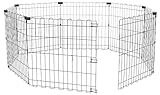
- Extra-Small 24-inch exercise play pen (no door) for dogs up to 16 inches tall or for other small pets
- 8 connected panels with thumb clips for connecting the ends together; 8 ground anchors for secure placement outdoors; made of durable iron wire with a rustproof finish
- Can be easily configured into multiple stand-alone shapes (round, square, rectangle) for playtime or be used to block off a room
- Sets up in seconds; simply unfold, shape, and connect (no tools needed); folds flat for easy transport and storage
- Note: Do not leave pets unattended outdoors
Design a study-day routine
Before studying
- Offer a toilet opportunity and check that the puppy is comfortable and healthy.
- Provide suitable movement and calm interaction, avoiding a frantic pre-study routine.
- Set up the crate, pen or puppy-proofed area and remove hazards.
- Place a familiar, puppy-safe activity in the area.
- Decide in advance when a helper, sitter or walker will arrive if the block may exceed the puppy’s capacity.
During the study block
Keep departures and returns low-key. If you are studying in another room, listen for changes in behavior but do not repeatedly open the door for every small sound; doing so can make settling harder. At the same time, do not ignore escalating panic in the hope that it will teach independence. Use the puppy’s behavior to decide whether the repetition was appropriate.
For longer academic sessions, divide your schedule around the puppy’s actual needs. A helper can provide a toilet break, play, feeding or social contact, but the helper’s visit does not replace gradual training. It simply prevents a study requirement from forcing the puppy beyond its current limit.
After the block
Take the puppy out as needed, provide normal interaction and note what happened. Record the setup, approximate duration, activity offered and any signs of stress. This practical log helps you identify whether the puppy struggles after meals, at a particular time of day, with a closed door or only when you leave the home.
Food toys and other enrichment: useful, with safeguards
A meal in a safe food-stuffed toy, a treat-dispensing toy or an appropriate puzzle activity can create a positive association with the safe area. Introduce the item while you are present. A toy that is safe during supervised chewing is not automatically safe to leave unattended.
Before leaving the puppy with a new item, watch how this puppy uses it. Avoid anything that can be swallowed whole, splinter, break apart, shed strings or become lodged in the mouth. Choose a size that cannot fit fully into the puppy’s mouth, and replace an item as soon as it becomes damaged. If the puppy ignores the toy, guards it, becomes frustrated or tries to destroy it, remove it and choose a simpler activity.
What’s actually slowing this PC down?
Pick the symptom - the matching free tool is one click away.
White noise or a heartbeat-style toy may comfort some puppies, and AKC lists them as possible aids, but they do not prevent distress. Observe the puppy’s reaction and stop using any sound or device that appears to increase agitation.
Independent reader supportYour contribution helps us test, update, and keep practical guides available for everyone.Recognize distress before it becomes a training setback
Vocalizing alone does not tell you exactly why a puppy is upset, but persistent or escalating behavior deserves attention. Cornell, UC Davis and AKC guidance identify warning signs such as:
Also popular on Amazon

- 🐶【 ANTI-RUST METAL PET PLAYPEN】: The epoxy coating finish protects the pet playpen from rust, corrosion, fading and making it perfect for all weather conditions. The dog fence’s durable design extends the life of the fence, ensuring long-term use with minimal maintenance and doesn't take up much time to clean.
- 🐶【 STURDY AND CUSTOMIZABLE SHAPES】:The dog playpen is constructed from high-strength solid wire and securely fastened to the ground when outdoor. Our 8-Panel pet pen design allows for multiple shape configurations, including square, rectangle and octagon, to suit your space and pet's needs.
- 🐶【CONVENIENCE ENTRY FOR PETS】: The puppy pet playpen comes in sizes of 24in, 30in, and 36in with a doorless design.The larger sizes of 42in and 48in feature step door makes it easy for your pet to walk through and fence doors will not injure them,and equipped with 2 secure latches, this playpen ensures double security, preventing even the most energetic pets from escaping.
- 🐶【EASY TO ASSEMBLE AND STORE】: This dog playpen does not require any tool assembly and can be set up right away in just a few minutes. Simply position the fence upright and secure it with the included metal buckles. When not in use, the dog pen folds flat for convenient storage and transport.
- 🐶【VERSATILE USAGE】: Perfect for various kind of pets such as puppies, rabbits, guinea pigs, ducks, turtle and other small animals, this indoor and outdoor playpen offers a safe play area indoors or outdoors. Pet playpen provides ample space for your pets to exercise, explore, and relax while giving you peace of mind.
- ongoing barking, whining or crying that does not settle;
- pacing, frantic circling or repeated inability to lie down;
- panting or drooling unrelated to heat or recent exercise;
- repeated pawing, biting or throwing the barrier;
- escape attempts, damaged doors or injured paws and teeth;
- elimination despite an otherwise appropriate toilet schedule;
- refusal of a normally valued food activity when alone.
These signs are not manipulation. They indicate that the current combination of confinement, distance, duration or environment is too difficult, or that a medical or behavioral problem needs assessment.
Troubleshoot by making the next repetition easier
| What you observe | Likely adjustment |
|---|---|
| The puppy cries as soon as the door closes. | Return to an open-door or partially closed-door exercise, stay nearer and reinforce calm before trying another brief closure. |
| The puppy settles beside you but panics when you leave the room. | Practice tiny out-of-sight movements, increasing distance only after calm repetitions. |
| The puppy is calm in a pen but distressed in a crate. | Use the pen or gated puppy-proofed area for management and reassess whether crate training is appropriate. |
| The puppy chews or swallows pieces of the provided toy. | Remove the item, supervise future trials and select a more durable, correctly sized alternative. |
| An accident occurs during a session. | Shorten the interval, improve toilet timing and clean the area thoroughly. Do not punish the puppy. |
| The puppy paces, pants, drools or attempts escape. | End the difficult repetition safely, return to an easier stage and seek professional advice if the response is intense or recurring. |
| The puppy is quiet but appears frozen, shut down or unusually withdrawn. | Do not treat silence as success. Check the puppy in person, reduce the challenge and discuss the behavior with a veterinary professional if it persists. |
When a puppy cries, AKC notes that training may have started before a positive association was established or that the absence was too long. The practical response is to shorten the exercise and rebuild comfort, not to wait through panic.
Do these 3 things before closing this tab:
1Repair Windows errors before they cause bigger problems2Scan for outdated or missing drivers - takes under a minute3Clear out junk files and repair common Windows errorsWhen to involve a veterinarian or behavior professional
Contact your veterinarian if anxiety is pronounced, begins suddenly, is accompanied by illness or injury, or does not improve when you make practice substantially easier. A veterinarian can look for medical contributors and advise whether referral is appropriate.
Seek a qualified, reward-based trainer or veterinary behavior professional when the puppy repeatedly panics, will not stop crying, injures itself trying to escape, destroys barriers, cannot eat or settle when alone, or when your attempts to progress keep causing setbacks. UC Davis cautions that crating may do little to reduce separation anxiety and can increase anxiety in some dogs; confinement should not be presented as treatment.
Common mistakes that make studying harder
- Starting with the full study block: A puppy that has only practiced being beside you is not ready for hours alone.
- Using a generic age formula as a guarantee: Toilet guidance is not an emotional-capacity test.
- Making every repetition harder: Alternate easy and difficult exercises so the puppy has repeated successes.
- Using the crate as punishment: This undermines the positive association needed for calm confinement.
- Leaving an untested chew: New toys require supervised safety checks first.
- Ignoring panic: Distress is information. Reduce the challenge instead of forcing the puppy to endure it.
- Assuming home presence equals supervision: If you cannot monitor the puppy while concentrating, use a setup and duration that are already known to be safe.
- Forgetting the puppy’s changing needs: Growth, teething, illness, new environments and changes in routine can alter tolerance.
Practical examples
If your puppy is new to the home
Keep the puppy’s safe area open while you study nearby. Reward voluntary entry, calm rest and appropriate chewing. Once the puppy can settle, add tiny movements away from the area and short out-of-sight moments. Schedule a helper for any class or study period longer than the puppy’s demonstrated ability.
If your puppy handles the pen but not the crate
Use the pen for current management rather than forcing the crate. Continue optional crate games with the door open, meals near or inside it and brief closures only when the puppy remains relaxed. The goal is a useful safe area, not a particular piece of equipment.
If your puppy was previously comfortable but now struggles
Check for a toilet or health issue, a change in household noise, a new fear, altered routine or an uncomfortable setup. Return to an easier stage and observe carefully. Persistent regression warrants veterinary or behavior guidance.
A decision checklist before you start studying
- Has my puppy had a recent toilet opportunity and appropriate activity?
- Is the chosen area puppy-proofed, secure and comfortable?
- Has my puppy practiced settling there while I am nearby?
- Have I tested the food toy or chew under supervision?
- Is the planned separation no longer than a duration my puppy has already handled calmly?
- What will I do if the puppy needs to toilet, becomes distressed or finishes the activity early?
- Do I have a sitter, trusted helper or suitable walker option for a block beyond the puppy’s current capacity?
If the answer to the duration question is no, change the study plan rather than asking the puppy to absorb a sudden, long absence. With gradual practice and appropriate support, studying can become one of many ordinary situations in which your puppy learns to settle safely.





Leave a Reply