
Do these 3 things before closing this tab:
1Clear out junk files and repair common Windows errors2Scan for outdated or missing drivers - takes under a minute3Repair Windows errors before they cause bigger problemsUsually, eating tuna every day is not the safest default. The answer depends on the type of tuna, portion size, how long you have been eating it, and what other seafood you eat during the week. Canned light tuna—including skipjack—is lower in mercury than albacore, yellowfin, and bigeye tuna, but U.S. FDA/EPA guidance still emphasizes a varied seafood pattern rather than daily tuna.
For most adults, a practical target is about 2–3 servings of a variety of lower-mercury fish per week, with one serving being approximately 4 ounces of fish measured before cooking. That does not mean eating 8–12 ounces of tuna every day.
As an Amazon Associate I earn from qualifying purchases.
The short answer
You can include tuna in a healthy diet, but eating the same tuna every day can increase your exposure to methylmercury. A safer pattern is to eat tuna a few times per week at most and rotate it with other lower-mercury seafood.
If you choose tuna frequently, canned light tuna or skipjack is generally a better choice than albacore (white) tuna, yellowfin tuna, or bigeye tuna. However, “lower mercury” does not mean “eat unlimited amounts.” The FDA/EPA advice recommends variety and weekly serving limits.
#1 Best Overall

- QUICK ACCESS: Unlike traditional leather wallet, this mens slim wallet is equipped with the ejection mechanism. Simply press the side button on the card holder, all cards pop up at a step pattern that makes them very easy & convenient to take out.
- SLIM BODY, LARGE CAPACITY: This mens minimalist wallet holds up to 12+ cards. The aluminium chamber holds 6-8 and the leather flap holds 4-6 (1 ID window included). There are also removable money clips on the back capable of holding 15+ cash.
- CLEAR ID WINDOW: On the inside of the carbon fiber wallet, which has an ID card holder slot, which allows you to swipe the card without removing the card. It can be used to store ID card, work card, driver license, access card, traffic card, etc.
- RFID BLOCKING: This rfid wallet for men embeds a chip in the aluminum card case to block unknown scanning devices from scanning your credit cards, debit cards, and driver's licenses, maximizing the protection of your personal property.
- PERFECT PRESENT IDEA: This leather wallet is packaged in a beautiful premium box and it is great choice for men. It is a perfect credit card wallet for your friend, lover, parent or yourself on special Days.
Why daily tuna may be a problem
The main concern is methylmercury, a form of mercury that accumulates in fish tissue. Tuna are predatory fish, and larger, older tuna generally accumulate more mercury than smaller tuna commonly used for canned light tuna.
FDA information indicates that albacore tuna typically contains about three times more mercury than canned light tuna. Mercury is distributed through the fish’s tissue, so cooking, draining, rinsing, or removing the oil does not remove it. The practical ways to lower exposure are choosing lower-mercury species, keeping portions reasonable, and varying the seafood you eat.
Mercury exposure is especially important during pregnancy and childhood because methylmercury can affect the developing nervous system. That does not mean an adult who has eaten tuna recently should assume they have been poisoned; risk depends on the species, amount, duration, body size, and overall diet.
Free tools Windows power users keep installed
One-click scans. No signup required.
How often can you eat each type of tuna?
| Tuna type | FDA/EPA category | Practical interpretation |
|---|---|---|
| Canned light tuna, including skipjack | Best Choice | Keep it to roughly 2–3 servings per week when it is part of your seafood rotation. Do not treat the allowance as a recommendation to eat only tuna. |
| Albacore or white tuna, canned or fresh/frozen | Good Choice | Generally limit to 1 serving per week under the FDA/EPA chart, with no other fish that week in the pregnancy-focused framework. |
| Yellowfin tuna | Good Choice | Treat it as a higher-mercury choice than canned light tuna and generally limit it to 1 serving per week under the chart. |
| Bigeye tuna | Choice to Avoid | Do not choose it as a routine seafood option under FDA/EPA advice. |
“Light” and “white” are not interchangeable package terms. Canned white tuna generally means albacore, while canned light tuna commonly includes skipjack. Read the label rather than assuming all canned tuna has the same mercury level.
Rank #2
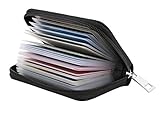
- Material: Genuine leather and PVC card slots.
- Size: 4.72"*3.15"*0.7" (12*8*1.8 CM)
- Large Capacity: The card holder has 26 cards slots. It is enough room for your ID card, credit cards, gift cards and dicounted cards. Small size is perfect to fit in your pockets or handbags.
- RFID Blocking: RFID Blocking designed lining keeps your vital information Secure. Be safe and protected from Electronic Pick pocketing.
- Great Gift Idea: Great gift for mother, daughter, grandmother and so on.
The FDA/EPA chart was created especially for people who are pregnant, breastfeeding, may become pregnant, and children ages 1–11. FDA also says the same lower-mercury approach can be followed by everyone. Recommendations can differ by country, and local advisories take priority for fish caught in local waters.
What counts as a serving?
For a typical adult, use approximately 4 ounces of fish measured before cooking as one serving. The general adult advice is about 2–3 servings—or approximately 8–12 ounces—of a variety of lower-mercury fish per week.
That weekly amount refers to your total pattern of lower-mercury seafood, not a quota of tuna to eat in addition to other fish. If you eat tuna twice and salmon once, for example, those are three seafood servings for the week. You should also account for other fish and shellfish you eat.
Does tuna provide useful nutrients?
Yes. Tuna provides protein and nutrients such as vitamin B12, vitamin D, selenium, iodine, iron, zinc, and choline. It also supplies EPA and DHA omega-3 fatty acids, although the amount varies by species and preparation.
Rank #3

- 💳 QUICK ACCESS & LARGE CAPACITY HOLD UP 1-12 CARDS: This mens wallet designed with enhanced enjection mechanism button to pop up cards quickly. The aluminum card holder holds 4-6, depends on the number of embossed cards, and the expandable metal backplate holds 5-6 additional cards. The actual capacity depends on the card thickness.
- 💳 ULTRA THIN PROFILE (SLIM WALLET FOR MEN): The minimalist tactical wallet is very thin and can be carried comfortably in a pocket. The aluminum cardholder size is 3.9*2.5*0.5in,weight only 2.6oz. And expandable backplate designed for additional storage. Ditch the bulk, less is more.
- 🔒 RFID & NFC BLOCKING: This smart wallet use advanced aluminium technology to protect your cards from unauthorized and contactless scanning. Stop thieves from cloning your bank cards and prevent data theft.
- 💳 KEEP CARD TIGHTLY: Our pop up wallet with inside silicone strip that keeps your cards to be held tightly compared with normal felt. No worry cards will fall out.
- 🎁 PERFECT PRESENT IDEA: Our minimalist wallets packed with a pretty box. Aluminum wallet for men is a great present for boyfriend, brother, son, husband, dad, or your male friends on christmas, birthdays, anniversaries, and father's Day.
According to the NIH Office of Dietary Supplements, 3 ounces of light tuna canned in water and drained contains approximately 0.17 grams of EPA and 0.02 grams of DHA. That is useful, but it is not necessarily as much omega-3 as you would get from salmon, sardines, or some other oily fish.
The American Heart Association recommends two servings of fish per week, particularly fatty fish, as part of a heart-healthy eating pattern. This supports eating seafood regularly; it does not require tuna every day. The benefit is more meaningful when nonfried seafood replaces less-healthy foods, rather than when tuna is simply added to an otherwise unchanged diet.
Pregnancy, breastfeeding, and trying to become pregnant
People who are pregnant, breastfeeding, or may become pregnant should follow the FDA/EPA fish chart particularly carefully:
PC Slower Than It Used to Be?
A free scan shows the junk files, broken settings and background clutter dragging Windows down - then fixes them in one click.Free scan · Windows 10 & 11Crashes, No Sound, or Screen Glitches?
Random freezes, missing sound and display glitches usually trace back to one bad driver. Find and replace yours safely.Free scan · under a minute- Eat 2–3 servings per week from the “Best Choices” list, with each serving about 4 ounces.
- Canned light tuna is a “Best Choice.”
- Albacore/white tuna and yellowfin tuna are “Good Choices,” generally limited to 1 serving per week.
- If eating one serving from the “Good Choices” category, the FDA/EPA framework says to eat no other fish that week.
- Avoid bigeye tuna.
Do not interpret canned light tuna’s “Best Choice” classification as a guarantee that daily consumption is appropriate during pregnancy. The guidance still emphasizes serving limits and variety.
Rank #4
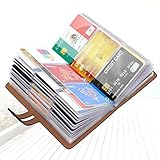
- 【Durable Materials】: Our credit card organizer is made of water-resistant and wear-resistant PU, reinforced with sealed edges and durable PVC credit card sleeves. It is scratch-resistant and water-repellent, resistant to dust and sweat, and easy to clean. The edges of the credit card holder are reinforced to provide the advantages of wrinkle resistance and crack resistance.
- 【RFID Blocking】The credit card holder has an anti-shield lining, which can effectively block the electronic scanning instrument from illegally scanning the credit card in the card holder to protect the security of your RFID chip card.
- 【Easy to Find & Read】The internal translucent anti-magnetic PVC card page makes it easy for you to find and read card information and quickly find the card you need.
- 【Large capacity / Multipurpose】A total of 32 card slots, each card can hold 3 cards. A total of 96 card slots, fully meet your needs for card storage. You can hold your important customer business cards, credit cards, debit cards, ID cards, membership cards, VIP cards, invoices, receipts, etc. to prevent loss and damage.
- This is the best choice to keep your credit card and business card organized and easy to manage. Can be used to store credit cards or business cards that are important but not commonly used.
How much tuna can children eat?
Children should have smaller portions based on age and generally eat 1–2 servings per week from the FDA/EPA “Best Choices” list. Approximate serving sizes are:
| Child’s age | Approximate serving size |
|---|---|
| 1–3 years | 1 ounce |
| 4–7 years | 2 ounces |
| 8–10 years | 3 ounces |
| 11 years | 4 ounces |
These are approximate amounts. A child’s overall seafood intake, the type of tuna, and any local fish advisories also matter.
A safer weekly seafood pattern
- Choose canned light or skipjack tuna when you want tuna more often. This category is generally lower in mercury than albacore and several larger tuna species. If you are shopping, canned light tuna in water is the relevant category to compare. Product labels still matter, and this is not a reason to eat tuna daily.
- Limit tuna to a few meals per week rather than every day. Stay aware of serving size instead of counting only cans or meals.
- Rotate species. FDA/EPA “Best Choices” include options such as salmon, sardines, trout, pollock, shrimp, cod, and tilapia.
- Check the label. “White” generally means albacore; “light” commonly includes skipjack.
- Count all seafood for the week. Tuna is not the only source of methylmercury exposure.
- Check local advisories if you eat fish caught by you, family, or friends. Contamination can vary substantially by location.
What if you have already eaten tuna every day?
Do not panic or assume that a short period of daily tuna proves mercury poisoning. Mercury risk is associated with repeated exposure over time, and the significance depends on the tuna species, portion size, duration, body size, pregnancy status, and other fish eaten.
Quick wins for a faster PC:
Repair Windows errors before they cause bigger problemsFix Now →Scan for outdated or missing drivers - takes under a minuteDriver Scan →Clear out junk files and repair common Windows errorsFree Scan →A sensible next step is to stop the daily pattern, switch to a variety of lower-mercury seafood, and review your intake. Speak with a clinician or poison-information service if the intake was unusually large or prolonged, or if you are pregnant or breastfeeding. Seek individualized advice rather than trying to diagnose mercury exposure from symptoms alone.
Best Value

- QUICK CARDS ACCESS: This minimalist wallet for men features a smooth pop-up mechanism. Just press the side button, and the cards slide out in a stepped layout for easy access.
- SLIM BODY WITH LARGE CAPACITY: Despite being slim at only 0.6 inches thick, this card wallet for men can hold 10-12 cards. The aluminum chamber holds 6-8 and the leather flap holds 4 (2 ID windows included). The money clip on the back holds 10+ bills.
- DOUBLE ID WINDOWS: KAFELLON designed the first pop up wallet on the market with 2 ID windows, based on real user needs. It's perfect for holding your ID and driver's license for quick access and quick view.
- RFID BLOCKING: This rfid blocking wallet features a built-in RFID-blocking layer that blocks unauthorized scans, protecting your finances and personal information.
- PERFECT GIFT IDEA: This money clip wallet combines a modern design with great practicality and comes with an elegant gift box. It's the perfect gift for men on Christmas, Valentine’s Day, Father’s Day, and other special occasions.
Common mistakes to avoid
- Assuming all tuna is equivalent: canned light, albacore, yellowfin, and bigeye have different mercury guidance.
- Using cooking or draining as a mercury solution: these steps do not remove mercury from fish tissue.
- Confusing “2–3 servings of fish” with “2–3 servings of tuna plus other fish”: the recommendation concerns your overall weekly seafood pattern.
- Eating tuna for omega-3s when other fish provide more: salmon and sardines can be particularly useful sources of EPA and DHA.
- Ignoring local advisories: self-caught fish may have location-specific contamination advice.
- Applying human tuna guidance to a pet: this article addresses human food safety. Cats and dogs have different nutritional needs; tuna intended for people should not become a pet’s daily diet without veterinary guidance.
Bottom line
Eating tuna every day is not the best routine. For most adults, choose a varied seafood pattern of roughly 2–3 weekly servings of lower-mercury fish. When you choose tuna, canned light or skipjack is generally the lower-mercury option, while albacore and yellowfin should be limited more strictly and bigeye tuna avoided under FDA/EPA guidance. Pregnancy, breastfeeding, childhood, unusually high intake, and locally caught fish call for closer attention to the relevant official advice.
Frequently Asked Questions
Is canned light tuna safer than albacore tuna?
Generally, yes. FDA information indicates that albacore tuna typically contains about three times more mercury than canned light tuna. Canned light tuna, including skipjack, is listed as a “Best Choice,” while albacore or white tuna is a “Good Choice” with a stricter frequency limit.
Can I eat tuna every day while pregnant?
Daily tuna should not be the default during pregnancy. FDA/EPA guidance recommends 2–3 weekly servings from the lower-mercury “Best Choices,” such as canned light tuna, or 1 weekly serving from the “Good Choices,” such as albacore or yellowfin, with no other fish that week under that framework.
Does draining canned tuna remove mercury?
No. Mercury is present throughout the fish tissue, so draining, rinsing, or cooking does not remove it. Lower exposure comes from choosing lower-mercury species, controlling portions, and varying the fish you eat.
What fish can I eat instead of tuna?
FDA/EPA “Best Choices” include salmon, sardines, trout, pollock, shrimp, cod, and tilapia. Rotating among these options helps avoid relying on one species and can provide different nutrient profiles.
Should I worry if I ate tuna every day for a week?
A week of daily tuna does not by itself prove mercury poisoning. Stop the daily pattern and consider the tuna type, portion size, and your other seafood intake. Discuss unusually high or prolonged intake with a clinician or poison-information service, especially during pregnancy or breastfeeding.
Quick Recap
Product prices and availability are accurate as of the date/time indicated and are subject to change. Any price and availability information displayed on Amazon at the time of purchase will apply.
The Tool Desk
Outbyte PC Repair FREERepair Windows errors before they cause bigger problemsFix Now →Outbyte Driver Updater FREEFix the driver behind crashes, sound loss and screen glitchesFind Drivers →




Leave a Reply