
What’s actually slowing this PC down?
Pick the symptom - the matching free tool is one click away.
For an ordinary backyard compost pile, no: keep dog feces, cat feces and used cat litter out. The U.S. Environmental Protection Agency (EPA), New York State Department of Environmental Conservation and the City of Tampa all caution against household composting of pet waste because disease organisms may survive an unmanaged pile. Arizona does describe a narrowly controlled, separate hot-pile method, but it requires specific temperatures, a two-year curing period and non-edible end uses.
Why a normal backyard pile is not a pet-waste treatment system
Backyard composting relies on a changing mix of food scraps, leaves, moisture, oxygen and naturally occurring microbes. A pile may develop hot zones, but the entire mass does not necessarily reach or maintain a pathogen-killing temperature. Cold edges, compacted pockets and newly added material can remain untreated. Turning a pile improves mixing and aeration; it does not prove that every part has been sanitized.
As an Amazon Associate I earn from qualifying purchases.
EPA’s general home-composting guidance lists pet waste and cat litter among materials to avoid. New York’s home-composting guidance excludes dog feces and cat litter, and Tampa’s backyard-composting FAQ also advises against pet waste. New York’s stated concern is that disease organisms may remain after composting. These are broad household recommendations, not claims that every possible controlled treatment is impossible.
That distinction matters: “the pile got hot” is not the same as documenting a validated sanitation process. If you want a routine, low-risk backyard system, put pet feces and litter in the disposal stream allowed by your local authority rather than in the compost.
#1 Best Overall
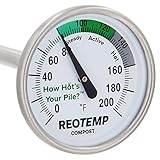
- Perfect for the Beginner Composter - Free PDF Digital Compost Guide Included - Expert instructions on how to get started composting and managing your compost pile for the most efficient compost production.
- Reotemp - Accurate and durable thermometers since 1965
- Quality Construction - 20 inch length, 1/4" diameter stem, stainless steel construction, hermetically sealed to prevent fogging
- Read at a Glance Dial Developed by Compost Experts - 3 temperature zones that indicate compost activity, understand your pile with our compost guide
- 100% Compostable Packaging - Printed with soy-based ink, zero waste, no plastic, no Styrofoam, shred the box to use in your compost pile as a brown
Dog poop: what the available study actually supports
A USDA Natural Resources Conservation Service fact sheet titled Composting Dog Waste describes a dog-waste compost study conducted in 1991 by the Fairbanks Soil and Water Conservation District with NRCS technical assistance. The study included dog waste only. It did not study cat feces, cat litter or mixed household pet waste, so its findings cannot be extended to cats.
The fact sheet reports that composting can reduce the volume of dog waste by 50 percent. That is the figure reported for the described work, not a guaranteed reduction for every household pile, climate or recipe. The material also gives end-use restrictions that are important even when the dog-waste process is managed correctly:
- Finished dog-waste compost may be used as a soil additive for revegetation, lawn establishment and planting beds.
- It should not be used on crops grown for human consumption.
- The fact sheet recommends a 25 percent compost blend for potting mix or flower beds.
- Because of salinity, the material is not suitable for germinating seedlings.
Those recommendations concern a dog-only method and its stated non-food uses. They are not approval for putting dog feces into an ordinary mixed backyard pile, and they provide no evidence that cat waste is safe to compost.
Recommended Free Tools
Rank #2
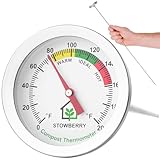
- COMPOST THERMOMETER FOR ACCURATE TEMPERATURE MONITORING: Easily track compost temperature levels with this 20 Inch stainless steel probe that reaches deep into piles for precise core readings
- STAINLESS STEEL LONG PROBE DESIGN: Durable 20 Inch corrosion-resistant composting probe for garden bins, tumblers, and large compost heaps
- EASY TO READ 2 INCH DIAL: Clear analogue dial with F readings and compost activity zones (Steady, Active, Hot) for fast and accurate interpretation
- GARDEN AND BACKYARD COMPOSTING USE: Boost decomposition by monitoring heat and adjusting conditions for optimal organic breakdown and soil enrichment
- NO BATTERIES REQUIRED WEATHER RESISTANT: Bimetal design compost thermometer works without power and withstands outdoor use in all seasons
Cat feces and litter require extra caution
Cat waste has a specific concern that ordinary compost advice cannot answer: Toxoplasma gondii. The Centers for Disease Control and Prevention (CDC) explains that infected cats can shed Toxoplasma in feces. Contaminated litter, soil or water can expose people if material is accidentally swallowed. An infection newly acquired during pregnancy or just before pregnancy can harm an unborn child.
CDC says Toxoplasma does not become infectious immediately. It generally takes one to five days after a cat sheds it in feces. That timing is why daily litter-box cleaning is a useful precaution: removing feces promptly reduces the time available for the organism to become infectious. The delay does not make composting a safe treatment, because an outdoor pile can contain feces for days or longer and its temperature and moisture are difficult to verify throughout.
The USDA dog-waste fact sheet expressly notes that cat and other pet wastes were not studied and does not recommend cat waste or cat litter. Do not treat a “pet-waste compost” recipe developed for dogs as evidence for cats. Clay-based litter, crystal litter, litter additives and fecal material can also change the pile’s chemistry or introduce materials that a particular process was never designed to handle.
Rank #3

- DURABLE CONSTRUCTION: Solid 20 inch (508 mm) 0.2 inch (5mm) diameter stem; reinforced welded bolt between dial and stem for long-lasting operation and conditions; high quality 304 stainless steel
- CLEAR ACCURATE DIAL: Easy to read 2 inch wide dial with color-coded temperature ranges; 40 - 180 Fahrenheit range and -17.77 - 82.22 Celsius in 2 degree increments for accurate readings
- HIGH QUALITY LENS: High-quality and lightweight PC-coated lens, hermetically sealed to avoid fogging and moisture; IP55 water-resistant rating
- COMPOSTING INSTRUCTIONS: Included to get you started
- LIFETIME WARRENTY, 100% MONEY BACK GARDENER SATISFACTION GUARANTEE: We are here 7 days a week, to answer all your questions
The narrow hot-pile method described by Arizona
Arizona’s Department of Environmental Quality (ADEQ) household compost guide, revised October 1, 2025, describes a specialized option rather than a blanket recommendation for home piles. Its instruction is to use a separate hot pile that “must reach and stay at 165 degrees for at least five days to kill parasites, and then cure for at least two years before use.” The guide also excludes clay-based or crystal deodorant litter and prohibits use on edible plants.
Do these 3 things before closing this tab:
1Fix the driver behind crashes, sound loss and screen glitches2Clear out junk files and repair common Windows errors3Scan for outdated or missing drivers - takes under a minuteEvery part of that method is a condition:
- Separate the material. Do not mix pet waste into the compost pile used for kitchen scraps or garden soil.
- Build and manage a hot pile. The ADEQ parameter is 165°F maintained for at least five days, not a brief peak reading.
- Verify the process throughout the mass. A thermometer reading in one spot cannot establish that cooler areas received the same treatment. Turn and manage the pile according to the method you are following, while recognizing that a thermometer alone is not a safety certificate.
- Cure for at least two years. The curing period begins after the required hot phase; it is not optional or interchangeable with a few weeks of resting.
- Exclude prohibited litter. Do not include clay-based or crystal deodorant litter.
- Keep it away from edible plants. ADEQ’s guide prohibits use on food crops, so plan only non-edible applications if local rules allow the method.
ADEQ’s numbers apply to that agency’s narrowly described approach. They should not be presented as a universal standard or as proof that any pile held at 165°F is safe. If your local authority has no equivalent guidance, the ordinary household answer remains to exclude pet waste and use an approved disposal route.
Can compost made with pet waste go on a vegetable garden?
Do not apply pet-waste compost to vegetables, herbs, fruit or other crops grown for people to eat. The USDA dog-waste fact sheet specifically says properly composted dog waste should not be used on crops for human consumption. Arizona’s household guide likewise prohibits edible-plant use for its separate hot-pile method.
Rank #4

- 24" Stem Length, Rugged All Stainless Steel Construction
- 5/16" Diameter Heavy Duty Stem
- Free Digital Compost Guide Included - Expert instructions on how to get started composting and managing your compost pile for the most efficient compost production.
- 2.5" Hermetically Sealed Dial (Won't Fog Up)
- Read at a Glance Dial: Fahrenheit with 3 Temperature Zones that Indicate Compost Activity - Steady, Active and Hot
For non-edible areas, the USDA dog guidance names lawns, revegetation projects and planting beds, and gives a 25 percent blend recommendation for potting mix or flower beds. It also warns that salinity makes the material unsuitable for germinating seedlings. Those limits apply to the dog-waste process described by USDA; they do not establish comparable uses for cat feces or cat litter.
If pet waste has accidentally entered a normal compost pile, do not use that finished material on edible plants. Because ordinary piles are not established sanitation systems, the prudent next step is to ask your municipal solid-waste or environmental-health authority how to handle the pile and the contaminated material. Keep children, pets and food-growing areas away from it while you obtain local instructions.
Quick wins for a faster PC:
Repair Windows errors before they cause bigger problemsFix Now →Scan for outdated or missing drivers - takes under a minuteDriver Scan →Clear out junk files and repair common Windows errorsFree Scan →Disposal options when composting is not appropriate
Local rules control what can go into garbage, sewer systems or organics programs. King County, for example, allows securely wrapped household pet waste in garbage. Its guidance says feces without litter or other debris may be flushed when a home is connected to a sewer and local rules permit it, but it does not recommend flushing into a septic system. It also does not authorize flushing litter.
Best Value
- Perfect for the Beginner Composter - Free Digital Compost Guide Included - Expert instructions on how to get started composting and managing your compost pile for the most efficient compost production.
- Reotemp - Accurate and durable thermometers since 1965, soilbuilder member of the US Composting Council
- Quality Construction - 16 inch length, 1/4" diameter stem, stainless steel construction, hermetically sealed to prevent fogging
- Read at a Glance Dial Developed by Compost Experts - 3 temperature Zones that indicate compost activity, understand your pile with our compost guide
- 100% Compostable Packaging - Printed with soy-based ink, zero waste, no plastic, no Styrofoam, shred the box to use in your compost pile as a brown
| Option | What the cited guidance says | Important limit |
|---|---|---|
| Ordinary backyard compost | EPA, New York DEC and Tampa advise keeping pet waste and/or cat litter out of household piles. | A typical pile is not established as a reliable pathogen-control process. |
| Separate hot pile | Arizona ADEQ describes 165°F for at least five days, followed by at least two years of curing. | Separate management, no clay or crystal deodorant litter, and no edible-plant use; apply local rules. |
| Dog-waste compost method | USDA’s fact sheet covers dog waste only and allows non-food uses such as lawns and planting beds. | No crops for human consumption; salinity caution for seedlings; not evidence for cat waste. |
| Household garbage | King County accepts securely wrapped household pet waste. | Your municipality may set different bagging or collection requirements. |
| Flushing | King County allows un-littered waste only where sewer connection and local rules permit. | Never flush litter; do not assume a septic system is suitable. |
Use leak-resistant bags if your local garbage rules allow them, seal the package, and follow collection instructions. Do not put a tied bag of pet waste in a food-scrap or yard-waste cart unless that program expressly accepts it.
Hygiene when handling feces, litter or contaminated soil
- Wear disposable gloves when cleaning litter, handling feces or gardening in soil that may have been contaminated by cat waste.
- Wash your hands with soap and running water afterward, even if you wore gloves.
- Keep litter tools, gloves and shoes used in a contaminated area away from kitchen surfaces.
- Ask someone else to clean the litter box during pregnancy if possible; if that is not possible, use gloves and clean it daily.
- Do not track potentially contaminated soil into areas where food is prepared or served.
These precautions address exposure; they do not turn pet waste into an acceptable compost ingredient. People who are pregnant or immunocompromised should discuss exposure concerns with a health professional.
A practical decision checklist
- Identify the material. Dog feces, cat feces and used litter are not equivalent to manure from herbivorous livestock. Cat litter may contain clay, crystals or deodorizing additives.
- Identify the system. If it is an ordinary backyard pile, exclude the material. A separate, measured hot-pile process is a different undertaking.
- Check the end use before starting. Food gardens are not an acceptable destination under the cited dog-waste and Arizona guidance.
- Check local rules. Ask your city, county or waste utility about bagged garbage, sewer flushing and septic restrictions.
- Choose the lowest-risk routine. For most households, prompt bagging and permitted disposal is simpler and more dependable than attempting pet-waste composting.
Bottom line for dog and cat owners
Keep dog and cat poop, plus used cat litter, out of an ordinary home compost pile. Dog-only evidence supports limited non-food uses after a defined process, while cat waste has an additional Toxoplasma concern and was not included in that study. Arizona’s separate 165°F-and-two-year method is a demanding, jurisdiction-specific exception with litter and end-use restrictions—not a reason to treat routine backyard compost as sanitized. Follow your local waste authority’s rules for securely bagged garbage or, where explicitly allowed, sewer disposal without litter.
Quick Recap
Product prices and availability are accurate as of the date/time indicated and are subject to change. Any price and availability information displayed on Amazon at the time of purchase will apply.





Leave a Reply