
Do these 3 things before closing this tab:
1Clear out junk files and repair common Windows errors2Fix the driver behind crashes, sound loss and screen glitches3Repair Windows errors before they cause bigger problemsAsk the rescue for specific, observed facts—not labels such as “aggressive,” “abused,” or “fearful”—before deciding whether a dog belongs in your home. Find out what happened, who witnessed it, what remains unknown, how the dog behaves in different settings, what medical care is needed, and what support and return terms the organization provides. A shelter assessment can inform your decision, but it cannot guarantee how a dog will behave after adoption. If there is substantial fear, aggression, or injury risk, involve a veterinarian and a qualified, reward-based behavior professional before committing.
Start with the story behind “difficult past”
“Difficult past” can describe very different situations: time as a stray, repeated moves, neglect, painful illness, frightening handling, conflict with another animal, or an incident that was reported without context. Ask the rescue to separate documented facts from assumptions.
As an Amazon Associate I earn from qualifying purchases.
Ask what is known, reported, and unknown
- What is known about the dog’s previous homes, time as a stray, or circumstances of rescue?
- Who supplied each detail, and how long did that person spend with the dog?
- Which information is written in a surrender form, intake record, or foster report?
- Which details are secondhand, and what remains unknown?
- Is “abuse” an evidenced history, or an interpretation based on the dog’s current behavior?
A responsible answer may be “we do not know.” Missing history is not proof of trauma, and it is not proof that the dog is safe. The value of an account depends on the source, the circumstances in which the dog was observed, and whether other observers have seen the same pattern.
Ask for events, not personality labels
Request a description of what the dog actually did. “Aggressive” could mean barking and retreating behind a handler, guarding food, snapping during a painful examination, or causing a serious bite. Those situations require different precautions and may have different explanations.
#1 Best Overall

- ★ Dog Training Toys: It is a unique dog training mat that allows your dog to find snacks or small toys hidden in the mat. It helps to train your dog's smell, consume your dog's energy and lose weight. Keep your dog occupied and avoid your dog being bored and engaged in destructive behavior.
- ★ Non-slip & Large & Portable: The bottom is a non-slip cloth that effectively holds the mat and prevents the dog from moving the mat. The design is small and can be shrunk into a small storage bag. It can also be hung or set aside when not in use. Suitable for traveling.
- ★ Dual-use Design: The feeding mat can be folded into a bowl. Stick to the good habits of your dog or use it as an olfactory pad.
- ★ Easy to clean: The main fabric of the scent pad is felt cloth, environmentally friendly and easy to clean. It is suggested that washed by hand.
- ★ Guarantee: If you are not satisfied with our dog feeding snuffle mat, please feel free to contact us.
Get a precise account of every concerning incident
If the dog has growled, snapped, attempted to bite, or bitten, ask the rescue to walk through each event in sequence. You need enough detail to judge risk and management—not a reassuring summary.
Use this incident checklist
- What happened immediately before the behavior?
- Who was present, and what were they doing?
- Was the dog cornered, restrained, approached while resting, or able to retreat?
- What warnings did people notice, such as turning away, freezing, lip licking, growling, or air snapping?
- Was there contact with skin? If so, was skin broken, and was medical treatment required?
- Did the dog stop when the person moved away, or did the behavior continue?
- Has a similar event happened more than once, with the same or different people?
- What did the rescue change afterward, and how did the dog respond?
Ask whether the account comes from a direct witness, a former caregiver, a staff member, or a report repeated by someone else. A rescue should be able to tell you when an event occurred and whether it was observed once or repeatedly. If records conflict, ask the organization to explain the difference rather than choosing the most favorable version.
Ask about ordinary triggers
Have the rescue describe behavior around unfamiliar adults, children if relevant to your home, other dogs and animals, food, toys, resting places, grooming, veterinary handling, confinement, doorways, car rides, noises, and being left alone. Ask what helps the dog relax and what a person should do at the first signs of discomfort.
Ask who has observed the dog and where
Behavior can change with the observer and the setting. Ask for separate reports from foster caregivers, daily-care staff, volunteers, and veterinary staff. Find out whether each observation was repeated during ordinary routines or occurred during a stressful event.
Why a foster report matters
A foster home may reveal how the dog handles household noises, visitors, rest, walks, handling, and time alone. Ask for examples rather than a global statement such as “great in a home.” How many days or weeks was the dog there? Were there children, pets, guests, stairs, deliveries, or periods without a person present? What management did the foster caregiver use?
Rank #2

- Mental Stimulation & Enrichment: Keeps dogs engaged and mentally active, encouraging natural foraging instincts and reducing boredom and destructive behaviors by hiding treats for your pup to sniff out
- Slow Feeding & Better Digestion: Promotes healthy eating habits with a textured design that slows down fast eaters, preventing bloating and improving digestion for dogs that gobble their food too quickly
- Durable & Easy to Clean: Built to last with high quality materials, this snuffle mat is machine washable or hand-washable for hassle-free cleaning, ensuring long-lasting use
- Stress & Anxiety Relief: Calms anxious dogs by providing a soothing activity where sniffing and searching for treats releases endorphins, offering a relaxing experience for your pet
- Non-Slip & Portable Design: Non-slip backing keeps the mat firmly in place even during excited foraging, lightweight and foldable at 19.7 x 19.7 inches for indoor use, lawns, parks, and travel
Account for shelter stress
A kennel, intake room, transport vehicle, or examination table can produce fear, frustration, pain, or defensive behavior that does not appear in a quiet home. The reverse is also possible: a dog may suppress behavior in a shelter and show it after settling in. Ask which observations were made in the shelter and which were made elsewhere, and what stressors were present.
The ASPCA describes foster information as potentially useful while cautioning that no single source is definitive. It also notes that behavior assessments have not been shown to be highly accurate or precise predictors of aggression after adoption. Personality, emotional state, stress, and setting all affect behavior.
Free tools Windows power users keep installed
One-click scans. No signup required.
Interpret temperament tests cautiously
Ask what assessment was performed, by whom, under what conditions, and what was actually observed. Do not treat a “passed” test as a safety guarantee or a single failed interaction as a complete forecast of life at home.
Questions about the assessment
- Was the dog assessed once or on multiple occasions?
- How long had the dog been in the shelter at the time?
- Was the dog in pain, ill, sedated, hungry, or unusually stressed?
- What specific behavior occurred, and what preceded it?
- Was the assessment designed to examine handling, resource guarding, dog-dog interaction, or another issue?
- Did the evaluator record uncertainty and recommend restrictions?
Use the assessment as one piece of evidence alongside history, foster observations, health information, and your household’s needs. Current scientific guidance remains inconclusive about how well shelter assessments predict post-adoption aggression.
Request complete medical and care information
Pain and medical conditions can change a dog’s tolerance for touch, movement, restraint, and proximity. Ask to review the veterinary record rather than relying on a verbal assurance that the dog is healthy.
Rank #3
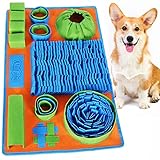
- SUITABLE FOR SMALL AND MEDIUM DOGS, CATS - The size of this snuffle mat is 26 x 16.5 inches, which is perfect for small dogs, medium dogs, cats and rabbits. It makes a wonderful gift for pet owners! NOT recommended for extra large and aggressive chewers dogs who could tear it up
- INTERACTIVE ACTIVITY MAT- If your dog always eat too fast, we recommend you try our enrichment training feeding mat. Dog snuffle mat simulate an environment for your dog to forage naturally, effectively slow down eating and prevent digestive problems
- 8 DIFFERENT PLACES TO HIDE TREATS - This sniff mat for dogs contains 8 different places to hide food or treats, increase the fun, challenge and training intensity of foraging. It allows you to enjoy the happy time of interacting with your dogs and avoid your dog destroys the furniture due to boredom
- SAFETY MATERIALS - The main material of the foraging mat is felt cloth, which is safety but not chewproof. When you receive this felt snuffle mat, machine wash it once to make the shape as good as the picture
- WASHABLE AND PORTABLE DESIGN - Easy to clean, hand wash and machine wash available. Two additional elastic straps can be fastened and easily wrapped around for storage
Records and diagnoses to request
- Vaccination and deworming history, plus parasite-prevention dates
- Diagnoses, injuries, surgeries, chronic conditions, and recommended follow-up
- Current and recently stopped medications, doses, and known side effects
- Test results or imaging the rescue can share
- Any observation that pain, impaired vision or hearing, neurological disease, or another medical issue may affect behavior
- Handling accommodations for nail trims, grooming, injections, examinations, and medication
The American Veterinary Medical Association recommends taking available history, including vaccination and deworming information, to the dog’s first veterinary visit. Schedule that visit promptly and tell the veterinarian about every behavior concern, even if the rescue believes it is resolved.
Recommended Free Tools
Ask about handling tolerance
Find out whether the dog accepts a collar, harness, leash, paw handling, ear checks, crate or room confinement, and car travel. Ask what equipment the dog currently tolerates and how it was introduced. A well-fitted harness may help some fearful dogs, but equipment is not a universal prescription; ask the rescue or behavior professional what this individual dog can tolerate and introduce any change gradually.
Match the dog’s needs to your household
The right question is not “Is this dog good?” It is “Can my household safely and consistently meet this dog’s needs?” Give the rescue an accurate picture of your home and ask for a candid fit assessment.
Describe your actual circumstances
- Children’s ages, supervision arrangements, and visiting children
- Resident dogs, cats, livestock, or other animals
- How often visitors, maintenance workers, or delivery people enter
- Typical time the dog would spend alone and your work schedule
- Stairs, elevators, shared hallways, busy streets, or other environmental challenges
- Your experience with fearful, reactive, guarding, or medically complex dogs
- Who can handle walks, feeding, medication, training, and veterinary appointments
Ask for management requirements in writing
Ask what the rescue expects on day one and what must remain in place until a professional evaluates the dog. Examples may include separating the dog from children during meals, using gates, avoiding dog parks, preventing access to visitors, feeding in a quiet room, or arranging a basket-muzzle introduction under professional guidance. Ask which behaviors the rescue has actually observed and which precautions are simply prudent because information is missing.
Plan the first weeks instead of testing the dog
Ask what decompression period, routine, enrichment, and reward-based support the rescue recommends for this dog. A newly adopted dog needs predictable access to food, water, sleep, elimination opportunities, safe space, and gradual exposure; it should not be pushed into crowded outings or forced interactions to “see what happens.”
Rank #4

- TRAIN YOUR DOG’S SMELL TO HUNT: Boost your pet’s mental stimulation with a snuffle mat! Perfect enrichment toys for dogs and cats, hiding treats in messy grass for fun, scent-focused play.
- DIGESTION & MENTAL HEALTH IMPROVEMENT: The dog snuffle mat acts as a puzzle feeder dog, slowing eating and boosting digestion. These mentally stimulating toys for dogs aid in weight loss and reduce anxiety.
- SNUFFLE MAT AND FEEDING BOWL: This food puzzle for dogs doubles as a sniff mat for dogs and a feeding bowl. With size-adjustable PP belt, it's a convenient, stimulating dog toy for mental stimulation and puppy enrichment.
- ECO-FRIENDLY & WASHABLE MATERIAL: Made from eco-friendly, anti-pilling polar fleece, this dog food puzzle is machine or hand washable. It's a durable addition to dog brain stimulation toys and perfect for pet enrichment.
- NON-SLIP & PORTABLE DESIGN: This dog puzzle toy features a non-slip base and a portable, shrinkable design. Ideal as puppy puzzle toys and dog stimulation toys to keep your pet engaged.
Use humane, individualized support
The American Veterinary Society of Animal Behavior encourages meeting a newly adopted dog’s basic needs and using positive reinforcement. That general advice is not a substitute for a tailored safety plan when there is serious fear, aggression, or bite risk. Ask exactly what rewards, cues, distance, and exit strategies the rescue has used successfully.
Enrichment such as a suitable snuffle mat or other food-search activity can be useful for some dogs when supervised and introduced at an appropriate difficulty. It is enrichment, not treatment for trauma, fear, or aggression. Stop if the dog shows guarding, frustration, or distress.
Ask about professional help and credentials
For substantial fear, aggression, repeated bites, or a realistic possibility that someone could be injured, ask whether a veterinarian has reviewed the case and whether the rescue can refer you to a qualified behavior professional. Ask what credentials the person holds, which methods they use, and whether they coordinate with your veterinarian.
The ASPCA and the International Association of Animal Behavior Consultants support humane, reward-based practices. IAABC’s 2025 standards state that positive reinforcement should be the primary training strategy and oppose intentional pain, fear, or intimidation. Be cautious of anyone promising a guaranteed “cure,” using punishment as a first response, or refusing to explain methods.
Crashes, No Sound, or Screen Glitches?
Random freezes, missing sound and display glitches usually trace back to one bad driver. Find and replace yours safely.Free scan · under a minuteWindows Errors? Fix Them Before They Spread
Repair common Windows errors and clear accumulated junk for a smoother, more stable PC - no reinstall needed.Free scan · no reinstallGet adoption, trial, and return terms before signing
Policies vary by organization. Do not assume there is a universal trial period, a guaranteed placement, or an unconditional return option.
Best Value

- Engaging Dog Sniffing Mat Design: the dog activity mat features a variety of puzzles and different fabric textures, making the foraging process exciting for your furry friend, and keeping them busy
- Various Levels of Dog Enrichment and Mental stimulation: The dog foraging mat provides a range of puzzles with different levels of difficulty, suitable for dogs of various dog games experience
- Slows Down Fast Eating to Avoid Digestion Problems: Our dog sniffing mat encourages fast eaters to use their sense of smell, reduce anxiety and burn energy. No small plastic details
- Wider Dog Puzzle Sizes: This dog digging toy fits most dog muzzles. The dog treat mat is 39.4''x23.6'', has a non-slip bottom. It is made of soft material for pet comfort and safety. Machine washable
- Reduces Destructive and Anxious Behavior: Fights boredom by training your dog's brain, keeping them busy from exhibiting behaviors like chewing, digging, and excessive barking
Ask for the actual policy
- Is there a trial or foster-to-adopt period, and what are its dates and conditions?
- Who pays for veterinary care, training, or behavior consultation during that period?
- What must you do if a bite, escape, serious illness, or unsafe interaction occurs?
- Can the dog be returned, and is prior approval required?
- Are fees refundable, and what happens to supplies or medical records?
- Who is available after hours for an urgent safety question?
- Will the rescue help with a behavior referral, placement change, or return?
Request these terms in writing, along with the contact person’s name and preferred communication method. Transparent, documented processes protect both the dog and the adopter.
How to evaluate the rescue’s answers
Strong answers contain concrete examples, acknowledge uncertainty, identify sources, and explain management. Different observers may disagree; what matters is that the rescue is candid about the disagreement and gives you enough context to plan safely.
| What you hear | How to interpret it | What to ask next |
|---|---|---|
| “We do not know.” | Incomplete history, not evidence of either safety or trauma. | What has been directly observed, and what precautions follow from the uncertainty? |
| “He is aggressive.” | A label without a usable risk description. | What behavior, trigger, setting, frequency, injury level, and recovery were observed? |
| “She passed temperament testing.” | One assessment with limited predictive value. | What did the dog do in foster care and during ordinary handling? |
| “The bite was unprovoked.” | Context may be missing or misunderstood. | What happened immediately before, what warnings were seen, and who witnessed it? |
| “Training will fix it.” | A promise that ignores health, environment, and individual variation. | What management is needed now, and which qualified professional will assess the dog? |
When to pause or decline the adoption
Pause when the rescue cannot provide basic incident details, withholds medical records it should have, minimizes a known bite, pressures you to decide immediately, or cannot explain how it would support a safe transition. Also pause when the dog’s needs exceed your household’s ability to supervise, separate, medicate, transport, or pay for professional care.
What’s actually slowing this PC down?
Pick the symptom - the matching free tool is one click away.
If you are considering a dog with a bite history or serious fear, ask the rescue to discuss the case with a veterinarian and qualified behavior professional before adoption. A careful “not this home” decision can be responsible and compassionate; it prevents a placement that may endanger people or set the dog up to fail.
Quick Recap
A printable question list
- What is documented, what is secondhand, and what is unknown?
- Who observed each behavior, in which setting, and how often?
- What exactly happened before, during, and after every bite, snap, growl, or escape?
- How does the dog respond to children, animals, food, toys, rest, handling, confinement, visitors, noises, and being alone?
- What early signs show discomfort, and what should a person do?
- What medical diagnoses, pain concerns, medications, injuries, and follow-up are documented?
- What equipment and routines does the dog already accept?
- What management would my household need from the first day?
- What decompression and reward-based plan does the rescue recommend?
- Which veterinarian and behavior professionals can help, and what methods do they use?
- What are the written trial, support, emergency-contact, and return terms?
Product prices and availability are accurate as of the date/time indicated and are subject to change. Any price and availability information displayed on Amazon at the time of purchase will apply.





Leave a Reply