Recommended Free Tools
Hemangiosarcoma is a rare cancer of the cells lining blood vessels. In cats it can affect the skin, tissue beneath the skin or muscles, or internal organs; symptoms, treatment options, and outlook depend heavily on the tumor’s location and spread. A suspicious lump needs veterinary assessment, and sudden collapse, severe weakness, pale gums, or difficulty breathing calls for emergency care.
What causes hemangiosarcoma in cats?
Hemangiosarcoma (HSA) is a malignant tumor arising from endothelial cells, which line blood vessels. A 2021 veterinary review describes a pluripotent bone marrow progenitor as a suspected cell of origin and the disease’s development as complex and multifactorial. This is a proposed explanation of tumor biology, not a proven cause in an individual cat.


As an Amazon Associate I earn from qualifying purchases.
The reviewed feline evidence does not establish a specific exposure, inherited risk, or prevention method. Risk claims drawn from studies of dogs should not automatically be applied to cats.
What forms can hemangiosarcoma take in cats?
Veterinary sources distinguish tumors associated with the skin, tumors deeper under the skin or in muscle, and tumors in internal organs. These categories matter: a tumor that appears to be a skin mass can behave differently from deeper or visceral disease.
#1 Best Overall
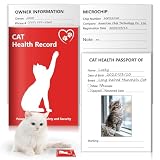
- 1.You’ll Get:When you choose our cat vaccines records tracker, you'll receive one notebook.This 12-page Kitty health journal has 8 dedicated pages for tracking your pup’s health, vet visits, and key details, with 4 blank pages at the end for jotting down extra notes, pet cat-related info, or anything else you want to record.
- 2.Ideal Size for Record Keeping:Each cat vaccine record book measures 5x3.5 inches folded; 5x7 inches unfolded, allowing for easy portability and storage.These handy health records notebook for cats with double sided printing, featuring enough space for all your pets important information,plus, it has dedicated spots for sticking on vaccine stickers and adding cute kitten photos.They offer a stylish and organized approach to pet health documentation, a must have addition to your pet supplies.
- 3.Premium Quality: The cat health record tracker’s cover features 300gsm coated paper with vibrant full-color printing and a protective laminate finish. Inside, 80gsm high-quality offset paper pages are durable and ink-resistant, ensuring no bleeding from pens or markers—so your records stay neat and easy to read.
- 4.Essential for cat owners: This kitten health record book is designed for vet clinics & owners. Track key health info (vaccines, exams, treatments) easily. When you’re away, pet sitters/family can quickly check medical history for seamless care. Kitten record book with photo, vital signs & ID sections, it helps in emergencies—even if your kitten gets lost.
- 5.Effortlessly Track Vaccinations and More:The cat canine health record booklets pages include:owner and cat information,medical history and hospitalizations,vaccination record and sticker,cat service providers,fecal examinations and de-worming,heartworm screening, prevention and treatment etc.This record keeping tool will ensure every important detail is accounted for and make this task easy, organized, and straightforward.Add this essential tool to your pet supplies for a happier, healthier pet.
| Form | Where it occurs | What the feline evidence indicates |
|---|---|---|
| Cutaneous | In or associated with the skin | A small feline case series found that surgery was associated with statistically longer median survival than no surgery; its authors concluded that aggressive excision may allow a good long-term prognosis. |
| Subcutaneous or intramuscular | Under the skin or in muscle | A 53-cat retrospective series found subcutaneous HSA more biologically aggressive than cutaneous HSA. Local recurrence occurred in 6 of 12 followed cats with subcutaneous lesions. |
| Visceral | Internal organs; disease may involve multiple sites | In a 26-cat retrospective study, 77% of cats had multifocal HSA. |
These are referral- and case-based studies, not population surveys, so they do not establish how frequently each form occurs among all cats.
What symptoms should you watch for?
Skin or deeper soft-tissue masses
A lump in or under the skin should be examined by a veterinarian. Appearance and feel alone cannot tell whether a mass is benign or malignant, or whether it is HSA.
Rank #2

- COMPLETE HEALTH RECORDS FOR CATS & SMALL PETS: Comprehensive veterinary record booklets designed to track vaccinations, exams, deworming, and treatments. Perfect for maintaining organized, up-to-date medical histories for cats, kittens, and small animals."
- 25 INDIVIDUAL BOOKLETS PER PACK: Includes 25 separate records—ideal for multi-pet households, shelters, rescues, breeders, or veterinary clinics that manage multiple animals. Each booklet provides structured documentation for easy organization."
- CLEAR, CUSTOMIZABLE FORMAT FOR EASY RECORDING: Each page features clearly labeled sections for vaccines, dates, treatment details, and veterinarian notes. The user-friendly layout allows for quick, legible recordkeeping at home, during exams, or on the go."
- PORTABLE AND CONVENIENT DESIGN: Compact and lightweight, these cat health record booklets fit easily into folders, travel bags, or adoption packets. Keep vital health information accessible during vet appointments, travel, or transfers."
- IDEAL FOR PET OWNERS, BREEDERS & PROFESSIONALS: Perfect for breeders, shelters, veterinarians, and pet owners who want a professional way to document a cat’s medical care. Simplifies communication between caregivers, adopters, and clinics."
Possible signs of visceral disease
Internal HSA can cause vague illness or sudden deterioration. In a 2008 multi-institutional study of 26 cats with visceral HSA, commonly reported findings included lethargy, loss of appetite, breathing difficulty, collapse, and vocalizing. These signs can have many causes and do not confirm cancer.
The Tool Desk
Outbyte Driver Updater FREEScan for outdated or missing drivers - takes under a minuteDriver Scan →Outbyte PC Repair FREERepair Windows errors before they cause bigger problemsFix Now →Because a tumor can contain blood and rupture, internal bleeding may cause a rapid decline. Cornell University’s veterinary oncology guidance notes the risk of internal bleeding and sudden death after rupture. Seek emergency veterinary care for sudden collapse, marked weakness, pale gums, breathing difficulty, or a distended abdomen.
How is hemangiosarcoma diagnosed and staged?
The veterinarian starts with the cat’s history and physical examination, then selects tests based on the suspected tumor site and the cat’s condition. Imaging can help locate masses and look for spread, but it does not always reveal every lesion.
- Assess the suspected site. Depending on the findings, tests may include abdominal ultrasound, chest radiographs, CT, or cardiac ultrasound.
- Obtain tissue for diagnosis. North Carolina State University Veterinary Hospital describes biopsy as the usual diagnostic route. Histopathology of a removed mass can also confirm HSA.
- Interpret needle samples cautiously. Fine-needle aspiration may be nondiagnostic because these tumors are fragile and bleed. A sample that does not establish a diagnosis does not, by itself, rule HSA out.
- Stage the disease where appropriate. Chest and abdominal imaging, and assessment of the heart when relevant, can help evaluate the extent of visceral disease.
In the 26-cat visceral study, abdominal ultrasound identified a specific HSA location in 75% of the cats, but identified all multifocal lesions in only 3 of the 9 cats with multifocal disease. An ultrasound that does not show every lesion should therefore not be treated as proof that disease is confined to one site.
Rank #4

- Impressive Quantity and Appropriate Size: the package includes 25 cat health records, offering a generous quantity for pet owners with multiple cats or veterinary practices; The unfolded size measures 7.87 x 10.63 inches/ 20 x 27 cm, and the folded size is 7.87 x 3.54 inches/ 20 x 9 cm, making it ideally suited for easy storage and convenient access of your pet's vital health information
- Distinctive Color and Reliable Material: presented in aesthetically pleasing shades of blue and white, these cat shot record booklets ensure that your pet's health data stands out; Crafted from durable 120 g offset paper, these records offer long lasting quality, ensuring the preservation of critical information for an extended period
- Ideal for Multiple Users and Various Occasions: from individual pet owners to professional veterinarians, these cat vaccine record books cater to a wide range of users; Their practicality makes them equally suited for various occasions, ranging from regular vet appointments to emergency visits
- Meaningful Gift for Pet Lovers: a thoughtful gift for any cat owner, these kitten health records not only indicate care for the pet but also understanding of the owner's responsibility; Gift these records to promote responsible pet ownership and foster better pet health
- Tri Fold Design for Enhanced Convenience: with a practical tri fold design, these animal health records provide an organized structure, making it easy for users to track the health history and vaccination records of their pets
What treatment is available?
The plan depends on the tumor’s location, whether it can be completely removed, whether it has spread, and the cat’s overall condition. A veterinarian or veterinary oncologist can explain the likely benefits, burdens, and goals for the individual cat.
What’s actually slowing this PC down?
Pick the symptom - the matching free tool is one click away.
Surgery
Complete surgical excision is a central option when a tumor is localized and can be removed safely. Cornell’s oncology guidance describes splenectomy for splenic HSA; cardiac tumors can be more challenging to treat surgically. The cutaneous case-series findings are encouraging for some cats, but should not be generalized to deeper or visceral forms.
Best Value
Chemotherapy and supportive care
Chemotherapy may be considered in selected cases, including as part of a plan for disease that cannot be addressed by surgery alone. The feline evidence is limited, and the number of cats receiving chemotherapy in the small visceral series was low. The veterinary team can also discuss symptom management and quality-of-life goals alongside cancer-directed treatment.
What is the outlook for a cat with hemangiosarcoma?
Outlook varies by form, location, extent of disease, and treatment. A 2021 veterinary review characterizes prognosis overall as generally poor because HSA can spread rapidly and widely, while noting that some forms, including cutaneous HSA, can be less aggressive. The small cutaneous series and the more concerning visceral findings should not be treated as interchangeable evidence.
For context, in the 2008 retrospective study of 26 cats with visceral HSA, 71% of cats that were euthanized were euthanized within one day of diagnosis. Among the six cats not euthanized at diagnosis, median survival was 77 days, with a range of 23–296 days. This is a small historical group, not a prediction for an individual cat.
In that same 26-cat study, 82% of cats were anemic and 33% had metastatic lung disease. Those figures describe the cats in that study; they are not rates for all cats with HSA.
Quick Recap
What should you discuss with the veterinarian?
- Where the tumor is, and whether the tissue findings confirm HSA.
- What imaging suggests about spread, and whether further staging could change the plan.
- Whether complete excision is feasible and what the procedure would involve.
- Whether additional treatment is appropriate, what benefit is expected, and what burdens it may add.
- How the plan will address comfort, daily function, and quality of life.
Product prices and availability are accurate as of the date/time indicated and are subject to change. Any price and availability information displayed on Amazon at the time of purchase will apply.




