Recommended Free Tools
Fluid overload during fluid therapy can progress from excess circulating volume to tissue edema or fluid in body cavities, and it can become life-threatening. In dogs and cats, the safest approach is prevention and early recognition: track weight and every source of fluid, watch for respiratory or other clinical changes, and have the veterinary team reassess the plan promptly. Treatment decisions—including stopping fluids or using diuretics—belong to the veterinary clinician.
What fluid overload means
The 2024 AAHA Fluid Therapy Guidelines for Dogs and Cats describe fluid overload, also called fluid intolerance, as a clinical spectrum. It may involve hypervolemia, tissue edema, or cavitary effusions, and severe cases can threaten life. Excessive fluid administration is the most common cause, but tolerance also depends on the patient and underlying disease. Any patient receiving fluid therapy can be affected; concern is greater with impaired renal function, heart or liver disease, or large fluid exposures. AAHA Section 6: Fluid Overload.
As an Amazon Associate I earn from qualifying purchases.
Edema can be difficult to reverse once it develops, and there is no universally effective treatment. That is why a rising weight or fluid balance matters even before obvious swelling appears.
How the veterinary team recognizes it
Trend weight and fluid balance
AAHA recommends weighing patients every 6–12 hours and comparing each measurement with the initial baseline. A gain of 10% or more is a warning finding, not a stand-alone diagnosis. Record fluid inputs and outputs so the team can interpret weight changes alongside the clinical picture.
#1 Best Overall

- PACK OF 10 INDIVIDUALLY SEALED SETS — STOCK YOUR SUPPLY: 10 sterile, single-use IV infusion sets ready to go straight from the pouch. Ideal for clinics, shelters, and home caregivers who need a reliable ongoing supply. At a fraction of what vets charge per set, this is the cost-effective solution for routine fluid administration — no constant reordering, no running short mid-treatment.
- CE 0197 CERTIFIED & ETHYLENE OXIDE STERILIZED — MEDICAL-GRADE SAFETY: Every set carries CE 0197 certification and is sterilized by ethylene oxide gas, confirming it meets strict medical device standards. Trusted by vet professionals and experienced home pet owners who won't compromise on hygiene.
- COMPLETE IV ADMINISTRATION SET — DRIP CHAMBER, AIR VENT & 21G NEEDLE INCLUDED: Each set includes a piercing spike, transparent drip chamber (20 drops/mL), built-in air vent, kink-resistant PVC tubing, and a 21-gauge needle at the patient end. Works with Lactated Ringer's, Normal Saline, and other standard electrolyte solutions prescribed for intravenous or subcutaneous treatment in small animals.
- TRUSTED FOR HOME SUBCUTANEOUS FLUID TREATMENTS — CHRONIC HYDRATION: The smooth-flowing tubing, precise flow wheel, and secure twist connector make at-home sessions faster and less stressful for your pet.
- UNIVERSAL FIT — VENTED & NON-VENTED BAGS, GRAVITY DRIP & PUMP COMPATIBLE: Works with both flexible IV bags and rigid vented containers. Compatible with standard gravity drip setups and most pump configurations. Disposable after a single session. Equipo de suero estéril para perros y gatos con insuficiencia renal.
Include all fluid sources in the balance: IV fluids and infusions, medications, line flushes, and enteral feedings. A positive balance and increasing weight may provide an early signal, before edema is apparent.
Watch for clinical changes
Findings that can support concern include:
- Swelling in the tissues, including the face or area under the jaw, limbs, paws, dependent areas, or conjunctiva (chemosis).
- Serous nasal discharge, or serous fluid from an endotracheal tube in an anesthetized patient.
- Faster or more labored breathing, or reduced oxygen saturation (SpO₂).
- A new heart murmur or gallop sound.
- Gastrointestinal changes such as abdominal distention, vomiting, diarrhea, reduced appetite, or not eating.
These findings are not individually definitive. For example, hypertension alone does not reliably establish fluid overload; AAHA says it is rarely associated with overload except in some renal patients.
Rank #2

- 103", Injection site male luer lock adapter with retractable collar
- For use with rigid non-vented and flexible containers
- Approximately 10 drops per ml
Use imaging as part of the assessment
Depending on the patient, radiographs may show body-wall edema, pulmonary or pleural edema, cardiomegaly, enlarged pulmonary arteries or vessels, or reduced serosal detail. Ultrasound may reveal subcutaneous edema, pleural effusion, B-lines, ascites, intestinal wall thickening or ileus, hepatic congestion, or gallbladder wall edema. These are clinical assessment findings for veterinary professionals, not a home diagnostic checklist.
Quick wins for a faster PC:
Scan for outdated or missing drivers - takes under a minuteDriver Scan →Clear out junk files and repair common Windows errorsFree Scan →Fix the driver behind crashes, sound loss and screen glitchesFind Drivers →What the veterinary team can do
If overload or edema is suspected, the clinician assesses the patient’s status and fluid exposure, then adjusts care to the individual case. AAHA describes general approaches that may include restricting sodium and water, discontinuing IV fluids, administering diuretics, and increasing mobility. Their effectiveness is limited, and none should be treated as a universal protocol.
Rank #3

- Recommended to help support healthy joints in the horse, dog and cat.
Do not independently stop a prescribed fluid plan, change a fluid rate, restrict water, or give a diuretic. Contact the treating veterinary team promptly about new swelling, breathing changes, or a marked weight increase; breathing difficulty warrants urgent veterinary attention.
If fluids are not improving the patient
Repeated boluses should not be continued automatically when a patient is not responding. AAHA advises stopping non-beneficial boluses, correcting electrolyte or glucose disturbances, and considering vasopressor treatment when appropriate. Low blood pressure does not by itself prove that more fluid will help.
Rank #4

- UNIVERSAL COMPATIBILITY: Designed for vented & non-vented IV fluid containers, this versatile IV set ensures seamless infusion, adapting to various medical needs for veterinarians, clinics, and pet owners.
- VETERINARY-GRADE QUALITY: Specially engineered for animal care, this IV set meets strict veterinary standards, offering precise fluid control. The piercing spike has a smooth surface that minimizes insertion risks.
- RELIABLE & SAFE INFUSION: Featuring a precision roller clamp and Luer connector, this IV set ensures accurate flow control, and consistent fluid delivery.
- SOFT & FLEXIBLE TUBING: The 72" elastic tubing provides optimal length and flexibility, reducing kinks while ensuring smooth fluid flow, making it easy to handle during veterinary procedures.
- SINGLE-USE & COST-EFFECTIVE: Designed for one-time use, this IV set ensures hygiene and safety while remaining an affordable solution for clinics, shelters, and pet owners needing reliable fluid administration.
Likewise, fluids should not be given to an already hydrated, euvolemic patient simply to try to increase glomerular filtration rate (GFR). Hemodialysis has a very limited role for edema in the guideline because movement of edema fluid back into the vascular space is limited.
How fluid overload risk can be reduced
- Tailor fluid therapy. AAHA recommends a low-volume resuscitation strategy and individualized ongoing fluid plans rather than a one-size-fits-all rate.
- Count every input. Account for medications, infusions, flushes, and enteral feedings in the balance calculation.
- Monitor consistently. Weigh every 6–12 hours against the initial baseline and document inputs and outputs regularly.
- Pay closer attention to higher-risk patients. This includes patients with oligoanuric renal failure, impaired renal function, heart or liver disease, or substantial fluid exposure. Small dogs and cats may become overloaded quickly because their blood volumes are smaller.
- Consider the setting. For anesthetized patients undergoing lengthy procedures, AAHA gives a general rule that total anesthetic fluids should not exceed the daily recommended total of 20 mL/kg/24 hr. This is specific context from the guideline, not a general fluid prescription for every patient; enteral water supplementation may also be considered.
The guidance is for dogs and cats and does not establish a prevalence rate for fluid overload. Its weight threshold is a monitoring trigger, not an estimate of how often the complication occurs.
Quick Recap
Best Value
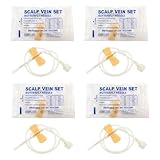
- 50 pcs per box, each with individual packaging for convenient storage and easy access in daily animal care routines
- Designed for veterinary care of pets like dogs and cats, featuring a screw luer adapter and 25G size suitable for small animal use
- Butterfly wing design enhances handling stability and simplifies operation, making it user-friendly during routine animal care procedures
- Individually sealed packaging helps maintain hygienic conditions, ensuring each piece is ready for immediate use when needed
- Made of high-quality materials with a single-use design, ensuring reliability in daily animal care applications
Product prices and availability are accurate as of the date/time indicated and are subject to change. Any price and availability information displayed on Amazon at the time of purchase will apply.




